





Passive Components Blog
No Result
View All Result
  • Home
  • NewsFilter
    • All
    • Aerospace & Defence
    • Antenna
    • Applications
    • Automotive
    • Capacitors
    • Circuit Protection Devices
    • electro-mechanical news
    • Filters
    • Fuses
    • Inductors
    • Industrial
    • Integrated Passives
    • inter-connect news
    • Market & Supply Chain
    • Market Insights
    • Medical
    • Modelling and Simulation
    • New Materials & Supply
    • New Technologies
    • Non-linear Passives
    • Oscillators
    • Passive Sensors News
    • Resistors
    • RF & Microwave
    • Telecommunication
    • Weekly Digest

    Modelithics Library for MATLAB: Measurement-Based Models for Microwave and RF Passive Components

    Bourns Extends Multilayer Chip Inductors Offer for RF and Wireless Designs

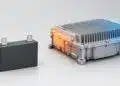
    Researchers developed a polymer capacitor by combining two cheap, commercially available plastics. The new polymer capacitor makes use of the transparent material — pictured here, with vintage Penn State athletic marks visible through it — to store four times the energy and withstand significantly more heat.  Credit: Penn State

    Penn State Demonstrated Polymer Alloy Capacitor Film with 4× Energy Density up to 250C

    ECIA January 2026 Reports Strong Sales Confidence

    Vishay Unveils Ultra-Compact 0201 Thick Film Chip Resistors

    Würth Elektronik Component Data Live in Accuris

    Coilcraft Releases Automotive Common Mode Chokes

    MLCC Manufacturers Consider Price Increase as AI Demand Outpaces Supply

    YAGEO Extends Antenna Portfolio with Wi‑Fi 6E/7 and Tri‑band GNSS Solutions

    Trending Tags

    • Ripple Current
    • RF
    • Leakage Current
    • Tantalum vs Ceramic
    • Snubber
    • Low ESR
    • Feedthrough
    • Derating
    • Dielectric Constant
    • New Products
    • Market Reports
  • VideoFilter
    • All
    • Antenna videos
    • Capacitor videos
    • Circuit Protection Video
    • Filter videos
    • Fuse videos
    • Inductor videos
    • Inter-Connect Video
    • Non-linear passives videos
    • Oscillator videos
    • Passive sensors videos
    • Resistor videos

    2026 Power Magnetics Design Trends: Flyback, DAB and Planar

    Enabling Software‑Defined Vehicle Architectures: Automotive Ethernet and Zonal Smart Power

    Calculating Resistance Value of a Flyback RC Snubber 

    One‑Pulse Characterization of Nonlinear Power Inductors

    Thermistor Linearization Challenges

    Coaxial Connectors and How to Connect with PCB

    PCB Manufacturing, Test Methods, Quality and Reliability

    Transformer Behavior – Current Transfer and Hidden Feedback

    Choosing the Right Capacitor: The Importance of Accurate Measurements

    Trending Tags

    • Capacitors explained
    • Inductors explained
    • Resistors explained
    • Filters explained
    • Application Video Guidelines
    • EMC
    • New Products
    • Ripple Current
    • Simulation
    • Tantalum vs Ceramic
  • Knowledge Blog
  • DossiersNew
  • Suppliers
    • Who is Who
  • PCNS
    • PCNS 2025
    • PCNS 2023
    • PCNS 2021
    • PCNS 2019
    • PCNS 2017
  • Events
  • Home
  • NewsFilter
    • All
    • Aerospace & Defence
    • Antenna
    • Applications
    • Automotive
    • Capacitors
    • Circuit Protection Devices
    • electro-mechanical news
    • Filters
    • Fuses
    • Inductors
    • Industrial
    • Integrated Passives
    • inter-connect news
    • Market & Supply Chain
    • Market Insights
    • Medical
    • Modelling and Simulation
    • New Materials & Supply
    • New Technologies
    • Non-linear Passives
    • Oscillators
    • Passive Sensors News
    • Resistors
    • RF & Microwave
    • Telecommunication
    • Weekly Digest

    Modelithics Library for MATLAB: Measurement-Based Models for Microwave and RF Passive Components

    Bourns Extends Multilayer Chip Inductors Offer for RF and Wireless Designs

    Researchers developed a polymer capacitor by combining two cheap, commercially available plastics. The new polymer capacitor makes use of the transparent material — pictured here, with vintage Penn State athletic marks visible through it — to store four times the energy and withstand significantly more heat.  Credit: Penn State

    Penn State Demonstrated Polymer Alloy Capacitor Film with 4× Energy Density up to 250C

    ECIA January 2026 Reports Strong Sales Confidence

    Vishay Unveils Ultra-Compact 0201 Thick Film Chip Resistors

    Würth Elektronik Component Data Live in Accuris

    Coilcraft Releases Automotive Common Mode Chokes

    MLCC Manufacturers Consider Price Increase as AI Demand Outpaces Supply

    YAGEO Extends Antenna Portfolio with Wi‑Fi 6E/7 and Tri‑band GNSS Solutions

    Trending Tags

    • Ripple Current
    • RF
    • Leakage Current
    • Tantalum vs Ceramic
    • Snubber
    • Low ESR
    • Feedthrough
    • Derating
    • Dielectric Constant
    • New Products
    • Market Reports
  • VideoFilter
    • All
    • Antenna videos
    • Capacitor videos
    • Circuit Protection Video
    • Filter videos
    • Fuse videos
    • Inductor videos
    • Inter-Connect Video
    • Non-linear passives videos
    • Oscillator videos
    • Passive sensors videos
    • Resistor videos

    2026 Power Magnetics Design Trends: Flyback, DAB and Planar

    Enabling Software‑Defined Vehicle Architectures: Automotive Ethernet and Zonal Smart Power

    Calculating Resistance Value of a Flyback RC Snubber 

    One‑Pulse Characterization of Nonlinear Power Inductors

    Thermistor Linearization Challenges

    Coaxial Connectors and How to Connect with PCB

    PCB Manufacturing, Test Methods, Quality and Reliability

    Transformer Behavior – Current Transfer and Hidden Feedback

    Choosing the Right Capacitor: The Importance of Accurate Measurements

    Trending Tags

    • Capacitors explained
    • Inductors explained
    • Resistors explained
    • Filters explained
    • Application Video Guidelines
    • EMC
    • New Products
    • Ripple Current
    • Simulation
    • Tantalum vs Ceramic
  • Knowledge Blog
  • DossiersNew
  • Suppliers
    • Who is Who
  • PCNS
    • PCNS 2025
    • PCNS 2023
    • PCNS 2021
    • PCNS 2019
    • PCNS 2017
  • Events
No Result
View All Result
Passive Components Blog
No Result
View All Result

FARAD Cryptoken Announces Pre-ICO Token Swap

24.8.2017
Reading Time: 4 mins read
A A

source: cointelegraph news

A unique cryptocurrency which captures Energy Storage and Internet & Telecommunications, two of the latest technological innovations in the market.

RelatedPosts

Modelithics Library for MATLAB: Measurement-Based Models for Microwave and RF Passive Components

Bourns Extends Multilayer Chip Inductors Offer for RF and Wireless Designs

Penn State Demonstrated Polymer Alloy Capacitor Film with 4× Energy Density up to 250C

23rd August 2017 – FARAD Cryptoken (FRD) announces its Pre-ICO Token Swap which will run from 25th August 2017 (13:00 GMT) to 14th September 2017 (23:59 GMT), followed by the actual ICO from 15th September to 30th September 2017, where 1.28 billion FRD will be offered for sale.

FARAD sets itself apart from other cryptocurrencies as it is backed by real economic activity and cash flow through the manufacturing of high-end Ultra-capacitors within actual factory settings. The energy storage innovation which FARAD represents is in the invention, manufacturing and delivery of FARAD ultra-capacitors, while the Blockchain is based on Ethereum ERC20 Smart Contract.

Launched earlier this month at the Dubai International Financial Centre (DIFC), FRD aims to allow cryptocurrency holders unique and safe access to the ultra-capacitor market by narrowing down their participation to the initial stage of the FARAD ultra-capacitor products manufacturing process. Public will be offered an opportunity to hold the FRD through its ICO.

FRD can be owned using Ethereum (ETH) or Bitcoin (BTC) through the FRD Token Swap Program. The FRD Team will be announcing its Pre-ICO Wallet on Friday, 25th August 2017 through its official website www.farad.energy. During the Pre-ICO, contributors will have the privilege to own 10% more FRD compared to the ICO.

By partaking in the ICO, each contributor will represent a right to the forward production of Ultra-capacitor Cells (“UCC“) defined by the millifarad (“mF”) of the UCCs where a total of 1.6 billion mF will be produced over a period of 36 months. Funds raised from the ICO exercise will be used for the following purpose:

  • 25%: To acquire specialized machineries which will be imported from Taiwan, Italy and Germany.
  • 25%: To purchase and stockpile the metal oxides material needed for the production of the FARAD Ultra-capacitors.
  • 15%: To fund further intellectual property protection (patents), industrial development and collaboration.
  • 10%: To cover Blockchain developments for the manufacturing process and Supply Chain and Value Chain management for the FARAD Ultra-capacitors on Ethereum blockchain concepts.
  • 25%: To cover international marketing, ICO costs, financial costs, of the FARDA Ultra-capacitors manufacturing, etc.

The FARAD Ultra-capacitors will be produced by Hong Kong Aerospace Beidou (HKAB) at the manufacturing plant located in Wuzhou City, Guangxi Province of China. Each Ultra-capacitor manufactured will be recorded in the Blockchain system, ensuring a fully transparent process, fully accountable and fully auditable by anyone at any time, using the Blockchain public records. This will provide trust and security for FRD contributors.

The FARAD ultra-capacitor is a breakthrough device based on proprietary electrochemical technology that bridges the performance gap between batteries and capacitors. This product has been designed to enable technology companies to solve many of their most challenging power and cost management problems.

Among the unique characteristics of the Farad ultra-capacitor include being the smallest and thinnest in the world with the highest power density and fastest rise time of all ultra-capacitors. It is able to supply hundred times the power level attainable from batteries and store hundred times more energy for a given volume than conventional capacitors.  The FARAD ultra-capacitor can be applied across the entire portable power source territory ranging from Wireless Telecommunications, Portable Power Tools, Automotives, Solid State Disk (SSD), IoT, Robotics, Medical, Military Weaponry, mobile propulsions, as well as Electric and Hybrid Electric Vehicles among others.

FRD will be offered for sale based on the timetable below:
Pre-ICO Token Swap program which will be conducted over a maximum period of 21 days starting from 25th August 2017, 13:00 GMT till 14th September 2017, 23:59 GMT

ICO Swap Token
ICO Swap program will start from the closing of the Pre-ICO Token Swap program or over a maximum period of 14 days from 15th September 2017, 00:00 GMT till 30th September 2017, 23:59 GMT

  • ICO Swap Volume 1,280,000,000 FRD
  • Total Issue Volume 1,600,000,000 FRD
  • FRD Offer Price (Pre-ICO Token Swap) 0.0005921 ETH / or BTC* equivalent.
    *The actual BTC/ETH exchange rate in USD, will be determined based on a Daily Simple Moving Average calculations for the period. For Pre-Sale ICO, it will be based on the rate for the period from 25 August to 14 September; and for ICO Sale, will be from 15 September to 30 September.  The exact rates for BTC to FRD will be determined based on those mentioned exchange rates from BTC to ETH, and thereafter, to FRD.

FRD Issue Date

  • 7 days after the ICO closing date
  • First Quarterly Swap Back 20th March 2018

Among the unique selling propositions of FRD are, firstly its valuation is driven and backed by real economic cash flows, secondly, its ‘mining model’ is an ‘assured model’ by ‘mining’ on actual FARAD produced on the Ethereum Smart Contract. After 3 years, when ‘mining’ is over, its fundamental will then be backed by 100% cryptocurrencies. Thirdly, the premium over Escrow is meant to be the value attached to FRD as currency for ultra-capacitor based products and markets in the future.

The FARAD Cryptoken Program is a result of partnership between Farad Ltd., Hong Kong SAR (a Hong Kong based company), Virtue Fintech FZ-LLC, Dubai, UAE (Program Manager & Blockchain Developer), HK Beidou Aerospace New Technology Co. Ltd. Hong Kong SAR & Guangxi Beidou Aerospace New Technology Co. Ltd., Wuzhou City, Guangxi Province, PRC (Program Executor).


Related

Recent Posts

Researchers developed a polymer capacitor by combining two cheap, commercially available plastics. The new polymer capacitor makes use of the transparent material — pictured here, with vintage Penn State athletic marks visible through it — to store four times the energy and withstand significantly more heat.  Credit: Penn State

Penn State Demonstrated Polymer Alloy Capacitor Film with 4× Energy Density up to 250C

19.2.2026
19

ECIA January 2026 Reports Strong Sales Confidence

19.2.2026
22

Würth Elektronik Component Data Live in Accuris

19.2.2026
14

MLCC Manufacturers Consider Price Increase as AI Demand Outpaces Supply

18.2.2026
163

TU Wien Sets New Benchmark in Superconducting Vacuum Gap nanoCapacitors

16.2.2026
11

Empower Releases High-Density Embedded Silicon Capacitors

11.2.2026
55

TDK Unveils 125C Compact DC Link Film Capacitors

11.2.2026
34

SCHURTER Releases Coin Cell Supercapacitors for Backup Power

10.2.2026
26

Skeleton Technologies Expands in U.S. to Power AI Data Centers

9.2.2026
33

Upcoming Events

Feb 24
16:00 - 17:00 CET

Mastering Galvanic Isolation: Ensuring Safety in Power Electronics

Mar 3
16:00 - 17:00 CET

Cybersecurity at the Eleventh Hour – from RED to CRA – Information and Discussion

Mar 21
All day

PSMA Capacitor Workshop 2026

View Calendar

Popular Posts

  • Buck Converter Design and Calculation

    0 shares
    Share 0 Tweet 0
  • Boost Converter Design and Calculation

    0 shares
    Share 0 Tweet 0
  • LLC Resonant Converter Design and Calculation

    0 shares
    Share 0 Tweet 0
  • Flyback Converter Design and Calculation

    0 shares
    Share 0 Tweet 0
  • Ripple Current and its Effects on the Performance of Capacitors

    3 shares
    Share 3 Tweet 0
  • Dual Active Bridge (DAB) Topology

    0 shares
    Share 0 Tweet 0
  • What is a Dielectric Constant and DF of Plastic Materials?

    4 shares
    Share 4 Tweet 0
  • MLCC and Ceramic Capacitors

    0 shares
    Share 0 Tweet 0
  • MLCC Case Sizes Standards Explained

    0 shares
    Share 0 Tweet 0
  • SEPIC Converter Design and Calculation

    0 shares
    Share 0 Tweet 0

Newsletter Subscription


Passive Components Blog

© EPCI - Leading Passive Components Educational and Information Site

  • Home
  • Privacy Policy
  • EPCI Membership & Advertisement
  • About

No Result
View All Result
  • Home
  • Knowledge Blog
  • PCNS

© EPCI - Leading Passive Components Educational and Information Site

This website uses cookies. By continuing to use this website you are giving consent to cookies being used. Visit our Privacy and Cookie Policy.
Go to mobile version