






Passive Components Blog
No Result
View All Result
  • Home
  • NewsFilter
    • All
    • Aerospace & Defence
    • Antenna
    • Applications
    • Automotive
    • Capacitors
    • Circuit Protection Devices
    • electro-mechanical news
    • Filters
    • Fuses
    • Inductors
    • Industrial
    • Integrated Passives
    • inter-connect news
    • Market & Supply Chain
    • Market Insights
    • Medical
    • Modelling and Simulation
    • New Materials & Supply
    • New Technologies
    • Non-linear Passives
    • Oscillators
    • Passive Sensors News
    • Resistors
    • RF & Microwave
    • Telecommunication
    • Weekly Digest

    Modelithics Library for MATLAB: Measurement-Based Models for Microwave and RF Passive Components

    Bourns Extends Multilayer Chip Inductors Offer for RF and Wireless Designs

    Researchers developed a polymer capacitor by combining two cheap, commercially available plastics. The new polymer capacitor makes use of the transparent material — pictured here, with vintage Penn State athletic marks visible through it — to store four times the energy and withstand significantly more heat.  Credit: Penn State

    Penn State Demonstrated Polymer Alloy Capacitor Film with 4× Energy Density up to 250C

    ECIA January 2026 Reports Strong Sales Confidence

    Vishay Unveils Ultra-Compact 0201 Thick Film Chip Resistors

    Würth Elektronik Component Data Live in Accuris

    Coilcraft Releases Automotive Common Mode Chokes

    MLCC Manufacturers Consider Price Increase as AI Demand Outpaces Supply

    YAGEO Extends Antenna Portfolio with Wi‑Fi 6E/7 and Tri‑band GNSS Solutions

    Trending Tags

    • Ripple Current
    • RF
    • Leakage Current
    • Tantalum vs Ceramic
    • Snubber
    • Low ESR
    • Feedthrough
    • Derating
    • Dielectric Constant
    • New Products
    • Market Reports
  • VideoFilter
    • All
    • Antenna videos
    • Capacitor videos
    • Circuit Protection Video
    • Filter videos
    • Fuse videos
    • Inductor videos
    • Inter-Connect Video
    • Non-linear passives videos
    • Oscillator videos
    • Passive sensors videos
    • Resistor videos

    2026 Power Magnetics Design Trends: Flyback, DAB and Planar

    Enabling Software‑Defined Vehicle Architectures: Automotive Ethernet and Zonal Smart Power

    Calculating Resistance Value of a Flyback RC Snubber 

    One‑Pulse Characterization of Nonlinear Power Inductors

    Thermistor Linearization Challenges

    Coaxial Connectors and How to Connect with PCB

    PCB Manufacturing, Test Methods, Quality and Reliability

    Transformer Behavior – Current Transfer and Hidden Feedback

    Choosing the Right Capacitor: The Importance of Accurate Measurements

    Trending Tags

    • Capacitors explained
    • Inductors explained
    • Resistors explained
    • Filters explained
    • Application Video Guidelines
    • EMC
    • New Products
    • Ripple Current
    • Simulation
    • Tantalum vs Ceramic
  • Knowledge Blog
  • DossiersNew
  • Suppliers
    • Who is Who
  • PCNS
    • PCNS 2025
    • PCNS 2023
    • PCNS 2021
    • PCNS 2019
    • PCNS 2017
  • Events
  • Home
  • NewsFilter
    • All
    • Aerospace & Defence
    • Antenna
    • Applications
    • Automotive
    • Capacitors
    • Circuit Protection Devices
    • electro-mechanical news
    • Filters
    • Fuses
    • Inductors
    • Industrial
    • Integrated Passives
    • inter-connect news
    • Market & Supply Chain
    • Market Insights
    • Medical
    • Modelling and Simulation
    • New Materials & Supply
    • New Technologies
    • Non-linear Passives
    • Oscillators
    • Passive Sensors News
    • Resistors
    • RF & Microwave
    • Telecommunication
    • Weekly Digest

    Modelithics Library for MATLAB: Measurement-Based Models for Microwave and RF Passive Components

    Bourns Extends Multilayer Chip Inductors Offer for RF and Wireless Designs

    Researchers developed a polymer capacitor by combining two cheap, commercially available plastics. The new polymer capacitor makes use of the transparent material — pictured here, with vintage Penn State athletic marks visible through it — to store four times the energy and withstand significantly more heat.  Credit: Penn State

    Penn State Demonstrated Polymer Alloy Capacitor Film with 4× Energy Density up to 250C

    ECIA January 2026 Reports Strong Sales Confidence

    Vishay Unveils Ultra-Compact 0201 Thick Film Chip Resistors

    Würth Elektronik Component Data Live in Accuris

    Coilcraft Releases Automotive Common Mode Chokes

    MLCC Manufacturers Consider Price Increase as AI Demand Outpaces Supply

    YAGEO Extends Antenna Portfolio with Wi‑Fi 6E/7 and Tri‑band GNSS Solutions

    Trending Tags

    • Ripple Current
    • RF
    • Leakage Current
    • Tantalum vs Ceramic
    • Snubber
    • Low ESR
    • Feedthrough
    • Derating
    • Dielectric Constant
    • New Products
    • Market Reports
  • VideoFilter
    • All
    • Antenna videos
    • Capacitor videos
    • Circuit Protection Video
    • Filter videos
    • Fuse videos
    • Inductor videos
    • Inter-Connect Video
    • Non-linear passives videos
    • Oscillator videos
    • Passive sensors videos
    • Resistor videos

    2026 Power Magnetics Design Trends: Flyback, DAB and Planar

    Enabling Software‑Defined Vehicle Architectures: Automotive Ethernet and Zonal Smart Power

    Calculating Resistance Value of a Flyback RC Snubber 

    One‑Pulse Characterization of Nonlinear Power Inductors

    Thermistor Linearization Challenges

    Coaxial Connectors and How to Connect with PCB

    PCB Manufacturing, Test Methods, Quality and Reliability

    Transformer Behavior – Current Transfer and Hidden Feedback

    Choosing the Right Capacitor: The Importance of Accurate Measurements

    Trending Tags

    • Capacitors explained
    • Inductors explained
    • Resistors explained
    • Filters explained
    • Application Video Guidelines
    • EMC
    • New Products
    • Ripple Current
    • Simulation
    • Tantalum vs Ceramic
  • Knowledge Blog
  • DossiersNew
  • Suppliers
    • Who is Who
  • PCNS
    • PCNS 2025
    • PCNS 2023
    • PCNS 2021
    • PCNS 2019
    • PCNS 2017
  • Events
No Result
View All Result
Passive Components Blog
No Result
View All Result

How to Use ESD/surge Protection Disk Varistors

18.7.2018
Reading Time: 7 mins read
A A

Source: TDK Technical Note

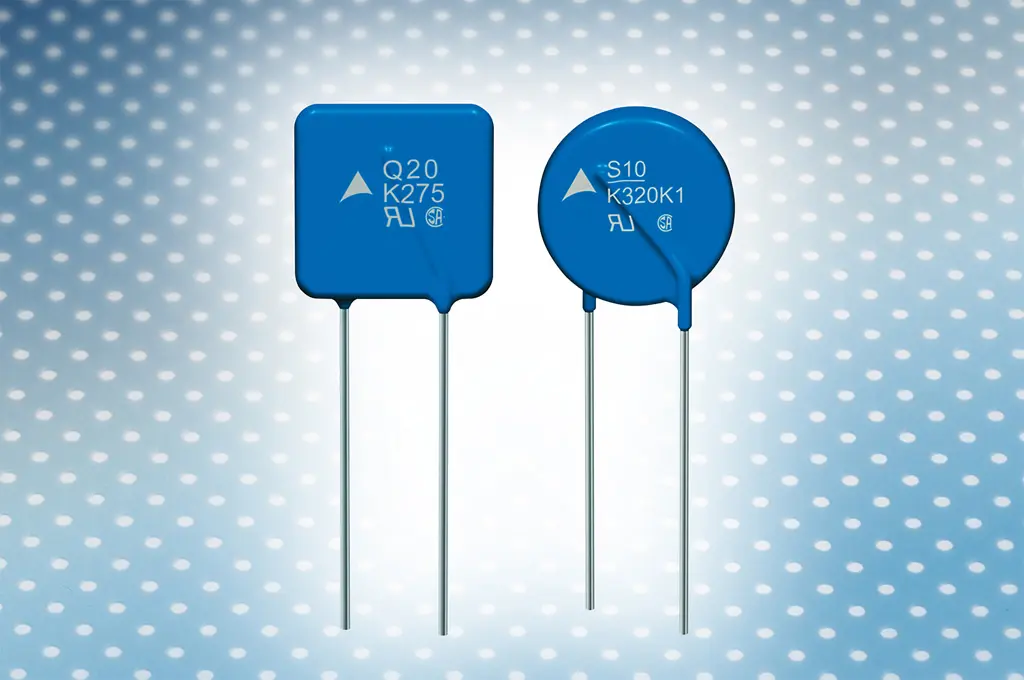
Varistors can be used as suppressors to protect devices and circuits from transient abnormal voltages including an ESD (electrostatic discharge) and a lightning surge.
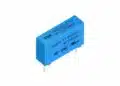
For protection from a relatively large surge current (100A to 25kA), leaded disk varistors and SMD disk varistors are suitable. For protection from a larger surge current (approximately 25kA or more), block varistors, and strap varistors are suitable.

RelatedPosts

Modelithics Library for MATLAB: Measurement-Based Models for Microwave and RF Passive Components

Bourns Extends Multilayer Chip Inductors Offer for RF and Wireless Designs

Penn State Demonstrated Polymer Alloy Capacitor Film with 4× Energy Density up to 250C

For industrial devices and energy apparatuses, disk varistors of which maximum allowable circuit voltage (rated voltage) and maximum peak current are large used.

●Leaded disk varistors
●ThermoFuse varistors
●SMD disk varistors
●Strap varistors
●Block varistors

Sample application: Surge protection for the input part of a switching power supply

Various types of small, lightweight, and high-efficiency switching power supplies are frequently used as power supplies of electronic devices. In a switching power supply, an EMC filter is placed before the power circuit to prevent conduction noise which enters through the power line. However, as a lightning surge and a switching surge cannot be prevented only with the EMC filter, a surge protection circuit using disk varistors is placed before the EMC filter. Combinations with surge arresters and other devices and their circuit configurations vary. Similar protection circuits are embedded in AC adapters that are used for laptop computers and the likes. Varistors are also used for power strips and wall outlets with a lightning protector.

Fig.1 Example of a surge protection circuit for a switching power supply

Sample application: Surge protection for a LED lighting system

An LED lighting system consists of LED arrays with multiple LEDs connected, a driver (driving circuit), a control circuit, and a LED power supply as well as sub systems including a power supply for communication. Many chip varistors are used for ESD and surge protection for the interface part and varistors are necessary for an ESD protection array. An LED is a device using a semiconductor, and without protection, it can be destroyed by ESD or surge. For the reason, a varistor is installed in parallel to an LED device.

Fig.2 Protection for an LED device in an LED lighting system

Sample application: Surge protection for inductive loads such as motors

At the moment of turning off the power of devices with inductive loads using coils such as motors, solenoids, and electromagnetic valves, the devices discharge magnetic energy that has been stored as counter electromotive force and generate a large surge voltage. To protect the devices from the surge voltage, a varistor is connected in parallel to a load.

Fig3. Surge protection for inductive loads such as motors

Sample application: Surge protection for a motor with an electromagnetic brake and protection for the contact of its switch

AC motors which are used for industrial devices include a motor with a brake. The electromagnetic brake using an electromagnet, an armature (movable steel plate), and a spring can stop the rotation of the motor immediately after turning off the switch. However, as the electromagnet is an inductive load using a coil, at the moment of shutting off the current, the coil generates counter electromotive force and a large surge voltage occurs, which damage the contact of the switch. To absorb the surge voltage and protect the contact of the switch, a varistor is connected.

Fig.4 Protection for the contact of the switch of a motor with an electromagnetic brake

Sample application: Surge protection for an SSR (solid-state relay) and protection for its output terminal

An SSR (solid-state relay) using a semiconductor element (such as a thyristor) is used for many industrial devices with a large current. It is a relay electrically insulated by a photocoupler, and as an advantage, it can control the on and off of a device safely by the on and off signals of very small electric current of a DC power supply. However, because a large current turns on and off, the output terminal is easily damaged by switching surge. To suppress this, a varistor is connected in parallel on the output side (Some SSRs have built-in varistors).

Fig. 5 Protection for the output terminal of an SSR (solid-state relay)

Sample application: Surge protection against load dump and field decay

When a current flowing an inductive load using a coil, such as a motor and an alternator (electric generator), is shut off, a large surge voltage is generated due to generation of counter electromotive force.

Load dump is a surge problem that occurs when a battery line is shut off for a reason such as disconnection of a battery terminal while power is supplied from an alternator to a battery. Field decay is a problem with a negative surge voltage, which is generated when the polarity of a battery is reversed by mistake.

As both of them may reach an ECU and cause a malfunction, ECUs must pass a load dump test and a field decay test. A disk varistor is used for surge protection.

Fig. 6 Load dump and surge protection by varistor
When power is supplied from an alternator to a battery, disconnection of a battery line generates a large surge voltage. The varistor bypasses the surge voltage to protect an ECU and others.

Immunity test and emission test for ECUs (ISO10605)

EMC evaluation tests for ECUs include an immunity test for confirming that an ECU does not malfunction and an emission test for confirming that an ECU is designed not to generate a noise larger than a limit.

Immunity test Standard Description
ESD test ISO10605 Evaluates its tolerance by applying an ESD
RF immunity test ISO11452-2, -3, -4 Evaluates its tolerance by applying a strong radio wave
Load dump test ISO7637-2 Evaluates its tolerance by applying a positive surge voltage
Field decay test Evaluates its tolerance by applying a negative surge voltage
Emission test Standard Description
Radiated emission test CISPR25 Evaluates radiation noise from an ECU
Conducted emission test Evaluates conduction noise from an ECU

Sample application: Surge protection for joint boxes and power conditioners of solar power generation systems

DC electricity generated by a solar panel is sent to the power conditioner via a joint box, boosted in a DC- DC converter, converted into AC electricity by an inverter, and then sent to a commercial power system. To protect its circuit from an inductive lightning surge and the likes, voltage protection circuits using varistors are inserted into the input and output parts of the joint box and the power conditioner. Combining with a surge arrester increases its reliability.

Fig.7 Surge protection for joint boxes and power conditioners of solar power generation systems

Sample application: Surge protection for important devices using a lightning transformer

A device called a lightning transformer is used to protect important devices such as servers in data centers and telephone switchboards from a lightning surge. It is a combination of an SPD (surge protection device or lightning protector) and a special transformer of which primary winding and secondary winding are electrostatic shielded, and a surge which cannot be removed by the SPD is bypassed through grounded electrostatic shield materials and discharged to the ground. It is excellently effective to a common-mode inductive lightning surge.

Fig.8 Example of lightning surge protection with a lightning transformer

Sample application: Protection against a high-energy surge in industrial devices

Block varistors and strap varistors are high-energy type products used for power supplies of industrial devices and communication devices, power switchboards at power plants and power substations, railway signal systems, and others, and their advantage is an extremely high surge current capability. A block varistor is contained in a case and has screw terminals, and a strap varistor has strap (flat plate) terminals with holes that are fixed with screws (or soldered). A surge arrester for AC power line protection is also used.

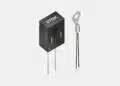
Fig. 9 Example of protection against a high-energy surge in an industrial device


Related

Recent Posts

Researchers developed a polymer capacitor by combining two cheap, commercially available plastics. The new polymer capacitor makes use of the transparent material — pictured here, with vintage Penn State athletic marks visible through it — to store four times the energy and withstand significantly more heat.  Credit: Penn State

Penn State Demonstrated Polymer Alloy Capacitor Film with 4× Energy Density up to 250C

19.2.2026
18

Vishay Unveils Ultra-Compact 0201 Thick Film Chip Resistors

19.2.2026
9

Würth Elektronik Component Data Live in Accuris

19.2.2026
14

Coilcraft Releases Automotive Common Mode Chokes

19.2.2026
10

YAGEO Extends Antenna Portfolio with Wi‑Fi 6E/7 and Tri‑band GNSS Solutions

17.2.2026
12

SCHURTER Introduces 2410 SMD Fuse for Robust AC/DC Protection

17.2.2026
11

TDK Releases High Temp 175C Automotive NTC thermistors

17.2.2026
10

2026 Power Magnetics Design Trends: Flyback, DAB and Planar

13.2.2026
46

Vishay Releases Sulfur‑Resistant Chip Resistors

12.2.2026
11

Upcoming Events

Feb 24
16:00 - 17:00 CET

Mastering Galvanic Isolation: Ensuring Safety in Power Electronics

Mar 3
16:00 - 17:00 CET

Cybersecurity at the Eleventh Hour – from RED to CRA – Information and Discussion

Mar 21
All day

PSMA Capacitor Workshop 2026

View Calendar

Popular Posts

  • Buck Converter Design and Calculation

    0 shares
    Share 0 Tweet 0
  • Boost Converter Design and Calculation

    0 shares
    Share 0 Tweet 0
  • LLC Resonant Converter Design and Calculation

    0 shares
    Share 0 Tweet 0
  • Flyback Converter Design and Calculation

    0 shares
    Share 0 Tweet 0
  • Ripple Current and its Effects on the Performance of Capacitors

    3 shares
    Share 3 Tweet 0
  • Dual Active Bridge (DAB) Topology

    0 shares
    Share 0 Tweet 0
  • What is a Dielectric Constant and DF of Plastic Materials?

    4 shares
    Share 4 Tweet 0
  • MLCC and Ceramic Capacitors

    0 shares
    Share 0 Tweet 0
  • 3-Phase EMI Filter Design, Simulation, Calculation and Test

    0 shares
    Share 0 Tweet 0
  • MLCC Case Sizes Standards Explained

    0 shares
    Share 0 Tweet 0

Newsletter Subscription


Passive Components Blog

© EPCI - Leading Passive Components Educational and Information Site

  • Home
  • Privacy Policy
  • EPCI Membership & Advertisement
  • About

No Result
View All Result
  • Home
  • Knowledge Blog
  • PCNS

© EPCI - Leading Passive Components Educational and Information Site

This website uses cookies. By continuing to use this website you are giving consent to cookies being used. Visit our Privacy and Cookie Policy.
Go to mobile version