
















Passive Components Blog
No Result
View All Result
  • Home
  • NewsFilter
    • All
    • Aerospace & Defence
    • Antenna
    • Applications
    • Automotive
    • Capacitors
    • Circuit Protection Devices
    • electro-mechanical news
    • Filters
    • Fuses
    • Inductors
    • Industrial
    • Integrated Passives
    • inter-connect news
    • Market & Supply Chain
    • Market Insights
    • Medical
    • Modelling and Simulation
    • New Materials & Supply
    • New Technologies
    • Non-linear Passives
    • Oscillators
    • Passive Sensors News
    • Resistors
    • RF & Microwave
    • Telecommunication
    • Weekly Digest

    Miniaturization of Tantalum Capacitors: Structural Limit Under Constant Rating

    Heatsink Design and Thermal Interface Materials for Reliable Electronics

    Murata New MLCC Bulk Case Packaging Cuts Packaging Material by 99%

    Wk 17 Electronics Supply Chain Digest

    Exxelia Introduces SMD High‑Voltage Mica Capacitors

    Modelithics Releases COMPLETE v26.1 for Keysight ADS

    April 2026 Interconnect, Passives and Electromechanical Components Market Insights

    SPICE Simulation of Non-Linear Resistors: Vishay’s Thermistor and PPTC Modelling Ecosystem

    KYOCERA AVX Introduces Traction‑Grade DC Link Film Capacitors

    Trending Tags

    • Ripple Current
    • RF
    • Leakage Current
    • Tantalum vs Ceramic
    • Snubber
    • Low ESR
    • Feedthrough
    • Derating
    • Dielectric Constant
    • New Products
    • Market Reports
  • VideoFilter
    • All
    • Antenna videos
    • Capacitor videos
    • Circuit Protection Video
    • Filter videos
    • Fuse videos
    • Inductor videos
    • Inter-Connect Video
    • Non-linear passives videos
    • Oscillator videos
    • Passive sensors videos
    • Resistor videos

    Why Power Inductors Use a Ferrite Core With an Air Gap

    Transformer-Based Power-Line Harvester Magnetic Design

    Thermal Modeling of Magnetics

    Standard vs Planar LLC transformers Comparison for Battery Chargers

    How Modern Tools Model Magnetic Components for Power Electronics

    Advanced Loss Modeling for Planar Magnetics in the Frenetic Planar Tool

    2026 Power Magnetics Design Trends: Flyback, DAB and Planar

    Enabling Software‑Defined Vehicle Architectures: Automotive Ethernet and Zonal Smart Power

    Calculating Resistance Value of a Flyback RC Snubber 

    Trending Tags

    • Capacitors explained
    • Inductors explained
    • Resistors explained
    • Filters explained
    • Application Video Guidelines
    • EMC
    • New Products
    • Ripple Current
    • Simulation
    • Tantalum vs Ceramic
  • Knowledge Blog
  • DossiersNew
  • Suppliers
    • Who is Who
  • PCNS
    • PCNS 2025
    • PCNS 2023
    • PCNS 2021
    • PCNS 2019
    • PCNS 2017
  • Events
  • Home
  • NewsFilter
    • All
    • Aerospace & Defence
    • Antenna
    • Applications
    • Automotive
    • Capacitors
    • Circuit Protection Devices
    • electro-mechanical news
    • Filters
    • Fuses
    • Inductors
    • Industrial
    • Integrated Passives
    • inter-connect news
    • Market & Supply Chain
    • Market Insights
    • Medical
    • Modelling and Simulation
    • New Materials & Supply
    • New Technologies
    • Non-linear Passives
    • Oscillators
    • Passive Sensors News
    • Resistors
    • RF & Microwave
    • Telecommunication
    • Weekly Digest

    Miniaturization of Tantalum Capacitors: Structural Limit Under Constant Rating

    Heatsink Design and Thermal Interface Materials for Reliable Electronics

    Murata New MLCC Bulk Case Packaging Cuts Packaging Material by 99%

    Wk 17 Electronics Supply Chain Digest

    Exxelia Introduces SMD High‑Voltage Mica Capacitors

    Modelithics Releases COMPLETE v26.1 for Keysight ADS

    April 2026 Interconnect, Passives and Electromechanical Components Market Insights

    SPICE Simulation of Non-Linear Resistors: Vishay’s Thermistor and PPTC Modelling Ecosystem

    KYOCERA AVX Introduces Traction‑Grade DC Link Film Capacitors

    Trending Tags

    • Ripple Current
    • RF
    • Leakage Current
    • Tantalum vs Ceramic
    • Snubber
    • Low ESR
    • Feedthrough
    • Derating
    • Dielectric Constant
    • New Products
    • Market Reports
  • VideoFilter
    • All
    • Antenna videos
    • Capacitor videos
    • Circuit Protection Video
    • Filter videos
    • Fuse videos
    • Inductor videos
    • Inter-Connect Video
    • Non-linear passives videos
    • Oscillator videos
    • Passive sensors videos
    • Resistor videos

    Why Power Inductors Use a Ferrite Core With an Air Gap

    Transformer-Based Power-Line Harvester Magnetic Design

    Thermal Modeling of Magnetics

    Standard vs Planar LLC transformers Comparison for Battery Chargers

    How Modern Tools Model Magnetic Components for Power Electronics

    Advanced Loss Modeling for Planar Magnetics in the Frenetic Planar Tool

    2026 Power Magnetics Design Trends: Flyback, DAB and Planar

    Enabling Software‑Defined Vehicle Architectures: Automotive Ethernet and Zonal Smart Power

    Calculating Resistance Value of a Flyback RC Snubber 

    Trending Tags

    • Capacitors explained
    • Inductors explained
    • Resistors explained
    • Filters explained
    • Application Video Guidelines
    • EMC
    • New Products
    • Ripple Current
    • Simulation
    • Tantalum vs Ceramic
  • Knowledge Blog
  • DossiersNew
  • Suppliers
    • Who is Who
  • PCNS
    • PCNS 2025
    • PCNS 2023
    • PCNS 2021
    • PCNS 2019
    • PCNS 2017
  • Events
No Result
View All Result
Passive Components Blog
No Result
View All Result

Inkjet-based fabrication of multilayer printed circuit boards with embedded printed passive elements

10.12.2019
Reading Time: 4 mins read
A A

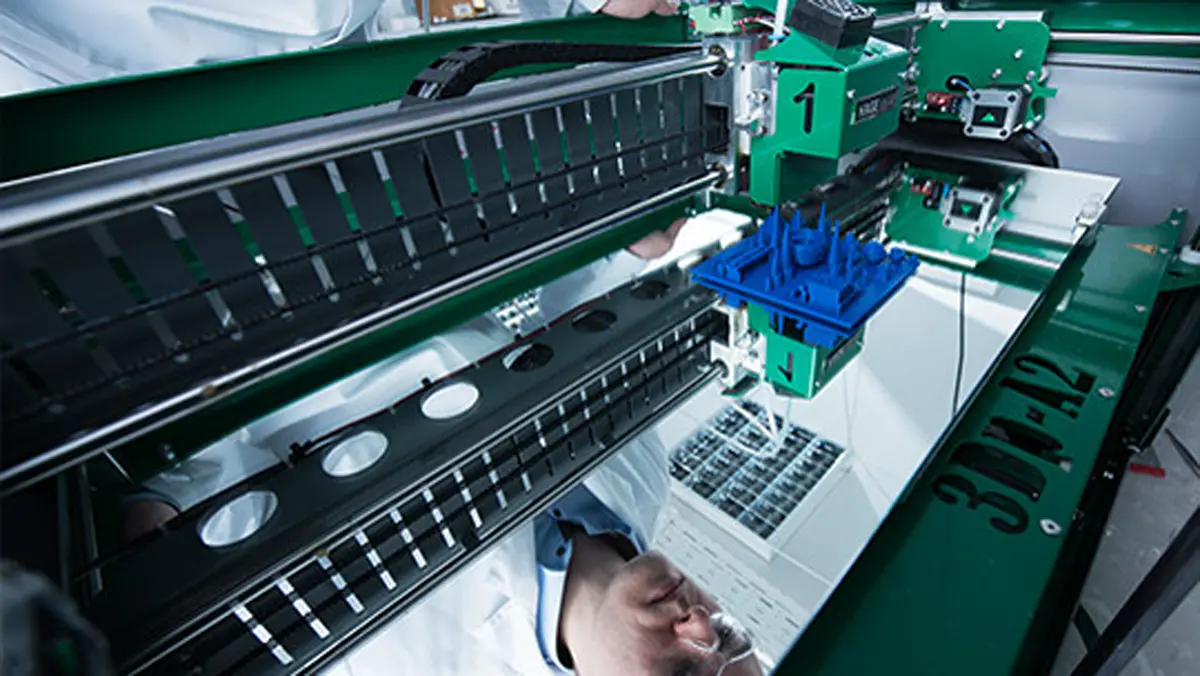
The project inkjetPCB has been recently publicly granted in the Eurostars program and started on the 1st of November 2019. Main scope of this project is to develop fully inkjet printed multi-layer Printed Circuit Boards (PCBs) including embedded passive components as a commercially viable process.

As outcome of this collaborative innovation project, the consortium partners plan to deliver to their customers a “Complete Solution” for the digital additive manufacturing of PCBs including materials, equipment and process guidelines.

RelatedPosts

Miniaturization of Tantalum Capacitors: Structural Limit Under Constant Rating

Heatsink Design and Thermal Interface Materials for Reliable Electronics

Murata New MLCC Bulk Case Packaging Cuts Packaging Material by 99%

An increasing demand for alternative processes is present in the PCB manufacturing industry. Considering photolithography as main alternative solution, inkjetPCB will be: innovative, cheaper, simpler, greener, stronger and closer to the market. Compared with photolithography, inkjetPCB technology has a clear economic advantage with the potential to cut PCB prices of more than 50%. Moreover, PCB manufacturing by inkjet printing will open new possibilities for this well-established market.

Partners of the project are the ink suppliers P.V. Nano Cell Ltd. and Tiger Coatings GmbH, the printer manufacturer Notion Systems GmbH, and the PCB manufacturer Fela GmbH. Profactor GmbH and SCIO Holding GmbH are research partners.

Preliminary results, arising from previous projects like DIMAP (www.dimap-project.eu) or Re-Fream (www.re-fream.eu), clearly show our advancement in the field and our capability to create, together with our partners, a commercially viable solution for 3D printed electronics.

program: https://www.3dprintingelectronicsconference.com/program/

Interview

What drives you?
I am motivated by challenging ideas which could disrupt electronic manufacturing.

Why should the delegate attend your presentation?
To learn about our latest results in the field of 2D and 3D inkjet printed electronics and to be informed about our planned innovation project “inkjetPCB”.

What emerging technologies/trends do you see as having the greatest potential in the short and long run?
Digital printing direct-to-shape seems one of the most promising ideas which is lately trending in the field: directly printing on 3D objects manufactured using dissimilar technologies (e.g. 3D printing, injection molding, forming, etc.).

What kind of impact do you expect them to have?
A whole new range of functionalities could be given to any object. Moreover the biggest impact is represented by the compatibility and scalability of the process from prototyping to mass production.

What are the barriers that might stand in the way?
Additional efforts are needed to overcome material and process related barriers for manufacturability. Materials need to be processable but also posses high performance. Processes need to be more flexible and easily scalable.

In addition to this technical barrier, it is difficult to convince potential customers to implement a new manufacturing process that make use of technologies in which they do not have experience (inkjet, additive manufacturing, curing, sintering, etc.).

A lack of customer belief represents a barrier to the growth of this new market. Customers do not want to take on a disruptive technology until they can see that it works.

At the same time, it is difficult to prove that it works, in terms of robustness and reliability in volume, until a customer has taken it on. This vicious circle might be creating a barrier for the business development.

“Special quote”
3D Printed Electronics is the next stage in the evolution of electronics.

About Vito Matteo Di Pietro

Vito Matteo Di Pietro is a Research Engineer at Profactor GmbH working in the field of additive manufacturing. He received his MSc and BSc in Electronics Engineering from Politecnico di Torino, Italy with a specialization in Micro and Nano Systems.

In 2015 he started his career in Infineon Technologies Austria AG, working at the development of inkjet printing processes for semiconductor manufacturing. From 2017 he works as Research Engineer and Project Manager at Profactor GmbH where he currently design and lead research projects for the development of innovative manufacturing process.

About Profactor GmbH

PROFACTOR conducts applied production research with two focuses: Systems for industrial assistance and additive micro/nano manufacturing. We develop systems that combine man and machine, intelligence and processing power, human expertise and machine power.

PROFACTOR has years of experience in process development and in understanding materials and their printability using Nanoimprint Lithography and Inkjet Printing. Functionalization of freeform surfaces as key for new products.

featured image: Profactor

Related

Source: 3dprintingelectronicsconference.com

Recent Posts

April 2026 Interconnect, Passives and Electromechanical Components Market Insights

22.4.2026
48

Würth Elektronik Expanded Capacity for Validation and Services in Asia

16.4.2026
17

YAGEO Q1 2026 Results: AI Servers and Pricing Power Behind a Moderate Q2 Outlook

16.4.2026
74

ECIA March 2026 Industry Pulse Points to Best Sales Climate in Five Years

13.4.2026
54

TDK and Nippon Chemical Launch Joint Venture for MLCC Materials

7.4.2026
52

March 2026 Interconnect, Passives and Electromechanical Components Market Insights

2.4.2026
116

Molex Completes Acquisition of Smiths Interconnect, Expanding Portfolio of High-Reliability Connectivity Solutions

1.4.2026
16

APEC 2026 Power Electronics Trends and Implications for Passive Components

1.4.2026
140

Würth Elektronik ICS to Acquire MRS Electronic and Expand Vehicle Electronics Portfolio

31.3.2026
30

Upcoming Events

Apr 27
15:00 - 16:00 CEST

Commercial Space Screening Approach for Agile, High-Reliability Payloads

Apr 29
10:00 - 11:00 CDT

SEPIC Design Done Right

Apr 30
10:00 - 11:00 CDT

Programming Embedded Systems

View Calendar

Popular Posts

  • Buck Converter Design and Calculation

    0 shares
    Share 0 Tweet 0
  • Boost Converter Design and Calculation

    0 shares
    Share 0 Tweet 0
  • Flyback Converter Design and Calculation

    0 shares
    Share 0 Tweet 0
  • LLC Resonant Converter Design and Calculation

    0 shares
    Share 0 Tweet 0
  • MLCC and Ceramic Capacitors

    0 shares
    Share 0 Tweet 0
  • Dual Active Bridge (DAB) Topology

    0 shares
    Share 0 Tweet 0
  • Capacitor Charging and Discharging

    0 shares
    Share 0 Tweet 0
  • What Electronics Engineer Needs to Know About Passive Low Pass Filters

    0 shares
    Share 0 Tweet 0
  • Ripple Current and its Effects on the Performance of Capacitors

    3 shares
    Share 3 Tweet 0
  • MLCC Case Sizes Standards Explained

    0 shares
    Share 0 Tweet 0

Newsletter Subscription


Passive Components Blog

© EPCI - Leading Passive Components Educational and Information Site

  • Home
  • Privacy Policy
  • EPCI Membership & Advertisement
  • About

No Result
View All Result
  • Home
  • Knowledge Blog
  • PCNS

© EPCI - Leading Passive Components Educational and Information Site

This website uses cookies. By continuing to use this website you are giving consent to cookies being used. Visit our Privacy and Cookie Policy.
Go to mobile version