






Passive Components Blog
No Result
View All Result
  • Home
  • NewsFilter
    • All
    • Aerospace & Defence
    • Antenna
    • Applications
    • Automotive
    • Capacitors
    • Circuit Protection Devices
    • electro-mechanical news
    • Filters
    • Fuses
    • Inductors
    • Industrial
    • Integrated Passives
    • inter-connect news
    • Market & Supply Chain
    • Market Insights
    • Medical
    • Modelling and Simulation
    • New Materials & Supply
    • New Technologies
    • Non-linear Passives
    • Oscillators
    • Passive Sensors News
    • Resistors
    • RF & Microwave
    • Telecommunication
    • Weekly Digest

    Miniaturization of Tantalum Capacitors: Structural Limit Under Constant Rating

    Heatsink Design and Thermal Interface Materials for Reliable Electronics

    Murata New MLCC Bulk Case Packaging Cuts Packaging Material by 99%

    Wk 17 Electronics Supply Chain Digest

    Exxelia Introduces SMD High‑Voltage Mica Capacitors

    Modelithics Releases COMPLETE v26.1 for Keysight ADS

    April 2026 Interconnect, Passives and Electromechanical Components Market Insights

    SPICE Simulation of Non-Linear Resistors: Vishay’s Thermistor and PPTC Modelling Ecosystem

    KYOCERA AVX Introduces Traction‑Grade DC Link Film Capacitors

    Trending Tags

    • Ripple Current
    • RF
    • Leakage Current
    • Tantalum vs Ceramic
    • Snubber
    • Low ESR
    • Feedthrough
    • Derating
    • Dielectric Constant
    • New Products
    • Market Reports
  • VideoFilter
    • All
    • Antenna videos
    • Capacitor videos
    • Circuit Protection Video
    • Filter videos
    • Fuse videos
    • Inductor videos
    • Inter-Connect Video
    • Non-linear passives videos
    • Oscillator videos
    • Passive sensors videos
    • Resistor videos

    Why Power Inductors Use a Ferrite Core With an Air Gap

    Transformer-Based Power-Line Harvester Magnetic Design

    Thermal Modeling of Magnetics

    Standard vs Planar LLC transformers Comparison for Battery Chargers

    How Modern Tools Model Magnetic Components for Power Electronics

    Advanced Loss Modeling for Planar Magnetics in the Frenetic Planar Tool

    2026 Power Magnetics Design Trends: Flyback, DAB and Planar

    Enabling Software‑Defined Vehicle Architectures: Automotive Ethernet and Zonal Smart Power

    Calculating Resistance Value of a Flyback RC Snubber 

    Trending Tags

    • Capacitors explained
    • Inductors explained
    • Resistors explained
    • Filters explained
    • Application Video Guidelines
    • EMC
    • New Products
    • Ripple Current
    • Simulation
    • Tantalum vs Ceramic
  • Knowledge Blog
  • DossiersNew
  • Suppliers
    • Who is Who
  • PCNS
    • PCNS 2025
    • PCNS 2023
    • PCNS 2021
    • PCNS 2019
    • PCNS 2017
  • Events
  • Home
  • NewsFilter
    • All
    • Aerospace & Defence
    • Antenna
    • Applications
    • Automotive
    • Capacitors
    • Circuit Protection Devices
    • electro-mechanical news
    • Filters
    • Fuses
    • Inductors
    • Industrial
    • Integrated Passives
    • inter-connect news
    • Market & Supply Chain
    • Market Insights
    • Medical
    • Modelling and Simulation
    • New Materials & Supply
    • New Technologies
    • Non-linear Passives
    • Oscillators
    • Passive Sensors News
    • Resistors
    • RF & Microwave
    • Telecommunication
    • Weekly Digest

    Miniaturization of Tantalum Capacitors: Structural Limit Under Constant Rating

    Heatsink Design and Thermal Interface Materials for Reliable Electronics

    Murata New MLCC Bulk Case Packaging Cuts Packaging Material by 99%

    Wk 17 Electronics Supply Chain Digest

    Exxelia Introduces SMD High‑Voltage Mica Capacitors

    Modelithics Releases COMPLETE v26.1 for Keysight ADS

    April 2026 Interconnect, Passives and Electromechanical Components Market Insights

    SPICE Simulation of Non-Linear Resistors: Vishay’s Thermistor and PPTC Modelling Ecosystem

    KYOCERA AVX Introduces Traction‑Grade DC Link Film Capacitors

    Trending Tags

    • Ripple Current
    • RF
    • Leakage Current
    • Tantalum vs Ceramic
    • Snubber
    • Low ESR
    • Feedthrough
    • Derating
    • Dielectric Constant
    • New Products
    • Market Reports
  • VideoFilter
    • All
    • Antenna videos
    • Capacitor videos
    • Circuit Protection Video
    • Filter videos
    • Fuse videos
    • Inductor videos
    • Inter-Connect Video
    • Non-linear passives videos
    • Oscillator videos
    • Passive sensors videos
    • Resistor videos

    Why Power Inductors Use a Ferrite Core With an Air Gap

    Transformer-Based Power-Line Harvester Magnetic Design

    Thermal Modeling of Magnetics

    Standard vs Planar LLC transformers Comparison for Battery Chargers

    How Modern Tools Model Magnetic Components for Power Electronics

    Advanced Loss Modeling for Planar Magnetics in the Frenetic Planar Tool

    2026 Power Magnetics Design Trends: Flyback, DAB and Planar

    Enabling Software‑Defined Vehicle Architectures: Automotive Ethernet and Zonal Smart Power

    Calculating Resistance Value of a Flyback RC Snubber 

    Trending Tags

    • Capacitors explained
    • Inductors explained
    • Resistors explained
    • Filters explained
    • Application Video Guidelines
    • EMC
    • New Products
    • Ripple Current
    • Simulation
    • Tantalum vs Ceramic
  • Knowledge Blog
  • DossiersNew
  • Suppliers
    • Who is Who
  • PCNS
    • PCNS 2025
    • PCNS 2023
    • PCNS 2021
    • PCNS 2019
    • PCNS 2017
  • Events
No Result
View All Result
Passive Components Blog
No Result
View All Result

Murata New MLCC Bulk Case Packaging Cuts Packaging Material by 99%

27.4.2026
Reading Time: 6 mins read
A A

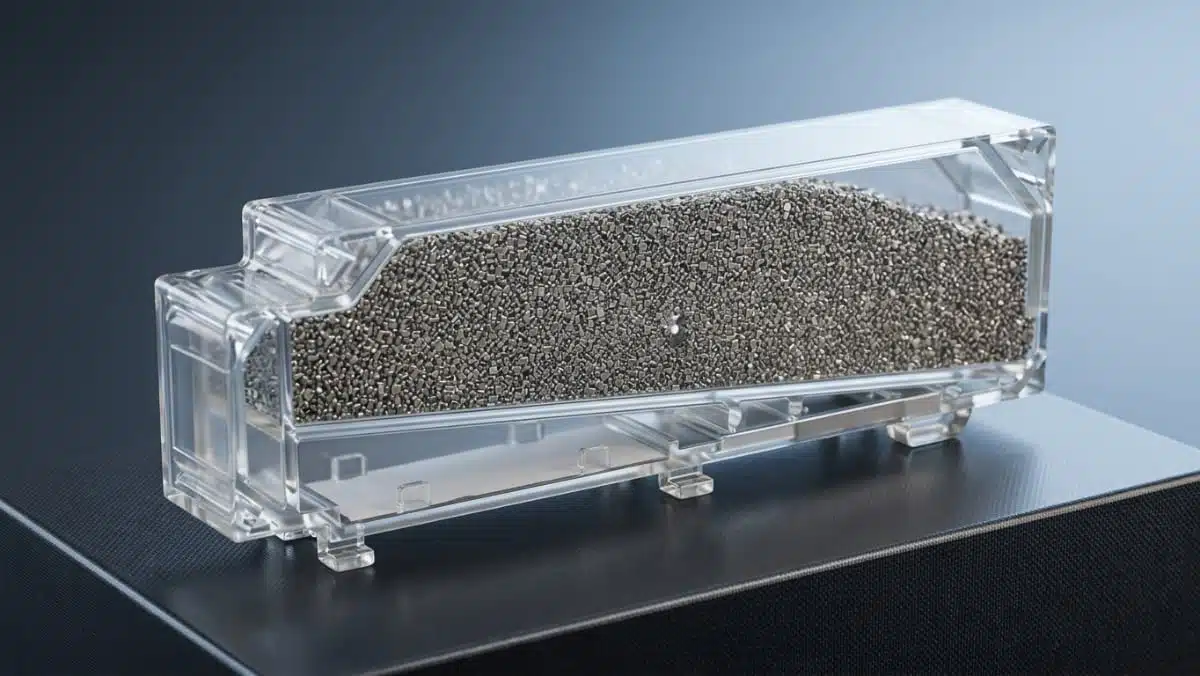
Murata has introduced a new bulk case packaging format for ultra‑small multilayer ceramic capacitors (MLCCs) that dramatically reduces packaging material while increasing packing density in SMT production.

The Murata concept targets both environmental impact and factory productivity, especially for high‑volume lines using 01005‑inch and 0201‑inch MLCC ceramic capacitors.

RelatedPosts

Murata Automotive MLCCs Push Capacitance Limits for ADAS and Power Lines

Murata to Decouple China Rare Earth Supply in 3 Years

Murata New Vibration Sensor Targets High‑Frequency Predictive Maintenance

Key features and benefits

Bulk case concept

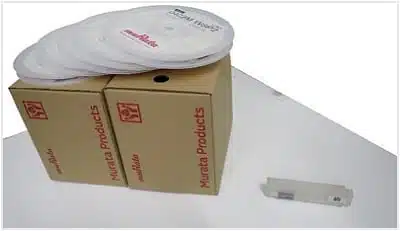
  • New dedicated case that holds loose MLCCs which are then fed to the placement machine via a bulk feeder instead of conventional tape‑and‑reel.
  • Specifically released for ultra‑small MLCC sizes 01005‑inch (0.4 mm × 0.2 mm) and 0201‑inch (0.6 mm × 0.3 mm).
  • Designed as an additional packaging option alongside traditional taping, not a full replacement.

Environmental and logistics benefits

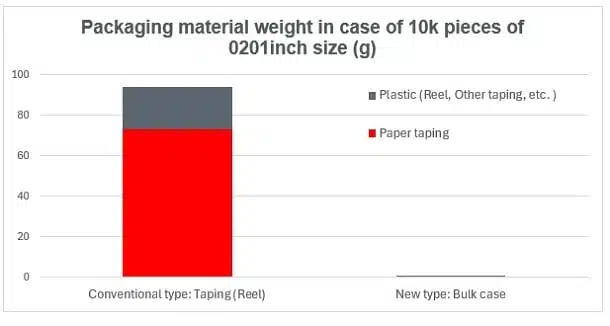
  • Up to approximately 99% reduction in packaging material weight compared to Murata’s conventional taping when packing 10,000 pieces of 0201‑inch MLCCs.
  • Significant decrease in plastic and paper consumption, helping OEMs and EMS providers address internal sustainability targets and regulatory pressure.
  • Reduced greenhouse gas emissions associated with manufacturing, transporting, and disposing of reels and other packaging materials.
  • Lower exposure to waste‑related compliance costs such as disposal taxes, incineration fees, and potential carbon‑linked charges.

Factory productivity and handling

  • For 01005‑inch MLCCs, each bulk case can hold 500,000 components versus 20,000 components per tape reel, consolidating the equivalent of 25 reels into one case.
  • For 0201‑inch MLCCs, each bulk case holds 150,000 components, approximately 10 times the capacity of conventional packaging.
  • Fewer changeovers and material replenishments on high‑speed lines, which can reduce downtime and operator workload.
  • Reduced storage volume for the same component count, simplifying warehousing and material handling.
  • Fewer internal transport operations within the plant thanks to higher packing density.

Typical applications

The bulk case packaging does not change the electrical characteristics or qualification status of the MLCCs themselves; it changes how they are supplied to manufacturing. Relevant use cases are driven by volume, size, and automation level.

Where this packaging is most attractive

  • High‑volume consumer electronics production using 01005 and 0201 capacitors (smartphones, wearables, tablets, compact IoT nodes).
  • Dense automotive ECUs and ADAS modules where ultra‑small MLCCs are used to save PCB area and weight, and where large reels of tiny parts complicate logistics.
  • Network and telecom equipment with very high MLCC counts per board where feeding stability and replenishment frequency are critical.
  • Industrial and medical electronics with stringent sustainability targets, where a quantifiable reduction in packaging waste supports ESG reporting.

When to consider staying with tape‑and‑reel

  • Low‑ to medium‑volume builds where the complexity of adding bulk feeders may not be justified.
  • Lines without access to bulk‑compatible feeders or where SMT platforms are locked to tape‑and‑reel only.
  • Product series and processes where Murata indicates that bulk case is not yet qualified or released for mass use; this must be confirmed series by series.

Technical highlights

Supported MLCC sizes and capacities

MLCC case sizeApprox. metric size (mm)Units per bulk caseRelative to tape‑and‑reel capacity
01005‑inch0.4 × 0.2500,000~25× a 20,000‑piece reel
0201‑inch0.6 × 0.3150,000~10× typical reel capacity
  • Packaging is currently released only for selected Murata MLCC series in the above sizes; suitability depends on series, detailed specs, and production process.
  • Component unit pricing remains unchanged compared to the same parts in conventional packaging, simplifying cost comparison.
Standardization and interoperability

  • The bulk case format is part of a broader industry effort under the Japan Electronics and Information Technology Industries Association (JEITA) to define standards for ultra‑small SMD bulk packaging.
  • The specification has been published as IEC TS 60286‑6‑1, providing an international technical reference for mechanical dimensions and interface conditions.
  • Murata intends to offer a royalty‑free license for the standardized specifications, encouraging broader ecosystem support among feeder and equipment vendors.
Equipment ecosystem

  • Use of the bulk case requires a bulk‑case‑compatible feeder on the surface‑mount line.
  • The feeder is responsible for singulating and orienting individual MLCCs from the case and delivering them to the pick‑up position with sufficient stability for high‑speed placement.
  • Murata explicitly advises contacting mounting equipment manufacturers for details on feeder availability, interface options, and performance data.

Source

This article is based on information provided in a Murata Manufacturing Co., Ltd. press release describing the introduction of a bulk case packaging format for ultra‑small MLCCs and related standardization activities, supplemented by the manufacturer’s publicly available corporate information and standards references.

References

  1. Murata press release: Bulk case MLCC packaging
  2. Murata corporate website
  3. Murata product and technology portal

Related

Recent Posts

Miniaturization of Tantalum Capacitors: Structural Limit Under Constant Rating

27.4.2026
1

Heatsink Design and Thermal Interface Materials for Reliable Electronics

27.4.2026
1

Exxelia Introduces SMD High‑Voltage Mica Capacitors

27.4.2026
3

Modelithics Releases COMPLETE v26.1 for Keysight ADS

23.4.2026
11

April 2026 Interconnect, Passives and Electromechanical Components Market Insights

22.4.2026
46

KYOCERA AVX Introduces Traction‑Grade DC Link Film Capacitors

21.4.2026
40

When More Capacitance Hurts Reliability: The Role of the Metallic Skeleton in Tantalum Anodes

20.4.2026
40

Why Power Inductors Use a Ferrite Core With an Air Gap

20.4.2026
44

YAGEO Introduces High‑Current Y2/X1 Film Capacitors for Wide-bandgap Power Systems

17.4.2026
32

Upcoming Events

Apr 27
15:00 - 16:00 CEST

Commercial Space Screening Approach for Agile, High-Reliability Payloads

Apr 29
10:00 - 11:00 CDT

SEPIC Design Done Right

Apr 30
10:00 - 11:00 CDT

Programming Embedded Systems

View Calendar

Popular Posts

  • Buck Converter Design and Calculation

    0 shares
    Share 0 Tweet 0
  • Boost Converter Design and Calculation

    0 shares
    Share 0 Tweet 0
  • Flyback Converter Design and Calculation

    0 shares
    Share 0 Tweet 0
  • LLC Resonant Converter Design and Calculation

    0 shares
    Share 0 Tweet 0
  • MLCC and Ceramic Capacitors

    0 shares
    Share 0 Tweet 0
  • Dual Active Bridge (DAB) Topology

    0 shares
    Share 0 Tweet 0
  • Capacitor Charging and Discharging

    0 shares
    Share 0 Tweet 0
  • What Electronics Engineer Needs to Know About Passive Low Pass Filters

    0 shares
    Share 0 Tweet 0
  • Ripple Current and its Effects on the Performance of Capacitors

    3 shares
    Share 3 Tweet 0
  • MLCC Case Sizes Standards Explained

    0 shares
    Share 0 Tweet 0

Newsletter Subscription


Passive Components Blog

© EPCI - Leading Passive Components Educational and Information Site

  • Home
  • Privacy Policy
  • EPCI Membership & Advertisement
  • About

No Result
View All Result
  • Home
  • Knowledge Blog
  • PCNS

© EPCI - Leading Passive Components Educational and Information Site

This website uses cookies. By continuing to use this website you are giving consent to cookies being used. Visit our Privacy and Cookie Policy.
Go to mobile version