





Passive Components Blog
No Result
View All Result
  • Home
  • News
    • All
    • Aerospace & Defence
    • Antenna
    • Applications
    • Automotive
    • Capacitors
    • Circuit Protection Devices
    • electro-mechanical news
    • Filters
    • Fuses
    • Inductors
    • Industrial
    • Integrated Passives
    • inter-connect news
    • Market & Supply Chain
    • Market Insights
    • Medical
    • Modelling and Simulation
    • New Materials & Supply
    • New Technologies
    • Non-linear Passives
    • Optoelectronics and Isolation
    • Oscillators
    • Passive Sensors News
    • Resistors
    • RF & Microwave
    • Telecommunication
    • Weekly Digest
    Power line EMI filter on a copper ground-plane fixture connected to a vector network analyzer with a toroidal balun

    How to Measure Filter Performance: Insertion Loss, VNA Fixtures and CM/DM Separation

    Assorted EMI and RF filter components: common mode choke, ferrite beads, feedthrough filter, X2 capacitor, cavity filter, ceramic coaxial resonators, thin-film filter and SAW/BAW packages

    Passive Filter Technologies Compared: LC, Ferrite, Feedthrough, Ceramic, Cavity, Microstrip, SAW and BAW

    Illustration of a thin-film capacitor stack with TiN electrodes and an ultrathin hafnium zirconium oxide ferroelectric layer on silicon

    Sub-Volt Ferroelectric HZO Capacitor Pairs Speed and Endurance

    Cut-open lithium-ion capacitor pouch cell showing stacked carbon electrodes and separators, with vials of carbon powder

    Lithium-Ion Capacitor Review Backs Hard Carbon//AC Pairing

    Rack power shelf in an AI data center with film DC-link capacitors, a supercapacitor bank and a converter board

    800 VDC AI Data Centers Reshape Capacitor Demand for 2027

    Schematic of a titanium nitride thin-film inductor within a CMOS poly-resistor stack beside its integrated resonator circuit.

    TiN Superinductors Bring Compact Cryogenic Inductance to CMOS

    Close-up of reddish-brown metallic rocks illustrating TTI MarketEYE’s connector raw material cost analysis

    Connector Raw Material Costs Rise 20.9% in Q2 2026

    AI and Passive Components: Structural Growth Beyond Data Centers

    YAGEO PMT6397 push-pull transformer with a segmented toroidal winding and surface-mount terminals

    YAGEO Releases Push-Pull Transformers for Isolated 3 W Supplies

    Trending Tags

    • Ripple Current
    • RF
    • Leakage Current
    • Tantalum vs Ceramic
    • Snubber
    • Low ESR
    • Feedthrough
    • Derating
    • Dielectric Constant
    • New Products
    • Market Reports
  • Knowledge Blog
  • Dossiers
    • Aerospace and Defense Passive Components Dossier
    • AI Hardware Dossier
    • Automotive Dossier
    • Industrial Robotics Dossier
    • Power Converter Dossier
    • Capacitor Dossier
    • Circuit Protection Dossier
    • Inductor Dossier
    • Resistor Dossier
    • Silicon Capacitors and Integrated Passives Dossier
  • Suppliers
    • Who is Who
  • PCNS
    • PCNS 2025
    • PCNS 2023
    • PCNS 2021
    • PCNS 2019
    • PCNS 2017
  • Events
No Result
View All Result
Passive Components Blog
No Result
View All Result

Lelon Electronics Expands in Thailand and China Plants In Response to Geopolitical Needs

13.9.2024
Reading Time: 4 mins read
A A

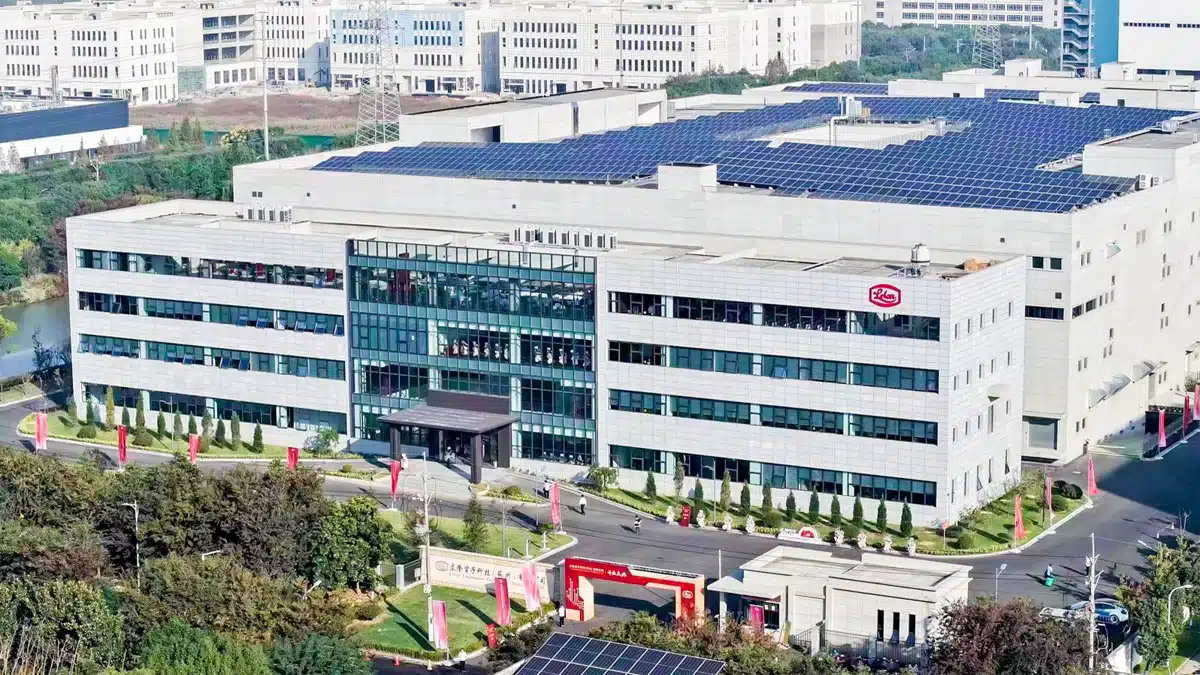
Lelon, the world’s top ten aluminum capacitor maker, recently embarked on constructing state-of-the-art production plants in Suzhou, China, and Thailand to satisfy the demand for automotive, high-performance computing, and other applications.

The current expansion strategy will give Lelon more agility and flexibility in its business operations, enhancing its adaptability in response to recent changes in global politics and economics.

RelatedPosts

Lelon Ramping Up Capacity to Meet Demand in 2021

Lelon Electronics Accelerates Development in Telecom, Automotive and Medical Fields in Wake of Pandemic

Investment in New Thai and Suzhou Plants In Response to Geopolitical Needs

Lelon Electronics Chairman Jimmy Wu stated that external factors such as COVID-19 and China-US tensions as well as the outbreak of the Russian-Ukrainian War have changed global politics and economics in substantial ways. The old globalized operating model can no longer be depended upon so many international customers are now pushing for their upstream supply chain to adopt a “China + 1” strategy. Consequently, it is imperative for upstream component sources not only to possess mass production capacity based in China but also to establish supply chains in other countries, mitigating operational risks from geopolitics. For this reason, Lelon Electronics has chosen to invest in a new plant in Thailand.

In China, Lelon has a well-established and strategically positioned plant in Suzhou’s Wujiang City. The successful development of the high-end market segment and the master development plan outlined by the local government prompted Lelon to make the decision, in 2018, to build a new plant in Wujiang City that would serve as the company’s headquarters in China. The new plant has cutting-edge automotive capacitor production machinery and an automotive reliability lab. The plant is targeted at local automotive, industrial, transportation, and other applications in China.

Will the successive construction of new plants in Suzhou and Thailand run the risk of over-production? Wu believes that, despite the growing number of countervailing factors in the current Chinese market, there is still room for further growth. In the past, Chinese customers tended to turn to European/US/Japanese suppliers in many premium application segments. However, Lelon’s existing plant in Suzhou does give it a home advantage. Furthermore, continued improvements in product quality have led to a positive reception of Lelon’s high-end products by customers. The current economic climate is still characterized by numerous variables but the outlook on automotive electronics remains positive.

According to Wu, the new Thai plant will feature a full array of production lines. Construction will start in 2024 and the production lines will start coming online from 2025 Q3 onwards. Due to growing environmental and sustainability awareness in recent years, important concepts such as renewable energy, water management, smart manufacturing, and digital management will all be progressively introduced to the new plants. This approach aims to ensure that Lelon can shoulder its social responsibility for local ecology, carbon inventory, and other issues.

Growing Demand for Electric Vehicles Drives Expansion into Charging Sector

Lelon has already established a close working relationship with the local automotive supply chain in China, but its involvement extends beyond the surface. Wu revealed that Lelon’s aluminum capacitor products have already entered the supply chain of tier-1 international automotive suppliers. Lelon now participates in the design-in process of customers during product development. An in-depth understanding of customer expectations allows Lelon to provide the customer with refined aluminum capacitor solutions. Lelon’s 2022 financial report indicated that automotive electronics accounted for up to 22.8%, followed by power supply/green energy at 13.9%, then telecommunications and network communications at 11.5%. Wu suggested that automotive use would exceed 30% this year, underscoring the sector’s critical importance to Lelon.

This significance prompted the planning of the two all-new plants in Suzhou, China, and Thailand will follow the planning approach for professional aluminum capacitor plants. The plants will not only have more production lines but also all the testing equipment required by the automotive sector. Wu said that while aluminum capacitor products can be found in consumer electronics like computers, communication devices, consumer electronics, and notebook computers, the products are relatively easy to supply so the competition is very intense. Automotive products by comparison have more requirements. For example, during extreme polar weather events, how can the car body transition from minus 30 degrees to 70 degrees in an instant? Therefore, a wide temperature range is an important attribute of electronic components. As vehicles in motion are subject to constant vibration, vibration resistance is another key factor for distinguishing between good and poor aluminum capacitors. Therefore, the material selection and professional expertise in aluminum capacitors become pivotal in meeting automotive specifications.

Wu added that as cars become more electrified the demand for aluminum capacitors naturally begins to rise. The rapid growth of electric vehicles has notably contributed to improvements in charging power. Wu said that the two main approaches for coping with the continued rise in charging power consist of high voltage or high current. Lelon is already engaging in co-development with customers to supply customers with sound products and services customized to their requirements. This approach has always been a cornerstone of Lelon’s business philosophy. For instance, Lelon works closely with a leading Japanese audio system maker to supply customized products. Other than the electric vehicles sector, server systems used for AI and high-performance computing now have their specifications for aluminum capacitor products, and Lelon is actively targeting this market.

In summary, Lelon, one of the world’s top ten aluminum capacitor suppliers, is now progressively building new plants in Suzhou (China) and Thailand in response to increased vehicle electrification, growing demand for electric vehicles, and geopolitical issues. Lelon is forging strong partnerships with tier-1 automotive suppliers and establishing a presence in other high-end applications. The company is very optimistic about the future development of the high-end market segment and aims to elevate operations to the next level.

Related

Source: Digitimes

Recent Posts

Illustration of a thin-film capacitor stack with TiN electrodes and an ultrathin hafnium zirconium oxide ferroelectric layer on silicon

Sub-Volt Ferroelectric HZO Capacitor Pairs Speed and Endurance

6.11.2026
3
Cut-open lithium-ion capacitor pouch cell showing stacked carbon electrodes and separators, with vials of carbon powder

Lithium-Ion Capacitor Review Backs Hard Carbon//AC Pairing

6.11.2026
2
Rack power shelf in an AI data center with film DC-link capacitors, a supercapacitor bank and a converter board

800 VDC AI Data Centers Reshape Capacitor Demand for 2027

6.11.2026
2
Close-up of reddish-brown metallic rocks illustrating TTI MarketEYE’s connector raw material cost analysis

Connector Raw Material Costs Rise 20.9% in Q2 2026

5.11.2026
12

AI and Passive Components: Structural Growth Beyond Data Centers

5.11.2026
33
YAGEO PMT6397 push-pull transformer with a segmented toroidal winding and surface-mount terminals

YAGEO Releases Push-Pull Transformers for Isolated 3 W Supplies

5.11.2026
8
DMASS Europe Q3 2026 electronic component distribution market overview

European Component Distribution Jumps 42.7% in Q3 2026

4.11.2026
15
Bourns MSF series four-terminal current-sense shunt resistor with radial PCB terminals

Bourns Introduces Four-Terminal Shunt Resistors for Current Sensing

4.11.2026
20
Würth Elektronik WE-SLSP SMT common-mode choke with a square package and four terminals.

Würth Elektronik Releases Common-Mode Chokes for 100 V Data and Power Lines

4.11.2026
20

Upcoming Events

Nov 24
16:00 - 17:00 CET

Select the Correct Components for Your DC/DC Converter

Dec 1
16:00 - 17:00 CET

Developing low-noise mixed-signal systems

Dec 8
16:00 - 17:00 CET

WE-CCMF: Design Principles, Layout Guidelines and Measurement Results for High-Speed EMI Filtering

View Calendar

Popular Posts

  • Buck Converter Design and Calculation

    0 shares
    Share 0 Tweet 0
  • September 2026 Interconnect, Passives and Electromechanical Components Market Insights

    0 shares
    Share 0 Tweet 0
  • Boost Converter Design and Calculation

    0 shares
    Share 0 Tweet 0
  • Capacitor Charging and Discharging

    0 shares
    Share 0 Tweet 0
  • LLC Resonant Converter Design and Calculation

    0 shares
    Share 0 Tweet 0
  • RF Connector Types: How To Choose the Right One

    0 shares
    Share 0 Tweet 0
  • Flyback Converter Design and Calculation

    0 shares
    Share 0 Tweet 0
  • Passive Low Pass Filters: Fundamentals and EMI Design

    0 shares
    Share 0 Tweet 0
  • Audio Capacitors: Choosing Capacitors for Crossover Circuits

    0 shares
    Share 0 Tweet 0
  • MLCC and Ceramic Capacitors

    0 shares
    Share 0 Tweet 0

Newsletter Subscription


Passive Components Blog

© 2015–2026
All rights reserved

  • Home
  • Privacy Policy
  • EPCI Membership & Advertisement
  • About

No Result
View All Result
  • Home
  • Knowledge Blog
  • Dossiers
  • PCNS

© 2015–2026
All rights reserved