Click on the Dossier payment button will redirect you to the online payment gateway. After a successful payment, a download link will appear, displaying the PDF report for your download or email transfer. Upon billing details, a PDF invoice will be sent to your email.
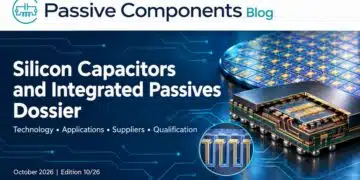
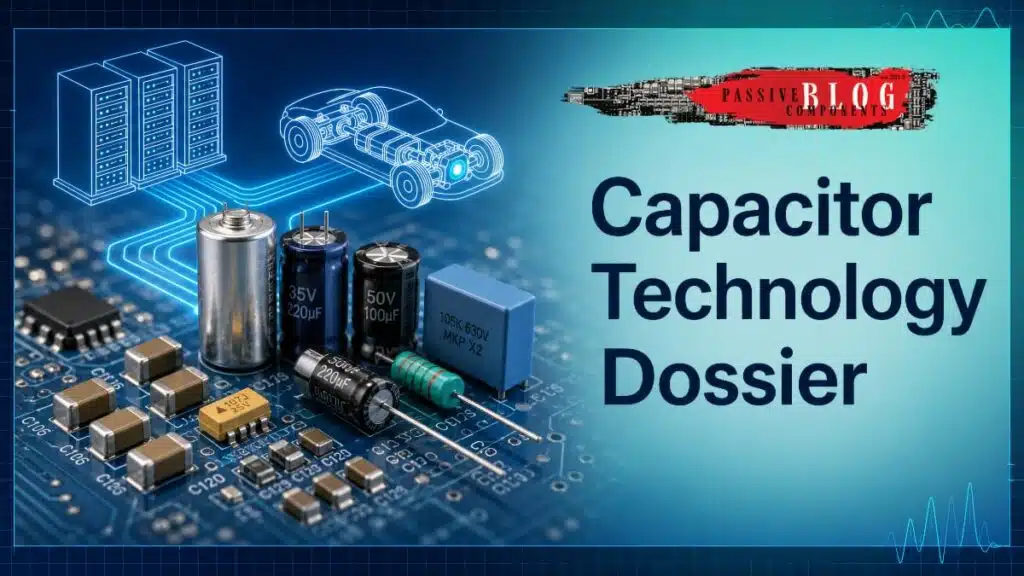
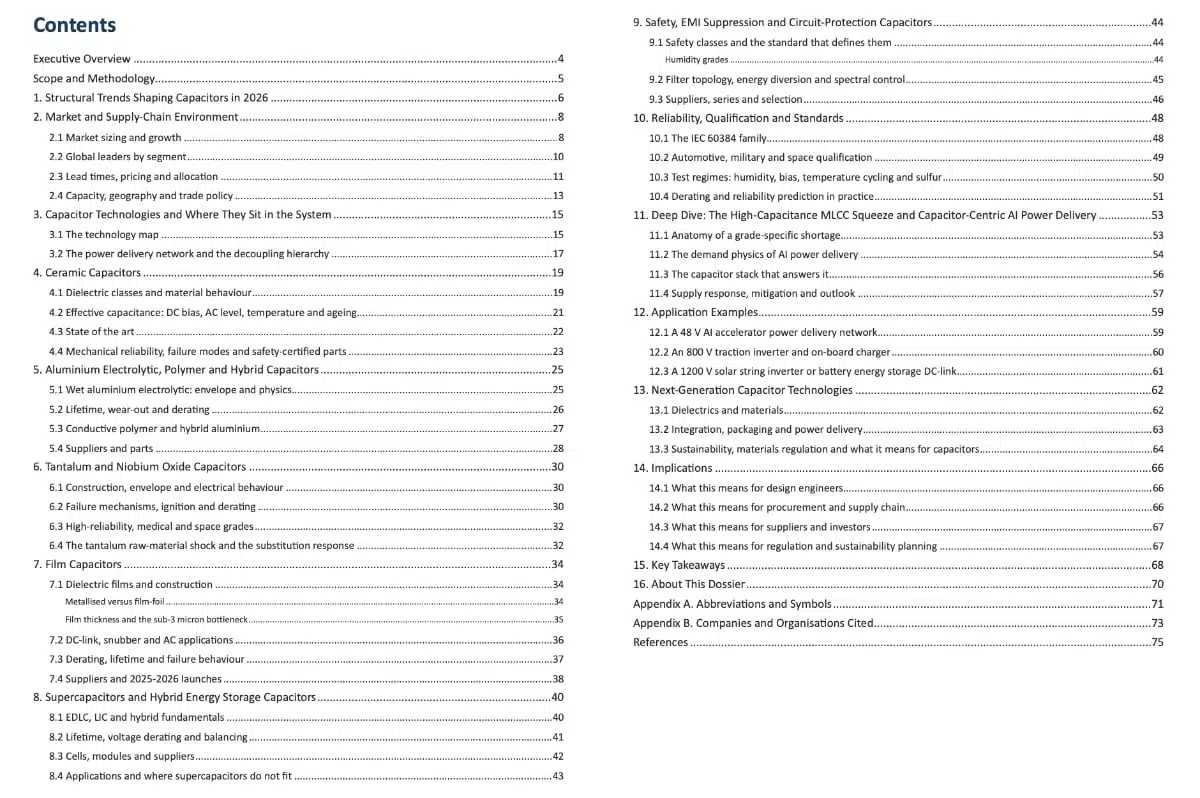
Passive Components Blog has released the Annual Capacitor Technology Dossier, a 37‑page deep dive into how capacitors moved from low-margin commodity parts to strategic enablers of AI, EV and 5G infrastructure.
The passive component industry underwent a fundamental transformation during the past 12month, as capacitors evolved from standardized commodities into strategic enablers of next-generation infrastructure. This shift was driven by three converging forces: the exponential power demands of artificial intelligence accelerators, the voltage architecture revolution in electric vehicles, and the density requirements of 5G-Advanced networks. Collectively, these applications created a bifurcated market where high-reliability, application-specific capacitors commanded premium pricing and extended lead times, while commodity segments faced oversupply and margin pressure.
The global capacitor market reached USD 41.23 billion in 2025, representing a 5.91% compound annual growth rate that significantly outpaced broader semiconductor segments. This growth was not uniform—strategic segments including high-voltage MLCCs, polymer electrolytics, and DC-link film capacitors grew at 12-17% CAGR, while general-purpose consumer MLCCs stagnated. The divergence reflects a critical industry inflection point: capacitors are no longer passive elements in a bill of materials but active determinants of system performance, thermal management, and reliability in mission-critical applications.
This dossier is written for:
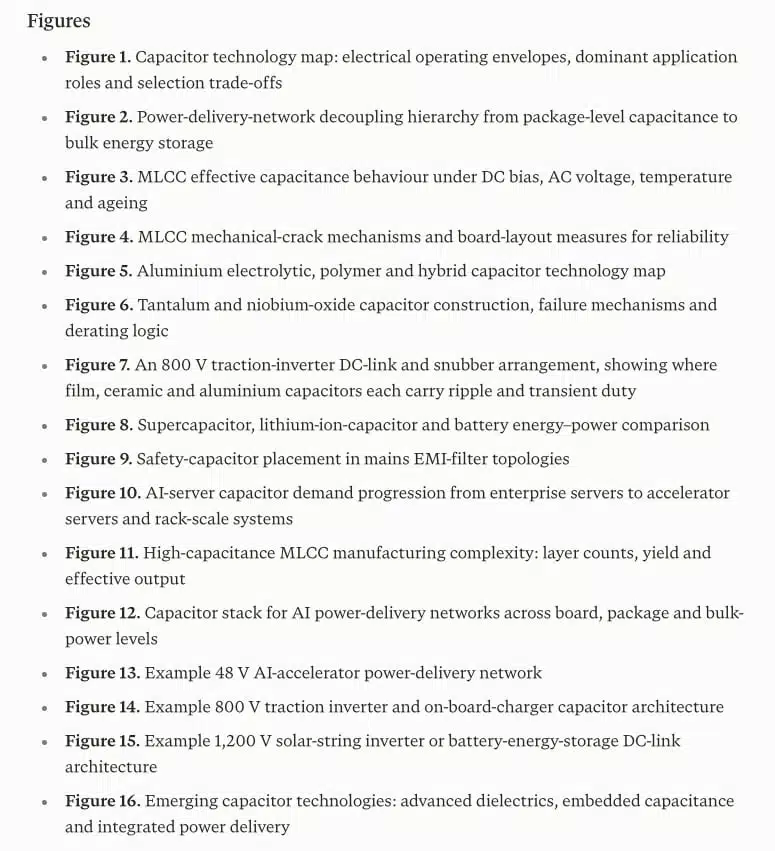
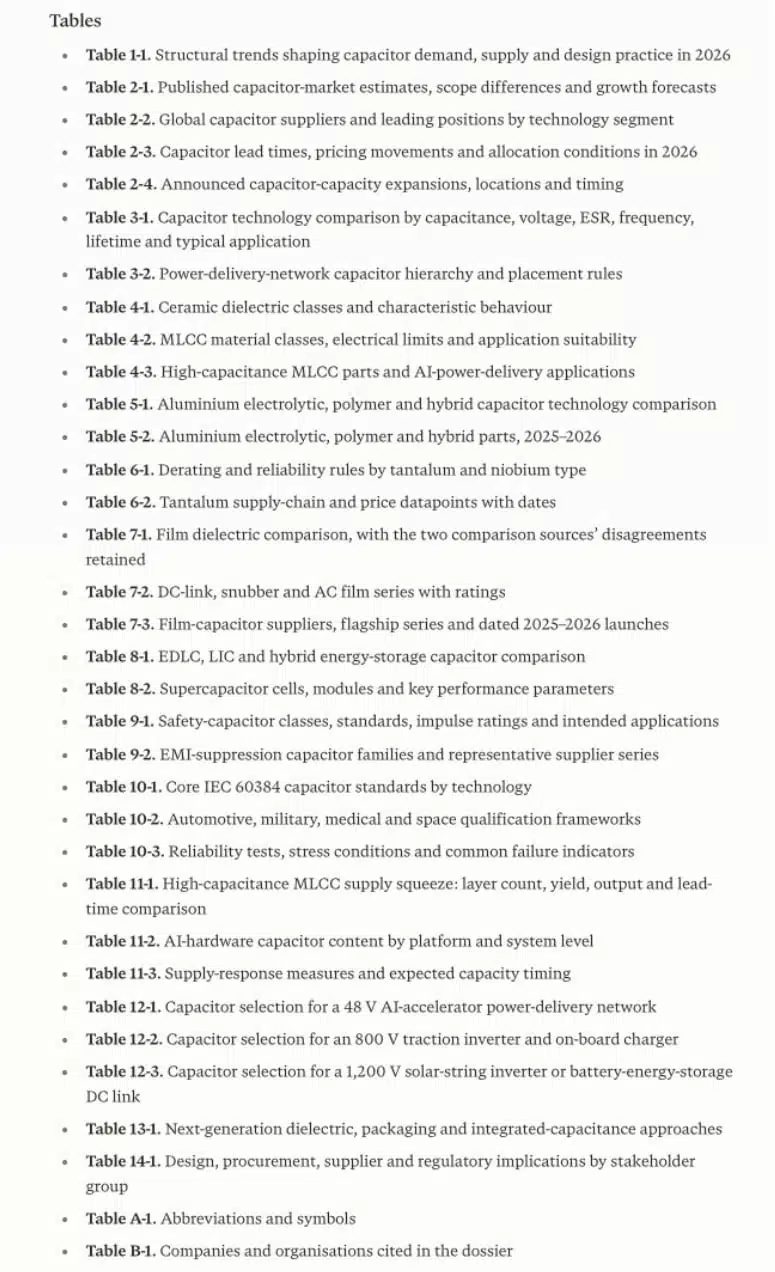
Unlike broad passive-component reports that focus on high-level market sizing, the 2025 Annual Capacitor Technology Dossier combines:
The result is a compact, high‑density reference that can be read in an afternoon and used throughout the year for strategy, design and sourcing decisions.
© EPCI - Leading Passive Components Educational and Information Site