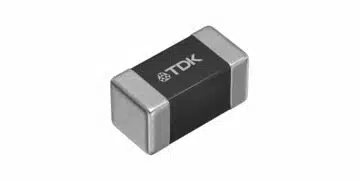
Aerospace and Defense passive components dossier technical report cover
  • 59 pages, 27 tables, 9 figures
  • Issued: September 2026

Instant PDF delivery after payment, plus emailed invoice.

Aerospace and Defense Passive Components Dossier

In aerospace and defense, the right passive component is not simply the one that meets the electrical specification. It is the one whose construction, qualification evidence and supply chain fit the mission.

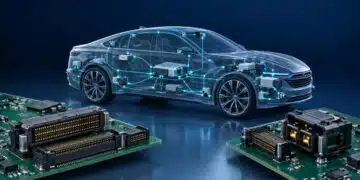
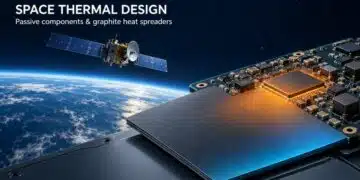
The Aerospace and Defense Passive Components Technology Dossier 9/26 examines how capacitors, magnetics, resistors, energy-storage devices, interconnect and circuit protection support aircraft, defense electronics and space systems. It connects component technology to the operating stresses, qualification routes and lifecycle commitments that determine whether a design can be built, qualified and supported.

From aircraft power distribution and radar front ends to satellite point-of-load converters and New Space constellations, different platforms require different evidence. A qualified military component, a space-listed part, a manufacturer-screened COTS-Plus grade and an automotive-derived device are not interchangeable purchasing categories—even when their headline ratings look similar.

This dossier brings those distinctions together with named suppliers, representative products, published test results, derating guidance and worked application examples. It helps engineering and procurement teams evaluate performance, mission risk and supply assurance as one decision.

Why this matters now

Three pressures are reshaping high-reliability component selection

  • Aircraft electrification is changing the passive bill of materials. Higher-voltage distribution, compact conversion stages and demanding thermal environments require new combinations of DC-link capacitors, integrated magnetics, current sensing and protection—not merely higher-rated versions of familiar parts.

  • New Space is challenging the traditional qualification model. Constellation production creates pressure for automotive-scale availability and cost, while space use still requires attention to documentation, lot traceability, radiation, outgassing and mission-specific derating. The dossier examines where automotive-derived and COTS-Plus parts can be evaluated without treating AEC-Q200 as space qualification.

  • Qualified supply and lifecycle support are design constraints. Specialist capacity, material exposure, lead times and discontinuation notices can affect a program long after the initial component selection. Qualification level and second-source planning need to be established before design freeze, not left to purchasing at production release.

The component decision therefore extends beyond capacitance, resistance or inductance. It includes the evidence behind the part, the conditions under which it will operate and the supplier’s ability to support the program.

What you get

What’s inside

Sixteen chapters connecting passive-component technology to practical aerospace, defense and space design decisions.

  • Market and supply-chain context—presenting published market estimates with their different scope definitions, alongside qualified-part lead times, pricing pressures, material exposure and the specialist supplier landscape.

  • System architecture mapping—connecting aircraft power distribution, spacecraft power conditioning, radar, missiles and mission electronics to the passive functions required at each stage.

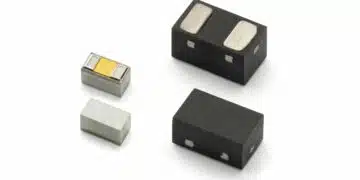
  • Capacitor selection across technologies—including ceramic, solid and polymer tantalum, wet and hybrid tantalum, film, mica, aluminum and silicon options, with qualification routes and representative product examples.

  • Power magnetics and RF inductors—covering planar transformers, integrated magnetics, common-mode chokes and signal inductors, with attention to insulation, screening, environmental limits and failure mechanisms.

  • Resistors and sensing—connecting precision, vibration tolerance, RF behavior, pulse capability and current sensing to component construction and application requirements.

  • Energy storage and supercapacitors—distinguishing hold-up, pulse discharge, battery support and actuation duties, with ESA qualification and evaluation results separated from emerging technology claims.

  • High-speed and RF interfaces—including rugged connectors, hybrid interconnect, RF signal-path passives and board-level integration for mission computing, navigation and payload electronics.

  • EMI/EMC and circuit protection—mapping military, civil-aircraft and space requirements to filters, transient suppression and overcurrent protection.

  • Reliability, qualification and derating—explaining the relationships between qualified-products-list parts, established-reliability grades, COTS-Plus alternatives and automotive-derived components, alongside process sensitivity and storage considerations.

  • A dedicated New Space deep dive—examining procurement evidence, test results and mission-tailored upscreening for automotive-grade and COTS-Plus passives in LEO constellations.

  • Three worked application examples—a LEO satellite point-of-load power stage, an airborne 270 V DC input stage, and a radar/GNSS RF front end.

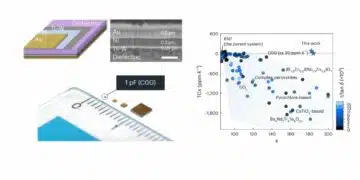
  • Technology outlook and business implications—covering emerging dielectrics, silicon and tantalum advances, energy-storage developments, cryogenic electronics and millimeter-wave applications, with implications for engineers, suppliers and program managers.


CONTENT

SectionTitlePage
—Executive Overview4
—Scope and Methodology6
1Structural Trends7
1.1Four Forces Reshaping A&D Passive Demand7
1.2Electrification, Frequency and Qualification7
2Market and Supply Chain9
2.1Market Size and Structure9
2.2Supply Chain, Lead Times and Pricing11
2.3Competitive Landscape and Global Leaders13
3System Architectures15
3.1Aircraft Power Distribution15
3.2Spacecraft, Missiles and Mission Electronics16
4Capacitors18
4.1Ceramic Capacitors18
4.2Tantalum Capacitors18
4.3Film, Mica, Aluminum and Hybrid Technologies19
4.4Aluminum Polymer and Emerging Capacitor Options19
5Inductors and Magnetics21
5.1Power Magnetics21
5.2EMI Chokes and RF Inductors21
5.3Failure Mechanisms and Environmental Limits22
6Resistors and Sensing23
6.1Precision, Thick-Film and Thin-Film Resistors23
6.2RF and Microwave Resistors23
6.3Power, Current-Sense and Sensor Components24
7Energy Storage and Supercapacitors25
7.1Energy-Storage Functions in A&D Systems25
7.2Hold-Up and Pulse Capacitor Banks26
7.3Supercapacitors in Space and Aviation27
7.4Named Suppliers and Emerging Energy-Storage Technologies27
8Interfaces, Networking and Interconnect29
8.1Connector Market and Military Standards29
8.2High-Speed Digital and RF Interconnect29
8.3RF Signal-Path Passives30
8.4Board-Level Integration31
SectionTitlePage
9EMI/EMC and Circuit Protection32
9.1EMC Requirements for Military, Civil and Space Equipment32
9.2EMI Filter Components33
9.3Transient and Overcurrent Protection33
9.4Named Suppliers in EMI and Circuit Protection33
10Reliability, Qualification and Standards35
10.1The Qualification Hierarchy35
10.2Derating and Mission-Profile Design35
10.3Process Sensitivity, Storage and Construction Analysis36
11Deep Dive: Automotive-Grade Passives for New Space Constellations38
11.1The Challenge: Volume, Cost and a Five-Year Orbit38
11.2Evidence: What Procurement and Testing Show38
11.3Solution: A Mission-Tailored Upscreening Flow39
12Application Examples41
12.1LEO Satellite Point-of-Load Power Stage41
12.2Airborne 270 V DC Input Stage41
12.3Radar and GNSS RF Front End42
13Next-Generation Technologies44
13.1High-Temperature and High-Energy Dielectrics44
13.2Silicon, Tantalum and Energy-Storage Advances44
13.3Cryogenic, Quantum and Millimeter-Wave Frontiers45
14Design and Business Implications46
14.1Implications for Design Engineers46
14.2Implications for Procurement and Supply Chain46
14.3Implications for Component Suppliers47
14.4Implications for Program Managers47
15Key Takeaways48
16About the Dossier49
Appendix AAbbreviations and Acronyms50
Appendix BCompanies and Organizations Cited53
—References55

List of Figures

FigureTitlePage
1World and US military expenditure, 2021–2025, with US 2026 approved and 2027 proposed budget levels7
2Passive components in aerospace and defense: global and European market values10
3Multi-analyst growth scenarios for A&D and space passive components10
4Published lead times for aerospace, defense and space passive components12
5Aerospace power chains and the passive functions at each stage16
6Component-level energy-storage technologies compared against A&D requirements26
7Qualification routes compared for LEO constellation passives39
8Mission-tailored upscreening flow for automotive-grade and COTS-Plus passives in LEO constellations40
9LEO satellite power chain from solar array to FPGA core41

List of Tables

TableTitlePage
1.1Structural demand drivers and passive-component implications8
2.1Aerospace and defense passive-component market estimates by definition9
2.2Global leaders by A&D passive-component segment with representative products14
3.1Platform power architectures and dominant passive-component functions17
4.1Qualified and high-reliability ceramic capacitor options for A&D18
4.2Tantalum capacitor qualification routes for A&D and space19
4.3Film, mica, aluminum and silicon capacitor examples for A&D power and pulse duties19
5.1Power magnetics for aerospace, defense and space21
5.2RF and signal inductors for A&D and space22
6.1Resistor technologies for A&D precision, harsh-environment and RF functions23
6.2Power and current-sense resistors for A&D power systems24
7.1Component-level energy-storage technologies for A&D functions25
7.2ESA supercapacitor qualification and evaluation results27
7.3Named energy-storage suppliers and technology status for space and A&D28
8.1High-speed, hybrid and RF interconnect for A&D platforms30
8.2RF signal-path passives for radar, navigation and satellite payloads30
9.1Key EMC and power-quality requirements and the passive functions they drive32
9.2Circuit-protection and EMI components for A&D power systems34
10.1EEE-INST-002 derating factors for principal passive families (NASA GSFC)36
11.1Evidence base for automotive and COTS-Plus passives in LEO39
11.2Qualification routes for LEO constellation passives compared40
12.1Passive component selections for the three worked designs42
12.2Key design calculations for the worked examples42
13.1Emerging dielectric technologies relevant to A&D44
13.2Frontier application requirements and passive-component responses45
B.1Manufacturers, suppliers and platform companies53
B.2Research bodies, agencies, standards organizations and press53

COMPONENT MANUFACTURERS, SUPPLIERS AND SYSTEM COMPANIES CITED

CompanySegment or roleChapters
KYOCERA AVXCapacitors, RF couplers, connectorsF, 2, 4, 7, 8, 9, 11, 12, 14, 15
KEMET (YAGEO Group)Capacitors: MLCC, tantalum2, 4, 7, 10, 11, 12, 15
YAGEOCapacitors, resistors (group parent)F, 2, 3, 4, 11, 12, 14
Vishay IntertechnologyCapacitors, resistors, magneticsF, 2, 3, 4, 5, 6, 8, 9, 10, 11, 12, 14, 15
Murata ManufacturingMLCC, silicon capacitors, inductors2, 4, 5, 7, 8, 10, 13, 14
Samsung Electro-MechanicsMLCC, silicon capacitorsF, 2, 11, 13, 14
Exxelia (HEICO)Film, mica, ceramic capacitors, magneticsF, 1, 2, 3, 4, 5, 7, 8, 9, 12, 14
Knowles Precision DevicesMLCC, filters, inductors2, 3, 4, 5, 6, 7, 8, 9, 12
Knowles Cornell Dubilier (CDE)Aluminum electrolytic capacitors2, 4, 7, 8, 12
Evans GroupHybrid wet tantalum capacitors2, 4, 7
Skeleton TechnologiesSupercapacitors2, 7
Maxwell Technologies / NesscapSupercapacitors2, 7, 15
CAP-XXSupercapacitors2, 7
SwistorHybrid supercapacitors7, 13
Pleione EnergyGraphene supercapacitors7
NawaTechnologiesCarbon-nanotube supercapacitors7
PolyCharge AmericaNanoLam polymer capacitors13
Rheinmetall / PierburgNanoLam production scale-up7, 13, 14, 15
Peak NanoNanolayer film capacitors7, 13
Advanced ConversionHigh-temperature film capacitors13
W. L. Gore & AssociatesHigh-temperature capacitor film13
Global Advanced MetalsTantalum powders13
TT ElectronicsResistors, Hall sensors2, 6
VPG / Alpha ElectronicsMetal foil resistors2, 6
CompanySegment or roleChapters
Stackpole ElectronicsResistors2, 6
BournsCurrent-sense resistors, air coils5, 6
IsabellenhuettePrecision resistors2, 11, 14
CoilcraftInductors2, 5, 8
API DelevanSpace inductors2, 5
iNRCOREPlanar magnetics2, 5
LittelfuseTVS diodes, wire splices2, 8, 9, 12
SCHURTERFuses, MEMS protection2, 9, 12
TDK / TDK-LambdaEMI filters, passives2, 9
Molex / Smiths InterconnectConnectors, RF components, harnesses2, 6, 8, 14
SamtecHigh-speed and RF connectors2, 3, 8, 14
RadiallRF connectors8
TE ConnectivityConnectors2, 8
AmphenolConnectors2
KyoceraSAW filters8
SOITECPiezo-on-insulator substrates8
Harp TechnologiesLTCC/SIW circulators8
Abbott TechnologiesMIL-STD-704 power supplies3, 9, 12
STMicroelectronicsSilicon capacitors, power semiconductors2
AirbusAircraft and space systems (OEM)F, 1, 7
BoeingAircraft (OEM)F, 1, 3, 15
SpaceX (Starlink)LEO constellation operator1, 11
Xona Space SystemsLEO PNT constellation13

Who needs this on their desk

  • Power-electronics and avionics engineers selecting capacitors, magnetics, sensing and protection for aircraft and mission-electronics power chains.

  • Space hardware and component engineers evaluating qualified parts, COTS-Plus grades and automotive-derived alternatives against a defined mission profile.

  • RF and microwave designers working on radar, electronic warfare, navigation and satellite payloads who need to connect component behavior with channel, thermal and environmental requirements.

  • Quality and reliability specialists reviewing screening evidence, derating, construction analysis, process sensitivity and lot-level documentation.

  • Procurement and supply-chain teams managing qualified suppliers, material exposure, lead times, second sources and long-term availability.

  • Program managers and component suppliers balancing qualification investment, production cost, schedule risk and lifecycle support.

The bottom line

This is not simply a catalog of high-reliability components. It is a framework for selecting passive technologies and qualification routes that fit the platform, the mission and the program.

By connecting electrical architecture, component construction, published test evidence and supply-chain realities, the dossier helps engineering and procurement teams make defensible decisions before qualification and availability become late-stage obstacles.