Click on the Dossier payment button will redirect you to the online payment gateway. After a successful payment, a download link will appear, displaying the PDF report for your download or email transfer. Upon billing details, a PDF invoice will be sent to your email.
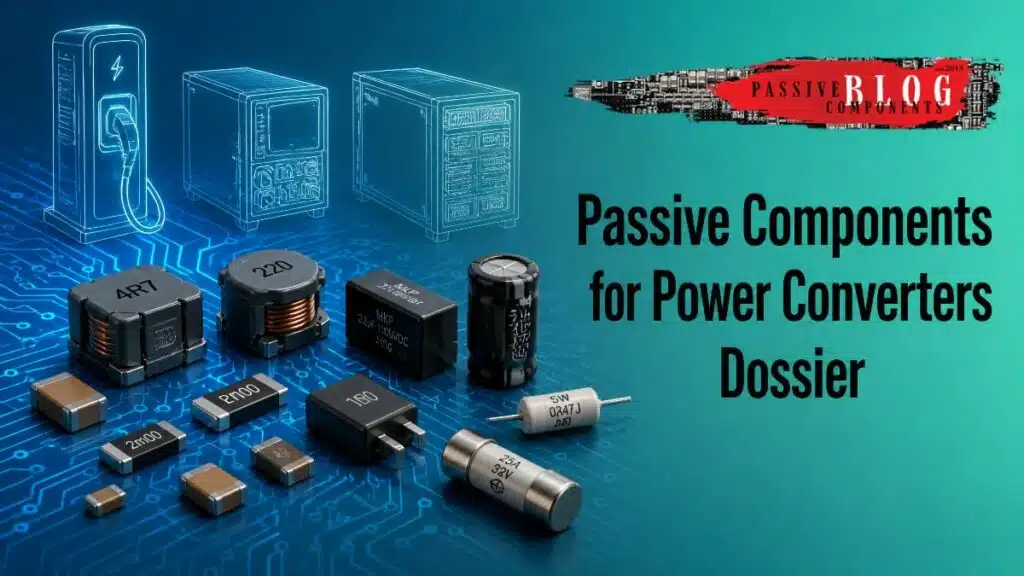
Passive Components for Power Converter Technology Dossier
Passive Components Blog has released the Annual Passive Components for Power Converters Dossier, a 63‑page, application‑driven analysis of how passive components shape modern power converter design between June 2025 and June 2026.
From AI data‑center racks and 800 V EV traction inverters to PV string inverters, industrial drives and high‑density USB‑C adapters, this dossier explains how capacitors, magnetics, resistors, EMI filters and protection devices have moved from “catalogue afterthoughts” to first‑order constraints on efficiency, power density, reliability and compliance.
What the dossier covers
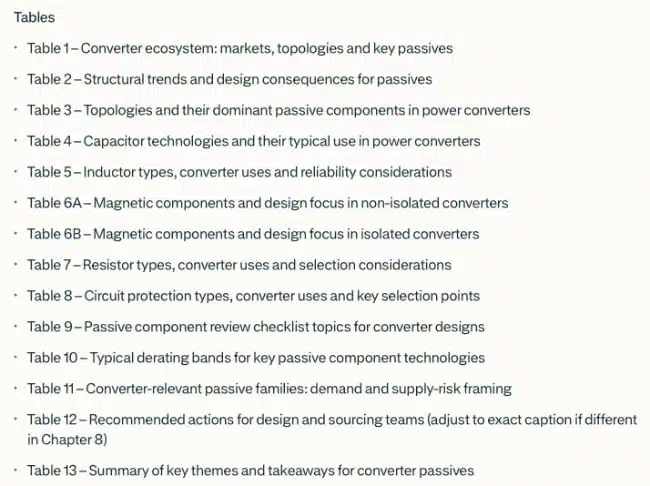
The Passive Components for Power Converters Dossier is a comprehensive annual report focused on converter‑critical passive components across the main power‑electronics ecosystems of 2026. It combines topology fundamentals, component‑technology deep dives, application chapters and design/sourcing guidance into one reference you can use all year.
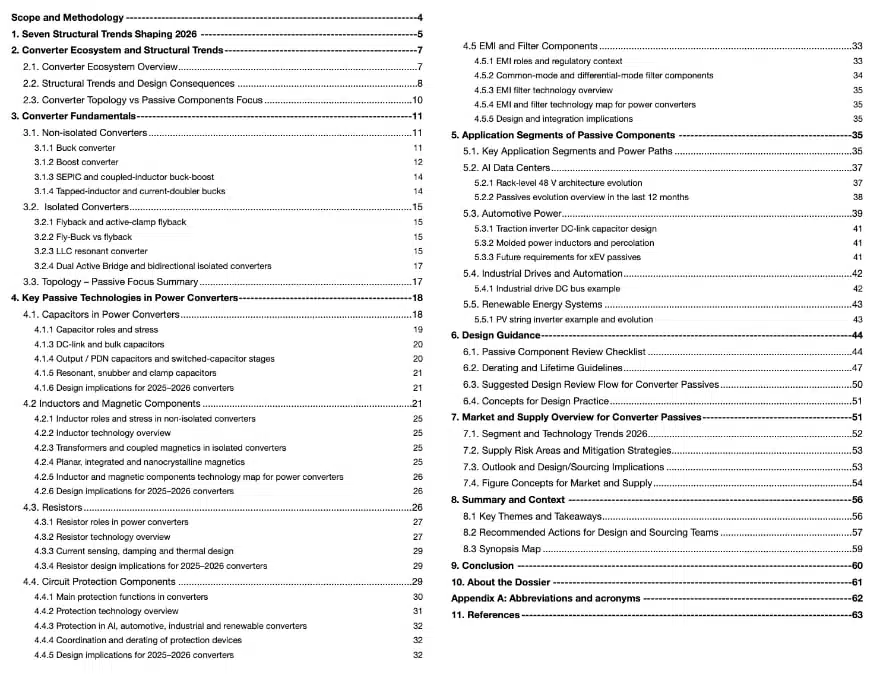
Structured into eleven chapters plus an abbreviations appendix, the dossier covers:
Seven structural trends shaping 2026 converters
How dynamic impedance engineering, wide‑bandgap devices, planar/integrated magnetics, polymer and film DC‑link capacitors, molded‑inductor reliability, and bidirectional/switch‑capacitor architectures are changing passive‑component requirements and failure modes.
Converter ecosystem & topology fundamentals
A landscape view that maps AI data centers, automotive, industrial, renewable, telecom and consumer adapters into power/voltage clusters, followed by a compact review of the main non‑isolated and isolated converter topologies and their dominant passive “hot spots”.
Key passive technologies in real converters
Application‑centric chapters for capacitors, inductors and magnetics, resistors, circuit‑protection components and EMI/filter parts. Each family is covered in terms of roles, stress mechanisms, technology options, derating rules, failure modes and 2025–2026 shifts in design practice.
Application‑segment chapters for converter passives
Dedicated sections describe how passives are actually deployed and stressed in:
- AI data‑center racks and 48 V bus architectures
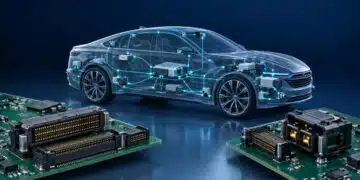
- Automotive xEV power paths (OBC, DC/DC, traction inverters, 48 V rails)
- Industrial drives and factory automation
- PV and storage/renewable energy systems
- High‑volume adapters and chargers
Design‑engineer guidance and checklists
A practical review checklist for converter passives, derating and lifetime guidelines by component family, and a suggested design‑review flow that ties mission profiles, hotspot temperatures and vendor life models back to concrete DC‑link, magnetics, EMI and protection choices.
Market and supply‑side view for converter passives
A qualitative 2025–2026 view of segment and technology trends, demand concentration and supply‑risk areas specific to converter‑relevant passives, plus an outlook on how these shifts affect design and sourcing decisions through the 2026 design cycle.