












Passive Components Blog
No Result
View All Result
  • Home
  • NewsFilter
    • All
    • Aerospace & Defence
    • Antenna
    • Applications
    • Automotive
    • Capacitors
    • Circuit Protection Devices
    • electro-mechanical news
    • Filters
    • Fuses
    • Inductors
    • Industrial
    • Integrated Passives
    • inter-connect news
    • Market & Supply Chain
    • Market Insights
    • Medical
    • Modelling and Simulation
    • New Materials & Supply
    • New Technologies
    • Non-linear Passives
    • Oscillators
    • Passive Sensors News
    • Resistors
    • RF & Microwave
    • Telecommunication
    • Weekly Digest

    Samsung Unveils World First CLLC Resonant 1kV 33nF C0G MLCC in 1210 Size

    Bourns Releases 500VDC 690VAC Fuse to Protect Power Semiconductors

    Samsung MLCC Replacing Aluminum Polymer Capacitors in AI Systems

    Reliability Improvement in BaTiO3 MLCCs Using Ni–Sn and Ni–In Alloy Electrodes

    Littelfuse Introduces Automotive Current Sensors for EV Battery, Motor, and Safety Systems

    Vishay Releases Fast Acting Thin Film Chip Fuses

    Mechanical Testing of Tantalum Anodes to Predict Tantalum Capacitor Quality

    Thermistor Linearization Challenges

    Coaxial Connectors and How to Connect with PCB

    Trending Tags

    • Ripple Current
    • RF
    • Leakage Current
    • Tantalum vs Ceramic
    • Snubber
    • Low ESR
    • Feedthrough
    • Derating
    • Dielectric Constant
    • New Products
    • Market Reports
  • VideoFilter
    • All
    • Antenna videos
    • Capacitor videos
    • Circuit Protection Video
    • Filter videos
    • Fuse videos
    • Inductor videos
    • Inter-Connect Video
    • Non-linear passives videos
    • Oscillator videos
    • Passive sensors videos
    • Resistor videos

    Thermistor Linearization Challenges

    Coaxial Connectors and How to Connect with PCB

    PCB Manufacturing, Test Methods, Quality and Reliability

    Transformer Behavior – Current Transfer and Hidden Feedback

    Choosing the Right Capacitor: The Importance of Accurate Measurements

    RF Inductors: Selection and Design Challenges for High-Frequency Circuits

    Transformer Safety IEC 61558 Standard

    3-Phase EMI Filter Design, Simulation, Calculation and Test

    Transformer Design Optimization for Power Electronics Applications

    Trending Tags

    • Capacitors explained
    • Inductors explained
    • Resistors explained
    • Filters explained
    • Application Video Guidelines
    • EMC
    • New Products
    • Ripple Current
    • Simulation
    • Tantalum vs Ceramic
  • Knowledge Blog
  • Suppliers
    • Who is Who
  • PCNS
    • PCNS 2025
    • PCNS 2023
    • PCNS 2021
    • PCNS 2019
    • PCNS 2017
  • Events
  • Home
  • NewsFilter
    • All
    • Aerospace & Defence
    • Antenna
    • Applications
    • Automotive
    • Capacitors
    • Circuit Protection Devices
    • electro-mechanical news
    • Filters
    • Fuses
    • Inductors
    • Industrial
    • Integrated Passives
    • inter-connect news
    • Market & Supply Chain
    • Market Insights
    • Medical
    • Modelling and Simulation
    • New Materials & Supply
    • New Technologies
    • Non-linear Passives
    • Oscillators
    • Passive Sensors News
    • Resistors
    • RF & Microwave
    • Telecommunication
    • Weekly Digest

    Samsung Unveils World First CLLC Resonant 1kV 33nF C0G MLCC in 1210 Size

    Bourns Releases 500VDC 690VAC Fuse to Protect Power Semiconductors

    Samsung MLCC Replacing Aluminum Polymer Capacitors in AI Systems

    Reliability Improvement in BaTiO3 MLCCs Using Ni–Sn and Ni–In Alloy Electrodes

    Littelfuse Introduces Automotive Current Sensors for EV Battery, Motor, and Safety Systems

    Vishay Releases Fast Acting Thin Film Chip Fuses

    Mechanical Testing of Tantalum Anodes to Predict Tantalum Capacitor Quality

    Thermistor Linearization Challenges

    Coaxial Connectors and How to Connect with PCB

    Trending Tags

    • Ripple Current
    • RF
    • Leakage Current
    • Tantalum vs Ceramic
    • Snubber
    • Low ESR
    • Feedthrough
    • Derating
    • Dielectric Constant
    • New Products
    • Market Reports
  • VideoFilter
    • All
    • Antenna videos
    • Capacitor videos
    • Circuit Protection Video
    • Filter videos
    • Fuse videos
    • Inductor videos
    • Inter-Connect Video
    • Non-linear passives videos
    • Oscillator videos
    • Passive sensors videos
    • Resistor videos

    Thermistor Linearization Challenges

    Coaxial Connectors and How to Connect with PCB

    PCB Manufacturing, Test Methods, Quality and Reliability

    Transformer Behavior – Current Transfer and Hidden Feedback

    Choosing the Right Capacitor: The Importance of Accurate Measurements

    RF Inductors: Selection and Design Challenges for High-Frequency Circuits

    Transformer Safety IEC 61558 Standard

    3-Phase EMI Filter Design, Simulation, Calculation and Test

    Transformer Design Optimization for Power Electronics Applications

    Trending Tags

    • Capacitors explained
    • Inductors explained
    • Resistors explained
    • Filters explained
    • Application Video Guidelines
    • EMC
    • New Products
    • Ripple Current
    • Simulation
    • Tantalum vs Ceramic
  • Knowledge Blog
  • Suppliers
    • Who is Who
  • PCNS
    • PCNS 2025
    • PCNS 2023
    • PCNS 2021
    • PCNS 2019
    • PCNS 2017
  • Events
No Result
View All Result
Passive Components Blog
No Result
View All Result

PCBs Mini, Micro and Microvia; Würth Elektronik Webinar

11.8.2025
Reading Time: 4 mins read
A A

Partial vias play a decisive role in the miniaturization of printed circuit boards. Learn more insights in this Würth Elektronik Webinar.

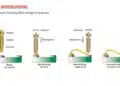
These are buried vias and microvias, which can be combined in different ways. We call microvias placed directly in solder pads “microvia-in-pad”. This saves valuable space, and since microvias are very small blind holes, they can also be integrated into very small solder pads. This is crucial for unbundling miniaturized or complex components such as micro BGAs.

RelatedPosts

Coaxial Connectors and How to Connect with PCB

PCB Manufacturing, Test Methods, Quality and Reliability

Würth Elektronik Extends its Safety Film Capacitors

In this webinar, learn more about

  • our sample WE.microbga and what you can learn from it
  • the current design rules of the MICROVIA.hdi technology and their application
  • the routing of a BGA component with pitch 0.4 mm
  • the advantages of MICROVIA.hdi technology in terms of signal integrity
  • impedance calculations

Advances in HDI PCB Design: A Technical Overview

Introduction

High-Density Interconnect (HDI) technology is revolutionizing the electronic circuit board industry with its ability to support complex designs and high-speed data transmission. This article explores the intricacies of HDI Printed Circuit Boards (PCBs), focusing on the Microvia technology and its applications, as presented in a recent webinar hosted by Andrea Schil and featured expert Andreas Drea from V Electronic Circuit Board Technology.

Understanding HDI PCB Sample

The HDI PCB sample represents a typical industrial board used in automotive, sensor applications, and various machinery. It integrates power lines, memory chips, QFP components, and BGA units. A closer look reveals details hidden beneath the surface, such as specific impedance requirements, runtime matching, and complex stackups.

BGA Components and Routing Techniques

  • Standard BGA (0.8 mm pitch): Utilizes through-hole drilling for routing, requiring multiple layers (typically 8-10) to accommodate all connections.
  • Microvia BGA (0.4 mm pitch): Employs laser-drilled vias, significantly reducing the number of layers needed and saving space, thus lowering production costs.

Stackup Configurations

Key features include:

  • Buried Vias: Resin-filled for enhanced reliability.
  • Staggered & Stacked Microvias: Optimized for different performance requirements.
  • Galvanic Processes: Sequential layer additions with meticulous copper plating techniques ensure structural integrity.

Production Insights

Inner Layer Manufacturing

Starting with a copper-clad laminate:

  • Photolithography: Defines circuit patterns.
  • Etching: Removes excess copper, creating precise trace geometries.

Via Formation and Filling

  • Laser Drilling: Achieves high precision for microvias without significant wear.
  • Filling Processes: Utilize copper or resin to enhance conductivity and mechanical strength.

Cost Considerations

  • Laser Drilling vs. Mechanical Drilling: While laser drilling has higher setup costs, it offers lower variable costs per via, making it cost-effective for high-density designs.

Impedance Control

Impedance is influenced by:

  • Line Width and Layer Spacing: Primary factors in determining signal integrity.
  • Material Properties: Dielectric constants play a secondary role.

V Electronic offers three levels of impedance services:

  1. Calculation: During the design phase.
  2. Manufacturing Control: Ensuring consistency across production.
  3. On-Panel Testing: Verifying impedance for each production batch.

Design Recommendations

  • Utilize Microvias Extensively: Not just in BGA areas but across the board for cost efficiency.
  • Optimize Line and Space Parameters: To enhance production yield and reduce costs.
  • Early Collaboration: Engage with PCB manufacturers early to mitigate redesign efforts and ensure manufacturability.

Conclusion

Advancements in HDI technology, particularly Microvia and impedance control techniques, offer significant benefits in efficiency, performance, and cost. Early-stage collaboration with PCB manufacturers like V Electronic is crucial for optimizing these advantages in electronic circuit board designs.


Related

Source: Würth Elektronik

Recent Posts

Coaxial Connectors and How to Connect with PCB

17.12.2025
26

PCB Manufacturing, Test Methods, Quality and Reliability

17.12.2025
33

Connector PCB Design Challenges

3.10.2025
60

What Track Width To Use When Routing PCB

6.6.2025
100

IPC Class 2 vs Class 3 Solder Joints Requirements Explained

27.2.2025
837

How to Determine Chip Temperature

3.1.2025
309

Die and Wire PCB Bonding Explained

1.7.2025
199

EMI Shielding Challenges

1.7.2025
19

EMC with Electromechanical Inter-Connections

1.7.2025
21

Upcoming Events

Jan 27
16:00 - 17:00 CET

Simplifying Vehicle Development with Automotive Ethernet and Zonal Smart Switch Technologies

Feb 24
16:00 - 17:00 CET

Designing Qi2 Wireless Power Systems: Practical Development and EMC Optimization

View Calendar

Popular Posts

  • Buck Converter Design and Calculation

    0 shares
    Share 0 Tweet 0
  • Boost Converter Design and Calculation

    0 shares
    Share 0 Tweet 0
  • LLC Resonant Converter Design and Calculation

    0 shares
    Share 0 Tweet 0
  • Flyback Converter Design and Calculation

    0 shares
    Share 0 Tweet 0
  • What Electronics Engineer Needs to Know About Passive Low Pass Filters

    0 shares
    Share 0 Tweet 0
  • Dual Active Bridge (DAB) Topology

    0 shares
    Share 0 Tweet 0
  • Ripple Current and its Effects on the Performance of Capacitors

    3 shares
    Share 3 Tweet 0
  • What is a Dielectric Constant and DF of Plastic Materials?

    4 shares
    Share 4 Tweet 0
  • MLCC and Ceramic Capacitors

    0 shares
    Share 0 Tweet 0
  • SEPIC Converter Design and Calculation

    0 shares
    Share 0 Tweet 0

Newsletter Subscription


Passive Components Blog

© EPCI - Leading Passive Components Educational and Information Site

  • Home
  • Privacy Policy
  • EPCI Membership & Advertisement
  • About

No Result
View All Result
  • Home
  • Knowledge Blog
  • PCNS

© EPCI - Leading Passive Components Educational and Information Site

This website uses cookies. By continuing to use this website you are giving consent to cookies being used. Visit our Privacy and Cookie Policy.
Go to mobile version