



Passive Components Blog
No Result
View All Result
  • Home
  • NewsFilter
    • All
    • Aerospace & Defence
    • Antenna
    • Applications
    • Automotive
    • Capacitors
    • Circuit Protection Devices
    • electro-mechanical news
    • Filters
    • Fuses
    • Inductors
    • Industrial
    • Integrated Passives
    • inter-connect news
    • Market & Supply Chain
    • Market Insights
    • Medical
    • Modelling and Simulation
    • New Materials & Supply
    • New Technologies
    • Non-linear Passives
    • Oscillators
    • Passive Sensors News
    • Resistors
    • RF & Microwave
    • Telecommunication
    • Weekly Digest

    Bourns Introduces Automotive BMS Signal Transformer with Integrated Common Mode Chokes

    Itelcond Introduces High‑Voltage Aluminium Capacitors for Modern IGBT DC‑links

    Bourns Introduces Automotive Shielded Power Inductors for Compact DC‑DC Converters

    EMC Design Fundamentals: Safe Use of Varistors and Common Mode Chokes in Mains and Data-Line Filters

    Murata Unveils Lead Disc Ceramic Capacitors for Automotive Safety and EMI Suppression

    SCHURTER Releases Intelligent Three‑Terminal Fuses for Safer Li‑ion Battery Systems

    Can Copper Conductive Inks Displace Silver in Hybrid Electronics?

    Square-Wave Harmonics and RMS Currents in Power Converters

    LeanBOM: Practical Cross‑Technology Capacitor Search by Real Working Conditions

    Trending Tags

    • Ripple Current
    • RF
    • Leakage Current
    • Tantalum vs Ceramic
    • Snubber
    • Low ESR
    • Feedthrough
    • Derating
    • Dielectric Constant
    • New Products
    • Market Reports
  • VideoFilter
    • All
    • Antenna videos
    • Capacitor videos
    • Circuit Protection Video
    • Filter videos
    • Fuse videos
    • Inductor videos
    • Inter-Connect Video
    • Non-linear passives videos
    • Oscillator videos
    • Passive sensors videos
    • Resistor videos

    EMC Design Fundamentals: Safe Use of Varistors and Common Mode Chokes in Mains and Data-Line Filters

    Ferrite versus Nanocrystalline Power Inductor Cores: Turns, Gap and Size

    KYOCERA AVX Presents Antenna Integrator Studio Tutorial for Antenna Placement and RF Design

    Power Design Simulation Tools for Faster Inductor Selection and Loss Optimization

    EMC‑Compliant PCB and Connector Design Guidelines

    Why Isolated DC/DC Power Supplies Fail Late, Würth Elektronik Podcast

    Designing 800 V DC EMC Filters: Calculation, Simulation and Measurement

    Current Sense Transformer Datasheet and Design‑in Guide

    Designing a USB Type‑C Flyback Planar Transformer with Frenetic’s Planar Tool

    Trending Tags

    • Capacitors explained
    • Inductors explained
    • Resistors explained
    • Filters explained
    • Application Video Guidelines
    • EMC
    • New Products
    • Ripple Current
    • Simulation
    • Tantalum vs Ceramic
  • Knowledge Blog
  • Dossiers
    • AI Hardware Dossier
    • Power Converter Dossier
    • Automotive Dossier
    • Capacitor Dossier
    • Resistor Dossier
    • Inductor Dossier
    • Circuit Protection Dossier
  • Suppliers
    • Who is Who
  • PCNS
    • PCNS 2025
    • PCNS 2023
    • PCNS 2021
    • PCNS 2019
    • PCNS 2017
  • Events
  • Home
  • NewsFilter
    • All
    • Aerospace & Defence
    • Antenna
    • Applications
    • Automotive
    • Capacitors
    • Circuit Protection Devices
    • electro-mechanical news
    • Filters
    • Fuses
    • Inductors
    • Industrial
    • Integrated Passives
    • inter-connect news
    • Market & Supply Chain
    • Market Insights
    • Medical
    • Modelling and Simulation
    • New Materials & Supply
    • New Technologies
    • Non-linear Passives
    • Oscillators
    • Passive Sensors News
    • Resistors
    • RF & Microwave
    • Telecommunication
    • Weekly Digest

    Bourns Introduces Automotive BMS Signal Transformer with Integrated Common Mode Chokes

    Itelcond Introduces High‑Voltage Aluminium Capacitors for Modern IGBT DC‑links

    Bourns Introduces Automotive Shielded Power Inductors for Compact DC‑DC Converters

    EMC Design Fundamentals: Safe Use of Varistors and Common Mode Chokes in Mains and Data-Line Filters

    Murata Unveils Lead Disc Ceramic Capacitors for Automotive Safety and EMI Suppression

    SCHURTER Releases Intelligent Three‑Terminal Fuses for Safer Li‑ion Battery Systems

    Can Copper Conductive Inks Displace Silver in Hybrid Electronics?

    Square-Wave Harmonics and RMS Currents in Power Converters

    LeanBOM: Practical Cross‑Technology Capacitor Search by Real Working Conditions

    Trending Tags

    • Ripple Current
    • RF
    • Leakage Current
    • Tantalum vs Ceramic
    • Snubber
    • Low ESR
    • Feedthrough
    • Derating
    • Dielectric Constant
    • New Products
    • Market Reports
  • VideoFilter
    • All
    • Antenna videos
    • Capacitor videos
    • Circuit Protection Video
    • Filter videos
    • Fuse videos
    • Inductor videos
    • Inter-Connect Video
    • Non-linear passives videos
    • Oscillator videos
    • Passive sensors videos
    • Resistor videos

    EMC Design Fundamentals: Safe Use of Varistors and Common Mode Chokes in Mains and Data-Line Filters

    Ferrite versus Nanocrystalline Power Inductor Cores: Turns, Gap and Size

    KYOCERA AVX Presents Antenna Integrator Studio Tutorial for Antenna Placement and RF Design

    Power Design Simulation Tools for Faster Inductor Selection and Loss Optimization

    EMC‑Compliant PCB and Connector Design Guidelines

    Why Isolated DC/DC Power Supplies Fail Late, Würth Elektronik Podcast

    Designing 800 V DC EMC Filters: Calculation, Simulation and Measurement

    Current Sense Transformer Datasheet and Design‑in Guide

    Designing a USB Type‑C Flyback Planar Transformer with Frenetic’s Planar Tool

    Trending Tags

    • Capacitors explained
    • Inductors explained
    • Resistors explained
    • Filters explained
    • Application Video Guidelines
    • EMC
    • New Products
    • Ripple Current
    • Simulation
    • Tantalum vs Ceramic
  • Knowledge Blog
  • Dossiers
    • AI Hardware Dossier
    • Power Converter Dossier
    • Automotive Dossier
    • Capacitor Dossier
    • Resistor Dossier
    • Inductor Dossier
    • Circuit Protection Dossier
  • Suppliers
    • Who is Who
  • PCNS
    • PCNS 2025
    • PCNS 2023
    • PCNS 2021
    • PCNS 2019
    • PCNS 2017
  • Events
No Result
View All Result
Passive Components Blog
No Result
View All Result

Würth Elektronik Offers Halogen‑Free EMC Gaskets for Displays and Housings

28.1.2026
Reading Time: 8 mins read
A A

Würth Elektronik has extended its WE‑LT conductive textile gasket family with a new halogen‑free variant aimed at enclosure and display designers who need reliable EMI shielding and environmental sealing.

The self‑adhesive gaskets combine high shielding effectiveness, IP54 protection, and UL 94 V‑0 flammability performance while meeting current EU ecodesign and RoHS requirements.

RelatedPosts

EMC Design Fundamentals: Safe Use of Varistors and Common Mode Chokes in Mains and Data-Line Filters

In the Age of AI, Every Watt Counts: Implications for Components

Power Design Simulation Tools for Faster Inductor Selection and Loss Optimization

Key features and benefits

The halogen‑free Würth Elektronik WE‑LT conductive textile gaskets target electromagnetic compatibility (EMC) issues around housing seams, doors, covers, and panel interfaces where low impedance contact and mechanical sealing are both needed.

Key electrical and regulatory characteristics include:

  • Shielding attenuation of more than 80 dB at 100 MHz, suitable for reducing radiated and conducted emissions in typical industrial and information technology equipment.
  • Typical surface resistance below 0.08 Ω, supporting low impedance bonding between mating metal surfaces.
  • Halogen‑free construction compliant with EU Ecodesign 2009/125/EC requirements for displays and similar equipment.
  • RoHS‑compliant material selection for use in regulated markets.
  • UL 94 V‑0 flammability rating, helping system designers meet safety and fire protection standards in end equipment.

From a mechanical and environmental perspective, the gaskets are designed to simplify integration into existing housings:

  • Self‑adhesive (pressure‑sensitive adhesive, PSA) backing for easy placement on metal flanges and frames without additional mounting hardware.
  • IP54 protection against dust and splashed water, allowing use in light industrial environments, control cabinets, and operator panels.
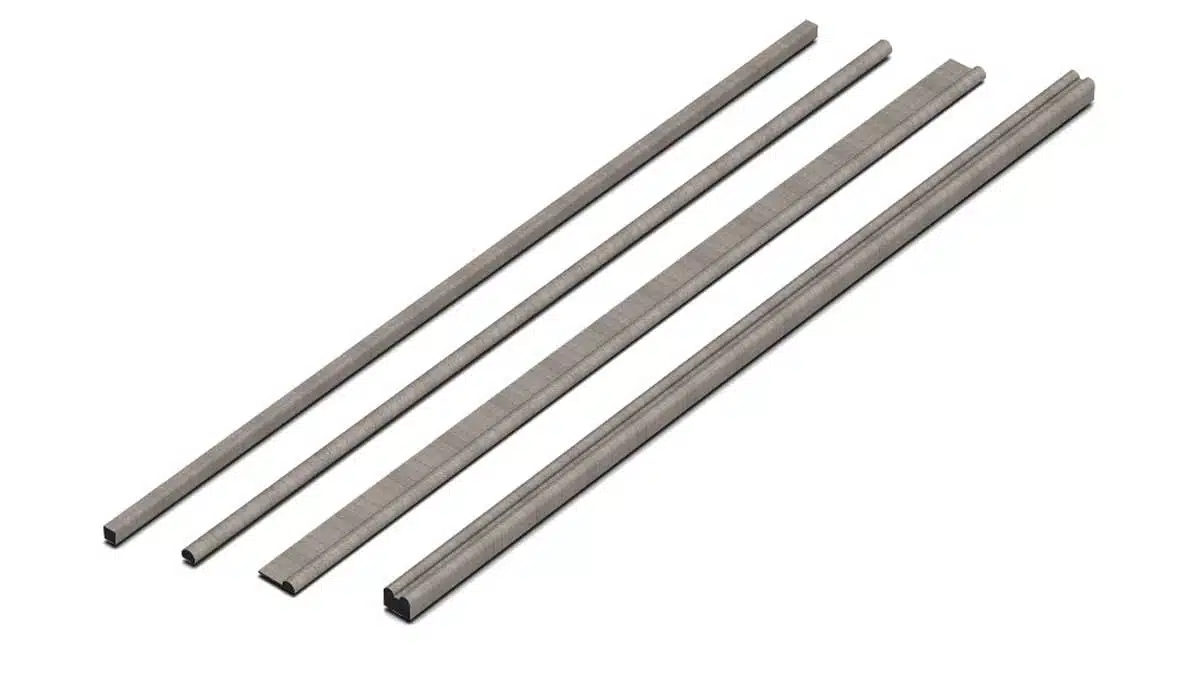
  • Broad selection of standard profile shapes (square, D, C, P, L, M, and blade) for different mounting geometries, door edges, and bezel designs.
  • Option for custom shapes and cut‑to‑length formats, enabling tailored solutions for complex housings or large display frames, with no specified additional tooling costs according to the manufacturer.

For purchasing and project engineers, the combination of halogen‑free material, established regulatory compliance, and a standard profile portfolio reduces qualification effort compared to custom in‑house gasket solutions.

Typical applications

Würth Elektronik positions the halogen‑free WE‑LT EMC gaskets for use wherever two conductive parts of an enclosure must be electrically bonded after assembly and simultaneously sealed against dust and splashed water.

Typical application areas include:

  • Display assemblies and monitor housings, especially within the EU where halogenated flame retardants in housings and stands for electronic displays are restricted.
  • Metal housings for industrial controllers, power supplies, and communication equipment that require EMI shielding along removable covers or door seams.
  • Control cabinets and rack systems where front doors, side panels, or cable entries need both EMC shielding and environmental sealing.
  • Input/output connection panels, interface plates, and backplanes where connectors penetrate shielded housings.
  • Grounding connections between housing parts or between doors and frames to ensure low‑impedance RF bonding.

In practice, these gaskets help maintain the shielding effectiveness of conductive housings at all openings, hinge lines, or access points where direct metal‑to‑metal contact is difficult to guarantee over the product lifetime.

Technical highlights

Construction and materials

The WE‑LT halogen‑free conductive textile gaskets are built as a composite structure:

  • Conductive textile: Woven polyester fabric with nickel‑plated copper threads to provide conductivity, corrosion protection, and abrasion resistance.
  • Optional aluminum layer versions: Certain variants also include an aluminum layer for specific shielding performance or mechanical requirements according to the manufacturer’s documentation.
  • Elastic core: Urethane foam in various densities between 45 kg/m³ and 150 kg/m³, allowing the gasket to deform under compression, tolerate tolerances, and recover after opening/closing cycles.
  • Pressure‑sensitive adhesive (PSA): A self‑adhesive backing to fix the gasket to one side of the housing or frame before final assembly.

The nickel plating on the copper threads is intended to protect against corrosion in the presence of humidity and to limit wear from repeated opening and closing of doors or covers.

Mechanical behavior and compression

The gasket performance depends strongly on proper compression during installation:

  • A recommended compression ratio of approximately 30% of the original gasket height is specified for normal operation.
  • At this compression level, contact area and pressure are sufficient to maintain low surface resistance and stable shielding performance, while preserving foam elasticity and service life.
  • The range of foam densities enables designers to choose a softer profile for light door closures or a stiffer one where high closure forces or larger gaps must be bridged.

For design engineers, this means that the correct profile height and foam hardness should be selected based on expected tolerances, door forces, and the number of opening cycles over equipment lifetime.

Profiles and geometries

Standard profile shapes offered for the WE‑LT halogen‑free series are:

  • Square profiles for flat flange‑to‑flange sealing and straightforward groove mounting.
  • D profiles for door seals and edge mounting where one side must compress against a flat surface.
  • C and P profiles for clipping around thin metal edges or bezel frames.
  • L and M profiles to adapt to corner geometries or step‑like housing interfaces.
  • Blade profiles for tight spaces, narrow edges, or where minimal width is available for an EMC seal.

Custom profiles and cut‑to‑size parts are also available, supporting tailored gaskets for display cutouts, instrument panels, and non‑rectangular covers.

Design‑in notes for engineers

To get reliable EMC and environmental performance from the WE‑LT halogen‑free gaskets, a few practical design‑in aspects should be considered.

EMC and grounding considerations

  • Ensure that both mating surfaces are conductive and free from insulating coatings at the contact area, or use defined contact windows through paint layers.
  • Maintain a continuous gasket path along the entire seam whenever possible; avoid gaps or sharp discontinuities that could compromise shielding.
  • Consider the frequency range of concern: shielding attenuation above 80 dB at 100 MHz is strong for many industrial and communication applications, but high‑frequency behavior and specific test conditions should be verified in the datasheet.
  • Use the gaskets as part of a system‑level EMC concept including filter components, cable shielding, and PCB layout measures rather than as a stand‑alone fix.

Mechanical integration and assembly

  • Design flanges and door frames so that the gasket is compressed to roughly 30% of its original height in the final assembled state, within the tolerance range of mechanical parts.
  • Avoid over‑compression, which can cause permanent deformation, higher closure forces, and reduced lifetime.
  • Take advantage of the self‑adhesive backing for easy assembly, but ensure clean, degreased surfaces for reliable adhesion over time.
  • For doors or covers that are opened frequently, select foam density and profile shape that balance ease of closing with long‑term mechanical durability.

Environmental and regulatory aspects

  • The halogen‑free formulation and compliance with EU Ecodesign 2009/125/EC make the WE‑LT halogen‑free gaskets particularly suitable for display housings and stands placed on the EU market.
  • UL 94 V‑0 flammability performance supports their use in safety‑critical equipment where flame retardancy is mandatory.
  • RoHS compliance simplifies global sourcing and helps avoid future requalification due to material restrictions.

By integrating these gaskets early in the mechanical and EMC design, engineers can reduce the risk of late‑stage EMC test failures and mechanical rework on enclosure designs.

Source

The information in this article is based on the official Würth Elektronik press release about the WE‑LT halogen‑free conductive textile gaskets and associated manufacturer documentation.


References

  1. Würth Elektronik press release – WE‑LT halogen‑free conductive textile gaskets
  2. Würth Elektronik WE‑LT halogen‑free product overview

Related

Recent Posts

Murata Unveils Lead Disc Ceramic Capacitors for Automotive Safety and EMI Suppression

15.7.2026
35

In the Age of AI, Every Watt Counts: Implications for Components

13.7.2026
58

Panasonic Releases Relays for IEC 62955 Compliant Single‑Phase EV Wallboxes

25.6.2026
43

KYOCERA AVX Releases NTN Antenna Selection Guide Brochure

25.6.2026
53

Würth Elektronik Expands Nanocrystalline Cable Cores for Broadband EMI Suppression

23.6.2026
70

Würth Elektroniks Flexible EMI Shielding Sheets Provides Quick and Easy Schielding Solution

17.6.2026
102

Murata Expands Ansys Simulation Models for RF inductors, MLCCs, and Power Inductors

16.6.2026
68

Murata Introduces World First 2.2uF 100V Soft‑Term MLCC in 0805 Size for Automotive

4.6.2026
119

Würth Elektronik Presents New Bidirectional Digital Isolators

20.5.2026
77

Upcoming Events

Jul 21
16:00 - 17:00 CEST

Safety by design: X and Y Interference suppression capacitors for power line filters

Jul 28
8:00 - 11:00 CEST

Post Procurement Testing of EEE Components for LEO Space Applications

Jul 29
17:30 - 18:30 CEST

To Ferrite or to Nanocrystalline in Transformer Design

View Calendar

Popular Posts

  • Boost Converter Design and Calculation

    0 shares
    Share 0 Tweet 0
  • Buck Converter Design and Calculation

    0 shares
    Share 0 Tweet 0
  • YAGEO Announces July 2026 Capacitor Price Increase

    0 shares
    Share 0 Tweet 0
  • Flyback Converter Design and Calculation

    0 shares
    Share 0 Tweet 0
  • LLC Resonant Converter Design and Calculation

    0 shares
    Share 0 Tweet 0
  • MLCC and Ceramic Capacitors

    0 shares
    Share 0 Tweet 0
  • Earthing Systems and IEC Classification Explained

    0 shares
    Share 0 Tweet 0
  • Nvidia Vera Rubin: Why One AI Rack Needs So Many More MLCC Capacitors

    0 shares
    Share 0 Tweet 0
  • MLCCs in the Age of AI: Q2 2026 Market Tightness

    0 shares
    Share 0 Tweet 0
  • Dual Active Bridge (DAB) Topology

    0 shares
    Share 0 Tweet 0

Newsletter Subscription


Passive Components Blog

© EPCI - Leading Passive Components Educational and Information Site

  • Home
  • Privacy Policy
  • EPCI Membership & Advertisement
  • About

No Result
View All Result
  • Home
  • Knowledge Blog
  • Dossiers
  • PCNS

© EPCI - Leading Passive Components Educational and Information Site

This website uses cookies. By continuing to use this website you are giving consent to cookies being used. Visit our Privacy and Cookie Policy.
Go to mobile version