









Passive Components Blog
No Result
View All Result
  • Home
  • NewsFilter
    • All
    • Aerospace & Defence
    • Antenna
    • Applications
    • Automotive
    • Capacitors
    • Circuit Protection Devices
    • electro-mechanical news
    • Filters
    • Fuses
    • Inductors
    • Industrial
    • Integrated Passives
    • inter-connect news
    • Market & Supply Chain
    • Market Insights
    • Medical
    • Modelling and Simulation
    • New Materials & Supply
    • New Technologies
    • Non-linear Passives
    • Oscillators
    • Passive Sensors News
    • Resistors
    • RF & Microwave
    • Telecommunication
    • Weekly Digest

    Miniaturization of Tantalum Capacitors: Structural Limit Under Constant Rating

    Heatsink Design and Thermal Interface Materials for Reliable Electronics

    Murata New MLCC Bulk Case Packaging Cuts Packaging Material by 99%

    Wk 17 Electronics Supply Chain Digest

    Exxelia Introduces SMD High‑Voltage Mica Capacitors

    Modelithics Releases COMPLETE v26.1 for Keysight ADS

    April 2026 Interconnect, Passives and Electromechanical Components Market Insights

    SPICE Simulation of Non-Linear Resistors: Vishay’s Thermistor and PPTC Modelling Ecosystem

    KYOCERA AVX Introduces Traction‑Grade DC Link Film Capacitors

    Trending Tags

    • Ripple Current
    • RF
    • Leakage Current
    • Tantalum vs Ceramic
    • Snubber
    • Low ESR
    • Feedthrough
    • Derating
    • Dielectric Constant
    • New Products
    • Market Reports
  • VideoFilter
    • All
    • Antenna videos
    • Capacitor videos
    • Circuit Protection Video
    • Filter videos
    • Fuse videos
    • Inductor videos
    • Inter-Connect Video
    • Non-linear passives videos
    • Oscillator videos
    • Passive sensors videos
    • Resistor videos

    Why Power Inductors Use a Ferrite Core With an Air Gap

    Transformer-Based Power-Line Harvester Magnetic Design

    Thermal Modeling of Magnetics

    Standard vs Planar LLC transformers Comparison for Battery Chargers

    How Modern Tools Model Magnetic Components for Power Electronics

    Advanced Loss Modeling for Planar Magnetics in the Frenetic Planar Tool

    2026 Power Magnetics Design Trends: Flyback, DAB and Planar

    Enabling Software‑Defined Vehicle Architectures: Automotive Ethernet and Zonal Smart Power

    Calculating Resistance Value of a Flyback RC Snubber 

    Trending Tags

    • Capacitors explained
    • Inductors explained
    • Resistors explained
    • Filters explained
    • Application Video Guidelines
    • EMC
    • New Products
    • Ripple Current
    • Simulation
    • Tantalum vs Ceramic
  • Knowledge Blog
  • DossiersNew
  • Suppliers
    • Who is Who
  • PCNS
    • PCNS 2025
    • PCNS 2023
    • PCNS 2021
    • PCNS 2019
    • PCNS 2017
  • Events
  • Home
  • NewsFilter
    • All
    • Aerospace & Defence
    • Antenna
    • Applications
    • Automotive
    • Capacitors
    • Circuit Protection Devices
    • electro-mechanical news
    • Filters
    • Fuses
    • Inductors
    • Industrial
    • Integrated Passives
    • inter-connect news
    • Market & Supply Chain
    • Market Insights
    • Medical
    • Modelling and Simulation
    • New Materials & Supply
    • New Technologies
    • Non-linear Passives
    • Oscillators
    • Passive Sensors News
    • Resistors
    • RF & Microwave
    • Telecommunication
    • Weekly Digest

    Miniaturization of Tantalum Capacitors: Structural Limit Under Constant Rating

    Heatsink Design and Thermal Interface Materials for Reliable Electronics

    Murata New MLCC Bulk Case Packaging Cuts Packaging Material by 99%

    Wk 17 Electronics Supply Chain Digest

    Exxelia Introduces SMD High‑Voltage Mica Capacitors

    Modelithics Releases COMPLETE v26.1 for Keysight ADS

    April 2026 Interconnect, Passives and Electromechanical Components Market Insights

    SPICE Simulation of Non-Linear Resistors: Vishay’s Thermistor and PPTC Modelling Ecosystem

    KYOCERA AVX Introduces Traction‑Grade DC Link Film Capacitors

    Trending Tags

    • Ripple Current
    • RF
    • Leakage Current
    • Tantalum vs Ceramic
    • Snubber
    • Low ESR
    • Feedthrough
    • Derating
    • Dielectric Constant
    • New Products
    • Market Reports
  • VideoFilter
    • All
    • Antenna videos
    • Capacitor videos
    • Circuit Protection Video
    • Filter videos
    • Fuse videos
    • Inductor videos
    • Inter-Connect Video
    • Non-linear passives videos
    • Oscillator videos
    • Passive sensors videos
    • Resistor videos

    Why Power Inductors Use a Ferrite Core With an Air Gap

    Transformer-Based Power-Line Harvester Magnetic Design

    Thermal Modeling of Magnetics

    Standard vs Planar LLC transformers Comparison for Battery Chargers

    How Modern Tools Model Magnetic Components for Power Electronics

    Advanced Loss Modeling for Planar Magnetics in the Frenetic Planar Tool

    2026 Power Magnetics Design Trends: Flyback, DAB and Planar

    Enabling Software‑Defined Vehicle Architectures: Automotive Ethernet and Zonal Smart Power

    Calculating Resistance Value of a Flyback RC Snubber 

    Trending Tags

    • Capacitors explained
    • Inductors explained
    • Resistors explained
    • Filters explained
    • Application Video Guidelines
    • EMC
    • New Products
    • Ripple Current
    • Simulation
    • Tantalum vs Ceramic
  • Knowledge Blog
  • DossiersNew
  • Suppliers
    • Who is Who
  • PCNS
    • PCNS 2025
    • PCNS 2023
    • PCNS 2021
    • PCNS 2019
    • PCNS 2017
  • Events
No Result
View All Result
Passive Components Blog
No Result
View All Result

ROHM Introduces Thick Film Shunt Resistors Featuring Industry-Leading 4W Rated Power

1.12.2021
Reading Time: 3 mins read
A A

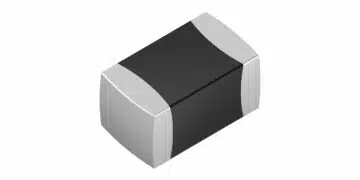
ROHM has developed thick-film shunt resistors, LTR100L, optimized for industrial and consumer applications. Often used to detect current in battery protection and motor drive circuits, shunt resistors require higher accuracy to improve reliability and ensure high efficiency operation.

Recent years have seen an emphasis on energy savings in the industrial and consumer fields, with efforts being made to reduce power consumption during drive operation by using motor inverters. At the same time, protection circuits are becoming more important in these fields as applications continue to increase in power.

RelatedPosts

ROHM Extends 2012 Shunt Resistors Power Rating up to 1.25 W

ROHM Expands Its High-Accuracy EROM Models for Shunt Resistors

ROHM Extends Chip Resistors Offering with Greater Miniaturization

ROHM has been working on expanding its considerable lineup, most recently with the GMR320 series of metal plate shunt resistors – released in February 2021. The devices feature a higher guaranteed rated power of up to 10W. Since April 2018, ROHM has been producing the LTR50 series of low ohmic thick film shunt resistors rated at 2W. With these latest products, ROHM has expanded its lineup of thick-film shunt resistors to support an even higher power area.

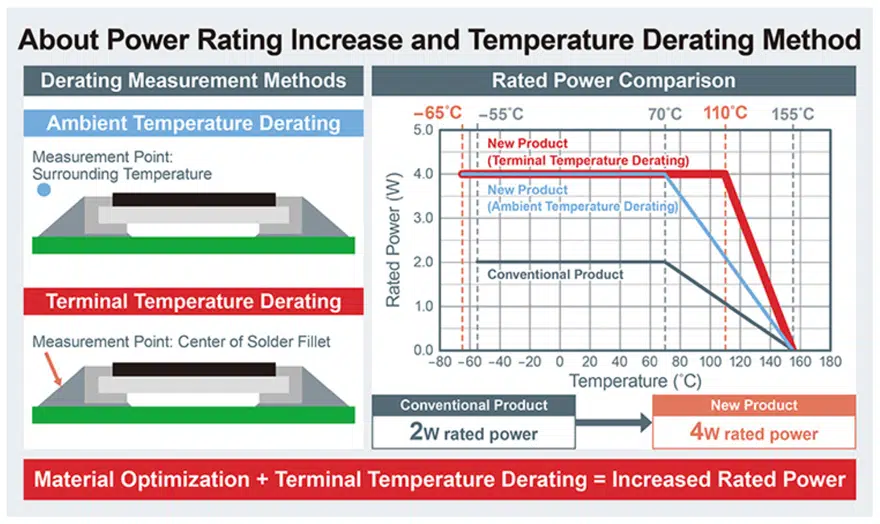
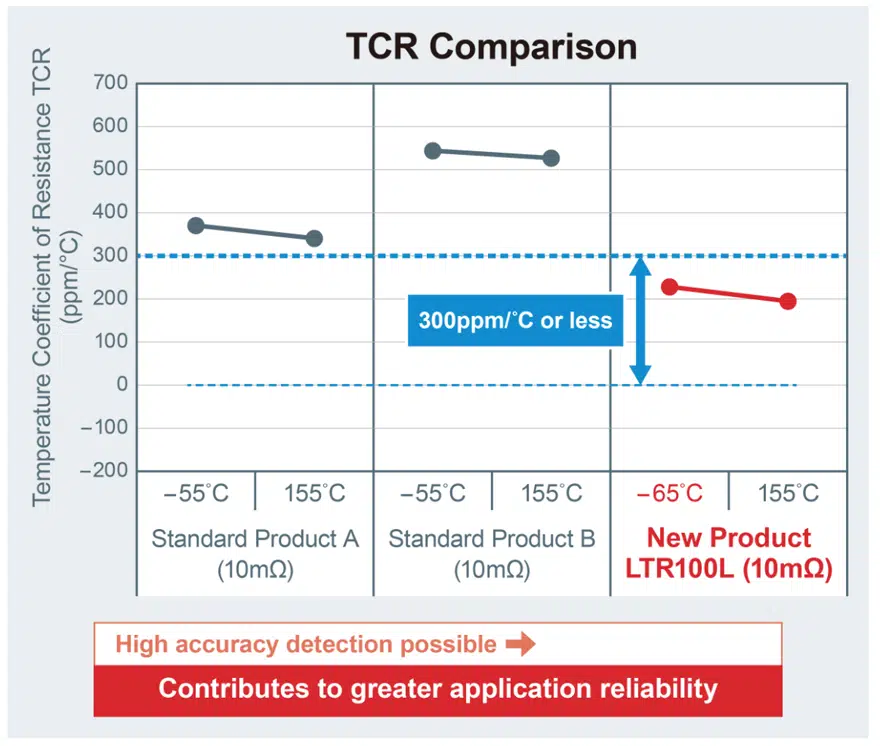
The LTR100L series achieves the industry’s highest rated power of 4W in the 3264 size (3.2mm × 6.4mm) / 1225 size (0.12inch × 0.25inch) by revising resistor materials and applying terminal temperature derating. This makes them ideal for current detection in motor control and overcurrent protection circuits for industrial and consumer applications, which are progressing towards higher power. In addition, optimization of the element structure delivers best-in-class TCR (temperature coefficient of resistance) characteristics among thick-film shunt resistors. As a result, they are not easily affected by temperature – enabling high accuracy, high reliability current detection.

Samples can be purchased from one piece from online distributors Digi-Key, Mouser, and Farnell (starting with 10mΩ, 47mΩ, and 91mΩ). Furthermore, a variety of content and tools useful for design, such as application notes, are available on ROHM’s website. Simulation Models will also be released.

Going forward, ROHM will continue to expand its resistor (a founding product) lineup from low to high power. The core aims: achieving greater energy savings and reliability, while contributing to the evolution of industrial and consumer equipment by leveraging its strengths as a comprehensive semiconductor manufacturer – to provide solution proposals utilizing ICs and discrete products.

Key Features

1. Achieves the industry’s highest 4W rated power for thick-film shunt resistors in the 3264 size (1225 size in inches)
ROHM’s new products adopt a high heat dissipation wide terminal package. In addition, optimizing resistor materials and applying terminal temperature derating allows ROHM to achieve thick film shunt resistors with the industry’s highest rated power of 4W in the 3264 size (3.2mm × 6.4mm) / 1225 size (0.12inch × 0.25inch). This is about twice that of conventional products in the same size – making them ideal for current detection in motor control and overcurrent protection circuits for industrial and consumer applications where higher power is required.
2. Superior temperature coefficient of resistance contributes to greater application reliability
The LTR100L series achieves excellent TCR characteristics of less than 300ppm/℃ (at 10mΩ resistance value products) within the operating temperature range through an optimized element structure. This reduces the change in resistance value due to temperature changes compared with standard products by 50% to 65%, – enabling high accuracy current detection that improves application reliability.

LTR100L Application Examples

The versatile design enables use in variety of applications, including consumer and industrial equipment.

  • Industrial equipment (factory automation, motor peripheral circuits, power supplies)
  • Consumer appliances (air conditioners, washers, refrigerators, vacuum cleaners)
  • Other (2-wheel vehicle headlamps, EV scooters (e-bikes), etc.)
Related

Source: ROHM

Recent Posts

Exxelia Introduces SMD High‑Voltage Mica Capacitors

27.4.2026
5

Modelithics Releases COMPLETE v26.1 for Keysight ADS

23.4.2026
11

April 2026 Interconnect, Passives and Electromechanical Components Market Insights

22.4.2026
49

KYOCERA AVX Introduces Traction‑Grade DC Link Film Capacitors

21.4.2026
40

YAGEO Introduces High‑Current Y2/X1 Film Capacitors for Wide-bandgap Power Systems

17.4.2026
33

Amphenol Explanded Liquid Cooling Connectors for AI, ESS and EV Systems

17.4.2026
16

Hirose Introduced BGA connector for PCIe Gen6 for AI and Edge Computing

17.4.2026
12

Samsung Introduces Ultra-High-Voltage 1500 V MLCCs for xEV Powertrains

16.4.2026
28

TDK Introduces High‑Voltage Common‑Mode Chokes for Compact 1250 V DC Converters

16.4.2026
31

Upcoming Events

Apr 29
10:00 - 11:00 CDT

SEPIC Design Done Right

Apr 30
10:00 - 11:00 CDT

Programming Embedded Systems

May 5
16:00 - 17:00 CEST

Understanding and Selecting Capacitors – Fundamentals, Technologies and Latest Trends

View Calendar

Popular Posts

  • Buck Converter Design and Calculation

    0 shares
    Share 0 Tweet 0
  • Boost Converter Design and Calculation

    0 shares
    Share 0 Tweet 0
  • Flyback Converter Design and Calculation

    0 shares
    Share 0 Tweet 0
  • LLC Resonant Converter Design and Calculation

    0 shares
    Share 0 Tweet 0
  • MLCC and Ceramic Capacitors

    0 shares
    Share 0 Tweet 0
  • Dual Active Bridge (DAB) Topology

    0 shares
    Share 0 Tweet 0
  • Capacitor Charging and Discharging

    0 shares
    Share 0 Tweet 0
  • What Electronics Engineer Needs to Know About Passive Low Pass Filters

    0 shares
    Share 0 Tweet 0
  • Ripple Current and its Effects on the Performance of Capacitors

    3 shares
    Share 3 Tweet 0
  • MLCC Case Sizes Standards Explained

    0 shares
    Share 0 Tweet 0

Newsletter Subscription


Passive Components Blog

© EPCI - Leading Passive Components Educational and Information Site

  • Home
  • Privacy Policy
  • EPCI Membership & Advertisement
  • About

No Result
View All Result
  • Home
  • Knowledge Blog
  • PCNS

© EPCI - Leading Passive Components Educational and Information Site

This website uses cookies. By continuing to use this website you are giving consent to cookies being used. Visit our Privacy and Cookie Policy.
Go to mobile version