



Passive Components Blog
No Result
View All Result
  • Home
  • NewsFilter
    • All
    • Aerospace & Defence
    • Antenna
    • Applications
    • Automotive
    • Capacitors
    • Circuit Protection Devices
    • electro-mechanical news
    • Filters
    • Fuses
    • Inductors
    • Industrial
    • Integrated Passives
    • inter-connect news
    • Market & Supply Chain
    • Market Insights
    • Medical
    • Modelling and Simulation
    • New Materials & Supply
    • New Technologies
    • Non-linear Passives
    • Oscillators
    • Passive Sensors News
    • Resistors
    • RF & Microwave
    • Telecommunication
    • Weekly Digest

    Tantalum Capacitor Anode Manufacturing Quality Management

    Middle East Conflict: The Potential Impact to Passive Components

    Wk 12 Electronics Supply Chain Digest

    Designing a 2 kW LLC Transformer with Integrated Resonant Inductor

    Inductor Technology Dossier

    Coilcraft Releases TLVR Inductors for High Density VRMs and PoL Converters

    Rutheniums Critical Role in Passive Component Supply Chains

    Bourns Expands its Modular Contacts for Power-Dense Systems

    Murata to Decouple China Rare Earth Supply in 3 Years

    Trending Tags

    • Ripple Current
    • RF
    • Leakage Current
    • Tantalum vs Ceramic
    • Snubber
    • Low ESR
    • Feedthrough
    • Derating
    • Dielectric Constant
    • New Products
    • Market Reports
  • VideoFilter
    • All
    • Antenna videos
    • Capacitor videos
    • Circuit Protection Video
    • Filter videos
    • Fuse videos
    • Inductor videos
    • Inter-Connect Video
    • Non-linear passives videos
    • Oscillator videos
    • Passive sensors videos
    • Resistor videos

    Thermal Modeling of Magnetics

    Standard vs Planar LLC transformers Comparison for Battery Chargers

    How Modern Tools Model Magnetic Components for Power Electronics

    Advanced Loss Modeling for Planar Magnetics in the Frenetic Planar Tool

    2026 Power Magnetics Design Trends: Flyback, DAB and Planar

    Enabling Software‑Defined Vehicle Architectures: Automotive Ethernet and Zonal Smart Power

    Calculating Resistance Value of a Flyback RC Snubber 

    One‑Pulse Characterization of Nonlinear Power Inductors

    Thermistor Linearization Challenges

    Trending Tags

    • Capacitors explained
    • Inductors explained
    • Resistors explained
    • Filters explained
    • Application Video Guidelines
    • EMC
    • New Products
    • Ripple Current
    • Simulation
    • Tantalum vs Ceramic
  • Knowledge Blog
  • DossiersNew
  • Suppliers
    • Who is Who
  • PCNS
    • PCNS 2025
    • PCNS 2023
    • PCNS 2021
    • PCNS 2019
    • PCNS 2017
  • Events
  • Home
  • NewsFilter
    • All
    • Aerospace & Defence
    • Antenna
    • Applications
    • Automotive
    • Capacitors
    • Circuit Protection Devices
    • electro-mechanical news
    • Filters
    • Fuses
    • Inductors
    • Industrial
    • Integrated Passives
    • inter-connect news
    • Market & Supply Chain
    • Market Insights
    • Medical
    • Modelling and Simulation
    • New Materials & Supply
    • New Technologies
    • Non-linear Passives
    • Oscillators
    • Passive Sensors News
    • Resistors
    • RF & Microwave
    • Telecommunication
    • Weekly Digest

    Tantalum Capacitor Anode Manufacturing Quality Management

    Middle East Conflict: The Potential Impact to Passive Components

    Wk 12 Electronics Supply Chain Digest

    Designing a 2 kW LLC Transformer with Integrated Resonant Inductor

    Inductor Technology Dossier

    Coilcraft Releases TLVR Inductors for High Density VRMs and PoL Converters

    Rutheniums Critical Role in Passive Component Supply Chains

    Bourns Expands its Modular Contacts for Power-Dense Systems

    Murata to Decouple China Rare Earth Supply in 3 Years

    Trending Tags

    • Ripple Current
    • RF
    • Leakage Current
    • Tantalum vs Ceramic
    • Snubber
    • Low ESR
    • Feedthrough
    • Derating
    • Dielectric Constant
    • New Products
    • Market Reports
  • VideoFilter
    • All
    • Antenna videos
    • Capacitor videos
    • Circuit Protection Video
    • Filter videos
    • Fuse videos
    • Inductor videos
    • Inter-Connect Video
    • Non-linear passives videos
    • Oscillator videos
    • Passive sensors videos
    • Resistor videos

    Thermal Modeling of Magnetics

    Standard vs Planar LLC transformers Comparison for Battery Chargers

    How Modern Tools Model Magnetic Components for Power Electronics

    Advanced Loss Modeling for Planar Magnetics in the Frenetic Planar Tool

    2026 Power Magnetics Design Trends: Flyback, DAB and Planar

    Enabling Software‑Defined Vehicle Architectures: Automotive Ethernet and Zonal Smart Power

    Calculating Resistance Value of a Flyback RC Snubber 

    One‑Pulse Characterization of Nonlinear Power Inductors

    Thermistor Linearization Challenges

    Trending Tags

    • Capacitors explained
    • Inductors explained
    • Resistors explained
    • Filters explained
    • Application Video Guidelines
    • EMC
    • New Products
    • Ripple Current
    • Simulation
    • Tantalum vs Ceramic
  • Knowledge Blog
  • DossiersNew
  • Suppliers
    • Who is Who
  • PCNS
    • PCNS 2025
    • PCNS 2023
    • PCNS 2021
    • PCNS 2019
    • PCNS 2017
  • Events
No Result
View All Result
Passive Components Blog
No Result
View All Result

Signal Transformer is Releasing New Safety Extra Low Voltage Lighting Transformers

21.5.2020
Reading Time: 2 mins read
A A

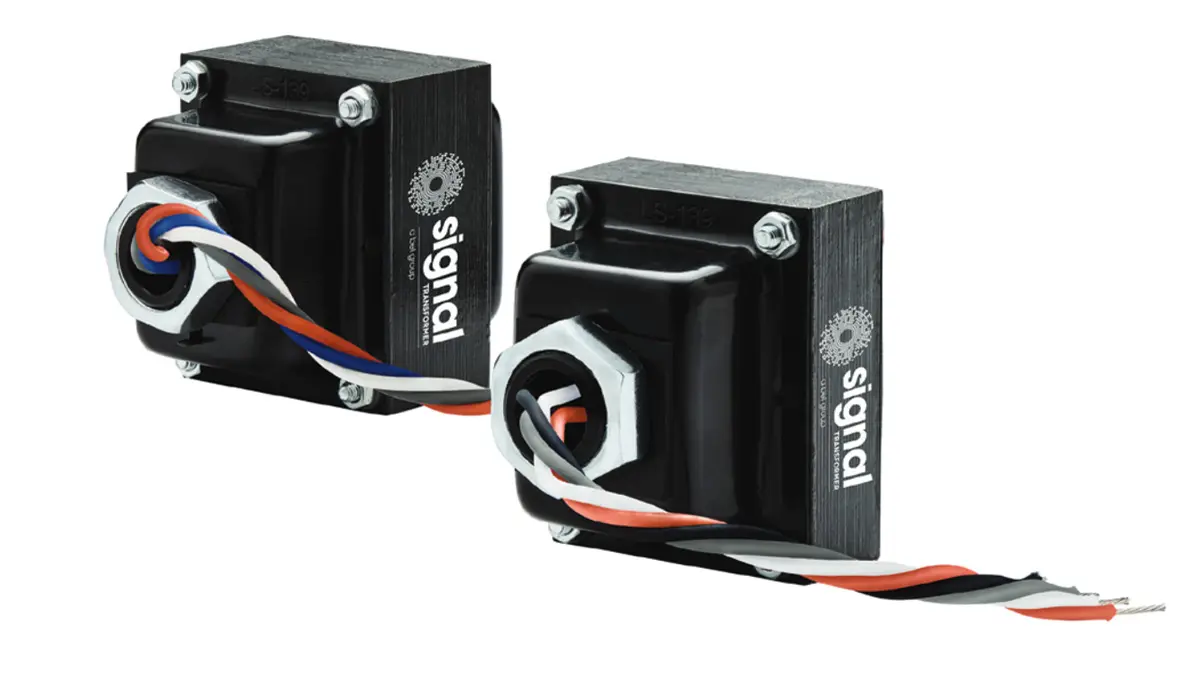
Signal Transformer, a Bel group company and global manufacturer of custom and standard transformers, chassis and high frequency chokes and inductors, SMD inductors and wireless charging coils, announce their latest product offering for the lighting industry, the Lighting Transformer (LT) Series.

The Lighting Transformers are designed and built to meet the U.S. and international safety standards: UL/CSA/IEC. Offers Safety Extra Low Voltage (SELV) outputs created for industries and OEM installations of landscape, track, recessed and LED lighting, as well as security systems, in the commercial, consumer and industrial sectors. Provides a safer work environment.

RelatedPosts

NIC Components Extends SMD High Voltage MLCC Offering

Stackpole Offers RoHS Compliant Lead-Free Thick Film Chip Resistors

Smiths Interconnect’s SMD Power Resistors with Heat Sink Qualified to Space Flights

When SELV outputs are required to operate control equipment and other electronic devices, a step-down transformer is needed to convert from 120V or 277V to 12V. Offering a safer work environment, the SELV isolation provided by Signal’s LT Transformer Series eliminates potential shock hazards. The LT277-50-12 is ideal for 480V, 3-phase 4-wire systems, where line voltage to neutral is equal to single-phase 277V 50/60 Hz. The LT120-50-12 is designed for single-phase 120V 50/60 Hz supplies.

The LT Series is easy to mount and can be hardwired via standard ½” conduit hardware and a straight box connection. Signal’s design features a corrosion-resistant surface coating that is environmentally resilient, with insulation Class B 130°C 1446. All the lead connections are 18AWG UL 1015. The LT Series is UL recognized to North American Harmonized standards: UL5085-1-2 and CSA C22.2 No. 66. With rugged construction at a reasonable price, Signal’s experienced engineering team has utilized the latest software in transformer design to develop the LT Series.

Specifications

  • Step-down transformer
  • 277V or 120V primary to 12V
  • Lead connections; 18AWG style UL 1015
  • Insulation class B, 130°C
  • UL recognized to North American Harmonized standards: UL5085-1-2 and CSA C22.2 No.66

Features

  • Highly effective
  • Low-cost design
  • Auto-resettable thermal protection
  • Rugged construction at a reasonable price
  • Corrosion-resistant surface coating that is environmentally resilient
  • Easy to mount and can be hardwired via standard 1/2″ conduit hardwire and a straight box connection

Related

Source: Signal Transformer

Recent Posts

Middle East Conflict: The Potential Impact to Passive Components

23.3.2026
50

Designing a 2 kW LLC Transformer with Integrated Resonant Inductor

20.3.2026
22

Inductor Technology Dossier

19.3.2026
38

Coilcraft Releases TLVR Inductors for High Density VRMs and PoL Converters

19.3.2026
32

Vishay Introduced Space-Grade SMT Common Mode Choke

19.3.2026
14

Exxelia to Exhibit at APEC 2026 in San Antonio, Texas

17.3.2026
35

Thermal Modeling of Magnetics

16.3.2026
23

ESA SPCD 26 Call for Papers Extended to 30th March

16.3.2026
84

Standard vs Planar LLC transformers Comparison for Battery Chargers

13.3.2026
33

Upcoming Events

Mar 24
9:00 - 10:00 CET

Power protection in the digital age – eFuse and hot-swap strategies for modern data center design

Apr 21
16:00 - 17:00 CEST

Heatsink Solutions: Thermal Management in electronic devices

May 5
16:00 - 17:00 CEST

Understanding and Selecting Capacitors – Fundamentals, Technologies and Latest Trends

View Calendar

Popular Posts

  • Buck Converter Design and Calculation

    0 shares
    Share 0 Tweet 0
  • Boost Converter Design and Calculation

    0 shares
    Share 0 Tweet 0
  • Flyback Converter Design and Calculation

    0 shares
    Share 0 Tweet 0
  • LLC Resonant Converter Design and Calculation

    0 shares
    Share 0 Tweet 0
  • MLCC Manufacturers Consider Price Increase as AI Demand Outpaces Supply

    0 shares
    Share 0 Tweet 0
  • MLCC and Ceramic Capacitors

    0 shares
    Share 0 Tweet 0
  • Dual Active Bridge (DAB) Topology

    0 shares
    Share 0 Tweet 0
  • Ripple Current and its Effects on the Performance of Capacitors

    3 shares
    Share 3 Tweet 0
  • MLCC Case Sizes Standards Explained

    0 shares
    Share 0 Tweet 0
  • What is a Dielectric Constant and DF of Plastic Materials?

    4 shares
    Share 4 Tweet 0

Newsletter Subscription


Passive Components Blog

© EPCI - Leading Passive Components Educational and Information Site

  • Home
  • Privacy Policy
  • EPCI Membership & Advertisement
  • About

No Result
View All Result
  • Home
  • Knowledge Blog
  • PCNS

© EPCI - Leading Passive Components Educational and Information Site

This website uses cookies. By continuing to use this website you are giving consent to cookies being used. Visit our Privacy and Cookie Policy.
Go to mobile version