








Passive Components Blog
No Result
View All Result
  • Home
  • NewsFilter
    • All
    • Aerospace & Defence
    • Antenna
    • Applications
    • Automotive
    • Capacitors
    • Circuit Protection Devices
    • electro-mechanical news
    • Filters
    • Fuses
    • Inductors
    • Industrial
    • Integrated Passives
    • inter-connect news
    • Market & Supply Chain
    • Market Insights
    • Medical
    • Modelling and Simulation
    • New Materials & Supply
    • New Technologies
    • Non-linear Passives
    • Oscillators
    • Passive Sensors News
    • Resistors
    • RF & Microwave
    • Telecommunication
    • Weekly Digest

    Modelithics Releases Component Model Library for SIMULIA CST Studio Suite

    Exxelia Publishes Micropen White Papers for Printed Electronics

    Stackpole Releases AlN High‑Power Thick Film Chip Resistors

    Samsung Q4 2025 Results: MLCC focus for AI, Server and Automotive

    Würth Elektronik Developed a Custom Transformer for Active Hand Orthosis

    Wk 4 Electronics Supply Chain Digest

    Capacitor Technology Dossier

    ROHM Extends 2012 Shunt Resistors Power Rating up to 1.25 W

    January 2026 Interconnect, Passives and Electromechanical Components Market Insights

    Trending Tags

    • Ripple Current
    • RF
    • Leakage Current
    • Tantalum vs Ceramic
    • Snubber
    • Low ESR
    • Feedthrough
    • Derating
    • Dielectric Constant
    • New Products
    • Market Reports
  • VideoFilter
    • All
    • Antenna videos
    • Capacitor videos
    • Circuit Protection Video
    • Filter videos
    • Fuse videos
    • Inductor videos
    • Inter-Connect Video
    • Non-linear passives videos
    • Oscillator videos
    • Passive sensors videos
    • Resistor videos

    One‑Pulse Characterization of Nonlinear Power Inductors

    Thermistor Linearization Challenges

    Coaxial Connectors and How to Connect with PCB

    PCB Manufacturing, Test Methods, Quality and Reliability

    Transformer Behavior – Current Transfer and Hidden Feedback

    Choosing the Right Capacitor: The Importance of Accurate Measurements

    RF Inductors: Selection and Design Challenges for High-Frequency Circuits

    Transformer Safety IEC 61558 Standard

    3-Phase EMI Filter Design, Simulation, Calculation and Test

    Trending Tags

    • Capacitors explained
    • Inductors explained
    • Resistors explained
    • Filters explained
    • Application Video Guidelines
    • EMC
    • New Products
    • Ripple Current
    • Simulation
    • Tantalum vs Ceramic
  • Knowledge Blog
  • DossiersNew
  • Suppliers
    • Who is Who
  • PCNS
    • PCNS 2025
    • PCNS 2023
    • PCNS 2021
    • PCNS 2019
    • PCNS 2017
  • Events
  • Home
  • NewsFilter
    • All
    • Aerospace & Defence
    • Antenna
    • Applications
    • Automotive
    • Capacitors
    • Circuit Protection Devices
    • electro-mechanical news
    • Filters
    • Fuses
    • Inductors
    • Industrial
    • Integrated Passives
    • inter-connect news
    • Market & Supply Chain
    • Market Insights
    • Medical
    • Modelling and Simulation
    • New Materials & Supply
    • New Technologies
    • Non-linear Passives
    • Oscillators
    • Passive Sensors News
    • Resistors
    • RF & Microwave
    • Telecommunication
    • Weekly Digest

    Modelithics Releases Component Model Library for SIMULIA CST Studio Suite

    Exxelia Publishes Micropen White Papers for Printed Electronics

    Stackpole Releases AlN High‑Power Thick Film Chip Resistors

    Samsung Q4 2025 Results: MLCC focus for AI, Server and Automotive

    Würth Elektronik Developed a Custom Transformer for Active Hand Orthosis

    Wk 4 Electronics Supply Chain Digest

    Capacitor Technology Dossier

    ROHM Extends 2012 Shunt Resistors Power Rating up to 1.25 W

    January 2026 Interconnect, Passives and Electromechanical Components Market Insights

    Trending Tags

    • Ripple Current
    • RF
    • Leakage Current
    • Tantalum vs Ceramic
    • Snubber
    • Low ESR
    • Feedthrough
    • Derating
    • Dielectric Constant
    • New Products
    • Market Reports
  • VideoFilter
    • All
    • Antenna videos
    • Capacitor videos
    • Circuit Protection Video
    • Filter videos
    • Fuse videos
    • Inductor videos
    • Inter-Connect Video
    • Non-linear passives videos
    • Oscillator videos
    • Passive sensors videos
    • Resistor videos

    One‑Pulse Characterization of Nonlinear Power Inductors

    Thermistor Linearization Challenges

    Coaxial Connectors and How to Connect with PCB

    PCB Manufacturing, Test Methods, Quality and Reliability

    Transformer Behavior – Current Transfer and Hidden Feedback

    Choosing the Right Capacitor: The Importance of Accurate Measurements

    RF Inductors: Selection and Design Challenges for High-Frequency Circuits

    Transformer Safety IEC 61558 Standard

    3-Phase EMI Filter Design, Simulation, Calculation and Test

    Trending Tags

    • Capacitors explained
    • Inductors explained
    • Resistors explained
    • Filters explained
    • Application Video Guidelines
    • EMC
    • New Products
    • Ripple Current
    • Simulation
    • Tantalum vs Ceramic
  • Knowledge Blog
  • DossiersNew
  • Suppliers
    • Who is Who
  • PCNS
    • PCNS 2025
    • PCNS 2023
    • PCNS 2021
    • PCNS 2019
    • PCNS 2017
  • Events
No Result
View All Result
Passive Components Blog
No Result
View All Result

Bourns Release Automotive 4-Terminal Shunt Resistors

17.10.2025
Reading Time: 3 mins read
A A

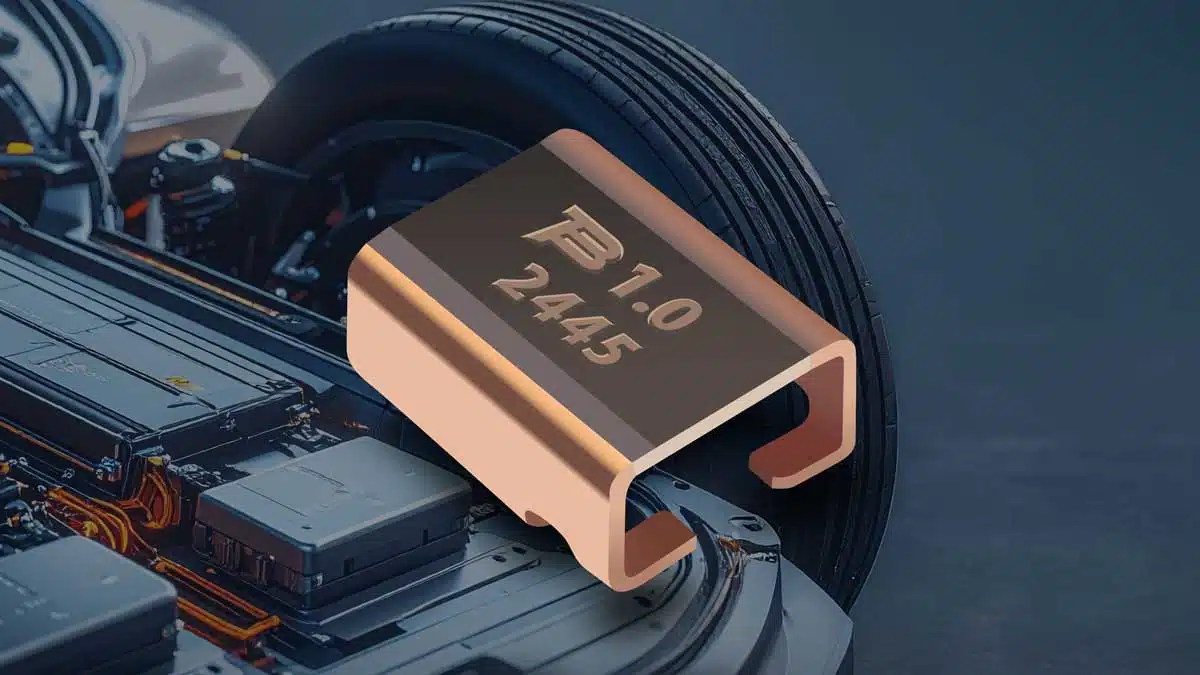
Bourns® CSS4C-1216 Series delivers superior current sensing accuracy in a compact, robust design ideal for high-performance and high-reliability applications.

Bourns, Inc., a leading manufacturer and supplier of electronic components for power, protection, and sensing solutions, announced its CSS4C-1216 Series 4-terminal current sense resistors.

RelatedPosts

Bourns SSD‑1000A AEC‑Q Digital Current Sensors

Bourns BTJ Thermal Jumper Chips for PCB Heat Management

Bourns Releases 500VDC 690VAC Fuse to Protect Power Semiconductors

The automotive-grade, AEC-Q200 compliant Bourns® CSS4C-1216 shunt resistor series meets precise current measurement requirements in today’s high-performance applications that demand higher power handling, greater efficiency and effective thermal management in a smaller, more compact footprint.

Applications that can benefit from these capabilities include Electric Vehicles (EVs), Hybrid Electric Vehicles (HEVs), (BMS) Battery Management Systems, frequency converters and power electronics.

The CSS4C-1216 Series is constructed with an Electron Beam Welded (EBW) metal strip that provides excellent long-term stability, minimal inductance (< 2 nH) and superior thermal performance.

Delivering a power rating of up to 5 watts and resistance values as low as 0.0003 ohms (Ω), these new shunt resistors help ensure precise, stable operation across an extensive operating temperature range from –65 °C to +170 °C.

The series’ 4-terminal design minimizes measurement inaccuracies resulting from lead resistance to significantly enhance reliable operation in high current circuits. Additionally, this current sense resistor series features robust construction that ensures consistent thermal stability and durability while also addressing the demanding requirements of precise current monitoring in space-constrained PCB layouts.

Bourns® CSS4C-1216 Series is available now through Bourns’ authorized distribution partners, and is RoHS compliant and halogen free.

Features

  • EB welded metal strip
  • High power up to 5 W
  • Excellent long term stability
  • Four terminals for high accuracy
  • RoHS compliant and halogen free
  • AEC-Q200 compliant

Applications

  • Current sensing
  • Voltage division
  • Battery management systems
  • Power modules
  • Frequency converters
  • Industrial

Related

Source: Bourns

Recent Posts

Stackpole Releases AlN High‑Power Thick Film Chip Resistors

26.1.2026
8

Samsung Q4 2025 Results: MLCC focus for AI, Server and Automotive

26.1.2026
26

Capacitor Technology Dossier

26.1.2026
53

ROHM Extends 2012 Shunt Resistors Power Rating up to 1.25 W

23.1.2026
13

Passive Components in Quantum Computing

22.1.2026
86

0603 Automotive Chip Varistors as TVS Diode Replacements, TDK Tech Note

21.1.2026
26

Conductive Polymer Capacitor Market and Design‑In Guide to 2035

20.1.2026
120

TDK Releases High Performance 105C DC Link Film Capacitors

19.1.2026
57

YAGEO Offers Automotive MOVs for EV and AI power

19.1.2026
33

Upcoming Events

Jan 27
16:00 - 17:00 CET

Simplifying Vehicle Development with Automotive Ethernet and Zonal Smart Switch Technologies

Feb 24
16:00 - 17:00 CET

Designing Qi2 Wireless Power Systems: Practical Development and EMC Optimization

Mar 3
16:00 - 17:00 CET

Cybersecurity at the Eleventh Hour – from RED to CRA – Information and Discussion

View Calendar

Popular Posts

  • Buck Converter Design and Calculation

    0 shares
    Share 0 Tweet 0
  • Boost Converter Design and Calculation

    0 shares
    Share 0 Tweet 0
  • LLC Resonant Converter Design and Calculation

    0 shares
    Share 0 Tweet 0
  • Flyback Converter Design and Calculation

    0 shares
    Share 0 Tweet 0
  • Ripple Current and its Effects on the Performance of Capacitors

    3 shares
    Share 3 Tweet 0
  • How Metal Prices Are Driving Passive Component Price Hikes

    0 shares
    Share 0 Tweet 0
  • MLCC and Ceramic Capacitors

    0 shares
    Share 0 Tweet 0
  • What is a Dielectric Constant and DF of Plastic Materials?

    4 shares
    Share 4 Tweet 0
  • Dual Active Bridge (DAB) Topology

    0 shares
    Share 0 Tweet 0
  • Degradation of Capacitors and its Failure Mechanisms

    0 shares
    Share 0 Tweet 0

Newsletter Subscription


Passive Components Blog

© EPCI - Leading Passive Components Educational and Information Site

  • Home
  • Privacy Policy
  • EPCI Membership & Advertisement
  • About

No Result
View All Result
  • Home
  • Knowledge Blog
  • PCNS

© EPCI - Leading Passive Components Educational and Information Site

This website uses cookies. By continuing to use this website you are giving consent to cookies being used. Visit our Privacy and Cookie Policy.
Go to mobile version