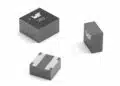








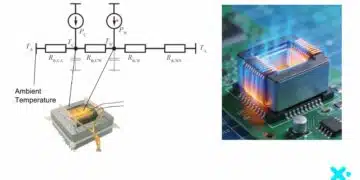









Panasonic’s super high precision thick film chip resistors target designs that need thin‑film‑class accuracy but with higher power handling and better cost efficiency. They are positioned for automotive and industrial control, where downsizing, long‑term stability and robust environmental performance are critical.
Key features and benefits
Panasonic’s super high precision thick film chip resistors are designed to bridge the gap between conventional thick film and thin film resistors by combining tight tolerance with improved power rating in small case sizes. The series uses proprietary thick film materials and process engineering to deliver very stable resistance over time and temperature in harsh environments.
Key features include:
- High precision with resistance tolerance down to ±0.1%, approaching typical thin film performance.
- Low temperature coefficient of resistance (TCR) down to ±25 × 10⁻⁶/K for selected values, helping to keep gain, sense and reference networks stable over temperature.
- Higher power rating than many thin film alternatives, for example 0.20 W in 0603 (1608 metric) and 0.25 W in 0805 (2012 metric), enabling smaller footprints at the same dissipation.
- Reference to international standards such as IEC 60115‑8, JIS C 5201‑8 and JEITA RC‑2134C, simplifying qualification and documentation for end equipment.
- AEC‑Q200 compliance for use in automotive ECUs and other high‑reliability applications with defined stress profiles.
- RoHS compliant construction with lead‑free materials and a roadmap towards fully lead‑free resistors without relying on RoHS exemptions according to Panasonic’s documentation.
From a practical design perspective, the combination of tight tolerance, low TCR and higher power density allows engineers to replace larger thin film parts with smaller thick film chips without sacrificing accuracy or thermal performance, supporting board area reduction while maintaining stability.
Typical applications
Panasonic positions this series for a wide range of high‑reliability electronics where precision and environmental robustness must be balanced with cost and size. Target markets span both automotive and industrial domains, as well as energy and ICT systems.
Typical application areas include:
- Automotive ECUs and sensor interfaces that require AEC‑Q200 qualified resistors with stable long‑term drift.
- Industrial control, factory automation and robotics, where tight tolerance resistors help maintain control loop accuracy over temperature and lifetime.
- Energy and power management equipment, including inverters and power supplies, where precision in feedback and sensing networks supports efficiency and safety.
- Transportation and other harsh‑environment electronics that demand resistance to ESD, corrosion and mechanical stress.
Within these systems, the parts are well suited for use in amplifier gain‑setting networks, precision voltage dividers, sensor signal conditioning, DAC/ADC input networks and other circuits where both precision and elevated operating temperatures are present.
Technical highlights
While detailed parametric information should always be taken from the manufacturer datasheet, the product line highlights several key technical characteristics that guide initial selection and comparison.
Main technical points:
- Construction: thick film chip resistors in super high precision variant, using proprietary resistive and protective materials.
- Sizes and power ratings (examples from the series):
- 0603 (1608 metric) devices such as ERJPC3 types with power rating around 0.20 W.
- 0805 (2012 metric) devices such as ERJPC6 or ERJHP6 types with power rating around 0.25 W or higher according to individual datasheets.
- Precision: resistance tolerance options down to ±0.1%; other tolerances may be available depending on part number.
- TCR classes: low TCR options such as ±25 × 10⁻⁶/K for selected resistance values, with other TCR classes according to datasheet.
- Resistance range: wide resistance coverage from a few hundred ohms up into the hundreds of kiloohms and above, as indicated by part examples like 316 Ω, 301 Ω, 30.1 kΩ, 309 kΩ and 270 kΩ.
- Packaging: surface‑mount chip format supplied in punched paper taping or equivalent standard SMD reel packaging for automated assembly.
The series is also promoted for superior stability, with resistance change after environmental and load testing kept within a small percentage window, which is important for drift‑sensitive designs such as long‑life industrial controllers and automotive systems.
Design‑in notes for engineers
When designing in Panasonic’s super high precision thick film chip resistors, a few practical considerations help maximize performance and reliability:
- Component selection strategy
- Use the low‑TCR (for example ±25 × 10⁻⁶/K) variants in positions where gain, offset or reference accuracy directly impacts system performance, such as precision amplifiers or high‑resolution ADC front ends.
- Reserve the tightest tolerance (±0.1%) values for resistor ratios and dividers that set critical thresholds, while allowing looser tolerance parts in less sensitive locations to optimize cost.
- Power derating and thermal design
- Even though these parts offer higher power capability than many thin film resistors in the same footprint, continuous dissipation should be derated according to ambient temperature, PCB layout and airflow conditions specified in the datasheet.
- Place higher‑dissipation resistors away from heat‑sensitive components and use adequate copper area under and around the pads to help spread heat when operating near the upper power rating.
- Layout, matching and stability
- For resistor networks that require tracking (for example differential amplifier feedback and input resistors), select parts from the same series and TCR class and keep them close together on the PCB to minimize temperature gradients.
- Observe standard SMD land patterns and avoid mechanical stress from board flex, as this can affect long‑term stability; mounting recommendations in the datasheet should be followed during footprint design.
- Automotive and industrial qualification
- For automotive ECUs or other safety‑relevant systems, use only AEC‑Q200 qualified variants and confirm that the particular part number is listed as compliant.
- Ensure that the applicable IEC, JIS and JEITA standards are acceptable for the target market and document them in the product’s technical file for easier regulatory review.
By leveraging the higher power density of these thick film precision resistors, designers can shrink resistor footprints while still achieving thin‑film‑like accuracy, which is particularly valuable in dense control units and compact industrial modules.
Source
This article is based on technical information provided by Panasonic for its super high precision thick film chip resistor series, complemented by publicly available product collateral and datasheet‑level documentation. Exact numerical ratings and derating behavior for individual part numbers should always be taken from the latest official datasheet and online product table published by the manufacturer.