















Passive Components Blog
No Result
View All Result
  • Home
  • NewsFilter
    • All
    • Aerospace & Defence
    • Antenna
    • Applications
    • Automotive
    • Capacitors
    • Circuit Protection Devices
    • electro-mechanical news
    • Filters
    • Fuses
    • Inductors
    • Industrial
    • Integrated Passives
    • inter-connect news
    • Market & Supply Chain
    • Market Insights
    • Medical
    • Modelling and Simulation
    • New Materials & Supply
    • New Technologies
    • Non-linear Passives
    • Oscillators
    • Passive Sensors News
    • Resistors
    • RF & Microwave
    • Telecommunication
    • Weekly Digest

    Binder Hybrid Connector Simplifies One Cable Automation

    Tapped Inductor Buck Converter Fundamentals

    TAIYO YUDEN Releases Mini Metal Power Inductors

    Molecular Memristor Shows Record 145 kH Emergent Inductance

    Planar vs Conventional Transformer: When it Make Sense

    Researchers Propose Next‑Gen Compact Memory Using Ultra-thin Ferroelectric Capacitors

    Nichicon ADN Automotive Hybrid Aluminum Capacitors Now Available in EMEA

    Wk 19 Electronics Supply Chain Digest

    Electrocaloric Multilayer Capacitors: Towards Quiet, Solid‑State Cooling Around Room Temperature

    Trending Tags

    • Ripple Current
    • RF
    • Leakage Current
    • Tantalum vs Ceramic
    • Snubber
    • Low ESR
    • Feedthrough
    • Derating
    • Dielectric Constant
    • New Products
    • Market Reports
  • VideoFilter
    • All
    • Antenna videos
    • Capacitor videos
    • Circuit Protection Video
    • Filter videos
    • Fuse videos
    • Inductor videos
    • Inter-Connect Video
    • Non-linear passives videos
    • Oscillator videos
    • Passive sensors videos
    • Resistor videos

    Tapped Inductor Buck Converter Fundamentals

    Planar vs Conventional Transformer: When it Make Sense

    Modeling Fringing Field Losses in Inductors & Transformers

    Why Power Inductors Use a Ferrite Core With an Air Gap

    Transformer-Based Power-Line Harvester Magnetic Design

    Thermal Modeling of Magnetics

    Standard vs Planar LLC transformers Comparison for Battery Chargers

    How Modern Tools Model Magnetic Components for Power Electronics

    Advanced Loss Modeling for Planar Magnetics in the Frenetic Planar Tool

    Trending Tags

    • Capacitors explained
    • Inductors explained
    • Resistors explained
    • Filters explained
    • Application Video Guidelines
    • EMC
    • New Products
    • Ripple Current
    • Simulation
    • Tantalum vs Ceramic
  • Knowledge Blog
  • DossiersNew
  • Suppliers
    • Who is Who
  • PCNS
    • PCNS 2025
    • PCNS 2023
    • PCNS 2021
    • PCNS 2019
    • PCNS 2017
  • Events
  • Home
  • NewsFilter
    • All
    • Aerospace & Defence
    • Antenna
    • Applications
    • Automotive
    • Capacitors
    • Circuit Protection Devices
    • electro-mechanical news
    • Filters
    • Fuses
    • Inductors
    • Industrial
    • Integrated Passives
    • inter-connect news
    • Market & Supply Chain
    • Market Insights
    • Medical
    • Modelling and Simulation
    • New Materials & Supply
    • New Technologies
    • Non-linear Passives
    • Oscillators
    • Passive Sensors News
    • Resistors
    • RF & Microwave
    • Telecommunication
    • Weekly Digest

    Binder Hybrid Connector Simplifies One Cable Automation

    Tapped Inductor Buck Converter Fundamentals

    TAIYO YUDEN Releases Mini Metal Power Inductors

    Molecular Memristor Shows Record 145 kH Emergent Inductance

    Planar vs Conventional Transformer: When it Make Sense

    Researchers Propose Next‑Gen Compact Memory Using Ultra-thin Ferroelectric Capacitors

    Nichicon ADN Automotive Hybrid Aluminum Capacitors Now Available in EMEA

    Wk 19 Electronics Supply Chain Digest

    Electrocaloric Multilayer Capacitors: Towards Quiet, Solid‑State Cooling Around Room Temperature

    Trending Tags

    • Ripple Current
    • RF
    • Leakage Current
    • Tantalum vs Ceramic
    • Snubber
    • Low ESR
    • Feedthrough
    • Derating
    • Dielectric Constant
    • New Products
    • Market Reports
  • VideoFilter
    • All
    • Antenna videos
    • Capacitor videos
    • Circuit Protection Video
    • Filter videos
    • Fuse videos
    • Inductor videos
    • Inter-Connect Video
    • Non-linear passives videos
    • Oscillator videos
    • Passive sensors videos
    • Resistor videos

    Tapped Inductor Buck Converter Fundamentals

    Planar vs Conventional Transformer: When it Make Sense

    Modeling Fringing Field Losses in Inductors & Transformers

    Why Power Inductors Use a Ferrite Core With an Air Gap

    Transformer-Based Power-Line Harvester Magnetic Design

    Thermal Modeling of Magnetics

    Standard vs Planar LLC transformers Comparison for Battery Chargers

    How Modern Tools Model Magnetic Components for Power Electronics

    Advanced Loss Modeling for Planar Magnetics in the Frenetic Planar Tool

    Trending Tags

    • Capacitors explained
    • Inductors explained
    • Resistors explained
    • Filters explained
    • Application Video Guidelines
    • EMC
    • New Products
    • Ripple Current
    • Simulation
    • Tantalum vs Ceramic
  • Knowledge Blog
  • DossiersNew
  • Suppliers
    • Who is Who
  • PCNS
    • PCNS 2025
    • PCNS 2023
    • PCNS 2021
    • PCNS 2019
    • PCNS 2017
  • Events
No Result
View All Result
Passive Components Blog
No Result
View All Result

Researchers Have for the First Time Demonstrated an Organic Battery

23.10.2020
Reading Time: 3 mins read
A A
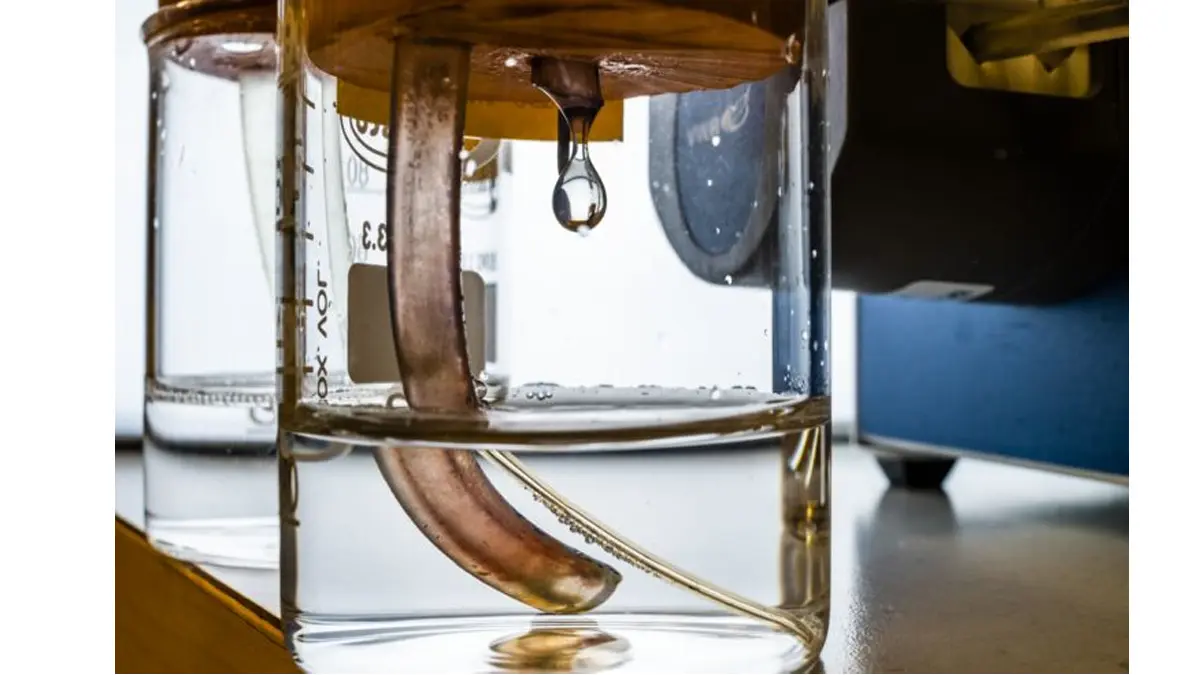
A model of the redox flow battery in the laboratory. Source: Linkoping University, Thor Balkhed

A model of the redox flow battery in the laboratory. Source: Linkoping University, Thor Balkhed

Researchers at the Laboratory of Organic Electronics have for the first time demonstrated an organic battery. It is of a type known as a “redox flow battery”, with a large capacity that can be used to store energy from wind turbines and solar cells, and as a power bank for cars.

Redox flow batteries are stationary batteries in which the energy is located in the electrolyte, outside of the cell itself, as in a fuel cell. They are often marketed with the prefix “eco”, since they open the possibility of storing excess energy from, for example, the sun and wind. Further, it appears to be possible to recharge them an unlimited number of times. However, redox flow batteries often contain vanadium, a scarce and expensive metal. The electrolyte in which energy is stored in a redox flow battery can be water-based, which makes the battery safe to use, but results in a lower energy density.

Mikhail Vagin, principal research engineer, and his colleagues at the Laboratory of Organic Electronics, Campus Norrköping, have now succeeded in producing not only a water-based electrolyte but also electrodes of organic material, which increases the energy density considerably. It is possible in this way to manufacture completely organic redox flow batteries for the storage of, for example, energy from the sun and wind, and to compensate for load variation in the electrical supply grid.

RelatedPosts

Binder Hybrid Connector Simplifies One Cable Automation

Tapped Inductor Buck Converter Fundamentals

TAIYO YUDEN Releases Mini Metal Power Inductors

Quinone molecule

They have used the conducting polymer PEDOT for the electrodes, which they have doped to transport either positive ions (cations) or negative ions (anions). The water-based electrolyte they have developed consists of a solution of quinone molecules, which can be extracted from forest-based materials.

“Quinones can be derived from wood, but here we have used the same molecule, together with different variants of the conducting polymer PEDOT. It turns out that they are highly compatible with each other, which is like a gift from the natural world”, says Viktor Gueskine, principal research engineer in the Laboratory of Organic Electronics, and one of the authors of the article now published in Advanced Functional Materials.

The high compatibility means that the PEDOT electrodes help the quinone molecules switch between their oxidised and their reduced states, and in this way create a flow of protons and electrons.

“It is normally difficult to control the ion process, but we have managed it here. We also use a fundamental phenomenon within electrocatalysis in which one special ion in solution, in this case quinone ions, is converted to electricity. The phenomenon is conceptualised by us as ion-selective electrocatalysis, and probably exists in other types of membrane storage devices such as batteries, fuel cells and supercapacitors. This effect has never previously been discussed. We showed it for the first time in redox flow batteries”, says Mikhail Vagin.

Extremely cheap

The organic redox flow batteries still have a lower energy density than batteries that contain vanadium, but they are extremely cheap, completely recyclable, safe, and perfect for storing energy and compensating for load variations in the electrical supply grid. Maybe in the future we will have an organic redox flow battery at home, as a power bank for the electric car.

The research has been financed by the Knut and Alice Wallenberg Foundation through the Wallenberg Wood Science Center, Vinnova through the Digital Cellulose Centre, and the Swedish Foundation for Strategic Research, SSF. The work has been carried out under the Swedish Government Strategic Research Area in Materials Science on Advanced Functional Materials at Linköping University

Ion-selective Electrocatalysis on Conducting Polymer Electrodes – Improving the Performance of Redox Flow Batteries
. Mikhail Vagin, Canyan Che, Viktor Gueskine, Magnus Berggren and Xavier Crispin, Advanced Functional Materials, 2020. DOI 10.1002/adfm.202007009


Related

Source: Linkoping University

Recent Posts

Molecular Memristor Shows Record 145 kH Emergent Inductance

12.5.2026
11

Researchers Propose Next‑Gen Compact Memory Using Ultra-thin Ferroelectric Capacitors

11.5.2026
28

Electrocaloric Multilayer Capacitors: Towards Quiet, Solid‑State Cooling Around Room Temperature

7.5.2026
186

High-Crystallinity Nanocrystalline Composites for MHz Chip Inductors

7.5.2026
64

Nanocrystalline Cores for Low‑Loss MHz Chip Inductors

25.3.2026
81
Schematic illustration of the electric double layer of porous carbon electrodes at elevated potentials in a a conventional electrolyte and b a weakly solvating electrolyte; source: authors

Researchers Presented Lignin-based Electrolyte for 4V Supercapacitors with Low Self‑Discharge

19.3.2026
39
Researchers developed a polymer capacitor by combining two cheap, commercially available plastics. The new polymer capacitor makes use of the transparent material — pictured here, with vintage Penn State athletic marks visible through it — to store four times the energy and withstand significantly more heat.  Credit: Penn State

Penn State Demonstrated Polymer Alloy Capacitor Film with 4× Energy Density up to 250C

19.2.2026
86

TU Wien Sets New Benchmark in Superconducting Vacuum Gap nanoCapacitors

16.2.2026
31

Researchers Demonstrated 32nm Aluminum Vacuum Gap Capacitor

20.1.2026
60

Upcoming Events

May 19
16:00 - 17:00 CEST

Designing Qi2 Wireless Power Systems: Practical Development and EMC Optimization

Jun 2
16:00 - 17:00 CEST

Calculation, Simulation and Measurement of 800V EMC Filters

Jun 16
16:00 - 17:00 CEST

EMC with EMC – EMC‑compliant design with electromechanical connectors

View Calendar

Popular Posts

  • Buck Converter Design and Calculation

    0 shares
    Share 0 Tweet 0
  • Boost Converter Design and Calculation

    0 shares
    Share 0 Tweet 0
  • Flyback Converter Design and Calculation

    0 shares
    Share 0 Tweet 0
  • LLC Resonant Converter Design and Calculation

    0 shares
    Share 0 Tweet 0
  • MLCC and Ceramic Capacitors

    0 shares
    Share 0 Tweet 0
  • Dual Active Bridge (DAB) Topology

    0 shares
    Share 0 Tweet 0
  • Capacitor Charging and Discharging

    0 shares
    Share 0 Tweet 0
  • What Electronics Engineer Needs to Know About Passive Low Pass Filters

    0 shares
    Share 0 Tweet 0
  • Ripple Current and its Effects on the Performance of Capacitors

    3 shares
    Share 3 Tweet 0
  • MLCC Case Sizes Standards Explained

    0 shares
    Share 0 Tweet 0

Newsletter Subscription


Passive Components Blog

© EPCI - Leading Passive Components Educational and Information Site

  • Home
  • Privacy Policy
  • EPCI Membership & Advertisement
  • About

No Result
View All Result
  • Home
  • Knowledge Blog
  • PCNS

© EPCI - Leading Passive Components Educational and Information Site

This website uses cookies. By continuing to use this website you are giving consent to cookies being used. Visit our Privacy and Cookie Policy.
Go to mobile version