















Passive Components Blog
No Result
View All Result
  • Home
  • NewsFilter
    • All
    • Aerospace & Defence
    • Antenna
    • Applications
    • Automotive
    • Capacitors
    • Circuit Protection Devices
    • electro-mechanical news
    • Filters
    • Fuses
    • Inductors
    • Industrial
    • Integrated Passives
    • inter-connect news
    • Market & Supply Chain
    • Market Insights
    • Medical
    • Modelling and Simulation
    • New Materials & Supply
    • New Technologies
    • Non-linear Passives
    • Oscillators
    • Passive Sensors News
    • Resistors
    • RF & Microwave
    • Telecommunication
    • Weekly Digest

    Murata to Decouple China Rare Earth Supply in 3 Years

    Samtec AcceleRate Slim ARC6 Cable Assemblies with New Signaling Options

    Hirose Electric to Establish Automotive Connector Plant in India

    Schematic illustration of the electric double layer of porous carbon electrodes at elevated potentials in a a conventional electrolyte and b a weakly solvating electrolyte; source: authors

    Researchers Presented Lignin-based Electrolyte for 4V Supercapacitors with Low Self‑Discharge

    Samsung Outlines Growth Roadmap at its 52nd General Shareholders Meeting

    Samsung Electro-Mechanics Enters LEO Satellite Market With High‑Reliability MLCCs

    Vishay Introduced Space-Grade SMT Common Mode Choke

    Exxelia to Exhibit at APEC 2026 in San Antonio, Texas

    Würth Elektronik Presents Differential Pressure Sensor for HVAC and Medical

    Trending Tags

    • Ripple Current
    • RF
    • Leakage Current
    • Tantalum vs Ceramic
    • Snubber
    • Low ESR
    • Feedthrough
    • Derating
    • Dielectric Constant
    • New Products
    • Market Reports
  • VideoFilter
    • All
    • Antenna videos
    • Capacitor videos
    • Circuit Protection Video
    • Filter videos
    • Fuse videos
    • Inductor videos
    • Inter-Connect Video
    • Non-linear passives videos
    • Oscillator videos
    • Passive sensors videos
    • Resistor videos

    Thermal Modeling of Magnetics

    Standard vs Planar LLC transformers Comparison for Battery Chargers

    How Modern Tools Model Magnetic Components for Power Electronics

    Advanced Loss Modeling for Planar Magnetics in the Frenetic Planar Tool

    2026 Power Magnetics Design Trends: Flyback, DAB and Planar

    Enabling Software‑Defined Vehicle Architectures: Automotive Ethernet and Zonal Smart Power

    Calculating Resistance Value of a Flyback RC Snubber 

    One‑Pulse Characterization of Nonlinear Power Inductors

    Thermistor Linearization Challenges

    Trending Tags

    • Capacitors explained
    • Inductors explained
    • Resistors explained
    • Filters explained
    • Application Video Guidelines
    • EMC
    • New Products
    • Ripple Current
    • Simulation
    • Tantalum vs Ceramic
  • Knowledge Blog
  • DossiersNew
  • Suppliers
    • Who is Who
  • PCNS
    • PCNS 2025
    • PCNS 2023
    • PCNS 2021
    • PCNS 2019
    • PCNS 2017
  • Events
  • Home
  • NewsFilter
    • All
    • Aerospace & Defence
    • Antenna
    • Applications
    • Automotive
    • Capacitors
    • Circuit Protection Devices
    • electro-mechanical news
    • Filters
    • Fuses
    • Inductors
    • Industrial
    • Integrated Passives
    • inter-connect news
    • Market & Supply Chain
    • Market Insights
    • Medical
    • Modelling and Simulation
    • New Materials & Supply
    • New Technologies
    • Non-linear Passives
    • Oscillators
    • Passive Sensors News
    • Resistors
    • RF & Microwave
    • Telecommunication
    • Weekly Digest

    Murata to Decouple China Rare Earth Supply in 3 Years

    Samtec AcceleRate Slim ARC6 Cable Assemblies with New Signaling Options

    Hirose Electric to Establish Automotive Connector Plant in India

    Schematic illustration of the electric double layer of porous carbon electrodes at elevated potentials in a a conventional electrolyte and b a weakly solvating electrolyte; source: authors

    Researchers Presented Lignin-based Electrolyte for 4V Supercapacitors with Low Self‑Discharge

    Samsung Outlines Growth Roadmap at its 52nd General Shareholders Meeting

    Samsung Electro-Mechanics Enters LEO Satellite Market With High‑Reliability MLCCs

    Vishay Introduced Space-Grade SMT Common Mode Choke

    Exxelia to Exhibit at APEC 2026 in San Antonio, Texas

    Würth Elektronik Presents Differential Pressure Sensor for HVAC and Medical

    Trending Tags

    • Ripple Current
    • RF
    • Leakage Current
    • Tantalum vs Ceramic
    • Snubber
    • Low ESR
    • Feedthrough
    • Derating
    • Dielectric Constant
    • New Products
    • Market Reports
  • VideoFilter
    • All
    • Antenna videos
    • Capacitor videos
    • Circuit Protection Video
    • Filter videos
    • Fuse videos
    • Inductor videos
    • Inter-Connect Video
    • Non-linear passives videos
    • Oscillator videos
    • Passive sensors videos
    • Resistor videos

    Thermal Modeling of Magnetics

    Standard vs Planar LLC transformers Comparison for Battery Chargers

    How Modern Tools Model Magnetic Components for Power Electronics

    Advanced Loss Modeling for Planar Magnetics in the Frenetic Planar Tool

    2026 Power Magnetics Design Trends: Flyback, DAB and Planar

    Enabling Software‑Defined Vehicle Architectures: Automotive Ethernet and Zonal Smart Power

    Calculating Resistance Value of a Flyback RC Snubber 

    One‑Pulse Characterization of Nonlinear Power Inductors

    Thermistor Linearization Challenges

    Trending Tags

    • Capacitors explained
    • Inductors explained
    • Resistors explained
    • Filters explained
    • Application Video Guidelines
    • EMC
    • New Products
    • Ripple Current
    • Simulation
    • Tantalum vs Ceramic
  • Knowledge Blog
  • DossiersNew
  • Suppliers
    • Who is Who
  • PCNS
    • PCNS 2025
    • PCNS 2023
    • PCNS 2021
    • PCNS 2019
    • PCNS 2017
  • Events
No Result
View All Result
Passive Components Blog
No Result
View All Result

Samtec AcceleRate Slim ARC6 Cable Assemblies with New Signaling Options

19.3.2026
Reading Time: 8 mins read
A A

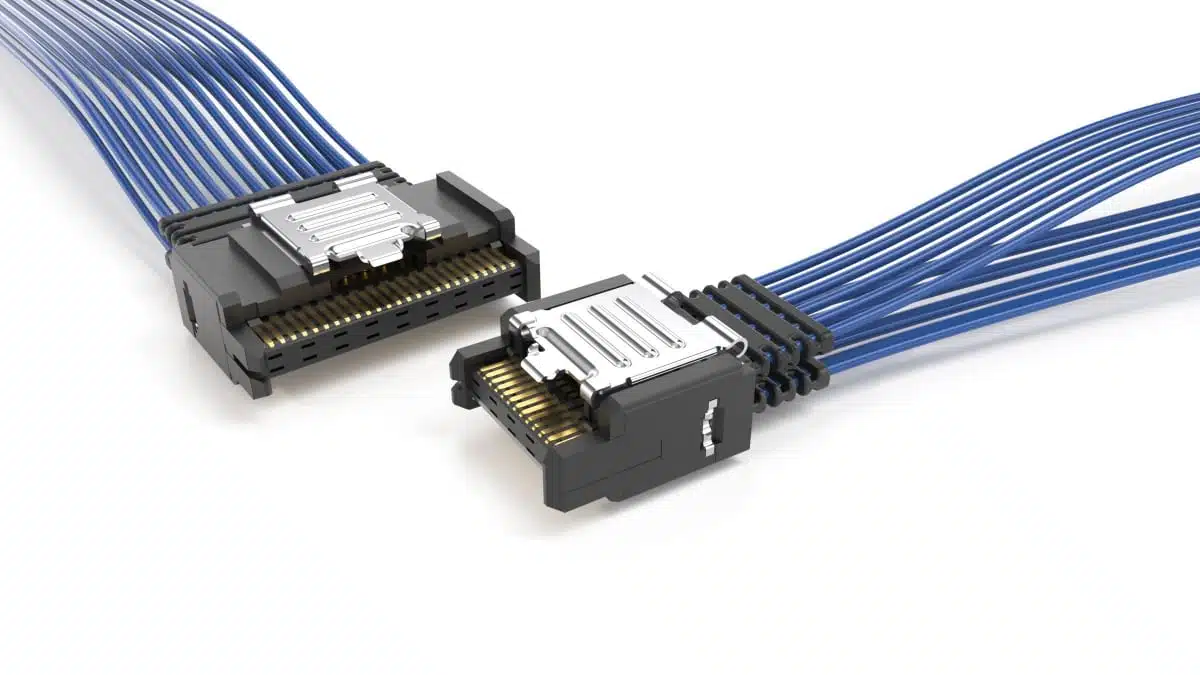
Samtec has expanded its AcceleRate Slim ARC6 high‑speed cable assembly family with new single‑ended and mixed signaling options targeting dense, high‑performance digital systems.

The updates give design engineers more flexibility to route a mix of high‑speed and lower‑speed interfaces while keeping signal integrity and airflow under control in space‑constrained designs.

RelatedPosts

Samtec ANSI/VITA 90 Connectors: Rugged Small Form Factor Standard

Key Interconnect Technologies for 2025

Samtec Releases Rugged Multi-Port SMPM Interconnects with Threaded Coupling

Key features and benefits

The AcceleRate Slim ARC6 cable assembly is a high‑density, high‑speed interconnect system with a very narrow connector body and direct cable attach contacts for improved electrical performance and routing flexibility.

  • Ultra‑narrow 7.6 mm body width helps fit high‑speed cabling into tight board‑to‑board and board‑to‑panel spaces in dense systems.
  • Contacts solder directly to the cable, removing the need for a transition card and shortening the signal path, which supports better high‑frequency performance and reduces potential discontinuities.
  • Original ARC6 configurations are optimized for high‑speed differential signaling up to 64 Gbps PAM4 and support standards such as PCIe 6.0 and CXL 3.2.
  • New signaling options extend the portfolio with:
    • ARC6‑S: single‑ended 50 Ω configuration rated to 5 Gbps NRZ.
    • ARC6‑M: mixed configuration combining 50 Ω single‑ended and 92 Ω differential pairs in one cable assembly.
  • Integrated flexible strain‑relief improves mechanical robustness under cable movement and handling, supporting long‑term reliability in lab, prototyping, and deployed environments.
  • Metal latching mechanism provides secure mating to the ARF6 board connector, helping maintain stable eye diagrams in applications exposed to vibration or connector stress.

From a practical perspective, the combination of narrow body, direct attach, and secure latching makes ARC6 suitable for designs where both high data rates and repeated re‑mating or handling are expected, such as lab test setups or configurable platforms.

Typical applications

Samtec positions the AcceleRate Slim ARC6 assemblies for high‑density computing and prototyping environments where both bandwidth and routing flexibility are critical.

  • High‑density computing platforms and server blades that must route high‑speed links from mid‑board near processors or accelerators to front panels or backplanes.
  • FPGA prototyping and emulation systems that require frequent reconfiguration and a mix of high‑speed differential links and lower‑speed control, sideband, or debug signals over a single harness.
  • Systems using MIPI‑based protocols, where high‑speed serial camera or display links coexist with slower control or configuration lines.
  • High‑performance embedded systems in industrial, medical, or instrumentation equipment, where cable harness size and airflow are critical.

In practice, ARC6 can be used wherever traditional high‑speed mezzanine connectors are impractical due to mechanical constraints, or where designers want the routing freedom of flyover cabling from mid‑board to the front panel.

Technical highlights

The AcceleRate Slim ARC6 system combines Samtec’s high‑speed Eye Speed cable technology with a compact mechanical design and a range of signaling options.

  • Cable technology:
    • Single‑ended paths use micro‑coax cable with an outer diameter of approximately 0.61 mm (0.0240.0240.024 inch), helping route the harness through congested chassis spaces and around other components.
    • Differential paths use twinax cable specified with ultra‑low skew of up to 3.5 ps per meter (maximum), which supports tight timing budgets and reduces intra‑pair skew margin penalties.
    • The twinax cable cross‑sectional area is about 40% smaller than Samtec’s original Eye Speed implementation, reducing harness weight and helping thermal engineers keep airflow channels open.
  • Signaling performance:
    • Differential configurations support data rates up to 64 Gbps PAM4, suitable for next‑generation SerDes channels and contemporary PCIe or CXL generations.
    • Single‑ended ARC6‑S configurations are specified to 5 Gbps NRZ, which covers a wide range of control, sideband, serial management, and moderate‑speed data links.
  • Impedance and signaling:
    • Single‑ended paths are designed for a characteristic impedance of 50 Ω, matching common high‑speed single‑ended I/O and many measurement systems.
    • Differential pairs are designed for around 92 Ω differential impedance, compatible with common high‑speed serial link requirements in the targeted standards.
  • Mechanical and system aspects:
    • 7.6 mm connector body width supports very high signal density in front‑panel or mid‑board areas.
    • Flexible strain‑relief reduces stress at the cable/connector interface.
    • Metal latching provides positive retention to the ARF6 mating connector and helps maintain consistent electrical contact under mechanical load.

For engineers, the main system‑level implications are reduced channel loss and reflection (due to the shorter, more direct path) and easier thermal/mechanical integration thanks to the slim, lightweight cable profile.

Availability and part numbers

ARC6 cable assemblies are available as catalog‑standard products that typically feature Samtec AcceleRate connectors on both ends of the cable, simplifying initial design‑in and procurement. For many systems, this standard configuration is sufficient to route high‑speed links between two boards or between a board and a panel‑mounted module.

However, one of the main strengths of the Flyover architecture is the ability to specify different end options on the same cable assembly for application‑specific customization. That allows engineers to, for example, route signals from mid‑board near an ASIC to a completely different connector style at the front panel or backplane without adding intermediate transition cards.

Exact orderable part numbers, pin counts, and length options are defined in the manufacturer’s documentation and product prints, and should be confirmed against the latest ARC6 cable assembly datasheet and online configurator before design freeze or purchase.

Design‑in notes for engineers

When designing in AcceleRate Slim ARC6 assemblies, there are several practical considerations for signal integrity, mechanical integration, and long‑term maintainability.

  • Channel planning:
    • Allocate the highest‑speed differential links (such as PCIe or CXL host‑to‑device lanes) to the differential pairs rated for 64 Gbps PAM4.
    • Use the single‑ended 5 Gbps NRZ paths for management, sideband, timing, or other moderate‑speed interfaces that benefit from being bundled into the same harness.
  • Impedance matching and routing:
    • Match on‑board trace impedances to the 50 Ω single‑ended and 92 Ω differential characteristics of the cable to minimize impedance discontinuities at launch points.
    • Pay careful attention to breakout routing from the ARF6 board connector, keeping differential pair spacing and length matching consistent with the twinax cable properties.
  • Mechanical implementation:
    • Reserve sufficient keep‑out around the 7.6 mm connector body for mating/unmating and strain‑relief bend radius.
    • Use the metal latch as part of the mechanical retention strategy, especially if the system is exposed to shock, vibration, or frequent reconnection.
  • Thermal management:
    • Leverage the smaller cable cross‑section to preserve airflow over critical components such as FPGAs, ASICs, or memory.
    • Coordinate harness routing with system‑level thermal simulations where high power densities are present.
  • Prototyping and migration:
    • In FPGA prototyping and emulation, ARC6 assemblies can help keep cable harnesses manageable even when large numbers of high‑speed channels are required.
    • As systems evolve, the mixed ARC6‑M option can support migration paths where some signals transition from lower‑speed single‑ended interfaces to high‑speed differential links within the same physical connector system.

For final validation, engineers should refer to the manufacturer’s SI models, eye diagram examples, and application notes associated with the ARC6 and ARF6 series to confirm compliance with their specific channel budgets and standards.

Source

This article is based on information provided in Samtec’s official press release on AcceleRate Slim ARC6 cable assemblies and related ARC6/ARF6 product documentation, complemented with general signal‑integrity and system‑integration considerations for high‑speed cabling.
References

  1. Samtec AcceleRate Slim ARC6 cable assemblies press release
  2. Samtec AcceleRate cable – product family overview
  3. Samtec ARC6 cable assembly product print / documentation

Related

Recent Posts

Hirose Electric to Establish Automotive Connector Plant in India

19.3.2026
1

Samsung Outlines Growth Roadmap at its 52nd General Shareholders Meeting

19.3.2026
1

Exxelia to Exhibit at APEC 2026 in San Antonio, Texas

17.3.2026
25

Würth Elektronik Presents Differential Pressure Sensor for HVAC and Medical

17.3.2026
7

Binder Extends NCC Circular Connectors for Harsh Environments

13.3.2026
2

Standard vs Planar LLC transformers Comparison for Battery Chargers

13.3.2026
26

Bourns Expanded Semi-Shielded Low Profile Automotive Power Inductor

12.3.2026
16

Peak Nano to Develop Fusion Grade High Energy Film Capacitors

11.3.2026
32

Murata New Vibration Sensor Targets High‑Frequency Predictive Maintenance

10.3.2026
32

Upcoming Events

Mar 19
13:00 - 14:00 CDT

Smart Consideration of Inductor Thermal Performance

Mar 21
All day

PSMA Capacitor Workshop 2026

Mar 24
9:00 - 10:00 CET

Power protection in the digital age – eFuse and hot-swap strategies for modern data center design

View Calendar

Popular Posts

  • Buck Converter Design and Calculation

    0 shares
    Share 0 Tweet 0
  • Boost Converter Design and Calculation

    0 shares
    Share 0 Tweet 0
  • Flyback Converter Design and Calculation

    0 shares
    Share 0 Tweet 0
  • LLC Resonant Converter Design and Calculation

    0 shares
    Share 0 Tweet 0
  • MLCC Manufacturers Consider Price Increase as AI Demand Outpaces Supply

    0 shares
    Share 0 Tweet 0
  • Dual Active Bridge (DAB) Topology

    0 shares
    Share 0 Tweet 0
  • MLCC and Ceramic Capacitors

    0 shares
    Share 0 Tweet 0
  • Ripple Current and its Effects on the Performance of Capacitors

    3 shares
    Share 3 Tweet 0
  • MLCC Case Sizes Standards Explained

    0 shares
    Share 0 Tweet 0
  • 3-Phase EMI Filter Design, Simulation, Calculation and Test

    0 shares
    Share 0 Tweet 0

Newsletter Subscription


Passive Components Blog

© EPCI - Leading Passive Components Educational and Information Site

  • Home
  • Privacy Policy
  • EPCI Membership & Advertisement
  • About

No Result
View All Result
  • Home
  • Knowledge Blog
  • PCNS

© EPCI - Leading Passive Components Educational and Information Site

This website uses cookies. By continuing to use this website you are giving consent to cookies being used. Visit our Privacy and Cookie Policy.
Go to mobile version