

- News
- All
- Aerospace & Defence
- Antenna
- Applications
- Automotive
- Capacitors
- Circuit Protection Devices
- electro-mechanical news
- Filters
- Fuses
- Inductors
- Industrial
- Integrated Passives
- inter-connect news
- Market & Supply Chain
- Market Insights
- Medical
- Modelling and Simulation
- New Materials & Supply
- New Technologies
- Non-linear Passives
- Optoelectronics and Isolation
- Oscillators
- Passive Sensors News
- Resistors
- RF & Microwave
- Telecommunication
- Weekly Digest
- News
- All
- Aerospace & Defence
- Antenna
- Applications
- Automotive
- Capacitors
- Circuit Protection Devices
- electro-mechanical news
- Filters
- Fuses
- Inductors
- Industrial
- Integrated Passives
- inter-connect news
- Market & Supply Chain
- Market Insights
- Medical
- Modelling and Simulation
- New Materials & Supply
- New Technologies
- Non-linear Passives
- Optoelectronics and Isolation
- Oscillators
- Passive Sensors News
- Resistors
- RF & Microwave
- Telecommunication
- Weekly Digest

Basic Principles of Connectors
Polymer Materials and Processing
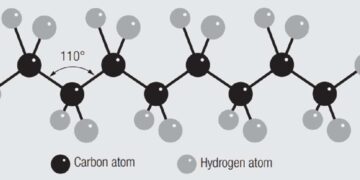
The majority of connector housings are manufactured from thermoplastic polymers due to their combination of electrical and mechanical properties and...
Read moreDetailsConnector Contact Design: Force, Wipe and PCB Alignment
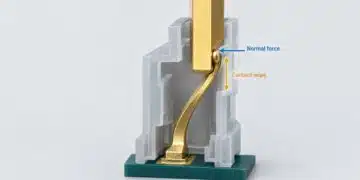
A connector’s electrical interface depends on a sequence of mechanical events: alignment, contact deflection and sliding engagement. This contact-design guidance...
Read moreDetailsFeedback from Connector Failure Analysis

In this paper SERMA TECHNOLOGIES presents failure statistics of connectors from field return analyzed during the last 10 years. The...
Read moreDetailsUnderstanding Cable Skew: A Key to High-Speed Signal Integrity
As the demand for faster data transmission intensifies, engineers must confront an often-overlooked challenge—cable skew. In high-speed digital systems, even...
Read moreDetailsRF Connector Types: How To Choose the Right One

Choosing the right RF connector isn’t just about what fits — it directly impacts signal integrity, frequency performance, and long-term...
Read moreDetailsEMI Shielding Considerations with Connectors
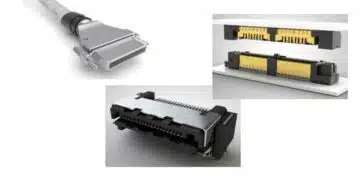
Samtec compiled a list of frequently asked questions about EMI shielding and connectors. Do shielded connectors and cable assemblies help...
Read moreDetailsConnector Materials and Processes

This article will provide a basic discussion of connector materials and manufacturing processes. Chapter I/1.4.1 Contact Finish Electroplating on contact...
Read moreDetailsCopper Alloy Metallurgy and Processing
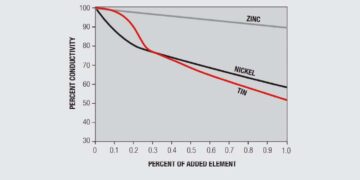
The majority of connector contacts are manufactured from copper alloys due to the combination of high electrical conductivity and good...
Read moreDetailsHow to Make a Good Electrical Contact for Inter-Connection
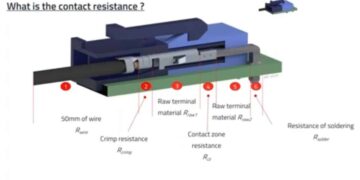
This Würth Elektronik webinar explains influence of different parameters and how to make a good electrical contact for reliable inter-connection....
Read moreDetailsConnector Inrush Current Explained
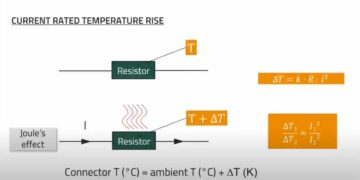
Würth Elektronik podcast explains connector inrush current considerations and discusses what other values need to be considered when selecting a...
Read moreDetailsPopular Posts
-

Buck Converter Design and Calculation
-
Boost Converter Design and Calculation
-
LLC Resonant Converter Design and Calculation
-
Capacitor Charging and Discharging
-
Flyback Converter Design and Calculation
-
Audio Capacitors: Choosing Capacitors for Crossover Circuits
-
MLCC and Ceramic Capacitors
-
Thermistors Basics, NTC and PTC Thermistors
-
RF Connector Types: How To Choose the Right One
-
Passive Low Pass Filters: Fundamentals and EMI Design

© 2015–2026
All rights reserved