





Passive Components Blog
No Result
View All Result
  • Home
  • NewsFilter
    • All
    • Aerospace & Defence
    • Antenna
    • Applications
    • Automotive
    • Capacitors
    • Circuit Protection Devices
    • electro-mechanical news
    • Filters
    • Fuses
    • Inductors
    • Industrial
    • Integrated Passives
    • inter-connect news
    • Market & Supply Chain
    • Market Insights
    • Medical
    • Modelling and Simulation
    • New Materials & Supply
    • New Technologies
    • Non-linear Passives
    • Oscillators
    • Passive Sensors News
    • Resistors
    • RF & Microwave
    • Telecommunication
    • Weekly Digest

    Samsung Introduces 35V MLCCs Flying Capacitors for USB PD Fast Charging

    New J‑STD‑075B Standard Elevates Process Sensitivity Classification for Passive and Solid-State Components

    Modelithics Expands COMPLETE+3D Library for Ansys HFSS

    DigiKey Launches “Engineering Unlocked” Video Series

    Equivalent Circuit Constants of Crystal Units Explained

    Vishay Releases Compact High‑Accuracy Hall Effect Linear Position Sensor

    Nanocrystalline Cores for Low‑Loss MHz Chip Inductors

    Exxelia Miniaturized 400 MHz Inverted‑F Antenna

    Würth Elektronik Unveils High-Current Automotive Power Inductor

    Trending Tags

    • Ripple Current
    • RF
    • Leakage Current
    • Tantalum vs Ceramic
    • Snubber
    • Low ESR
    • Feedthrough
    • Derating
    • Dielectric Constant
    • New Products
    • Market Reports
  • VideoFilter
    • All
    • Antenna videos
    • Capacitor videos
    • Circuit Protection Video
    • Filter videos
    • Fuse videos
    • Inductor videos
    • Inter-Connect Video
    • Non-linear passives videos
    • Oscillator videos
    • Passive sensors videos
    • Resistor videos

    Transformer-Based Power-Line Harvester Magnetic Design

    Thermal Modeling of Magnetics

    Standard vs Planar LLC transformers Comparison for Battery Chargers

    How Modern Tools Model Magnetic Components for Power Electronics

    Advanced Loss Modeling for Planar Magnetics in the Frenetic Planar Tool

    2026 Power Magnetics Design Trends: Flyback, DAB and Planar

    Enabling Software‑Defined Vehicle Architectures: Automotive Ethernet and Zonal Smart Power

    Calculating Resistance Value of a Flyback RC Snubber 

    One‑Pulse Characterization of Nonlinear Power Inductors

    Trending Tags

    • Capacitors explained
    • Inductors explained
    • Resistors explained
    • Filters explained
    • Application Video Guidelines
    • EMC
    • New Products
    • Ripple Current
    • Simulation
    • Tantalum vs Ceramic
  • Knowledge Blog
  • DossiersNew
  • Suppliers
    • Who is Who
  • PCNS
    • PCNS 2025
    • PCNS 2023
    • PCNS 2021
    • PCNS 2019
    • PCNS 2017
  • Events
  • Home
  • NewsFilter
    • All
    • Aerospace & Defence
    • Antenna
    • Applications
    • Automotive
    • Capacitors
    • Circuit Protection Devices
    • electro-mechanical news
    • Filters
    • Fuses
    • Inductors
    • Industrial
    • Integrated Passives
    • inter-connect news
    • Market & Supply Chain
    • Market Insights
    • Medical
    • Modelling and Simulation
    • New Materials & Supply
    • New Technologies
    • Non-linear Passives
    • Oscillators
    • Passive Sensors News
    • Resistors
    • RF & Microwave
    • Telecommunication
    • Weekly Digest

    Samsung Introduces 35V MLCCs Flying Capacitors for USB PD Fast Charging

    New J‑STD‑075B Standard Elevates Process Sensitivity Classification for Passive and Solid-State Components

    Modelithics Expands COMPLETE+3D Library for Ansys HFSS

    DigiKey Launches “Engineering Unlocked” Video Series

    Equivalent Circuit Constants of Crystal Units Explained

    Vishay Releases Compact High‑Accuracy Hall Effect Linear Position Sensor

    Nanocrystalline Cores for Low‑Loss MHz Chip Inductors

    Exxelia Miniaturized 400 MHz Inverted‑F Antenna

    Würth Elektronik Unveils High-Current Automotive Power Inductor

    Trending Tags

    • Ripple Current
    • RF
    • Leakage Current
    • Tantalum vs Ceramic
    • Snubber
    • Low ESR
    • Feedthrough
    • Derating
    • Dielectric Constant
    • New Products
    • Market Reports
  • VideoFilter
    • All
    • Antenna videos
    • Capacitor videos
    • Circuit Protection Video
    • Filter videos
    • Fuse videos
    • Inductor videos
    • Inter-Connect Video
    • Non-linear passives videos
    • Oscillator videos
    • Passive sensors videos
    • Resistor videos

    Transformer-Based Power-Line Harvester Magnetic Design

    Thermal Modeling of Magnetics

    Standard vs Planar LLC transformers Comparison for Battery Chargers

    How Modern Tools Model Magnetic Components for Power Electronics

    Advanced Loss Modeling for Planar Magnetics in the Frenetic Planar Tool

    2026 Power Magnetics Design Trends: Flyback, DAB and Planar

    Enabling Software‑Defined Vehicle Architectures: Automotive Ethernet and Zonal Smart Power

    Calculating Resistance Value of a Flyback RC Snubber 

    One‑Pulse Characterization of Nonlinear Power Inductors

    Trending Tags

    • Capacitors explained
    • Inductors explained
    • Resistors explained
    • Filters explained
    • Application Video Guidelines
    • EMC
    • New Products
    • Ripple Current
    • Simulation
    • Tantalum vs Ceramic
  • Knowledge Blog
  • DossiersNew
  • Suppliers
    • Who is Who
  • PCNS
    • PCNS 2025
    • PCNS 2023
    • PCNS 2021
    • PCNS 2019
    • PCNS 2017
  • Events
No Result
View All Result
Passive Components Blog
No Result
View All Result

EEStor Reveals Results of Multilayer Ceramic Capacitor Tests

30.10.2018
Reading Time: 2 mins read
A A

Source: EEStor news

EEStor Reveals Results of Multilayer Ceramic Capacitor Tests. Results show EEStor’s proprietary Composition Modified Barium Titanate (CMBT) powder can be utilized in the Multilayer Ceramic Capacitors (MLCC) process producing dielectrics with a relative dielectric constant of over 30,000, which is significantly higher than equivalent technologies.

RelatedPosts

Samsung Introduces 35V MLCCs Flying Capacitors for USB PD Fast Charging

New J‑STD‑075B Standard Elevates Process Sensitivity Classification for Passive and Solid-State Components

Modelithics Expands COMPLETE+3D Library for Ansys HFSS

Toronto, Ontario – October 23, 2018 – EEStor Corporation a developer of high energy density, solid-state capacitor technology, today announced the results of independent third party production and performance testing of Multilayer Ceramic Capacitors (MLCCs), made with EEStor’s proprietary Composition Modified Barium Titanate (CMBT) powder.

In a first for the MLCC industry, EEStor’s CMBT powder has been used to create densified ceramic layers and Multilayer Ceramic Capacitors using standard Multilayer Ceramic Capacitor processes.

During production tests, EEStor’s CMBT was used to create MLCC devices and densified layers with high relative permittivity, high insulation resistance and low dissipation and predicted long lifespan. The test results demonstrate that EEStor’s high permittivity CMBT powder is not only compatible with standard MLCC manufacturing techniques, it can also be used to create superior performing and long lasting MLCC devices.

Test methods

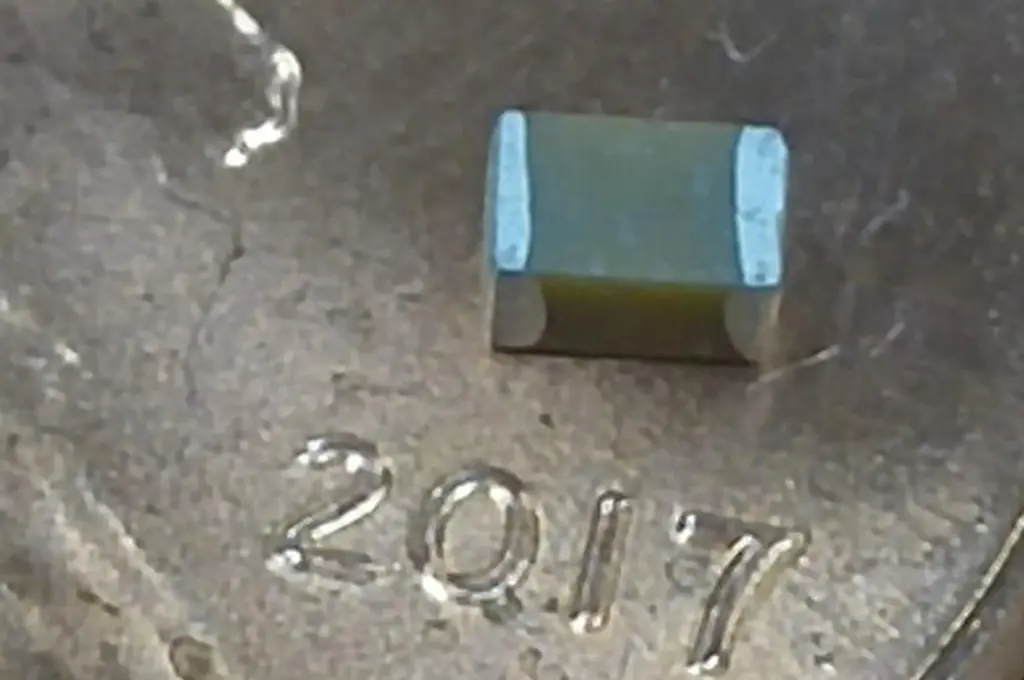
Densified ceramic layers without electrodes called “K-squares”, as well as a small production lot of size .0805 MLCCs, were manufactured by MRA Laboratories through MRA’s standard MLCC processes, utilizing EEStor produced CMBT powders. Testing to characterize these densified ceramic layers and MLCC capacitors was completed by Intertek, MRA and Radiant Technology.

Results

The latest tests carried out between August and September of 2018 by Radiant, MRA and Intertek, demonstrated that MLCC techniques can produce a lead-free relaxor dielectric material, with a very high relative permittivity of over 30,000, alongside low residual polarization, high insulation resistance and low dissipation.

In addition, Highly Accelerated Life Testing (HALT) predicts a long expected lifespan for the produced MLCCs, with 20 out of 20 units passing HALT tests with an average of 1 tera-ohm resistance after 100 hours at 180˚C.

The EEStor MLCCs meet Electronic Industries Alliance (EIA) RS-198 Standards for X7V and Y5V thermal performance criteria. This demonstrates EEStor’s high permittivity CMBT powder is compatible with standard MLCC manufacturing techniques.

White Paper is available in pdf here.

featured image: EEStor 0805 MLCC on a penny; image credit: EEStor

Related

Recent Posts

Samsung Introduces 35V MLCCs Flying Capacitors for USB PD Fast Charging

27.3.2026
3

New J‑STD‑075B Standard Elevates Process Sensitivity Classification for Passive and Solid-State Components

27.3.2026
12

Modelithics Expands COMPLETE+3D Library for Ansys HFSS

27.3.2026
5

Vishay Releases Compact High‑Accuracy Hall Effect Linear Position Sensor

26.3.2026
8

Nanocrystalline Cores for Low‑Loss MHz Chip Inductors

25.3.2026
30

Exxelia Miniaturized 400 MHz Inverted‑F Antenna

24.3.2026
8

Würth Elektronik Unveils High-Current Automotive Power Inductor

24.3.2026
23

Tantalum Capacitor Anode Manufacturing Quality Management

23.3.2026
33

Middle East Conflict: The Potential Impact to Passive Components

23.3.2026
122

Upcoming Events

Apr 21
16:00 - 17:00 CEST

Heatsink Solutions: Thermal Management in electronic devices

May 5
16:00 - 17:00 CEST

Understanding and Selecting Capacitors – Fundamentals, Technologies and Latest Trends

May 19
16:00 - 17:00 CEST

Designing Qi2 Wireless Power Systems: Practical Development and EMC Optimization

View Calendar

Popular Posts

  • Buck Converter Design and Calculation

    0 shares
    Share 0 Tweet 0
  • Boost Converter Design and Calculation

    0 shares
    Share 0 Tweet 0
  • Flyback Converter Design and Calculation

    0 shares
    Share 0 Tweet 0
  • LLC Resonant Converter Design and Calculation

    0 shares
    Share 0 Tweet 0
  • Dual Active Bridge (DAB) Topology

    0 shares
    Share 0 Tweet 0
  • MLCC and Ceramic Capacitors

    0 shares
    Share 0 Tweet 0
  • Ripple Current and its Effects on the Performance of Capacitors

    3 shares
    Share 3 Tweet 0
  • MLCC Case Sizes Standards Explained

    0 shares
    Share 0 Tweet 0
  • Capacitor Charging and Discharging

    0 shares
    Share 0 Tweet 0
  • What is a Dielectric Constant and DF of Plastic Materials?

    4 shares
    Share 4 Tweet 0

Newsletter Subscription


Passive Components Blog

© EPCI - Leading Passive Components Educational and Information Site

  • Home
  • Privacy Policy
  • EPCI Membership & Advertisement
  • About

No Result
View All Result
  • Home
  • Knowledge Blog
  • PCNS

© EPCI - Leading Passive Components Educational and Information Site

This website uses cookies. By continuing to use this website you are giving consent to cookies being used. Visit our Privacy and Cookie Policy.
Go to mobile version