


Passive Components Blog
No Result
View All Result
  • Home
  • NewsFilter
    • All
    • Aerospace & Defence
    • Antenna
    • Applications
    • Automotive
    • Capacitors
    • Circuit Protection Devices
    • electro-mechanical news
    • Filters
    • Fuses
    • Inductors
    • Industrial
    • Integrated Passives
    • inter-connect news
    • Market & Supply Chain
    • Market Insights
    • Medical
    • Modelling and Simulation
    • New Materials & Supply
    • New Technologies
    • Non-linear Passives
    • Oscillators
    • Passive Sensors News
    • Resistors
    • RF & Microwave
    • Telecommunication
    • Weekly Digest

    Binder Hybrid Connector Simplifies One Cable Automation

    Tapped Inductor Buck Converter Fundamentals

    TAIYO YUDEN Releases Mini Metal Power Inductors

    Molecular Memristor Shows Record 145 kH Emergent Inductance

    Planar vs Conventional Transformer: When it Make Sense

    Researchers Propose Next‑Gen Compact Memory Using Ultra-thin Ferroelectric Capacitors

    Nichicon ADN Automotive Hybrid Aluminum Capacitors Now Available in EMEA

    Wk 19 Electronics Supply Chain Digest

    Electrocaloric Multilayer Capacitors: Towards Quiet, Solid‑State Cooling Around Room Temperature

    Trending Tags

    • Ripple Current
    • RF
    • Leakage Current
    • Tantalum vs Ceramic
    • Snubber
    • Low ESR
    • Feedthrough
    • Derating
    • Dielectric Constant
    • New Products
    • Market Reports
  • VideoFilter
    • All
    • Antenna videos
    • Capacitor videos
    • Circuit Protection Video
    • Filter videos
    • Fuse videos
    • Inductor videos
    • Inter-Connect Video
    • Non-linear passives videos
    • Oscillator videos
    • Passive sensors videos
    • Resistor videos

    Tapped Inductor Buck Converter Fundamentals

    Planar vs Conventional Transformer: When it Make Sense

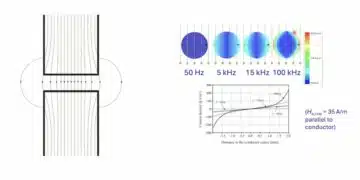
    Modeling Fringing Field Losses in Inductors & Transformers

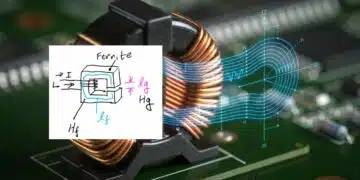
    Why Power Inductors Use a Ferrite Core With an Air Gap

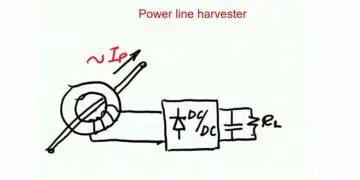
    Transformer-Based Power-Line Harvester Magnetic Design

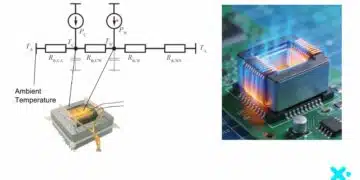
    Thermal Modeling of Magnetics

    Standard vs Planar LLC transformers Comparison for Battery Chargers

    How Modern Tools Model Magnetic Components for Power Electronics

    Advanced Loss Modeling for Planar Magnetics in the Frenetic Planar Tool

    Trending Tags

    • Capacitors explained
    • Inductors explained
    • Resistors explained
    • Filters explained
    • Application Video Guidelines
    • EMC
    • New Products
    • Ripple Current
    • Simulation
    • Tantalum vs Ceramic
  • Knowledge Blog
  • DossiersNew
  • Suppliers
    • Who is Who
  • PCNS
    • PCNS 2025
    • PCNS 2023
    • PCNS 2021
    • PCNS 2019
    • PCNS 2017
  • Events
  • Home
  • NewsFilter
    • All
    • Aerospace & Defence
    • Antenna
    • Applications
    • Automotive
    • Capacitors
    • Circuit Protection Devices
    • electro-mechanical news
    • Filters
    • Fuses
    • Inductors
    • Industrial
    • Integrated Passives
    • inter-connect news
    • Market & Supply Chain
    • Market Insights
    • Medical
    • Modelling and Simulation
    • New Materials & Supply
    • New Technologies
    • Non-linear Passives
    • Oscillators
    • Passive Sensors News
    • Resistors
    • RF & Microwave
    • Telecommunication
    • Weekly Digest

    Binder Hybrid Connector Simplifies One Cable Automation

    Tapped Inductor Buck Converter Fundamentals

    TAIYO YUDEN Releases Mini Metal Power Inductors

    Molecular Memristor Shows Record 145 kH Emergent Inductance

    Planar vs Conventional Transformer: When it Make Sense

    Researchers Propose Next‑Gen Compact Memory Using Ultra-thin Ferroelectric Capacitors

    Nichicon ADN Automotive Hybrid Aluminum Capacitors Now Available in EMEA

    Wk 19 Electronics Supply Chain Digest

    Electrocaloric Multilayer Capacitors: Towards Quiet, Solid‑State Cooling Around Room Temperature

    Trending Tags

    • Ripple Current
    • RF
    • Leakage Current
    • Tantalum vs Ceramic
    • Snubber
    • Low ESR
    • Feedthrough
    • Derating
    • Dielectric Constant
    • New Products
    • Market Reports
  • VideoFilter
    • All
    • Antenna videos
    • Capacitor videos
    • Circuit Protection Video
    • Filter videos
    • Fuse videos
    • Inductor videos
    • Inter-Connect Video
    • Non-linear passives videos
    • Oscillator videos
    • Passive sensors videos
    • Resistor videos

    Tapped Inductor Buck Converter Fundamentals

    Planar vs Conventional Transformer: When it Make Sense

    Modeling Fringing Field Losses in Inductors & Transformers

    Why Power Inductors Use a Ferrite Core With an Air Gap

    Transformer-Based Power-Line Harvester Magnetic Design

    Thermal Modeling of Magnetics

    Standard vs Planar LLC transformers Comparison for Battery Chargers

    How Modern Tools Model Magnetic Components for Power Electronics

    Advanced Loss Modeling for Planar Magnetics in the Frenetic Planar Tool

    Trending Tags

    • Capacitors explained
    • Inductors explained
    • Resistors explained
    • Filters explained
    • Application Video Guidelines
    • EMC
    • New Products
    • Ripple Current
    • Simulation
    • Tantalum vs Ceramic
  • Knowledge Blog
  • DossiersNew
  • Suppliers
    • Who is Who
  • PCNS
    • PCNS 2025
    • PCNS 2023
    • PCNS 2021
    • PCNS 2019
    • PCNS 2017
  • Events
No Result
View All Result
Passive Components Blog
No Result
View All Result

KYOCERA AVX Releases Novel Mini BME Stacked Ceramic Capacitors

10.9.2025
Reading Time: 3 mins read
A A

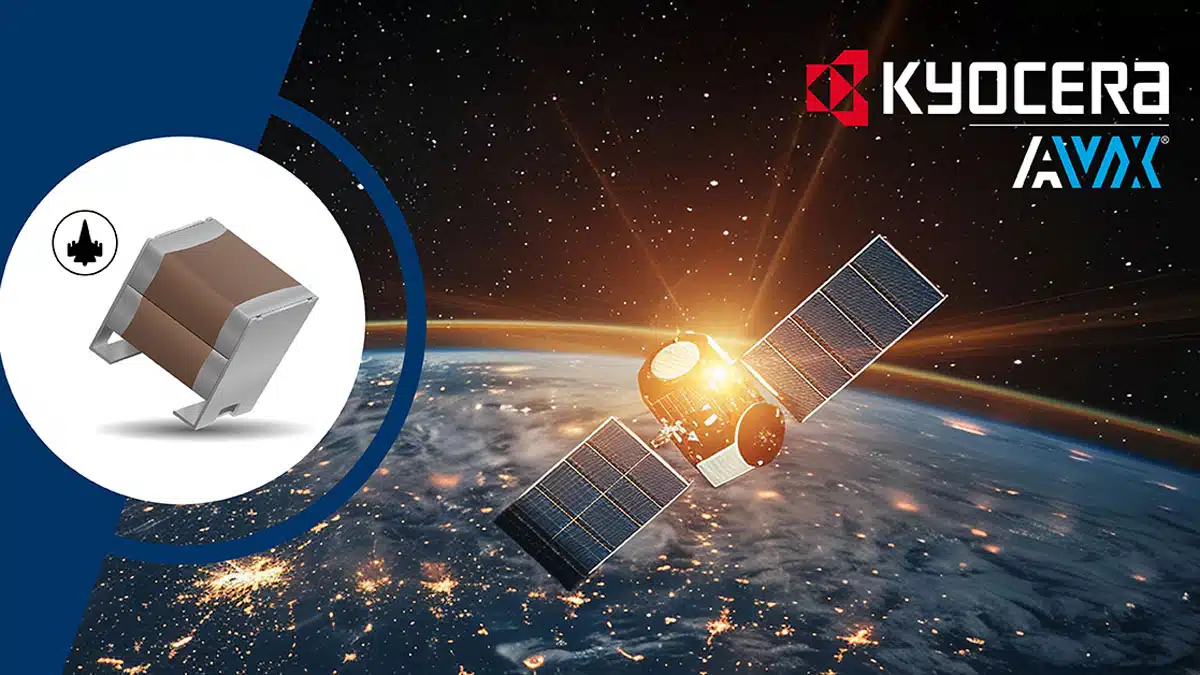
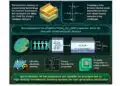
The new KYOCERA AVX DSCC 25007 Mini BME ceramic capacitors stacks deliver an unparalleled combination of high-reliability, high-CV performance, substantial space and weight savings, and standard 100% Group A testing to satisfy military and aerospace industry demands.

KYOCERA AVX, a leading global manufacturer of advanced electronic components engineered to accelerate technological innovation and build a better future, released the new DSCC 25007 Mini BME Stacks — miniature, high-CV stacked X7R capacitors equipped with base metal electrodes (BME) and subjected to 100% Group A testing. 

RelatedPosts

KYOCERA 10 µF 0201 MLCC Brings High‑Capacitance into Mobile Designs

KYOCERA AVX Extends MLV Varistors for 48V Automotive Protection

Kyocera Developed Multilayer Ceramic Core Substrate for AI Packages

Designed to satisfy the growing need for compact and lightweight high-CV SMT capacitors in high-reliability military, aerospace, and space applications subjected to extreme operating conditions and harsh environments, the new fully-tested and -traceable DSCC 25007 Mini BME Stacks are based on its proven MIL-PRF-32535 X7R capacitors but completely unique to market. 

The innovative series currently features two horizontally stacked X7R multilayer ceramic chip capacitors (MLCCs) in an EIA 2220 package that conserves board space, exhibits high-CV performance, and allows design engineers to downsize from currently available components. It also exhibits low ESR, low impedance, high current handling capabilities, and higher shock and vibration resistance than larger, heavier stacked capacitors. Additional features include a variety of lead frame options: standard two-foot J and L styles and paddle, or single bar foot, J and L styles optimized for improved vibration resistance — all equipped with tin/lead plating. 

The initial release of the DSCC 25007 Mini BME Stacks is rated for operating temperatures extending from -55°C to +125°C and available with three voltage ratings (25, 50, and 100V) and nine capacitance values extending from 8.2–47µF ±20% tolerance. 

Ideal applications for the series extend throughout the military, aerospace, and space industries and include satellites and satellite launchers, military missiles and aircraft, and input/output filtering circuits in power supplies. 

“We’re very excited to release the new DSCC Mini BME Stacks, as they’re engineered to solve design challenges that a growing number of our aerospace and defense industry customers have been wrestling with for the past few years, so they’re currently unique to market — the one component capable of delivering what they need,” said Michael Conway, Senior Product Marketing Manager – High Reliability Products at KYOCERA AVX. “Thanks to their compact and lightweight stacked form factor equipped with BME technology, these Mini Stacks deliver an unparalleled combination of high-reliability, high-capacitance, and high-voltage performance and substantial space and weight savings. 

“In fact, when compared to an equivalent 100V, 10µF part with precious metal electrodes (PME), they’re approximately 1/9th the weight and 1/6th the volume. And component weight directly impacts things like aircraft operating costs, satellite launch costs, and missile performance and operating costs. So, this is huge! 

“The new DSCC Mini BME stacks also come standard with 100% Group A testing and — since they utilize the inserts from our proven M32535 line — are fully traceable as well, which satisfies another common request for our aerospace and defense industry customers.” 

The new DSCC 25007 Mini BME Stacks are manufactured in a DLA approved, MIL-PRF-32535 qualified facility and are fully traceable and subjected to rigorous testing to ensure high reliability and performance in extreme conditions and harsh environments — specifically 100% Group A testing or 100% Group A and Group B testing for especially demanding designs with T-level requirements. Parts ship in waffle pack, tape and reel, or two-chip packaging.

Future expansions to the series will include a three-chip horizontal stack projected to launch by Q1 2026 followed by parts with three to 10 vertically stacked chips. 

For more information about the new KYOCERA AVX DSCC 25007 Mini BME Stacks — miniature, high-CV stacked X7R capacitors with BME electrodes, check out the product page, Fast Facts brochure, and datasheet.
Related

Source: KYOCERA AVX

Recent Posts

Researchers Propose Next‑Gen Compact Memory Using Ultra-thin Ferroelectric Capacitors

11.5.2026
28

Nichicon ADN Automotive Hybrid Aluminum Capacitors Now Available in EMEA

11.5.2026
22

Electrocaloric Multilayer Capacitors: Towards Quiet, Solid‑State Cooling Around Room Temperature

7.5.2026
184

KYOCERA 10 µF 0201 MLCC Brings High‑Capacitance into Mobile Designs

6.5.2026
52

Würth Elektronik Introduces Compact Flat-wire SMT Power Inductors for Automotive

5.5.2026
49

KYOCERA AVX Extends MLV Varistors for 48V Automotive Protection

5.5.2026
25

Energy Localization in Tantalum Anode Formation: A Structural Perspective

4.5.2026
46

YAGEO Introduces C0G Flexible Termination Automotive MLCCs

30.4.2026
41

Vishay Introduced Thin Film Submount Platform for Optical and RF Modules

30.4.2026
33

Upcoming Events

May 13
17:00 - 17:30 CEST

Winding Loss Modeling for Toroidal Magnetics – Including Gapped Cores

May 19
16:00 - 17:00 CEST

Designing Qi2 Wireless Power Systems: Practical Development and EMC Optimization

Jun 2
16:00 - 17:00 CEST

Calculation, Simulation and Measurement of 800V EMC Filters

View Calendar

Popular Posts

  • Buck Converter Design and Calculation

    0 shares
    Share 0 Tweet 0
  • Boost Converter Design and Calculation

    0 shares
    Share 0 Tweet 0
  • Flyback Converter Design and Calculation

    0 shares
    Share 0 Tweet 0
  • LLC Resonant Converter Design and Calculation

    0 shares
    Share 0 Tweet 0
  • MLCC and Ceramic Capacitors

    0 shares
    Share 0 Tweet 0
  • Dual Active Bridge (DAB) Topology

    0 shares
    Share 0 Tweet 0
  • What Electronics Engineer Needs to Know About Passive Low Pass Filters

    0 shares
    Share 0 Tweet 0
  • Capacitor Charging and Discharging

    0 shares
    Share 0 Tweet 0
  • Ripple Current and its Effects on the Performance of Capacitors

    3 shares
    Share 3 Tweet 0
  • MLCC Case Sizes Standards Explained

    0 shares
    Share 0 Tweet 0

Newsletter Subscription


Passive Components Blog

© EPCI - Leading Passive Components Educational and Information Site

  • Home
  • Privacy Policy
  • EPCI Membership & Advertisement
  • About

No Result
View All Result
  • Home
  • Knowledge Blog
  • PCNS

© EPCI - Leading Passive Components Educational and Information Site

This website uses cookies. By continuing to use this website you are giving consent to cookies being used. Visit our Privacy and Cookie Policy.
Go to mobile version