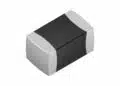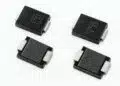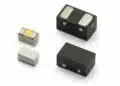



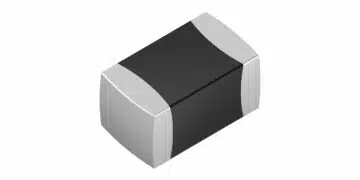
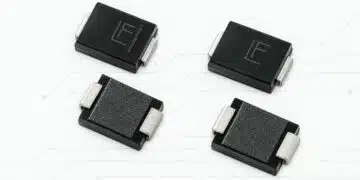



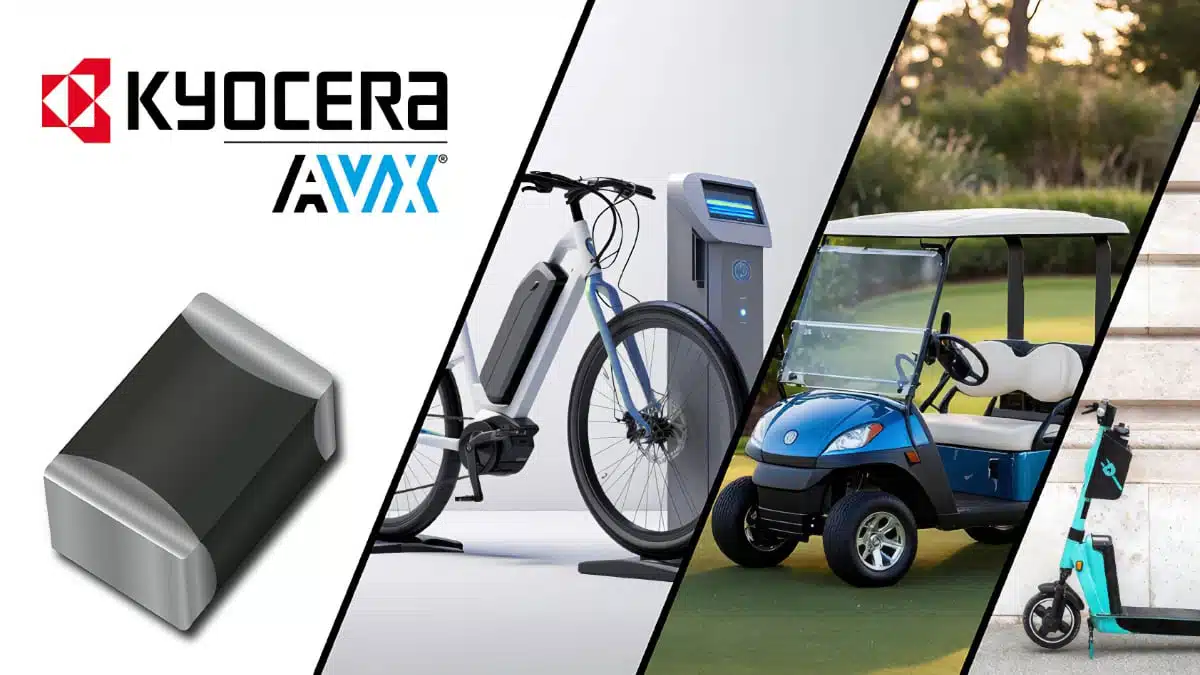
KYOCERA AVX has extended its TransGuard VT Series of multilayer varistors (MLVs) with new versions optimized for 48V automotive power supply systems in electric and hybrid vehicles, light e‑mobility, and charging infrastructure.
These Kyocera AVX SMT protection devices target engineers who need robust transient suppression and EMI/RFI attenuation in increasingly dense, high‑temperature automotive and industrial electronics. The new MLV varistor parts are designed to simplify 48V surge protection design while meeting demanding automotive reliability and qualification requirements.
Key features and benefits
- Optimized for 48V vehicle power nets: Working voltages of 56V DC and 40V AC address typical 48V automotive bus requirements, including jump start events up to 48V, which makes these parts suitable for mild hybrid, e‑axle, and auxiliary 48V rails.
- Integrated surge and EMI/RFI protection: ZnO‑based ceramic MLV technology provides bidirectional overvoltage protection combined with EMI/RFI attenuation in a single SMT component, reducing the number of discrete MLCCs or separate filters often needed around power interfaces.
- High temperature capability: The TransGuard VT Series operates from −55°C up to 150°C or 175°C depending on variant, with zero derating across that range, which is important for under‑hood ECUs, inverters, and power modules exposed to sustained high ambient and self‑heating conditions.
- Automotive‑grade qualification: Devices are qualified to AEC‑Q200, IEC 61000‑4‑2, ISO 10605 and, for the new 48V System VT versions, additionally to VDA‑320, supporting use directly on automotive 48V lines exposed to ESD and system‑level surge tests.
- High ESD robustness: Human‑body model ESD classification Class 6 allows the MLVs to withstand more than 25 kV HBM, which simplifies meeting system ESD immunity at exposed connectors or housings.
- High surge current and energy ratings: Across the full VT portfolio, devices cover surge currents from 20 A up to 2,150 A and energy handling from 0.1 J up to 9 J per transient, enabling protection from small signal interfaces up to robust power stages; the 48V System VT variants span 30–1,500 A and 0.2–9 J.
- Mechanical robustness options: Versions with FLEXITERM terminations tolerate up to 5 mm PCB flex and up to 3,000 temperature cycles to 150°C without internal cracking, well beyond the minimum AEC‑Q200 requirement, which reduces field failure risk in harsh vibration environments.
- Moisture and handling friendly: All TransGuard VT Series parts have moisture sensitivity level MSL 1, meaning unlimited floor life under specified conditions and no need for special dry packing or baking before reflow, simplifying logistics and assembly.
- RoHS‑compliant terminations and standard packaging: Matte‑tin over nickel barriers and tape‑and‑reel packing options (1,000, 4,000, or 10,000 pcs) align with standard high‑volume SMT assembly processes.
Typical applications
The TransGuard VT Series and the new 48V System VT variants target protection of high‑temperature, noise‑sensitive automotive and industrial circuits against ESD, load dump, and switching spikes. Their combination of temperature capability, automotive qualification, and compact SMT case sizes makes them suitable wherever space is limited and transients are severe.
Typical use cases include:
- 48V automotive electrical systems in passenger and commercial vehicles (mild hybrids, electric power steering, electric compressors, active suspension, and 48V auxiliary loads).
- E‑mobility platforms such as e‑bikes, e‑scooters, and golf carts, particularly on battery interfaces, motor controllers, and DC/DC converter inputs.
- On‑board and off‑board charging stations and wallboxes for light electric vehicles and automotive charging infrastructure, protecting control boards and communication interfaces.
- Industrial and transportation equipment using 48V DC bus architectures, including UPS systems, industrial drives, and motor control units that must withstand frequent switching and inductive load transients.
- High‑temperature applications in engine compartments or near radiators where operating temperatures may approach the 150–175°C range supported by the wider VT Series.
In many of these circuits, the MLV is placed directly across the 48V line and return at the connector, at DC/DC converter inputs, or across inductive loads and relays, limiting the voltage seen by downstream ICs and power stages when fast surges occur.
Technical highlights
The new 48V System VT MLVs are part of the broader TransGuard VT Series and share many electrical and mechanical characteristics, while targeting the specific needs of 48V power nets.
48V System VT key parameters
- Working voltage: 56 V DC or 40 V AC, tailored to 48V automotive system operation and jump start conditions.
- Clamping voltage: 100–110 V, limiting the voltage during transient events to a level compatible with typical 48V power electronics components according to the manufacturer datasheet.
- Surge handling: 30–1,500 A and 0.2–9 J per transient, allowing selection according to expected surge energy and source impedance.
- Capacitance range: 80–2,800 pF, which also provides some line‑to‑line filtering effect helpful for EMI reduction; engineers should account for this capacitance when working with very high‑speed interfaces.
- Maximum operating temperature: up to 150°C for the 48V System VT variants, with zero derating across the specified operating range.
- Case sizes: 0805, 1206, 1210, 1812, and 2220 SMT chip sizes.
Complete TransGuard VT Series overview
The full TransGuard VT family offers additional flexibility when protection is needed on 12 V or other lower‑voltage automotive rails.
- Case sizes: 0603–2220 SMT, covering compact signal‑level protection up to robust power line protection footprints.
- Operating temperature ranges:
- VTA3 versions up to 150°C.
- VTA7 versions up to 175°C, with zero derating across −55°C to 175°C.
- Working voltage range: 12–56 V DC and 4–40 V AC, supporting both low‑voltage electronics and higher power rails in the same series.
- Clamping voltage range: 32–110 V depending on part number, allowing coordination with maximum allowable system voltages and insulation levels.
- Jump start capability: 20–48 V, aligned with common automotive battery misconnection and jump start scenarios.
- Surge current and energy: 20–2,150 A and 0.1–9.0 J, enabling coordination from light data lines up to heavy power feeds.
- Capacitance: 60–2,800 pF, which engineers can use either as an additional EMI filter benefit or design around when capacitance on the line must be limited.
Package and reliability attributes
Some TransGuard VT devices, including selected 48V System VT part numbers, are available with FLEXITERM terminations. These soft‑termination parts are designed to withstand up to 5 mm PCB flex and up to 3,000 temperature cycles to 150°C without internal cracking, exceeding the standard 1,000‑cycle AEC‑Q200 requirement. This is particularly relevant for large chip sizes such as 1812 and 2220 placed between connectors or in mechanically stressed PCB areas.
All VT Series devices use RoHS‑compliant 100% matte‑tin plating over nickel barriers and are supplied on tape and reel, compatible with standard pick‑and‑place and reflow soldering processes. With moisture sensitivity level MSL 1, they do not require dry packing, baking, or special handling beyond normal SMT best practices.
VT Series electrical summary table
The following table summarizes the main electrical ranges of the TransGuard VT portfolio, including the new 48V System VT versions.
| Parameter | 48V System VT subset | Full TransGuard VT series |
|---|---|---|
| Working voltage (DC) | 56 V | 12–56 V |
| Working voltage (AC) | 40 V | 4–40 V |
| Clamping voltage | 100–110 V | 32–110 V |
| Jump start | 48 V | 20–48 V |
| Surge current | 30–1,500 A | 20–2,150 A |
| Surge energy | 0.2–9 J | 0.1–9.0 J |
| Capacitance | 80–2,800 pF | 60–2,800 pF |
| Max operating temperature | 150°C | 150°C (VTA3), 175°C (VTA7) |
| Case sizes | 0805–2220 | 0603–2220 |
Values are according to the manufacturer press material and the linked FastFacts document and should be confirmed in the detailed datasheet for final design‑in.
Package and qualification table
The table below summarizes package sizes and related qualification aspects for the series.
| Case size options | VT Series (all) | FLEXITERM option availability |
|---|---|---|
| 0603 | Yes | Not specified, see datasheet |
| 0805 | Yes | Selected part numbers |
| 1206 | Yes | Selected part numbers |
| 1210 | Yes | Selected part numbers |
| 1812 | Yes | Selected part numbers |
| 2220 | Yes | Selected part numbers |
Exact FLEXITERM coverage per case size and part number is according to the manufacturer’s detailed product tables and datasheets.
Design‑in notes for engineers
When designing protection for a 48V automotive or industrial power rail, MLV selection should be coordinated with system voltage limits, surge profiles, and component stress limits. The new 48V System VT parts are intended to simplify this by aligning working voltage, clamping levels, and automotive qualifications with typical 48V system requirements.
Key design‑in considerations:
- Coordinate working and clamping voltages: Choose a device with a DC working voltage at or above the maximum steady‑state bus voltage, including tolerance and charging profiles, while ensuring the clamping voltage remains below the maximum safe voltage for downstream components according to the manufacturer datasheet.
- Match surge current and energy ratings to worst‑case transients: Use system surge specifications (for example, OEM load dump or motor inrush profiles) and IEC/ISO test levels to select an MLV whose surge current and energy ratings exceed the worst‑case conditions with adequate margin.
- Account for capacitance in signal integrity: The 80–2,800 pF capacitance can be beneficial for EMI suppression but might load high‑speed or very low‑leakage lines; for purely power rails this is usually acceptable and often desirable, but for data lines check that added capacitance does not distort signals.
- Place close to the disturbance source or entry point: For best effectiveness, position the MLV close to connectors, relay contacts, or inductive loads generating the surge, with short traces and a low‑impedance return path to minimize residual voltage at sensitive ICs.
- Consider FLEXITERM in mechanically harsh locations: Where large components sit near board edges, connectors, or mounting holes, FLEXITERM versions can significantly reduce the risk of flex‑induced cracking during assembly, installation, or operation.
- Verify thermal environment versus operating range: The VT Series parts are specified up to 150°C or 175°C with zero derating, but the actual board‑level temperature will depend on local self‑heating and enclosure conditions; ensure that combined ambient and heating from repetitive surges stay within the specified limits.
- Check standards compliance requirements: Since these devices are qualified to AEC‑Q200, IEC 61000‑4‑2, ISO 10605, and (for the 48V System VT) VDA‑320, they can support compliance with many OEM specifications; nevertheless, system‑level validation in the target design is still necessary.
- Use manufacturer tools for selection: KYOCERA AVX provides online product search and documentation that list exact part numbers, detailed curves, and surge waveforms, allowing precise coordination of the MLV with expected transient shapes according to the manufacturer datasheet.
For new designs migrating from 12 V to 48 V architectures, the availability of a consistent MLV family across 12–56 V rails can simplify platform reuse, allowing similar protection concepts to be applied with appropriately scaled part numbers.
Source
This article is based on information provided in a KYOCERA AVX press release about new TransGuard VT Series multilayer varistors for 48V automotive power supply systems and related product documentation on the manufacturer’s website.