




Passive Components Blog
No Result
View All Result
  • Home
  • NewsFilter
    • All
    • Aerospace & Defence
    • Antenna
    • Applications
    • Automotive
    • Capacitors
    • Circuit Protection Devices
    • electro-mechanical news
    • Filters
    • Fuses
    • Inductors
    • Industrial
    • Integrated Passives
    • inter-connect news
    • Market & Supply Chain
    • Market Insights
    • Medical
    • Modelling and Simulation
    • New Materials & Supply
    • New Technologies
    • Non-linear Passives
    • Oscillators
    • Passive Sensors News
    • Resistors
    • RF & Microwave
    • Telecommunication
    • Weekly Digest

    Vishay Releases Compact 0806 Low‑DCR Power Inductor

    Murata Opens New Ceramic Capacitor Manufacturing and R&D Center in Japan

    Murata Publishes Power Delivery Guide for AI Servers

    Selecting Current Sense Transformers with Würth Elektronik REDEXPERT

    Mechanical Drift Indicator of Tantalum Capacitor Anodes Degradation under Reverse Bias

    Enabling Software‑Defined Vehicle Architectures: Automotive Ethernet and Zonal Smart Power

    Calculating Resistance Value of a Flyback RC Snubber 

    Wk 5 Electronics Supply Chain Digest

    Top 10 Connector Vendors by Product Type

    Trending Tags

    • Ripple Current
    • RF
    • Leakage Current
    • Tantalum vs Ceramic
    • Snubber
    • Low ESR
    • Feedthrough
    • Derating
    • Dielectric Constant
    • New Products
    • Market Reports
  • VideoFilter
    • All
    • Antenna videos
    • Capacitor videos
    • Circuit Protection Video
    • Filter videos
    • Fuse videos
    • Inductor videos
    • Inter-Connect Video
    • Non-linear passives videos
    • Oscillator videos
    • Passive sensors videos
    • Resistor videos

    Enabling Software‑Defined Vehicle Architectures: Automotive Ethernet and Zonal Smart Power

    Calculating Resistance Value of a Flyback RC Snubber 

    One‑Pulse Characterization of Nonlinear Power Inductors

    Thermistor Linearization Challenges

    Coaxial Connectors and How to Connect with PCB

    PCB Manufacturing, Test Methods, Quality and Reliability

    Transformer Behavior – Current Transfer and Hidden Feedback

    Choosing the Right Capacitor: The Importance of Accurate Measurements

    RF Inductors: Selection and Design Challenges for High-Frequency Circuits

    Trending Tags

    • Capacitors explained
    • Inductors explained
    • Resistors explained
    • Filters explained
    • Application Video Guidelines
    • EMC
    • New Products
    • Ripple Current
    • Simulation
    • Tantalum vs Ceramic
  • Knowledge Blog
  • DossiersNew
  • Suppliers
    • Who is Who
  • PCNS
    • PCNS 2025
    • PCNS 2023
    • PCNS 2021
    • PCNS 2019
    • PCNS 2017
  • Events
  • Home
  • NewsFilter
    • All
    • Aerospace & Defence
    • Antenna
    • Applications
    • Automotive
    • Capacitors
    • Circuit Protection Devices
    • electro-mechanical news
    • Filters
    • Fuses
    • Inductors
    • Industrial
    • Integrated Passives
    • inter-connect news
    • Market & Supply Chain
    • Market Insights
    • Medical
    • Modelling and Simulation
    • New Materials & Supply
    • New Technologies
    • Non-linear Passives
    • Oscillators
    • Passive Sensors News
    • Resistors
    • RF & Microwave
    • Telecommunication
    • Weekly Digest

    Vishay Releases Compact 0806 Low‑DCR Power Inductor

    Murata Opens New Ceramic Capacitor Manufacturing and R&D Center in Japan

    Murata Publishes Power Delivery Guide for AI Servers

    Selecting Current Sense Transformers with Würth Elektronik REDEXPERT

    Mechanical Drift Indicator of Tantalum Capacitor Anodes Degradation under Reverse Bias

    Enabling Software‑Defined Vehicle Architectures: Automotive Ethernet and Zonal Smart Power

    Calculating Resistance Value of a Flyback RC Snubber 

    Wk 5 Electronics Supply Chain Digest

    Top 10 Connector Vendors by Product Type

    Trending Tags

    • Ripple Current
    • RF
    • Leakage Current
    • Tantalum vs Ceramic
    • Snubber
    • Low ESR
    • Feedthrough
    • Derating
    • Dielectric Constant
    • New Products
    • Market Reports
  • VideoFilter
    • All
    • Antenna videos
    • Capacitor videos
    • Circuit Protection Video
    • Filter videos
    • Fuse videos
    • Inductor videos
    • Inter-Connect Video
    • Non-linear passives videos
    • Oscillator videos
    • Passive sensors videos
    • Resistor videos

    Enabling Software‑Defined Vehicle Architectures: Automotive Ethernet and Zonal Smart Power

    Calculating Resistance Value of a Flyback RC Snubber 

    One‑Pulse Characterization of Nonlinear Power Inductors

    Thermistor Linearization Challenges

    Coaxial Connectors and How to Connect with PCB

    PCB Manufacturing, Test Methods, Quality and Reliability

    Transformer Behavior – Current Transfer and Hidden Feedback

    Choosing the Right Capacitor: The Importance of Accurate Measurements

    RF Inductors: Selection and Design Challenges for High-Frequency Circuits

    Trending Tags

    • Capacitors explained
    • Inductors explained
    • Resistors explained
    • Filters explained
    • Application Video Guidelines
    • EMC
    • New Products
    • Ripple Current
    • Simulation
    • Tantalum vs Ceramic
  • Knowledge Blog
  • DossiersNew
  • Suppliers
    • Who is Who
  • PCNS
    • PCNS 2025
    • PCNS 2023
    • PCNS 2021
    • PCNS 2019
    • PCNS 2017
  • Events
No Result
View All Result
Passive Components Blog
No Result
View All Result

Murata Opens EMC Test Lab in Nuremberg to Enhance Automotive Support

22.10.2025
Reading Time: 2 mins read
A A

Murata Manufacturing Co., Ltd. enhances its support for customers in the EMEA region and globally with its advanced electromagnetic compatibility (EMC) test laboratory in Nuremberg, Germany.

This strategic expansion underscores Murata’s commitment to delivering unparalleled EMC solutions, particularly for the rapidly evolving automotive industry.

RelatedPosts

Murata Opens New Ceramic Capacitor Manufacturing and R&D Center in Japan

Murata Publishes Power Delivery Guide for AI Servers

Conductive Polymer Capacitor Market and Design‑In Guide to 2035

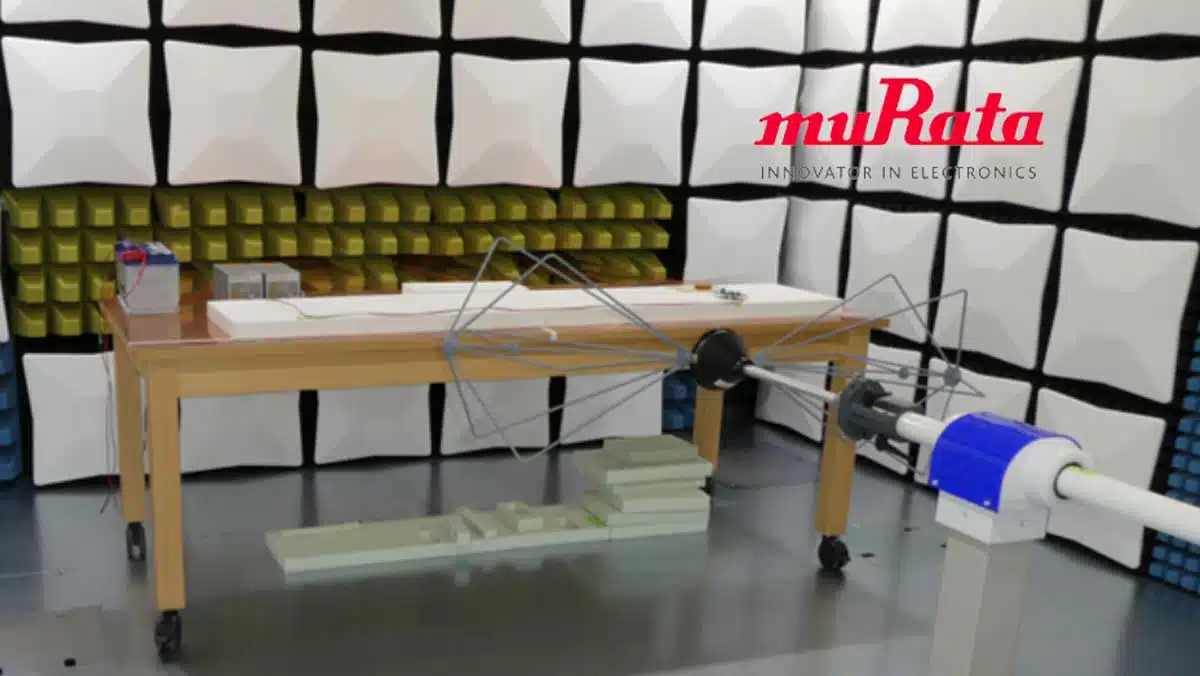
The Nuremberg facility features a dedicated electromagnetic semi-anechoic chamber specifically designed for Automotive applications. Although it is not an internationally certified EMC test laboratory for commercial use, its primary function is to provide robust EMC noise suppression support directly to Murata’s customers by a wide range of noise EMI filters and accumulated knowledge in decades.

The lab is equipped to perform critical automotive product tests, including radiated emission and conducted emission according to CISPR 25, alongside immunity testing (BCI/DPI) against ISO 11452-4 and ISO 11452-7 standards.

Murata’s EMEA EMC Lab offers a comprehensive suite of support services. This includes on-site support where Murata EMC engineers, along with necessary equipment, visit customer labs or third party labs. Off-site support involves actual measurements on borrowed or purchased devices under test (DUTs) with real time remote monitor and simulation support based on customer requirements and conditions. Customers can also visit the Nuremberg lab directly for assistance with EMC noise suppression. These services are complemented by Murata’s comprehensive design support, leveraging a diverse array of equipment, advanced analysis techniques, and experienced engineers.

“The opening of our new EMC test lab in Nuremberg marks a pivotal moment for Murata, signifying our deepened commitment to supporting our customers, especially within the critical automotive sector,” says Daniel Lucas, Field Application Engineer at Murata Europe. “By leveraging advanced analysis techniques and integrating with our global network of EMC facilities, we are empowering our customers to accelerate product development, ensure robust compliance, and bring cutting-edge, reliable innovations to market faster, addressing challenges at both the component and system (vehicle) levels.”

The Nuremberg lab seamlessly integrates with Murata’s extensive global network of EMC evaluation environments, which includes facilities in Japan (Kyoto, Yokohama), China (Beijing, Shanghai, Shenzhen), Taiwan, and the US (San Jose). This worldwide presence, including vehicle measuring equipment, enables Murata to evaluate noise and propose optimal solutions across various regions comprehensively.
Related

Source: Murata

Recent Posts

Murata Opens New Ceramic Capacitor Manufacturing and R&D Center in Japan

5.2.2026
6

Enabling Software‑Defined Vehicle Architectures: Automotive Ethernet and Zonal Smart Power

2.2.2026
19

Top 10 Connector Vendors by Product Type

29.1.2026
64

Component Distribution Supply Chain January 2026

28.1.2026
74

Samsung Q4 2025 Results: MLCC focus for AI, Server and Automotive

26.1.2026
102

Capacitor Technology Dossier

26.1.2026
140

ROHM Extends 2012 Shunt Resistors Power Rating up to 1.25 W

23.1.2026
30

January 2026 Interconnect, Passives and Electromechanical Components Market Insights

22.1.2026
177

Passive Components in Quantum Computing

22.1.2026
155

Upcoming Events

Feb 11
16:00 - 17:00 CET

What’s Next in Power Electronics Design

Feb 24
16:00 - 17:00 CET

Designing Qi2 Wireless Power Systems: Practical Development and EMC Optimization

Mar 3
16:00 - 17:00 CET

Cybersecurity at the Eleventh Hour – from RED to CRA – Information and Discussion

View Calendar

Popular Posts

  • Buck Converter Design and Calculation

    0 shares
    Share 0 Tweet 0
  • Boost Converter Design and Calculation

    0 shares
    Share 0 Tweet 0
  • LLC Resonant Converter Design and Calculation

    0 shares
    Share 0 Tweet 0
  • Flyback Converter Design and Calculation

    0 shares
    Share 0 Tweet 0
  • Ripple Current and its Effects on the Performance of Capacitors

    3 shares
    Share 3 Tweet 0
  • How Metal Prices Are Driving Passive Component Price Hikes

    0 shares
    Share 0 Tweet 0
  • MLCC and Ceramic Capacitors

    0 shares
    Share 0 Tweet 0
  • Dual Active Bridge (DAB) Topology

    0 shares
    Share 0 Tweet 0
  • What is a Dielectric Constant and DF of Plastic Materials?

    4 shares
    Share 4 Tweet 0
  • Degradation of Capacitors and its Failure Mechanisms

    0 shares
    Share 0 Tweet 0

Newsletter Subscription


Passive Components Blog

© EPCI - Leading Passive Components Educational and Information Site

  • Home
  • Privacy Policy
  • EPCI Membership & Advertisement
  • About

No Result
View All Result
  • Home
  • Knowledge Blog
  • PCNS

© EPCI - Leading Passive Components Educational and Information Site

This website uses cookies. By continuing to use this website you are giving consent to cookies being used. Visit our Privacy and Cookie Policy.
Go to mobile version