








Passive Components Blog
No Result
View All Result
  • Home
  • NewsFilter
    • All
    • Aerospace & Defence
    • Antenna
    • Applications
    • Automotive
    • Capacitors
    • Circuit Protection Devices
    • electro-mechanical news
    • Filters
    • Fuses
    • Inductors
    • Industrial
    • Integrated Passives
    • inter-connect news
    • Market & Supply Chain
    • Market Insights
    • Medical
    • Modelling and Simulation
    • New Materials & Supply
    • New Technologies
    • Non-linear Passives
    • Oscillators
    • Passive Sensors News
    • Resistors
    • RF & Microwave
    • Telecommunication
    • Weekly Digest

    January 2026 Interconnect, Passives and Electromechanical Components Market Insights

    Passive Components in Quantum Computing

    0603 Automotive Chip Varistors as TVS Diode Replacements, TDK Tech Note

    Miniaturization of MLCCs and Electrolytics, KAVX Tech Chat

    Exxelia Offers Custom Naval Transformers and Inductors

    Researchers Demonstrated 32nm Aluminum Vacuum Gap Capacitor

    Conductive Polymer Capacitor Market and Design‑In Guide to 2035

    TDK Releases High Performance 105C DC Link Film Capacitors

    YAGEO Offers Automotive MOVs for EV and AI power

    Trending Tags

    • Ripple Current
    • RF
    • Leakage Current
    • Tantalum vs Ceramic
    • Snubber
    • Low ESR
    • Feedthrough
    • Derating
    • Dielectric Constant
    • New Products
    • Market Reports
  • VideoFilter
    • All
    • Antenna videos
    • Capacitor videos
    • Circuit Protection Video
    • Filter videos
    • Fuse videos
    • Inductor videos
    • Inter-Connect Video
    • Non-linear passives videos
    • Oscillator videos
    • Passive sensors videos
    • Resistor videos

    One‑Pulse Characterization of Nonlinear Power Inductors

    Thermistor Linearization Challenges

    Coaxial Connectors and How to Connect with PCB

    PCB Manufacturing, Test Methods, Quality and Reliability

    Transformer Behavior – Current Transfer and Hidden Feedback

    Choosing the Right Capacitor: The Importance of Accurate Measurements

    RF Inductors: Selection and Design Challenges for High-Frequency Circuits

    Transformer Safety IEC 61558 Standard

    3-Phase EMI Filter Design, Simulation, Calculation and Test

    Trending Tags

    • Capacitors explained
    • Inductors explained
    • Resistors explained
    • Filters explained
    • Application Video Guidelines
    • EMC
    • New Products
    • Ripple Current
    • Simulation
    • Tantalum vs Ceramic
  • Knowledge Blog
  • Suppliers
    • Who is Who
  • PCNS
    • PCNS 2025
    • PCNS 2023
    • PCNS 2021
    • PCNS 2019
    • PCNS 2017
  • Events
  • Home
  • NewsFilter
    • All
    • Aerospace & Defence
    • Antenna
    • Applications
    • Automotive
    • Capacitors
    • Circuit Protection Devices
    • electro-mechanical news
    • Filters
    • Fuses
    • Inductors
    • Industrial
    • Integrated Passives
    • inter-connect news
    • Market & Supply Chain
    • Market Insights
    • Medical
    • Modelling and Simulation
    • New Materials & Supply
    • New Technologies
    • Non-linear Passives
    • Oscillators
    • Passive Sensors News
    • Resistors
    • RF & Microwave
    • Telecommunication
    • Weekly Digest

    January 2026 Interconnect, Passives and Electromechanical Components Market Insights

    Passive Components in Quantum Computing

    0603 Automotive Chip Varistors as TVS Diode Replacements, TDK Tech Note

    Miniaturization of MLCCs and Electrolytics, KAVX Tech Chat

    Exxelia Offers Custom Naval Transformers and Inductors

    Researchers Demonstrated 32nm Aluminum Vacuum Gap Capacitor

    Conductive Polymer Capacitor Market and Design‑In Guide to 2035

    TDK Releases High Performance 105C DC Link Film Capacitors

    YAGEO Offers Automotive MOVs for EV and AI power

    Trending Tags

    • Ripple Current
    • RF
    • Leakage Current
    • Tantalum vs Ceramic
    • Snubber
    • Low ESR
    • Feedthrough
    • Derating
    • Dielectric Constant
    • New Products
    • Market Reports
  • VideoFilter
    • All
    • Antenna videos
    • Capacitor videos
    • Circuit Protection Video
    • Filter videos
    • Fuse videos
    • Inductor videos
    • Inter-Connect Video
    • Non-linear passives videos
    • Oscillator videos
    • Passive sensors videos
    • Resistor videos

    One‑Pulse Characterization of Nonlinear Power Inductors

    Thermistor Linearization Challenges

    Coaxial Connectors and How to Connect with PCB

    PCB Manufacturing, Test Methods, Quality and Reliability

    Transformer Behavior – Current Transfer and Hidden Feedback

    Choosing the Right Capacitor: The Importance of Accurate Measurements

    RF Inductors: Selection and Design Challenges for High-Frequency Circuits

    Transformer Safety IEC 61558 Standard

    3-Phase EMI Filter Design, Simulation, Calculation and Test

    Trending Tags

    • Capacitors explained
    • Inductors explained
    • Resistors explained
    • Filters explained
    • Application Video Guidelines
    • EMC
    • New Products
    • Ripple Current
    • Simulation
    • Tantalum vs Ceramic
  • Knowledge Blog
  • Suppliers
    • Who is Who
  • PCNS
    • PCNS 2025
    • PCNS 2023
    • PCNS 2021
    • PCNS 2019
    • PCNS 2017
  • Events
No Result
View All Result
Passive Components Blog
No Result
View All Result

Passive Components challenges under the Gallium Nitride (GaN) transistor revolution

30.3.2016
Reading Time: 3 mins read
A A

source: EPCI, Tomas Zednicek

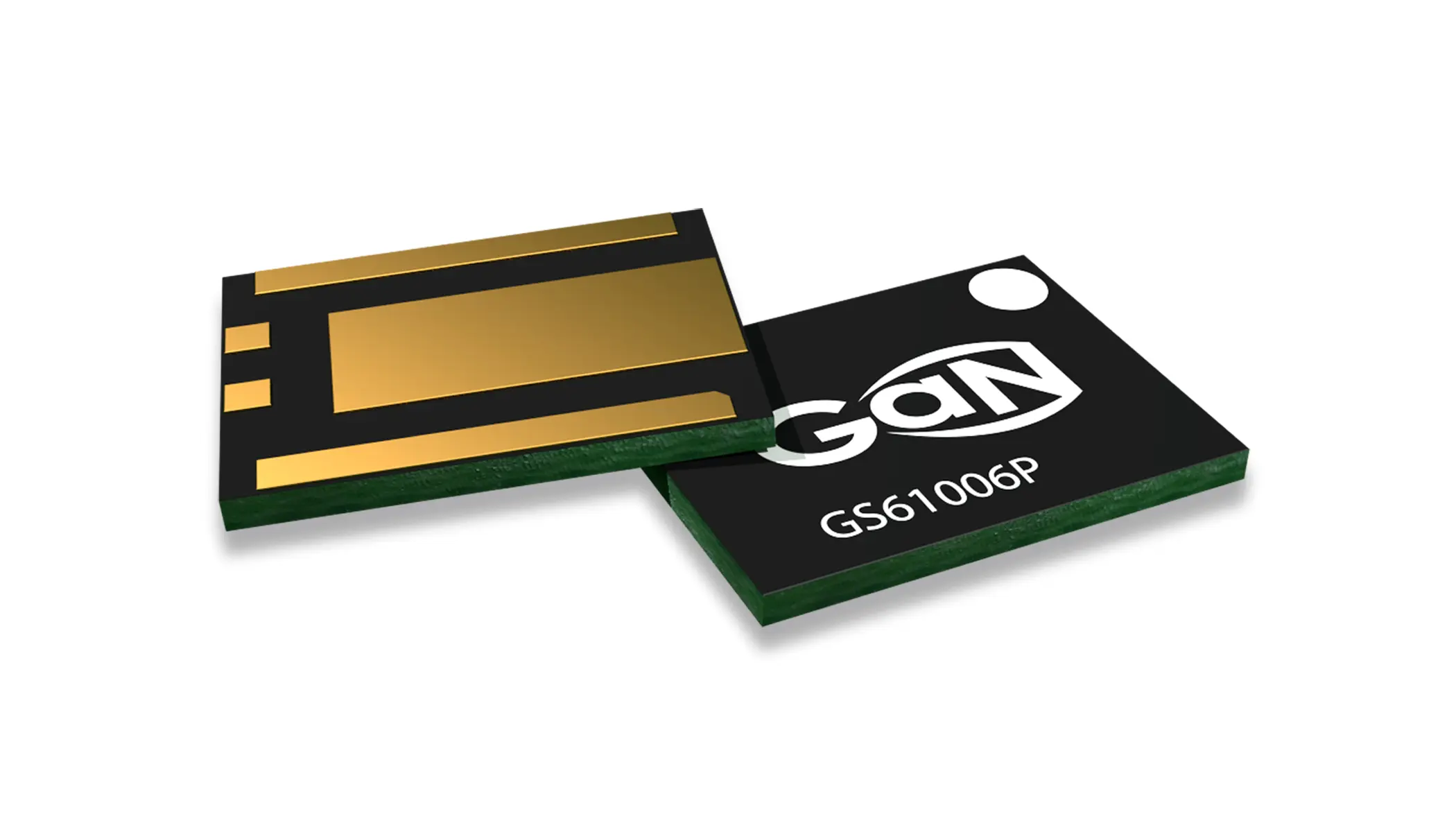
GaN transistors have been for long time considered as the side product for special applications. Nevertheless, the recent advancements and introduction of GaN transistors with various voltages, current ratings and package designs present a real “revolution” in the field of active components these days. New generation of DC-DC switching converters operating efficiently at higher switching frequencies can bring significant downsizing, low profiles and higher power outputs of today’s power supplies. The GaN “revolution” may have an significant impact to the need of passive components in near future. 

RelatedPosts

January 2026 Interconnect, Passives and Electromechanical Components Market Insights

Passive Components in Quantum Computing

0603 Automotive Chip Varistors as TVS Diode Replacements, TDK Tech Note

The switching frequencies of DC-DC converters with GaN transistors can increase up to 40MHz from the current efficiency sweetspot 500kHz to 2MHz typical for sillicon transistor. GaN transistors could enable 65 watt tablet adapters with 680W-per-cubic-inch densities, and 96% efficiency, according to the latest news from the active components industry.

Infineon recently announced release of GaN based very small module in 5mm x 6mm x 0.9mm package that can deliver 70-A load at up to 5.5V output and claimed efficiency better than 95 %.  This demonstrates capability of the technology to deliver high power, high switching frequency together with high efficiency at low profile designs. The other vendors annouced GaN base transistor with 60A continuous load capability within just a 0.5mm maximum thickness and efficiency close to 99%. The operating range of GaN transistors is however not concentrating only on low voltage applications, the maximum working voltage of power train recently increased from 650V to as high as 1200V and thus it brings new solutions for wide range of industrial and automotive applications including HEV/EV vehicles.

The recent development and commercialization of GaN transistors may present an important change for the need of passive component used in today’s DC/DC converters. The significant increase of the switching frequencies and the current ratings will present a major challenge for the output capacitors and resistors.

The trend for capacitors’ higher current ratings, lower equivalent series resistance ESR, lower self inductance ESL in smaller, lower profile package has been already seen on today’s silicon based transistor technology for decades and it present “no surprise” for capacitor manufacturers that have such development programs already in place. Nevertheless introduction of the latest GaN transistors present such big jump in the performance that the traditional technology continuous improvements may not be sufficient. The usual application way to increase output capacitance and power rating is to use multiple capacitors in a capacitor bank. Nevertheless parallel configuration is not influenving the resonance frequency – thus low ESL capacitors with stable capacitance value at high frequencies have to be used only at the GaN working frequencies – where capacitance value and power ratings may be limited. Thus the capacitor bank would have to use many low ESL capacitors in parallel to achieve the required parameters. Such multiple capacitor field naturally require more space and cost and it may degrade some of the GaN advantages. The GaN transistors thus present a challenge for the new capacitor technology with ever highest capacitance, highest power ratings, lowest ESR, lowest ESL and low profile designs.

Similar can be considered for the resistors selection guide – the resistor technologies with higher parasitic capacitance or inductance may not be suitable to operate at such frequencies close 40 MHz as presented by the new generation of GaN transistors.

On the other hand HW designers may be faced with other new issues related to the high switching frequencies and high power ratings. The EMC considerations and radiation shielding may change its requirements as well – thus it can present a new opportunities for EMC filters, noise suppressors etc.

In summary, the current revolution in the active component industry brought by introduction of the new GaN transistors generation may significantly influence the passive component industry in near future. Not only the change in the passive component type volume mix, but it has to be followed by a new innovative component types that will enable end-users to effectively use all the new capabilities of the GaN transistors.

Related

Recent Posts

January 2026 Interconnect, Passives and Electromechanical Components Market Insights

22.1.2026
18

Passive Components in Quantum Computing

22.1.2026
18

0603 Automotive Chip Varistors as TVS Diode Replacements, TDK Tech Note

21.1.2026
13

Miniaturization of MLCCs and Electrolytics, KAVX Tech Chat

21.1.2026
26

Researchers Demonstrated 32nm Aluminum Vacuum Gap Capacitor

20.1.2026
25

Conductive Polymer Capacitor Market and Design‑In Guide to 2035

20.1.2026
68

TDK Releases High Performance 105C DC Link Film Capacitors

19.1.2026
43

YAGEO Offers Automotive MOVs for EV and AI power

19.1.2026
26

YAGEO Acquires 100% of Shares of Shibaura Electronics

19.1.2026
65

Upcoming Events

Jan 27
16:00 - 17:00 CET

Simplifying Vehicle Development with Automotive Ethernet and Zonal Smart Switch Technologies

Feb 24
16:00 - 17:00 CET

Designing Qi2 Wireless Power Systems: Practical Development and EMC Optimization

Mar 21
All day

PSMA Capacitor Workshop 2026

View Calendar

Popular Posts

  • Buck Converter Design and Calculation

    0 shares
    Share 0 Tweet 0
  • Boost Converter Design and Calculation

    0 shares
    Share 0 Tweet 0
  • LLC Resonant Converter Design and Calculation

    0 shares
    Share 0 Tweet 0
  • Flyback Converter Design and Calculation

    0 shares
    Share 0 Tweet 0
  • Ripple Current and its Effects on the Performance of Capacitors

    3 shares
    Share 3 Tweet 0
  • How Metal Prices Are Driving Passive Component Price Hikes

    0 shares
    Share 0 Tweet 0
  • MLCC and Ceramic Capacitors

    0 shares
    Share 0 Tweet 0
  • What is a Dielectric Constant and DF of Plastic Materials?

    4 shares
    Share 4 Tweet 0
  • Dual Active Bridge (DAB) Topology

    0 shares
    Share 0 Tweet 0
  • Degradation of Capacitors and its Failure Mechanisms

    0 shares
    Share 0 Tweet 0

Newsletter Subscription


Passive Components Blog

© EPCI - Leading Passive Components Educational and Information Site

  • Home
  • Privacy Policy
  • EPCI Membership & Advertisement
  • About

No Result
View All Result
  • Home
  • Knowledge Blog
  • PCNS

© EPCI - Leading Passive Components Educational and Information Site

This website uses cookies. By continuing to use this website you are giving consent to cookies being used. Visit our Privacy and Cookie Policy.
Go to mobile version