







Passive Components Blog
No Result
View All Result
  • Home
  • NewsFilter
    • All
    • Aerospace & Defence
    • Antenna
    • Applications
    • Automotive
    • Capacitors
    • Circuit Protection Devices
    • electro-mechanical news
    • Filters
    • Fuses
    • Inductors
    • Industrial
    • Integrated Passives
    • inter-connect news
    • Market & Supply Chain
    • Market Insights
    • Medical
    • Modelling and Simulation
    • New Materials & Supply
    • New Technologies
    • Non-linear Passives
    • Oscillators
    • Passive Sensors News
    • Resistors
    • RF & Microwave
    • Telecommunication
    • Weekly Digest

    How a Digital Structural Twin Can Predict Tantalum Capacitor Reliability

    SCHURTER Buys Biaodi to Boost High-Voltage Protection Portfolio

    Binder Hybrid Connector Simplifies One Cable Automation

    Tapped Inductor Buck Converter Fundamentals

    TAIYO YUDEN Releases Mini Metal Power Inductors

    Molecular Memristor Shows Record 145 kH Emergent Inductance

    Planar vs Conventional Transformer: When it Make Sense

    Researchers Propose Next‑Gen Compact Memory Using Ultra-thin Ferroelectric Capacitors

    Nichicon ADN Automotive Hybrid Aluminum Capacitors Now Available in EMEA

    Trending Tags

    • Ripple Current
    • RF
    • Leakage Current
    • Tantalum vs Ceramic
    • Snubber
    • Low ESR
    • Feedthrough
    • Derating
    • Dielectric Constant
    • New Products
    • Market Reports
  • VideoFilter
    • All
    • Antenna videos
    • Capacitor videos
    • Circuit Protection Video
    • Filter videos
    • Fuse videos
    • Inductor videos
    • Inter-Connect Video
    • Non-linear passives videos
    • Oscillator videos
    • Passive sensors videos
    • Resistor videos

    Tapped Inductor Buck Converter Fundamentals

    Planar vs Conventional Transformer: When it Make Sense

    Modeling Fringing Field Losses in Inductors & Transformers

    Why Power Inductors Use a Ferrite Core With an Air Gap

    Transformer-Based Power-Line Harvester Magnetic Design

    Thermal Modeling of Magnetics

    Standard vs Planar LLC transformers Comparison for Battery Chargers

    How Modern Tools Model Magnetic Components for Power Electronics

    Advanced Loss Modeling for Planar Magnetics in the Frenetic Planar Tool

    Trending Tags

    • Capacitors explained
    • Inductors explained
    • Resistors explained
    • Filters explained
    • Application Video Guidelines
    • EMC
    • New Products
    • Ripple Current
    • Simulation
    • Tantalum vs Ceramic
  • Knowledge Blog
  • DossiersNew
  • Suppliers
    • Who is Who
  • PCNS
    • PCNS 2025
    • PCNS 2023
    • PCNS 2021
    • PCNS 2019
    • PCNS 2017
  • Events
  • Home
  • NewsFilter
    • All
    • Aerospace & Defence
    • Antenna
    • Applications
    • Automotive
    • Capacitors
    • Circuit Protection Devices
    • electro-mechanical news
    • Filters
    • Fuses
    • Inductors
    • Industrial
    • Integrated Passives
    • inter-connect news
    • Market & Supply Chain
    • Market Insights
    • Medical
    • Modelling and Simulation
    • New Materials & Supply
    • New Technologies
    • Non-linear Passives
    • Oscillators
    • Passive Sensors News
    • Resistors
    • RF & Microwave
    • Telecommunication
    • Weekly Digest

    How a Digital Structural Twin Can Predict Tantalum Capacitor Reliability

    SCHURTER Buys Biaodi to Boost High-Voltage Protection Portfolio

    Binder Hybrid Connector Simplifies One Cable Automation

    Tapped Inductor Buck Converter Fundamentals

    TAIYO YUDEN Releases Mini Metal Power Inductors

    Molecular Memristor Shows Record 145 kH Emergent Inductance

    Planar vs Conventional Transformer: When it Make Sense

    Researchers Propose Next‑Gen Compact Memory Using Ultra-thin Ferroelectric Capacitors

    Nichicon ADN Automotive Hybrid Aluminum Capacitors Now Available in EMEA

    Trending Tags

    • Ripple Current
    • RF
    • Leakage Current
    • Tantalum vs Ceramic
    • Snubber
    • Low ESR
    • Feedthrough
    • Derating
    • Dielectric Constant
    • New Products
    • Market Reports
  • VideoFilter
    • All
    • Antenna videos
    • Capacitor videos
    • Circuit Protection Video
    • Filter videos
    • Fuse videos
    • Inductor videos
    • Inter-Connect Video
    • Non-linear passives videos
    • Oscillator videos
    • Passive sensors videos
    • Resistor videos

    Tapped Inductor Buck Converter Fundamentals

    Planar vs Conventional Transformer: When it Make Sense

    Modeling Fringing Field Losses in Inductors & Transformers

    Why Power Inductors Use a Ferrite Core With an Air Gap

    Transformer-Based Power-Line Harvester Magnetic Design

    Thermal Modeling of Magnetics

    Standard vs Planar LLC transformers Comparison for Battery Chargers

    How Modern Tools Model Magnetic Components for Power Electronics

    Advanced Loss Modeling for Planar Magnetics in the Frenetic Planar Tool

    Trending Tags

    • Capacitors explained
    • Inductors explained
    • Resistors explained
    • Filters explained
    • Application Video Guidelines
    • EMC
    • New Products
    • Ripple Current
    • Simulation
    • Tantalum vs Ceramic
  • Knowledge Blog
  • DossiersNew
  • Suppliers
    • Who is Who
  • PCNS
    • PCNS 2025
    • PCNS 2023
    • PCNS 2021
    • PCNS 2019
    • PCNS 2017
  • Events
No Result
View All Result
Passive Components Blog
No Result
View All Result

Peak Nano to Develop Fusion Grade High Energy Film Capacitors

11.3.2026
Reading Time: 4 mins read
A A

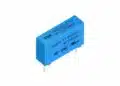
Peak Nano and E&P Technologies have announced a partnership to co‑develop fusion‑grade, high‑energy‑density film capacitors based on Peak Nano’s NanoPlex HDC dielectric platform, manufactured in the United States.

The collaboration is aimed at pushing pulsed‑power film capacitor performance beyond conventional polymer films while also addressing U.S. supply‑chain resilience for fusion energy, aerospace, aviation and power grid modernization.

RelatedPosts

How a Digital Structural Twin Can Predict Tantalum Capacitor Reliability

SCHURTER Buys Biaodi to Boost High-Voltage Protection Portfolio

Binder Hybrid Connector Simplifies One Cable Automation

Key features and benefits

The joint development centers on high‑energy‑density capacitors using Peak Nano’s NanoPlex HDC nanolayer film as the dielectric. The material is engineered by arranging multiple polymers in precisely controlled nanoscale layers to tune electrical, thermal and mechanical behavior.

Key attributes highlighted by the partners include:

  • High energy density compared with traditional polymer dielectric films, enabling more compact capacitor banks or higher stored energy in a given volume.
  • Improved thermal stability, supporting higher operating temperatures and better performance in tightly packed power electronics and pulsed‑power assemblies.
  • Enhanced electrical reliability and high‑duty‑cycle robustness, targeting “million‑shot” operation in fusion drivers and other pulsed‑power systems.
  • U.S.‑manufactured dielectric film and domestic capacitor manufacturing, intended to reduce dependence on foreign film supply and support policy goals around secure, on‑shore production.

From a design perspective, the use of nanolayer polymer stacks allows optimization of dielectric strength and loss behavior; in practical terms, this supports higher specific energy storage J/cm3\text{J/cm}^3J/cm3 at given voltage levels while controlling self‑heating in repetitive‑pulse duty.

Typical applications

Although specific electrical ratings will be defined at the product level, the partnership explicitly targets demanding use cases where energy density, duty‑cycle capability and reliability are critical:

  • Fusion energy drivers and pulsed‑power stages requiring repetitive high‑current discharge over million‑shot lifetimes.
  • Aerospace and aviation power electronics where volume, weight and environmental robustness are tightly constrained.
  • Defense pulsed‑power systems and other mission‑critical platforms needing high reliability and secure supply chains.
  • Power grid modernization, especially grid‑enhancing technologies for increasing transmission capacity and stability on existing infrastructure.
  • Advanced power electronics in sectors such as heavy industrial operations, where compact high‑energy film capacitors can support fast pulsed loads or high‑power conversion stages.

In many of these applications, the capacitors will function as main energy‑storage elements in pulsed power blocks, pulse‑forming networks, or high‑voltage DC link stages where cycle life and field reliability are as important as the nameplate capacitance and voltage rating.

Technical highlights

The press information focuses on the dielectric platform and manufacturing approach rather than listing specific part numbers. Key technical themes relevant to capacitor specifiers include:

  • NanoPlex HDC dielectric film technology: multiple polymer layers arranged at the nanoscale to achieve a tailored combination of dielectric strength, permittivity, loss tangent and mechanical robustness.
  • High‑duty‑cycle design: the capacitors are intended for “million‑shot” pulsed‑power service, which implies careful control of partial discharge behavior, dielectric heating and electrode/termination design according to manufacturer datasheets.
  • Thermal performance: improved thermal stability versus conventional films supports higher ripple loading or closer packing, but the exact temperature ratings and allowable hot‑spot limits are to be taken from the manufacturer datasheets for each capacitor series.
  • U.S.‑based manufacturing flow: material development, film production and capacitor manufacturing/qualification are integrated within a domestic supply chain, supporting programs that emphasize domestic content and secure sourcing.

For engineers used to standard polypropylene or polyester film capacitors, the main shift with a nanolayer platform is the potential to trade conventional margins (package size, voltage derating, operating temperature) for higher energy density and lifetime in a defined pulsed‑duty envelope, provided the application remains within the manufacturer’s validated operating area.

Source

This article is based on information released by Peak Nano regarding its strategic partnership with E&P Technologies to co‑develop high‑energy‑density capacitors using NanoPlex HDC dielectric films, complemented with general engineering context relevant to film capacitor selection and design‑in.

References

  1. Peak Nano press release: Partnership with E&P Technologies to develop fusion‑grade high‑energy‑density capacitors

Related

Recent Posts

How a Digital Structural Twin Can Predict Tantalum Capacitor Reliability

14.5.2026
1

SCHURTER Buys Biaodi to Boost High-Voltage Protection Portfolio

14.5.2026
6

Binder Hybrid Connector Simplifies One Cable Automation

13.5.2026
7

Planar vs Conventional Transformer: When it Make Sense

11.5.2026
41

Researchers Propose Next‑Gen Compact Memory Using Ultra-thin Ferroelectric Capacitors

11.5.2026
29

Nichicon ADN Automotive Hybrid Aluminum Capacitors Now Available in EMEA

11.5.2026
24

Electrocaloric Multilayer Capacitors: Towards Quiet, Solid‑State Cooling Around Room Temperature

7.5.2026
187

High-Crystallinity Nanocrystalline Composites for MHz Chip Inductors

7.5.2026
64

Stackpole Expanded its AlN Thick Film Chip Resistors

6.5.2026
23

Upcoming Events

May 19
16:00 - 17:00 CEST

Designing Qi2 Wireless Power Systems: Practical Development and EMC Optimization

Jun 2
16:00 - 17:00 CEST

Calculation, Simulation and Measurement of 800V EMC Filters

Jun 16
16:00 - 17:00 CEST

EMC with EMC – EMC‑compliant design with electromechanical connectors

View Calendar

Popular Posts

  • Buck Converter Design and Calculation

    0 shares
    Share 0 Tweet 0
  • Boost Converter Design and Calculation

    0 shares
    Share 0 Tweet 0
  • Flyback Converter Design and Calculation

    0 shares
    Share 0 Tweet 0
  • LLC Resonant Converter Design and Calculation

    0 shares
    Share 0 Tweet 0
  • MLCC and Ceramic Capacitors

    0 shares
    Share 0 Tweet 0
  • Dual Active Bridge (DAB) Topology

    0 shares
    Share 0 Tweet 0
  • Capacitor Charging and Discharging

    0 shares
    Share 0 Tweet 0
  • What Electronics Engineer Needs to Know About Passive Low Pass Filters

    0 shares
    Share 0 Tweet 0
  • Ripple Current and its Effects on the Performance of Capacitors

    3 shares
    Share 3 Tweet 0
  • MLCC Case Sizes Standards Explained

    0 shares
    Share 0 Tweet 0

Newsletter Subscription


Passive Components Blog

© EPCI - Leading Passive Components Educational and Information Site

  • Home
  • Privacy Policy
  • EPCI Membership & Advertisement
  • About

No Result
View All Result
  • Home
  • Knowledge Blog
  • PCNS

© EPCI - Leading Passive Components Educational and Information Site

This website uses cookies. By continuing to use this website you are giving consent to cookies being used. Visit our Privacy and Cookie Policy.
Go to mobile version