















Passive Components Blog
No Result
View All Result
  • Home
  • NewsFilter
    • All
    • Aerospace & Defence
    • Antenna
    • Applications
    • Automotive
    • Capacitors
    • Circuit Protection Devices
    • electro-mechanical news
    • Filters
    • Fuses
    • Inductors
    • Industrial
    • Integrated Passives
    • inter-connect news
    • Market & Supply Chain
    • Market Insights
    • Medical
    • Modelling and Simulation
    • New Materials & Supply
    • New Technologies
    • Non-linear Passives
    • Oscillators
    • Passive Sensors News
    • Resistors
    • RF & Microwave
    • Telecommunication
    • Weekly Digest

    Molecular Memristor Shows Record 145 kH Emergent Inductance

    Planar vs Conventional Transformer: When it Make Sense

    Researchers Propose Next‑Gen Compact Memory Using Ultra-thin Ferroelectric Capacitors

    Nichicon ADN Automotive Hybrid Aluminum Capacitors Now Available in EMEA

    Wk 19 Electronics Supply Chain Digest

    Electrocaloric Multilayer Capacitors: Towards Quiet, Solid‑State Cooling Around Room Temperature

    High-Crystallinity Nanocrystalline Composites for MHz Chip Inductors

    European Components Distribution Shows Strong Q1 2026 Growth Amid Geopolitical Uncertainty

    Stackpole Expanded its AlN Thick Film Chip Resistors

    Trending Tags

    • Ripple Current
    • RF
    • Leakage Current
    • Tantalum vs Ceramic
    • Snubber
    • Low ESR
    • Feedthrough
    • Derating
    • Dielectric Constant
    • New Products
    • Market Reports
  • VideoFilter
    • All
    • Antenna videos
    • Capacitor videos
    • Circuit Protection Video
    • Filter videos
    • Fuse videos
    • Inductor videos
    • Inter-Connect Video
    • Non-linear passives videos
    • Oscillator videos
    • Passive sensors videos
    • Resistor videos

    Planar vs Conventional Transformer: When it Make Sense

    Modeling Fringing Field Losses in Inductors & Transformers

    Why Power Inductors Use a Ferrite Core With an Air Gap

    Transformer-Based Power-Line Harvester Magnetic Design

    Thermal Modeling of Magnetics

    Standard vs Planar LLC transformers Comparison for Battery Chargers

    How Modern Tools Model Magnetic Components for Power Electronics

    Advanced Loss Modeling for Planar Magnetics in the Frenetic Planar Tool

    2026 Power Magnetics Design Trends: Flyback, DAB and Planar

    Trending Tags

    • Capacitors explained
    • Inductors explained
    • Resistors explained
    • Filters explained
    • Application Video Guidelines
    • EMC
    • New Products
    • Ripple Current
    • Simulation
    • Tantalum vs Ceramic
  • Knowledge Blog
  • DossiersNew
  • Suppliers
    • Who is Who
  • PCNS
    • PCNS 2025
    • PCNS 2023
    • PCNS 2021
    • PCNS 2019
    • PCNS 2017
  • Events
  • Home
  • NewsFilter
    • All
    • Aerospace & Defence
    • Antenna
    • Applications
    • Automotive
    • Capacitors
    • Circuit Protection Devices
    • electro-mechanical news
    • Filters
    • Fuses
    • Inductors
    • Industrial
    • Integrated Passives
    • inter-connect news
    • Market & Supply Chain
    • Market Insights
    • Medical
    • Modelling and Simulation
    • New Materials & Supply
    • New Technologies
    • Non-linear Passives
    • Oscillators
    • Passive Sensors News
    • Resistors
    • RF & Microwave
    • Telecommunication
    • Weekly Digest

    Molecular Memristor Shows Record 145 kH Emergent Inductance

    Planar vs Conventional Transformer: When it Make Sense

    Researchers Propose Next‑Gen Compact Memory Using Ultra-thin Ferroelectric Capacitors

    Nichicon ADN Automotive Hybrid Aluminum Capacitors Now Available in EMEA

    Wk 19 Electronics Supply Chain Digest

    Electrocaloric Multilayer Capacitors: Towards Quiet, Solid‑State Cooling Around Room Temperature

    High-Crystallinity Nanocrystalline Composites for MHz Chip Inductors

    European Components Distribution Shows Strong Q1 2026 Growth Amid Geopolitical Uncertainty

    Stackpole Expanded its AlN Thick Film Chip Resistors

    Trending Tags

    • Ripple Current
    • RF
    • Leakage Current
    • Tantalum vs Ceramic
    • Snubber
    • Low ESR
    • Feedthrough
    • Derating
    • Dielectric Constant
    • New Products
    • Market Reports
  • VideoFilter
    • All
    • Antenna videos
    • Capacitor videos
    • Circuit Protection Video
    • Filter videos
    • Fuse videos
    • Inductor videos
    • Inter-Connect Video
    • Non-linear passives videos
    • Oscillator videos
    • Passive sensors videos
    • Resistor videos

    Planar vs Conventional Transformer: When it Make Sense

    Modeling Fringing Field Losses in Inductors & Transformers

    Why Power Inductors Use a Ferrite Core With an Air Gap

    Transformer-Based Power-Line Harvester Magnetic Design

    Thermal Modeling of Magnetics

    Standard vs Planar LLC transformers Comparison for Battery Chargers

    How Modern Tools Model Magnetic Components for Power Electronics

    Advanced Loss Modeling for Planar Magnetics in the Frenetic Planar Tool

    2026 Power Magnetics Design Trends: Flyback, DAB and Planar

    Trending Tags

    • Capacitors explained
    • Inductors explained
    • Resistors explained
    • Filters explained
    • Application Video Guidelines
    • EMC
    • New Products
    • Ripple Current
    • Simulation
    • Tantalum vs Ceramic
  • Knowledge Blog
  • DossiersNew
  • Suppliers
    • Who is Who
  • PCNS
    • PCNS 2025
    • PCNS 2023
    • PCNS 2021
    • PCNS 2019
    • PCNS 2017
  • Events
No Result
View All Result
Passive Components Blog
No Result
View All Result

Pulse Transformers are the Key to More Reliable Wired LANs

7.9.2018
Reading Time: 4 mins read
A A

Source: Design News article

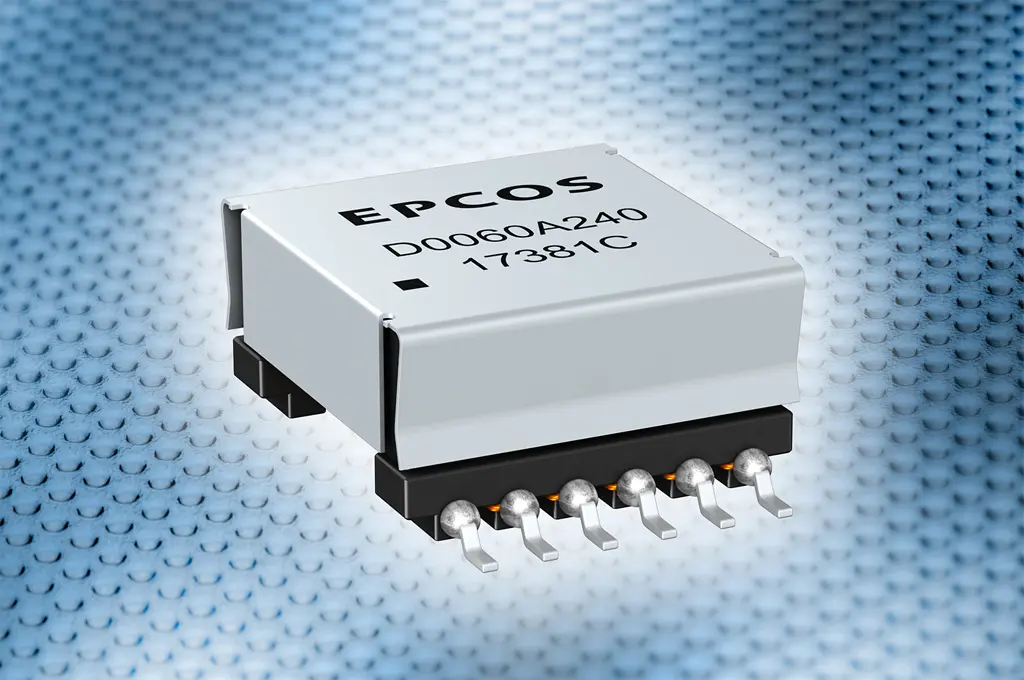
Joe Pulomena, director of  product marketing magnetics at EPCOS Inc., A TDK Group Company, explained benefits of often forgotten wired LANs benefits and pulse transformers benefits to its reliability in his Electronics & Test Automation article.

RelatedPosts

Molecular Memristor Shows Record 145 kH Emergent Inductance

Planar vs Conventional Transformer: When it Make Sense

Researchers Propose Next‑Gen Compact Memory Using Ultra-thin Ferroelectric Capacitors

Over the past decade, innovations in technology have helped wireless connections become more prevalent and more reliable, allowing for shared connections across devices and across greater distances. Wireless definitely has its place. However, wired LANs have many benefits that are critical to the design of most networks. They include speed, less electromagnetic interference (EMI), better security, more stability, and greater reliability. With new technological advances, the advantages of wired LANs are exponentially increasing.


1. Pictured is a LAN interface structure (100BASE-TX) with two pulse transformers and two common-mode chokes. (Image source: Product Marketing Magnetics, EPCOS Inc., A TDK Group Co.)

We often associate wireless with the Internet of Things (IoT), but it is also powered by wired LANs. For example, as more  servers, PCs, laptops, smart TVs, audio/visual devices, wireless access points, and other digital devices increase within a network, ensuring that a quality wired LAN is as close to the devices as possible will help safeguard the success of the network. Simply put, they rely on wired LAN connectivity to work well.

As a result, the number of servers and routers that serve ever more LAN ports will continue to grow—as will the multitude of consumer devices, such as notebook PCs, digital TVs, and other audiovisual devices, that will profit from the benefits of wired LAN connectivity.

The Key to Reliable Wired LANs

In order for wired LANs to work, pulse transformers send rectangular pulse transmissions. Pulse transformers are just like any other transformer; they contain both primary and secondary windings within a single core. The galvanic separation helps to protect sensitive ICs and networked devices within the network from DC bias. In addition, these cores prevent pulse waveform distortions across a wide frequency range. They also have low losses that transmit pulse waves, having many different frequencies resulting from the Fast Fourier Transform.

Newer LAN pulse transformers, which have been developed over the past several years, use high-performance ferrite materials within the core. In addition to improving performance, this helps the transformers have a longer operational lifespan.

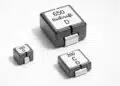
2. A new type of common-mode choke is manufactured using advanced materials and auto-winding processes. This produces pulse transformer modules that are small enough to be integrated in standard RJ-45 LAN connectors. (Image source: Product Marketing Magnetics, EPCOS Inc., A TDK Group Co.)


LAN pulse transformers are typically used alongside a common-mode choke to form a pulse transformer module, which limits common mode noise entering or exiting the system. A pulse transformer module is often embedded within the RJ-45 connector to form a connector module. As a result, LAN pulse transformers must be extremely compact to be used in standard RJ-45 connectors (see figure 1).

Extremely Reliable Performance 

The demand for SMD LAN pulse transformers has increased significantly over the past several years, particularly as more devices become connected. However, traditional, manual production methods have been the norm. In order to speed manufacturing and improve the performance, quality, and miniaturization of pulse transformers, new manufacturing methods and pulse transformer designs needed to evolve.

To improve performance, pulse transformer modules utilize ring cores in both the common-mode choke and the transformer. Ring cores have a lower leakage flux due to their design, which minimizes air gaps that are normal characteristics of other core shapes. In addition, ring cores can be manufactured using an auto-winding process, preventing unevenness across the manufacturing process and within production batches—even for compact SMD designs.

These new manufacturing processes have helped to create entirely new types of SMD common-mode filters and LAN pulse transformers. Engineers found that using a coil carrier in SMD common-mode chokes—with a rectangular profile (DR core) that is automatically wound and bonded to an SP ferrite core or plate—would create the functional equivalent of a ring core. In order to accomplish this design, a special Ni-Zn ferrite material is used within these cores to create high magnetic permeability and saturation flux density throughout the temperature ranges that are typically found in LAN environments.

In addition, these types of SMD common-mode filters and LAN pulse transformers employ automated thermo-compression bonding for the connector electrodes and wires. In doing so, they provide higher quality components with uniform characteristics, a smaller footprint, and an overall lower cost of manufacturing.

While automating production, this advance in the manufacturing process improves the quality and stability of the core. It also enables pulse transformer modules to be miniaturized and made small enough to be integrated in standard RJ-45 LAN connectors in package size 3232 (as small as 3.2 mm × 3.2 mm × 2.9 mm). Using these techniques and manufacturing processes can reduce most 100BASE-TX pulse transformer modules by as much as 30 percent with a footprint that uses as little as 50 percent of the space as traditional LAN pulse transformers (see figure 2).

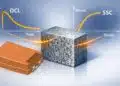
With these innovative manufacturing processes, pulse transformers may exhibit very low insertion loss of 1.5 dB or below over the range of 0.1 MHz to 100 MHz. And, with the advances in miniaturization, they may not exceed 2.5 dB over the same range (see figure 3).

3. Shown is the insertion loss of an SMD pulse transformer that is operating below 1 dB over a very broad frequency range. (Image source: Product Marketing Magnetics, EPCOS Inc., A TDK Group Co.)


Final Thoughts

New, low profile SMD pulse transformers and common-mode chokes offer all the paybacks of fully automated manufacturing processes—including uniformity, reliability, and miniaturization—for a wide range of temperature conditions. New materials, evaluation and simulation, and device and module technology will ensure the high quality, high performance of these devices. Such performance and reliability are crucial as more and more LAN ports are added to servers, routers, notebooks, TVs, and other connected equipment, including many applications in the automotive market. I’m excited to see what additional advances will be developed over the next several years, which will become an integral part of tomorrow’s high-speed, next-generation networks.

 

Related

Recent Posts

Molecular Memristor Shows Record 145 kH Emergent Inductance

12.5.2026
10

Planar vs Conventional Transformer: When it Make Sense

11.5.2026
31

High-Crystallinity Nanocrystalline Composites for MHz Chip Inductors

7.5.2026
63

Würth Elektronik Introduces Compact Flat-wire SMT Power Inductors for Automotive

5.5.2026
49

Energy Localization in Tantalum Anode Formation: A Structural Perspective

4.5.2026
46

Modeling Fringing Field Losses in Inductors & Transformers

30.4.2026
52

Miniaturization of Tantalum Capacitors: Structural Limit Under Constant Rating

27.4.2026
54

Heatsink Design and Thermal Interface Materials for Reliable Electronics

27.4.2026
34

Murata New MLCC Bulk Case Packaging Cuts Packaging Material by 99%

27.4.2026
101

Upcoming Events

May 13
17:00 - 17:30 CEST

Winding Loss Modeling for Toroidal Magnetics – Including Gapped Cores

May 19
16:00 - 17:00 CEST

Designing Qi2 Wireless Power Systems: Practical Development and EMC Optimization

Jun 2
16:00 - 17:00 CEST

Calculation, Simulation and Measurement of 800V EMC Filters

View Calendar

Popular Posts

  • Buck Converter Design and Calculation

    0 shares
    Share 0 Tweet 0
  • Boost Converter Design and Calculation

    0 shares
    Share 0 Tweet 0
  • Flyback Converter Design and Calculation

    0 shares
    Share 0 Tweet 0
  • LLC Resonant Converter Design and Calculation

    0 shares
    Share 0 Tweet 0
  • MLCC and Ceramic Capacitors

    0 shares
    Share 0 Tweet 0
  • Dual Active Bridge (DAB) Topology

    0 shares
    Share 0 Tweet 0
  • Capacitor Charging and Discharging

    0 shares
    Share 0 Tweet 0
  • What Electronics Engineer Needs to Know About Passive Low Pass Filters

    0 shares
    Share 0 Tweet 0
  • Ripple Current and its Effects on the Performance of Capacitors

    3 shares
    Share 3 Tweet 0
  • MLCC Case Sizes Standards Explained

    0 shares
    Share 0 Tweet 0

Newsletter Subscription


Passive Components Blog

© EPCI - Leading Passive Components Educational and Information Site

  • Home
  • Privacy Policy
  • EPCI Membership & Advertisement
  • About

No Result
View All Result
  • Home
  • Knowledge Blog
  • PCNS

© EPCI - Leading Passive Components Educational and Information Site

This website uses cookies. By continuing to use this website you are giving consent to cookies being used. Visit our Privacy and Cookie Policy.
Go to mobile version