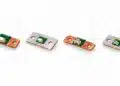


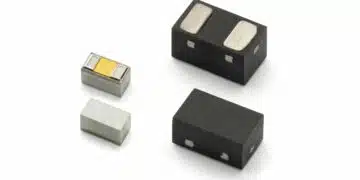




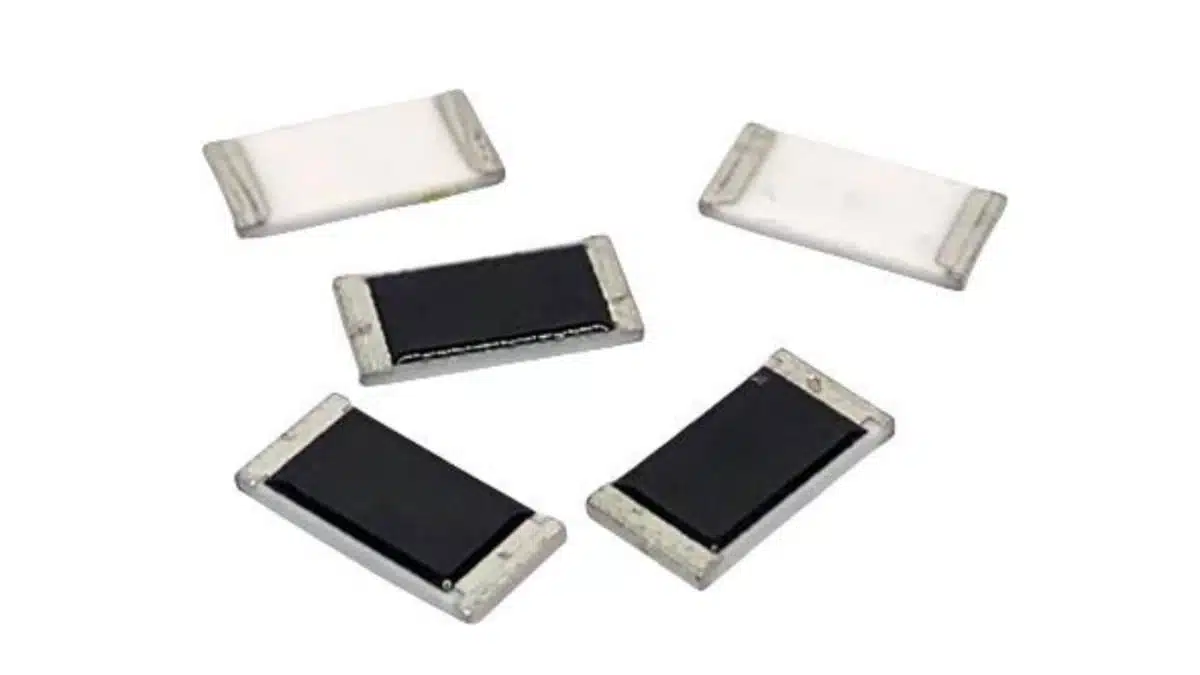
Stackpole Electronics has expanded its RMAN series of thick film chip resistors, which use aluminum nitride substrates instead of conventional alumina to overcome thermal bottlenecks in high-power surface-mount applications.
The series delivers up to 2.4 W in 1206 and 3.4 W in 2512 packages while maintaining safe operating temperatures—performance levels difficult to achieve with standard alumina-based thick film designs.seielect+1
Key features and benefits
- Aluminum nitride (AlN) substrate with thermal conductivity 80–190 W/m·K compared to 14–30 W/m·K for standard alumina, enabling significantly faster heat removal from the resistive element
- High power ratings of 2.4 W in 1206 and up to 3.5 W in 2512 form factors
- Temperature coefficient of ±150 ppm/°C for stable resistance characteristics across the operating range
- Operating temperature range from -55°C to +155°C suitable for industrial and automotive environments
- Thick film technology providing cost-effective, proven construction with high-volume manufacturability
- Standard footprints compatible with 1206 and 2512 land patterns for drop-in replacement potential
- Compliance with RoHS, REACH, and halogen-free requirements
The thermal conductivity advantage of aluminum nitride is substantial. While alumina substrates typically offer 14–30 W/m·K, aluminum nitride can reach 170–230 W/m·K—up to seven times higher. This translates directly into lower hot-spot temperatures, improved power handling, and better long-term stability under continuous load.cerampro+1
Typical applications
The RMAN series targets applications where thermal performance directly affects electrical behavior and reliability.
Power electronics and switching circuits:
- Snubber and gate resistors in IGBT, SiC, and GaN power modules
- Pre-charge and discharge circuits in industrial drives and EV inverters
- Current sensing and bleeder resistors in power supplies
Automotive electronics:
- Battery management systems (BMS) requiring thermal cycling resistance
- Onboard chargers and DC-DC converters
- Inverter gate drives with continuous high-power dissipation
RF and microwave circuits:
- Termination resistors maintaining impedance stability under high dissipation
- Attenuators and dummy loads in amplifier test setups
- High-power applications where alumina-based chips overheat
Specialty high-power applications:
- High-power LED and laser drivers
- Aerospace and defense power conditioning
- High-voltage divider networks where temperature gradients degrade accuracy
Technical highlights
Rising power density in modern electronics is pushing traditional thick film chip resistors beyond their thermal limits. In conventional designs, the alumina substrate becomes the thermal bottleneck: even with good termination contact and adequate PCB copper, heat cannot spread fast enough away from the resistive film.
Aluminum nitride addresses this by improving heat spreading from the resistive element to the terminations and into the PCB or heat-sinking structure. Because AlN also offers excellent electrical insulation and a coefficient of thermal expansion (CTE) close to silicon, it combines thermal performance with mechanical reliability in thermal cycling environments.
| Property | Alumina (Al₂O₃) | Aluminum Nitride (AlN) |
|---|---|---|
| Thermal conductivity | 14–30 W/m·K | 80–190 W/m·K |
| Dielectric strength | High | High |
| CTE match to silicon | Moderate mismatch | Close match |
| Cost | Lower | Higher |
The RMAN series uses thick film resistive technology, which is well-established, stable, and cost-effective compared to thin-film alternatives. Tolerances of 1% are standard, with a TCR of ±150 ppm/°C across a wide resistance range.
Availability and part numbers
The RMAN series is available in two package sizes:
- 1206: up to 2.4 W power rating
- 2512: up to 3.4–3.5 W power rating
Resistance values span a wide range, with standard tolerances of 1% and TCR of ±150 ppm/°C. Pricing varies by size, tolerance, and TCR specification; volume pricing is available through Stackpole and franchised distribution partners.mouser+2
Design-in notes for engineers
- Thermal design: Even with AlN substrates, proper PCB layout is essential. Ensure adequate copper area under terminations and use thermal vias to conduct heat into inner layers or ground planes.
- Power derating: Always consult the manufacturer datasheet for derating curves based on ambient temperature and mounting conditions. Power ratings assume specific PCB copper configurations.
- Pad geometry: While RMAN resistors fit standard 1206 and 2512 footprints, verify exact pad geometry recommendations in the datasheet to optimize thermal and mechanical performance.
- Tolerance and TCR selection: For precision applications (e.g., voltage dividers, current sensing), consider the combined effect of initial tolerance and temperature coefficient over the operating range.
- Comparative analysis: If migrating from alumina-based chips, you may be able to reduce package size or increase power handling in the same footprint, saving board space or improving reliability margins.
- Availability: Check lead times and minimum order quantities, especially for non-standard resistance values or tighter tolerances.
Source
This article is based on the official press release issued by Stackpole Electronics on April 15, 2026, and supplemented with publicly available technical data from distributor listings and ceramic materials references.