







Passive Components Blog
No Result
View All Result
  • Home
  • NewsFilter
    • All
    • Aerospace & Defence
    • Antenna
    • Applications
    • Automotive
    • Capacitors
    • Circuit Protection Devices
    • electro-mechanical news
    • Filters
    • Fuses
    • Inductors
    • Industrial
    • Integrated Passives
    • inter-connect news
    • Market & Supply Chain
    • Market Insights
    • Medical
    • Modelling and Simulation
    • New Materials & Supply
    • New Technologies
    • Non-linear Passives
    • Oscillators
    • Passive Sensors News
    • Resistors
    • RF & Microwave
    • Telecommunication
    • Weekly Digest

    YAGEO Introduces C0G Flexible Termination Automotive MLCCs

    SCHURTER Releases SMT Micro Switch for Compact HMIs

    binder Releases Tool‑Tightenable M12 Connectors for Improved Reliability

    Vishay Introduced Thin Film Submount Platform for Optical and RF Modules

    Murata Introduces Crystal and NTC Set for Automotive UWB Timing

    Kyocera Developed Multilayer Ceramic Core Substrate for AI Packages

    Modeling Fringing Field Losses in Inductors & Transformers

    YMIN Introduces Polymer Tantalum Capacitors for AI Server SSDs

    Littelfuse Expands High-Voltage TVS Diodes

    Trending Tags

    • Ripple Current
    • RF
    • Leakage Current
    • Tantalum vs Ceramic
    • Snubber
    • Low ESR
    • Feedthrough
    • Derating
    • Dielectric Constant
    • New Products
    • Market Reports
  • VideoFilter
    • All
    • Antenna videos
    • Capacitor videos
    • Circuit Protection Video
    • Filter videos
    • Fuse videos
    • Inductor videos
    • Inter-Connect Video
    • Non-linear passives videos
    • Oscillator videos
    • Passive sensors videos
    • Resistor videos

    Modeling Fringing Field Losses in Inductors & Transformers

    Why Power Inductors Use a Ferrite Core With an Air Gap

    Transformer-Based Power-Line Harvester Magnetic Design

    Thermal Modeling of Magnetics

    Standard vs Planar LLC transformers Comparison for Battery Chargers

    How Modern Tools Model Magnetic Components for Power Electronics

    Advanced Loss Modeling for Planar Magnetics in the Frenetic Planar Tool

    2026 Power Magnetics Design Trends: Flyback, DAB and Planar

    Enabling Software‑Defined Vehicle Architectures: Automotive Ethernet and Zonal Smart Power

    Trending Tags

    • Capacitors explained
    • Inductors explained
    • Resistors explained
    • Filters explained
    • Application Video Guidelines
    • EMC
    • New Products
    • Ripple Current
    • Simulation
    • Tantalum vs Ceramic
  • Knowledge Blog
  • DossiersNew
  • Suppliers
    • Who is Who
  • PCNS
    • PCNS 2025
    • PCNS 2023
    • PCNS 2021
    • PCNS 2019
    • PCNS 2017
  • Events
  • Home
  • NewsFilter
    • All
    • Aerospace & Defence
    • Antenna
    • Applications
    • Automotive
    • Capacitors
    • Circuit Protection Devices
    • electro-mechanical news
    • Filters
    • Fuses
    • Inductors
    • Industrial
    • Integrated Passives
    • inter-connect news
    • Market & Supply Chain
    • Market Insights
    • Medical
    • Modelling and Simulation
    • New Materials & Supply
    • New Technologies
    • Non-linear Passives
    • Oscillators
    • Passive Sensors News
    • Resistors
    • RF & Microwave
    • Telecommunication
    • Weekly Digest

    YAGEO Introduces C0G Flexible Termination Automotive MLCCs

    SCHURTER Releases SMT Micro Switch for Compact HMIs

    binder Releases Tool‑Tightenable M12 Connectors for Improved Reliability

    Vishay Introduced Thin Film Submount Platform for Optical and RF Modules

    Murata Introduces Crystal and NTC Set for Automotive UWB Timing

    Kyocera Developed Multilayer Ceramic Core Substrate for AI Packages

    Modeling Fringing Field Losses in Inductors & Transformers

    YMIN Introduces Polymer Tantalum Capacitors for AI Server SSDs

    Littelfuse Expands High-Voltage TVS Diodes

    Trending Tags

    • Ripple Current
    • RF
    • Leakage Current
    • Tantalum vs Ceramic
    • Snubber
    • Low ESR
    • Feedthrough
    • Derating
    • Dielectric Constant
    • New Products
    • Market Reports
  • VideoFilter
    • All
    • Antenna videos
    • Capacitor videos
    • Circuit Protection Video
    • Filter videos
    • Fuse videos
    • Inductor videos
    • Inter-Connect Video
    • Non-linear passives videos
    • Oscillator videos
    • Passive sensors videos
    • Resistor videos

    Modeling Fringing Field Losses in Inductors & Transformers

    Why Power Inductors Use a Ferrite Core With an Air Gap

    Transformer-Based Power-Line Harvester Magnetic Design

    Thermal Modeling of Magnetics

    Standard vs Planar LLC transformers Comparison for Battery Chargers

    How Modern Tools Model Magnetic Components for Power Electronics

    Advanced Loss Modeling for Planar Magnetics in the Frenetic Planar Tool

    2026 Power Magnetics Design Trends: Flyback, DAB and Planar

    Enabling Software‑Defined Vehicle Architectures: Automotive Ethernet and Zonal Smart Power

    Trending Tags

    • Capacitors explained
    • Inductors explained
    • Resistors explained
    • Filters explained
    • Application Video Guidelines
    • EMC
    • New Products
    • Ripple Current
    • Simulation
    • Tantalum vs Ceramic
  • Knowledge Blog
  • DossiersNew
  • Suppliers
    • Who is Who
  • PCNS
    • PCNS 2025
    • PCNS 2023
    • PCNS 2021
    • PCNS 2019
    • PCNS 2017
  • Events
No Result
View All Result
Passive Components Blog
No Result
View All Result

Schaffner Announces Extension of its Ecosine Evo Passive Harmonic Filters

26.3.2019
Reading Time: 2 mins read
A A

Source: Schaffner news

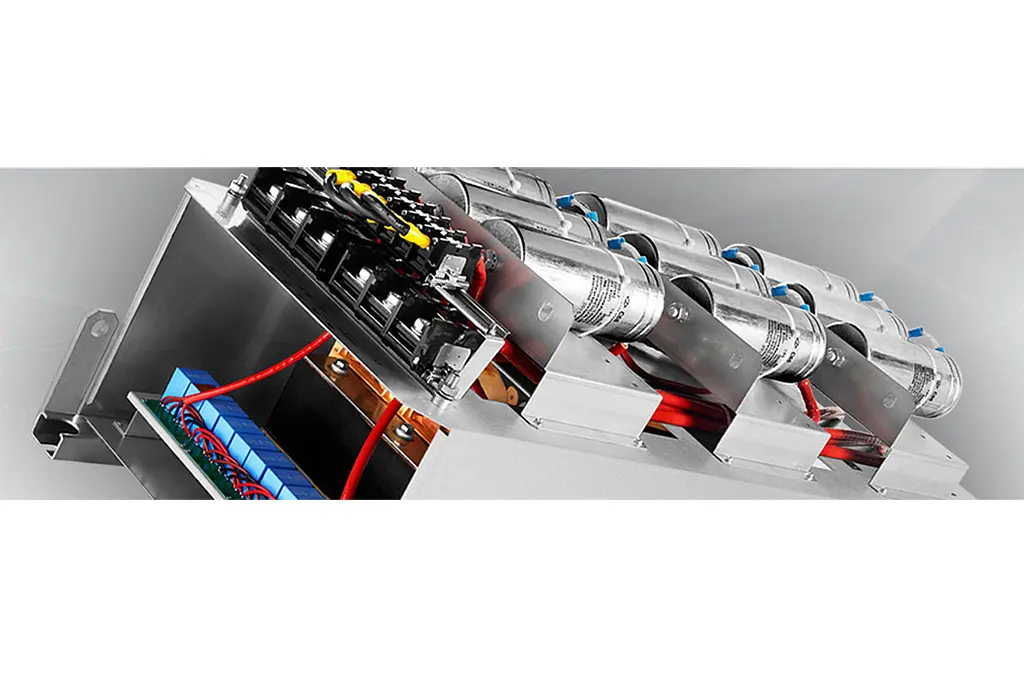
Schaffner, the international leader in the fields of electromagnetic compatibility and power quality, is pleased to announce the expansion of well-known and best-in-class ecosine evo line passive harmonic filter series to 380 VAC to 415 VAC, 60 Hz. The expansion combines superior technology to reliably mitigate excessive harmonics with an evolutionary modular product concept and broadens the availability of Schaffner filter solutions for customers and applications.

RelatedPosts

YAGEO Introduces C0G Flexible Termination Automotive MLCCs

SCHURTER Releases SMT Micro Switch for Compact HMIs

binder Releases Tool‑Tightenable M12 Connectors for Improved Reliability

The new ecosine evo filters FN 3442 and FN 3443 are dedicated passive harmonic filters for three-phase diode and thyristor rectifiers. They are achieving a THID ≤ 5% with and without DC-link choke included in the drive. They guarantee compliance with the toughest requirement of IEEE-519 and other stringent international power quality standards while being the most dedicated and compact passive harmonic filters available in the market. The filters offer excellent performance at rated power with minimal reactive power, even at partial or no-load conditions. While using ecosine evo filters the electrical infrastructure is unburdened and its utilization is much more efficient and reliable. Furthermore, the service life cycle of electrical equipment is extended, and energy costs can be reduced.

With Schaffner’s expertise in the field of inductor design as well as broad experience in power quality Adding this extension to the existing six product families of ecosine evo filters FN 3440/41, FN 3450/51 and FN 3452/53, ecosine evo product families now cover networks of 380 VAC to 500 VAC, 50 Hz/60 Hz.

Thanks to the modular concept including dedicated filters for drives without (FN 3440, FN 3450, FN 3442, FN 3452) and drives with (FN 3441, FN 3451, FN 3443, FN 3453) included DC-link choke ecosine evo filter series offers a market unique flexibility. It allows Schaffner to provide the optimal solution by offering base modules that are dedicated to the drive technology and can additionally be adapted to application and customer needs as well as installation requirements by merely “plugging in add-on modules”. Thus, utilizing the new Schaffner modular filters allows for the best tailored solutions for applications, aligning product offerings with the international market requirements and customer expectations.

Ecosine evo filters FN 3442/43 are available with standard power ratings from 1HP to 240HP (0.9 to 177kW). They are available as open frame IP 00 (-E0XXXXX, -E0FAXRX, -E0FAJRX) and IP 20 (-E2FAJRX) versions. All FN 3442/43 filters are CE-marked, UL listed and RoHS compliant. Ecosine evo filters are easy to install and maintain. They are fully supported in Schaffner’s well known power quality simulator SchaffnerPQS3.


Related

Recent Posts

YAGEO Introduces C0G Flexible Termination Automotive MLCCs

30.4.2026
4

SCHURTER Releases SMT Micro Switch for Compact HMIs

30.4.2026
4

binder Releases Tool‑Tightenable M12 Connectors for Improved Reliability

30.4.2026
3

Vishay Introduced Thin Film Submount Platform for Optical and RF Modules

30.4.2026
5

Modeling Fringing Field Losses in Inductors & Transformers

30.4.2026
7

Exxelia Introduces SMD High‑Voltage Mica Capacitors

28.4.2026
20

Modelithics Releases COMPLETE v26.1 for Keysight ADS

23.4.2026
13

April 2026 Interconnect, Passives and Electromechanical Components Market Insights

22.4.2026
76

KYOCERA AVX Introduces Traction‑Grade DC Link Film Capacitors

21.4.2026
48

Upcoming Events

May 5
16:00 - 17:00 CEST

Understanding and Selecting Capacitors – Fundamentals, Technologies and Latest Trends

May 7
17:00 - 18:00 CEST

From Grid to Motion: How Industrial Electrification is Redefining Power System Design

May 12
8:00 - 15:00 CEST

ESCC Space Splice connectors

View Calendar

Popular Posts

  • Buck Converter Design and Calculation

    0 shares
    Share 0 Tweet 0
  • Boost Converter Design and Calculation

    0 shares
    Share 0 Tweet 0
  • Flyback Converter Design and Calculation

    0 shares
    Share 0 Tweet 0
  • LLC Resonant Converter Design and Calculation

    0 shares
    Share 0 Tweet 0
  • MLCC and Ceramic Capacitors

    0 shares
    Share 0 Tweet 0
  • Dual Active Bridge (DAB) Topology

    0 shares
    Share 0 Tweet 0
  • Capacitor Charging and Discharging

    0 shares
    Share 0 Tweet 0
  • What Electronics Engineer Needs to Know About Passive Low Pass Filters

    0 shares
    Share 0 Tweet 0
  • Ripple Current and its Effects on the Performance of Capacitors

    3 shares
    Share 3 Tweet 0
  • MLCC Case Sizes Standards Explained

    0 shares
    Share 0 Tweet 0

Newsletter Subscription


Passive Components Blog

© EPCI - Leading Passive Components Educational and Information Site

  • Home
  • Privacy Policy
  • EPCI Membership & Advertisement
  • About

No Result
View All Result
  • Home
  • Knowledge Blog
  • PCNS

© EPCI - Leading Passive Components Educational and Information Site

This website uses cookies. By continuing to use this website you are giving consent to cookies being used. Visit our Privacy and Cookie Policy.
Go to mobile version