







Passive Components Blog
No Result
View All Result
  • Home
  • NewsFilter
    • All
    • Aerospace & Defence
    • Antenna
    • Applications
    • Automotive
    • Capacitors
    • Circuit Protection Devices
    • electro-mechanical news
    • Filters
    • Fuses
    • Inductors
    • Industrial
    • Integrated Passives
    • inter-connect news
    • Market & Supply Chain
    • Market Insights
    • Medical
    • Modelling and Simulation
    • New Materials & Supply
    • New Technologies
    • Non-linear Passives
    • Oscillators
    • Passive Sensors News
    • Resistors
    • RF & Microwave
    • Telecommunication
    • Weekly Digest

    binder Releases Tool‑Tightenable M12 Connectors for Improved Reliability

    Vishay Introduced Thin Film Submount Platform for Optical and RF Modules

    Murata Introduces Crystal and NTC Set for Automotive UWB Timing

    Kyocera Developed Multilayer Ceramic Core Substrate for AI Packages

    Modeling Fringing Field Losses in Inductors & Transformers

    YMIN Introduces Polymer Tantalum Capacitors for AI Server SSDs

    Littelfuse Expands High-Voltage TVS Diodes

    DigiKey Adds 31k New In‑Stock Parts in Q1 2026

    Miniaturization of Tantalum Capacitors: Structural Limit Under Constant Rating

    Trending Tags

    • Ripple Current
    • RF
    • Leakage Current
    • Tantalum vs Ceramic
    • Snubber
    • Low ESR
    • Feedthrough
    • Derating
    • Dielectric Constant
    • New Products
    • Market Reports
  • VideoFilter
    • All
    • Antenna videos
    • Capacitor videos
    • Circuit Protection Video
    • Filter videos
    • Fuse videos
    • Inductor videos
    • Inter-Connect Video
    • Non-linear passives videos
    • Oscillator videos
    • Passive sensors videos
    • Resistor videos

    Modeling Fringing Field Losses in Inductors & Transformers

    Why Power Inductors Use a Ferrite Core With an Air Gap

    Transformer-Based Power-Line Harvester Magnetic Design

    Thermal Modeling of Magnetics

    Standard vs Planar LLC transformers Comparison for Battery Chargers

    How Modern Tools Model Magnetic Components for Power Electronics

    Advanced Loss Modeling for Planar Magnetics in the Frenetic Planar Tool

    2026 Power Magnetics Design Trends: Flyback, DAB and Planar

    Enabling Software‑Defined Vehicle Architectures: Automotive Ethernet and Zonal Smart Power

    Trending Tags

    • Capacitors explained
    • Inductors explained
    • Resistors explained
    • Filters explained
    • Application Video Guidelines
    • EMC
    • New Products
    • Ripple Current
    • Simulation
    • Tantalum vs Ceramic
  • Knowledge Blog
  • DossiersNew
  • Suppliers
    • Who is Who
  • PCNS
    • PCNS 2025
    • PCNS 2023
    • PCNS 2021
    • PCNS 2019
    • PCNS 2017
  • Events
  • Home
  • NewsFilter
    • All
    • Aerospace & Defence
    • Antenna
    • Applications
    • Automotive
    • Capacitors
    • Circuit Protection Devices
    • electro-mechanical news
    • Filters
    • Fuses
    • Inductors
    • Industrial
    • Integrated Passives
    • inter-connect news
    • Market & Supply Chain
    • Market Insights
    • Medical
    • Modelling and Simulation
    • New Materials & Supply
    • New Technologies
    • Non-linear Passives
    • Oscillators
    • Passive Sensors News
    • Resistors
    • RF & Microwave
    • Telecommunication
    • Weekly Digest

    binder Releases Tool‑Tightenable M12 Connectors for Improved Reliability

    Vishay Introduced Thin Film Submount Platform for Optical and RF Modules

    Murata Introduces Crystal and NTC Set for Automotive UWB Timing

    Kyocera Developed Multilayer Ceramic Core Substrate for AI Packages

    Modeling Fringing Field Losses in Inductors & Transformers

    YMIN Introduces Polymer Tantalum Capacitors for AI Server SSDs

    Littelfuse Expands High-Voltage TVS Diodes

    DigiKey Adds 31k New In‑Stock Parts in Q1 2026

    Miniaturization of Tantalum Capacitors: Structural Limit Under Constant Rating

    Trending Tags

    • Ripple Current
    • RF
    • Leakage Current
    • Tantalum vs Ceramic
    • Snubber
    • Low ESR
    • Feedthrough
    • Derating
    • Dielectric Constant
    • New Products
    • Market Reports
  • VideoFilter
    • All
    • Antenna videos
    • Capacitor videos
    • Circuit Protection Video
    • Filter videos
    • Fuse videos
    • Inductor videos
    • Inter-Connect Video
    • Non-linear passives videos
    • Oscillator videos
    • Passive sensors videos
    • Resistor videos

    Modeling Fringing Field Losses in Inductors & Transformers

    Why Power Inductors Use a Ferrite Core With an Air Gap

    Transformer-Based Power-Line Harvester Magnetic Design

    Thermal Modeling of Magnetics

    Standard vs Planar LLC transformers Comparison for Battery Chargers

    How Modern Tools Model Magnetic Components for Power Electronics

    Advanced Loss Modeling for Planar Magnetics in the Frenetic Planar Tool

    2026 Power Magnetics Design Trends: Flyback, DAB and Planar

    Enabling Software‑Defined Vehicle Architectures: Automotive Ethernet and Zonal Smart Power

    Trending Tags

    • Capacitors explained
    • Inductors explained
    • Resistors explained
    • Filters explained
    • Application Video Guidelines
    • EMC
    • New Products
    • Ripple Current
    • Simulation
    • Tantalum vs Ceramic
  • Knowledge Blog
  • DossiersNew
  • Suppliers
    • Who is Who
  • PCNS
    • PCNS 2025
    • PCNS 2023
    • PCNS 2021
    • PCNS 2019
    • PCNS 2017
  • Events
No Result
View All Result
Passive Components Blog
No Result
View All Result

binder Releases Tool‑Tightenable M12 Connectors for Improved Reliability

30.4.2026
Reading Time: 6 mins read
A A

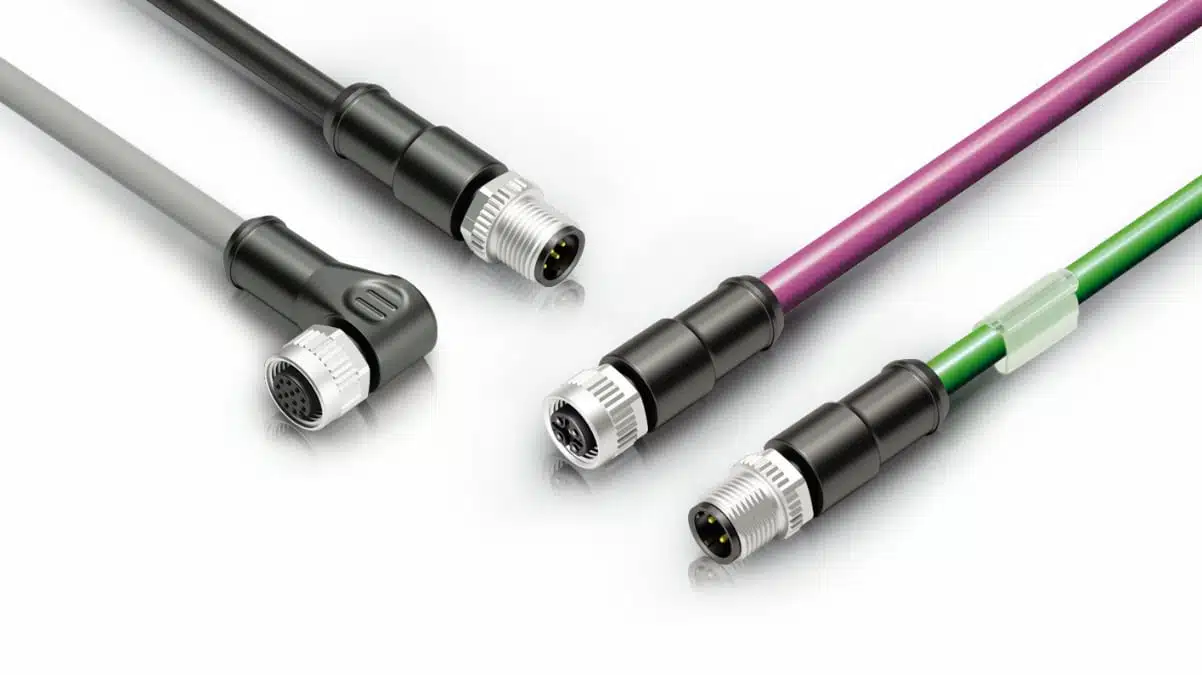
M12 circular connectors are a staple interface in industrial automation for carrying sensor signals, communication data and low‑voltage power in harsh environments.

The latest design update from binder adds a tool‑tightenable coupling ring to moulded, shielded M12 versions, addressing the growing need for controlled, documented assembly in the field. For design engineers and installers, this change directly impacts process reliability, serviceability and long‑term stability of connected devices.

RelatedPosts

Binder Introduces Triangular Moulding for M16 and M12 Cable Connectors

Binder Extends NCC Circular Connectors for Harsh Environments

Binder Unveils M8 Flange Solder Connectors for Flexible Cabling

Key features and benefits

  • Tool‑assisted tightening: New coupling rings combine traditional knurling with a hexagonal geometry, allowing the use of torque wrenches and other open‑end tools for defined tightening instead of relying solely on hand torque.
  • Higher process reliability: Defined torque during installation helps ensure consistent contact pressure and sealing conditions across multiple connectors and installation teams.
  • Support for traceable assembly processes: The possibility of specifying tightening tools and torque values in work instructions supports quality management systems and documented field assembly procedures.
  • Improved handling in the field: Knurling continues to support fast manual pre‑tightening, while the hexagon provides a positive tool interface for final torque application even in confined spaces.
  • Harmonised portfolio: The same knurling‑plus‑hexagon concept already used on unshielded M12 variants is now extended to moulded, shielded types, simplifying training, tooling and visual inspection across a mixed connector population.
  • Enhanced mechanical robustness in operation: Controlled tightening reduces the risk of under‑tightened rings loosening under vibration or over‑tightened rings damaging threads or sealing elements over time.

Typical applications

In many industrial environments, M12 connectors are treated as commodity components, yet their correct assembly is critical for system uptime. The updated binder design is particularly relevant wherever repeatable, spec‑compliant installation is required.

Typical use cases include:

  • Automation technology – sensors and actuators: Connection of proximity sensors, encoders, IO‑modules and valve terminals on machinery, often subject to vibration and regular maintenance interventions.
  • Mechanical engineering and plant construction: Distributed I/O, local control modules and safety devices in production lines where assembly is performed by multiple teams and must follow standardised work instructions.
  • Robotics and handling systems: Dynamic cable routing and frequent motion require connectors that remain secure under defined mechanical load and vibration.
  • Test and measurement equipment: Modular test setups and fixtures that need repeatable reconnection without compromising shielding integrity and contact resistance over many mating cycles.
  • Harsh industrial environments: Installations where connectors must be tightened under defined mechanical conditions to maintain environmental protection and EMC performance over long service life.

Technical highlights

The press release focuses on the mechanical geometry of the coupling ring rather than electrical parameters, but several technical aspects are important from a design‑in perspective.

Coupling ring geometry

  • Combined knurling and hexagon: The external surface of the coupling ring now features a mixed profile – a knurled section for grip and a hexagonal section for wrench engagement.
  • Compatibility with torque tools: The hexagon is intended for tools such as torque wrenches, enabling the specification of installation torque according to manufacturer datasheet and internal plant standards.
  • Continuity with existing designs: The concept is aligned with existing unshielded M12 versions in the binder portfolio, so users see a uniform mechanical interface across shielded and unshielded assemblies.

Shielded moulded M12 execution

  • Moulded, shielded construction: The update applies to overmoulded, shielded M12 cables, which are widely used where EMC performance and strain relief are critical and field‑terminable connectors are not desired.
  • Targeted for defined torque applications: The design is explicitly aimed at installations where tightening torque is a parameter of the specification, for example in high‑vibration environments or where sealing performance must be validated.
  • Electrical and environmental data: Detailed ratings (voltage, current, IP class, shielding performance and temperature range) remain as specified in the corresponding binder datasheets for the individual M12 product families and should be consulted during selection.

Portfolio consistency

A key theme of the update is portfolio harmonisation. For engineers and purchasing teams this has practical implications.

AspectPrevious situationNew situation with updated rings
Shielded moulded M12Knurled ring, primarily hand‑tightenedKnurling plus hexagon, tool‑tightenable
Unshielded M12 versionsKnurling plus hexagon already availableSame concept maintained
Visual identificationDifferent geometries across some variantsMore uniform appearance across families
Installation toolsMainly manual tightening, limited tool useStandard spanners/torque wrenches usable

This uniformity simplifies internal standards for connector selection, assembly tooling and operator training, especially in organisations rolling out common connector policies across multiple plants.

Design‑in notes for engineers

From a design and operations standpoint, the change in coupling ring geometry is a small mechanical detail that can have measurable impact on assembly quality and lifetime performance.

  • Define installation torque: Where possible, specify a torque range for M12 coupling rings in installation instructions, aligned with binder recommendations. This helps avoid both under‑ and over‑tightening.
  • Update work instructions and checklists: If your plant already uses torque‑controlled assembly for other connector systems, consider adding the updated M12 connectors to these standard procedures so operators use the same style of tools.
  • Consider vibration and movement: In applications with high vibration or frequent machine motion, torque‑controlled tightening of M12 connectors can reduce loosening events and maintenance interventions compared to purely hand‑tightened rings.
  • Leverage portfolio consistency: Standardising on the updated binder M12 connectors across shielded and unshielded lines simplifies spare parts management and reduces training complexity for installation crews.
  • Support traceability and audits: In quality‑sensitive sectors, the ability to specify tools and torque in procedures supports audit trails and process capability analyses for electrical termination steps.
  • Coordinate with EMC and IP requirements: For systems requiring defined shielding and ingress protection levels, treat connector tightening torque as a parameter in system qualification and verify it against the latest binder datasheet recommendations.

Source

This article is based on information provided in the official binder press release about the optimised assembly concept for M12 connectors and related documentation available on the binder website, interpreted and commented from an independent engineering perspective.


References

  1. Optimised Assembly for M12 Connectors – binder news release
  2. binder automation technology – M12 connectors overview

Related

Recent Posts

Vishay Introduced Thin Film Submount Platform for Optical and RF Modules

30.4.2026
1

Kyocera Developed Multilayer Ceramic Core Substrate for AI Packages

30.4.2026
3

Heatsink Design and Thermal Interface Materials for Reliable Electronics

27.4.2026
8

Exxelia Introduces SMD High‑Voltage Mica Capacitors

28.4.2026
19

April 2026 Interconnect, Passives and Electromechanical Components Market Insights

22.4.2026
74

KYOCERA AVX Introduces Traction‑Grade DC Link Film Capacitors

21.4.2026
47

YAGEO Introduces High‑Current Y2/X1 Film Capacitors for Wide-bandgap Power Systems

17.4.2026
43

Amphenol Explanded Liquid Cooling Connectors for AI, ESS and EV Systems

17.4.2026
23

Hirose Introduced BGA connector for PCIe Gen6 for AI and Edge Computing

17.4.2026
14

Upcoming Events

May 5
16:00 - 17:00 CEST

Understanding and Selecting Capacitors – Fundamentals, Technologies and Latest Trends

May 7
17:00 - 18:00 CEST

From Grid to Motion: How Industrial Electrification is Redefining Power System Design

May 12
8:00 - 15:00 CEST

ESCC Space Splice connectors

View Calendar

Popular Posts

  • Buck Converter Design and Calculation

    0 shares
    Share 0 Tweet 0
  • Boost Converter Design and Calculation

    0 shares
    Share 0 Tweet 0
  • Flyback Converter Design and Calculation

    0 shares
    Share 0 Tweet 0
  • LLC Resonant Converter Design and Calculation

    0 shares
    Share 0 Tweet 0
  • MLCC and Ceramic Capacitors

    0 shares
    Share 0 Tweet 0
  • Dual Active Bridge (DAB) Topology

    0 shares
    Share 0 Tweet 0
  • What Electronics Engineer Needs to Know About Passive Low Pass Filters

    0 shares
    Share 0 Tweet 0
  • Capacitor Charging and Discharging

    0 shares
    Share 0 Tweet 0
  • MLCC Case Sizes Standards Explained

    0 shares
    Share 0 Tweet 0
  • Ripple Current and its Effects on the Performance of Capacitors

    3 shares
    Share 3 Tweet 0

Newsletter Subscription


Passive Components Blog

© EPCI - Leading Passive Components Educational and Information Site

  • Home
  • Privacy Policy
  • EPCI Membership & Advertisement
  • About

No Result
View All Result
  • Home
  • Knowledge Blog
  • PCNS

© EPCI - Leading Passive Components Educational and Information Site

This website uses cookies. By continuing to use this website you are giving consent to cookies being used. Visit our Privacy and Cookie Policy.
Go to mobile version