




Passive Components Blog
No Result
View All Result
  • Home
  • NewsFilter
    • All
    • Aerospace & Defence
    • Antenna
    • Applications
    • Automotive
    • Capacitors
    • Circuit Protection Devices
    • electro-mechanical news
    • Filters
    • Fuses
    • Inductors
    • Industrial
    • Integrated Passives
    • inter-connect news
    • Market & Supply Chain
    • Market Insights
    • Medical
    • Modelling and Simulation
    • New Materials & Supply
    • New Technologies
    • Non-linear Passives
    • Oscillators
    • Passive Sensors News
    • Resistors
    • RF & Microwave
    • Telecommunication
    • Weekly Digest

    Murata Introduces Crystal and NTC Set for Automotive UWB Timing

    Kyocera Developed Multilayer Ceramic Core Substrate for AI Packages

    Modeling Fringing Field Losses in Inductors & Transformers

    YMIN Introduces Polymer Tantalum Capacitors for AI Server SSDs

    Littelfuse Expands High-Voltage TVS Diodes

    DigiKey Adds 31k New In‑Stock Parts in Q1 2026

    Miniaturization of Tantalum Capacitors: Structural Limit Under Constant Rating

    Heatsink Design and Thermal Interface Materials for Reliable Electronics

    Murata New MLCC Bulk Case Packaging Cuts Packaging Material by 99%

    Trending Tags

    • Ripple Current
    • RF
    • Leakage Current
    • Tantalum vs Ceramic
    • Snubber
    • Low ESR
    • Feedthrough
    • Derating
    • Dielectric Constant
    • New Products
    • Market Reports
  • VideoFilter
    • All
    • Antenna videos
    • Capacitor videos
    • Circuit Protection Video
    • Filter videos
    • Fuse videos
    • Inductor videos
    • Inter-Connect Video
    • Non-linear passives videos
    • Oscillator videos
    • Passive sensors videos
    • Resistor videos

    Modeling Fringing Field Losses in Inductors & Transformers

    Why Power Inductors Use a Ferrite Core With an Air Gap

    Transformer-Based Power-Line Harvester Magnetic Design

    Thermal Modeling of Magnetics

    Standard vs Planar LLC transformers Comparison for Battery Chargers

    How Modern Tools Model Magnetic Components for Power Electronics

    Advanced Loss Modeling for Planar Magnetics in the Frenetic Planar Tool

    2026 Power Magnetics Design Trends: Flyback, DAB and Planar

    Enabling Software‑Defined Vehicle Architectures: Automotive Ethernet and Zonal Smart Power

    Trending Tags

    • Capacitors explained
    • Inductors explained
    • Resistors explained
    • Filters explained
    • Application Video Guidelines
    • EMC
    • New Products
    • Ripple Current
    • Simulation
    • Tantalum vs Ceramic
  • Knowledge Blog
  • DossiersNew
  • Suppliers
    • Who is Who
  • PCNS
    • PCNS 2025
    • PCNS 2023
    • PCNS 2021
    • PCNS 2019
    • PCNS 2017
  • Events
  • Home
  • NewsFilter
    • All
    • Aerospace & Defence
    • Antenna
    • Applications
    • Automotive
    • Capacitors
    • Circuit Protection Devices
    • electro-mechanical news
    • Filters
    • Fuses
    • Inductors
    • Industrial
    • Integrated Passives
    • inter-connect news
    • Market & Supply Chain
    • Market Insights
    • Medical
    • Modelling and Simulation
    • New Materials & Supply
    • New Technologies
    • Non-linear Passives
    • Oscillators
    • Passive Sensors News
    • Resistors
    • RF & Microwave
    • Telecommunication
    • Weekly Digest

    Murata Introduces Crystal and NTC Set for Automotive UWB Timing

    Kyocera Developed Multilayer Ceramic Core Substrate for AI Packages

    Modeling Fringing Field Losses in Inductors & Transformers

    YMIN Introduces Polymer Tantalum Capacitors for AI Server SSDs

    Littelfuse Expands High-Voltage TVS Diodes

    DigiKey Adds 31k New In‑Stock Parts in Q1 2026

    Miniaturization of Tantalum Capacitors: Structural Limit Under Constant Rating

    Heatsink Design and Thermal Interface Materials for Reliable Electronics

    Murata New MLCC Bulk Case Packaging Cuts Packaging Material by 99%

    Trending Tags

    • Ripple Current
    • RF
    • Leakage Current
    • Tantalum vs Ceramic
    • Snubber
    • Low ESR
    • Feedthrough
    • Derating
    • Dielectric Constant
    • New Products
    • Market Reports
  • VideoFilter
    • All
    • Antenna videos
    • Capacitor videos
    • Circuit Protection Video
    • Filter videos
    • Fuse videos
    • Inductor videos
    • Inter-Connect Video
    • Non-linear passives videos
    • Oscillator videos
    • Passive sensors videos
    • Resistor videos

    Modeling Fringing Field Losses in Inductors & Transformers

    Why Power Inductors Use a Ferrite Core With an Air Gap

    Transformer-Based Power-Line Harvester Magnetic Design

    Thermal Modeling of Magnetics

    Standard vs Planar LLC transformers Comparison for Battery Chargers

    How Modern Tools Model Magnetic Components for Power Electronics

    Advanced Loss Modeling for Planar Magnetics in the Frenetic Planar Tool

    2026 Power Magnetics Design Trends: Flyback, DAB and Planar

    Enabling Software‑Defined Vehicle Architectures: Automotive Ethernet and Zonal Smart Power

    Trending Tags

    • Capacitors explained
    • Inductors explained
    • Resistors explained
    • Filters explained
    • Application Video Guidelines
    • EMC
    • New Products
    • Ripple Current
    • Simulation
    • Tantalum vs Ceramic
  • Knowledge Blog
  • DossiersNew
  • Suppliers
    • Who is Who
  • PCNS
    • PCNS 2025
    • PCNS 2023
    • PCNS 2021
    • PCNS 2019
    • PCNS 2017
  • Events
No Result
View All Result
Passive Components Blog
No Result
View All Result

Murata Introduces Crystal and NTC Set for Automotive UWB Timing

30.4.2026
Reading Time: 6 mins read
A A

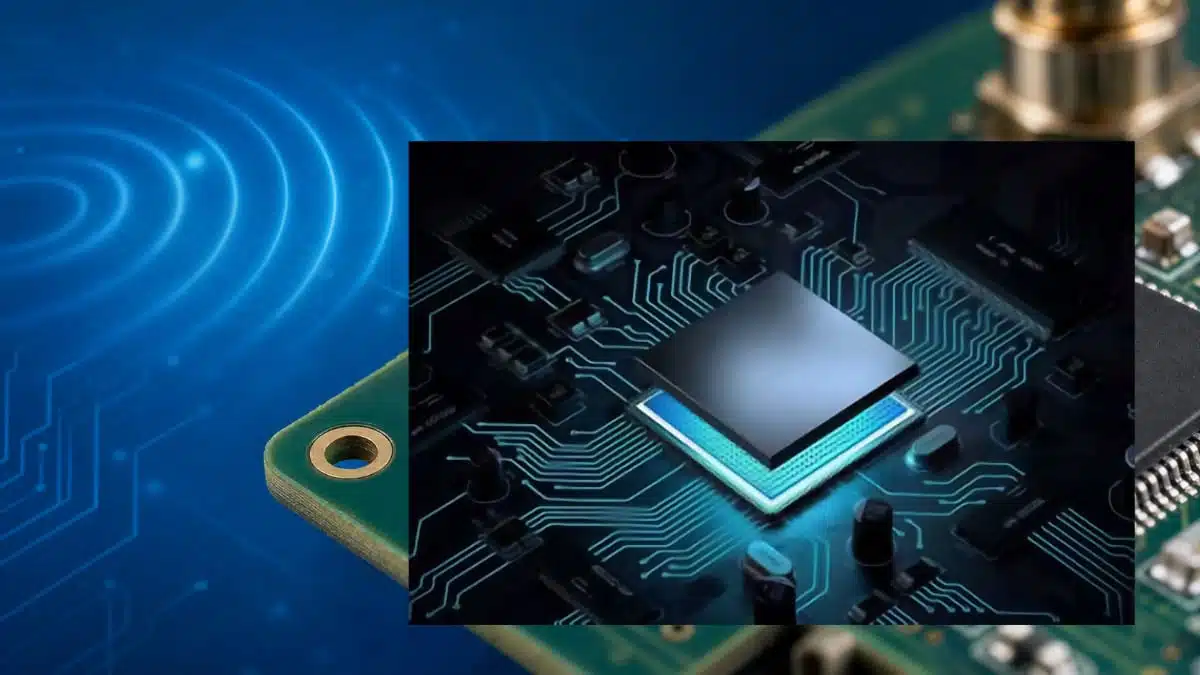
Murata has introduced a discrete timing solution that combines a high‑precision crystal unit with an external NTC thermistor to meet the tight timing accuracy requirements of automotive Ultra Wide Band (UWB) systems.

The concept is not just a new crystal or sensor, but a supported set proposal with circuit‑level temperature compensation guidance, aimed at helping designers reach ppm‑level stability over a wide temperature range typical of automotive environments.

RelatedPosts

Murata New MLCC Bulk Case Packaging Cuts Packaging Material by 99%

Murata Automotive MLCCs Push Capacitance Limits for ADAS and Power Lines

Murata to Decouple China Rare Earth Supply in 3 Years

Key features and benefits

  • High timing accuracy for UWB – 55.2 MHz crystal with tight initial tolerance and compensated frequency‑temperature characteristics of approximately ±10 ppm from −40 to 115°C helps meet increasingly demanding UWB timing budgets in digital keys, CPD, wireless BMS and safety‑related sensors.
  • Discrete crystal + thermistor approach – enables optimization of BOM cost and layout flexibility versus integrated temperature‑sensor crystals, while still offering guidance to realize accurate temperature compensation.
  • Automotive‑grade reliability – crystal unit qualified for operation up to 115°C and designed with a particle‑less structure to reduce field failure risk in harsh automotive environments.
  • Miniaturized footprint – compact 2016 crystal (2.0 × 1.6 mm) and 0201 thermistor (0.6 × 0.3 mm) help shrink RF and timing sections in space‑constrained ECUs, key fobs and sensor nodes.
  • Fast thermal tracking – very small NTC thermistor volume improves thermal response, which is important for accurate compensation when the temperature of the board changes quickly.
  • Design support included – Murata offers circuit design support and measurement of mounted boards, providing application‑specific compensation parameters to shorten development time and de‑risk discrete implementations.
  • Lead‑free, stable supply – suitable for long‑term automotive programs where regulatory compliance and supply continuity are important.

Typical applications

Murata positions this set for automotive applications that already rely on or are migrating to UWB‑based communication and localization. In practice, the components fit into:

  • Digital key systems (smart keys, smartphone‑as‑a‑key) where precise timing supports secure ranging and robust communication between vehicle and key device.
  • Child Presence Detection (CPD) and in‑cabin sensing units using UWB for occupancy detection and safety monitoring.
  • Wireless Battery Management Systems (Wireless BMS) that need accurate timing for wideband communication between battery modules and central controllers.
  • Automotive sensor nodes and ECUs that integrate UWB radios and require small, accurate timing references in thermally challenging locations within the vehicle.

Beyond these target use cases, any automotive UWB transceiver or timing‑sensitive RF block designed for −40 to above 100°C operation can potentially benefit from the set, especially when PCB space and cost are tightly constrained.

Technical highlights

The crystal unit XRCGE55M200MZF1BR0 is a newly mass‑produced device (since March 2026) targeted at automotive timing for UWB.

Key characteristics

  • Package size: 2016 (2.0 × 1.6 mm).
  • Oscillation frequency: 55.2 MHz.
  • Frequency tolerance at 25°C: ±10 ppm.
  • Frequency‑temperature characteristic after compensation: ±10 ppm over −40 to 115°C (according to manufacturer data).
  • Guaranteed operation temperature: up to 115°C.
  • Particle‑less design to support low failure rates in automotive environments.
  • Lead‑free construction.

In practical terms, the combination of tight room‑temperature tolerance and compensated temperature drift helps maintain the RF carrier and UWB timing windows within the limits required by modern transceivers, reducing the margin that firmware must reserve for clock error.

Crystal key data summary

ParameterValue (typical)
Package size2016, 2.0 × 1.6 mm
Nominal frequency55.2 MHz
Frequency tolerance at 25°C±10 ppm
Compensated frequency‑temperature±10 ppm from −40 to 115°C (after compensation)
Operating temperature (crystal)Up to 115°C

The NTC thermistor NCU03XH103F6SRL is intended as an external temperature sensor for the discrete compensation scheme.

Key characteristics

  • Package size: 0201 inch (0.6 × 0.3 mm).
  • Resistance at 25°C: 10 kΩ, tolerance ±1.0%.
  • B constant (25/50°C): 3380 K, tolerance ±1.0%.
  • Operating temperature range: −55 to +125°C.

A 10 kΩ NTC with this B constant is common in temperature sensing; it offers a relatively steep resistance change around room to mid‑temperature, supporting good resolution for compensation algorithms across the specified range.

Thermistor key data summary

ParameterValue
Package size0201 inch, 0.6 × 0.3 mm
Resistance at 25°C10 kΩ ±1.0%
B constant (25/50°C)3380 K ±1.0%
Operating temperature range−55 to +125°C

Source

This article is based on information published by Murata Manufacturing Co., Ltd. in its official product and event news release and related product pages, complemented with general engineering commentary for design‑in and application context.

References

  1. Murata product & event news – Launch of set proposal and circuit design support for high precision crystal unit and thermistor for automotive UWB
  2. Murata crystal unit XRCGE55M200MZF1BR0 product page
  3. Murata NTC thermistor NCU03XH103F6SRL product page
  4. Murata discrete configuration timing device and circuit design support information

Related

Recent Posts

Murata New MLCC Bulk Case Packaging Cuts Packaging Material by 99%

27.4.2026
39

April 2026 Interconnect, Passives and Electromechanical Components Market Insights

22.4.2026
72

KYOCERA AVX Introduces Traction‑Grade DC Link Film Capacitors

21.4.2026
47

YAGEO Introduces High‑Current Y2/X1 Film Capacitors for Wide-bandgap Power Systems

17.4.2026
43

Würth Elektronik Expanded Capacity for Validation and Services in Asia

16.4.2026
17

Samsung Introduces Ultra-High-Voltage 1500 V MLCCs for xEV Powertrains

16.4.2026
30

YAGEO Releases Ferrite Shielded Power Inductors for High‑Density Designs

15.4.2026
29

KYOCERA AVX MIL-PRF-32535 BME NP0 MLCCs Approved to the DLA QPD

16.4.2026
30

ECIA March 2026 Industry Pulse Points to Best Sales Climate in Five Years

13.4.2026
57

Upcoming Events

Apr 30
10:00 - 11:00 CDT

Programming Embedded Systems

May 5
16:00 - 17:00 CEST

Understanding and Selecting Capacitors – Fundamentals, Technologies and Latest Trends

May 7
17:00 - 18:00 CEST

From Grid to Motion: How Industrial Electrification is Redefining Power System Design

View Calendar

Popular Posts

  • Buck Converter Design and Calculation

    0 shares
    Share 0 Tweet 0
  • Boost Converter Design and Calculation

    0 shares
    Share 0 Tweet 0
  • Flyback Converter Design and Calculation

    0 shares
    Share 0 Tweet 0
  • LLC Resonant Converter Design and Calculation

    0 shares
    Share 0 Tweet 0
  • MLCC and Ceramic Capacitors

    0 shares
    Share 0 Tweet 0
  • Dual Active Bridge (DAB) Topology

    0 shares
    Share 0 Tweet 0
  • What Electronics Engineer Needs to Know About Passive Low Pass Filters

    0 shares
    Share 0 Tweet 0
  • Capacitor Charging and Discharging

    0 shares
    Share 0 Tweet 0
  • MLCC Case Sizes Standards Explained

    0 shares
    Share 0 Tweet 0
  • Ripple Current and its Effects on the Performance of Capacitors

    3 shares
    Share 3 Tweet 0

Newsletter Subscription


Passive Components Blog

© EPCI - Leading Passive Components Educational and Information Site

  • Home
  • Privacy Policy
  • EPCI Membership & Advertisement
  • About

No Result
View All Result
  • Home
  • Knowledge Blog
  • PCNS

© EPCI - Leading Passive Components Educational and Information Site

This website uses cookies. By continuing to use this website you are giving consent to cookies being used. Visit our Privacy and Cookie Policy.
Go to mobile version