













Passive Components Blog
No Result
View All Result
  • Home
  • NewsFilter
    • All
    • Aerospace & Defence
    • Antenna
    • Applications
    • Automotive
    • Capacitors
    • Circuit Protection Devices
    • electro-mechanical news
    • Filters
    • Fuses
    • Inductors
    • Industrial
    • Integrated Passives
    • inter-connect news
    • Market & Supply Chain
    • Market Insights
    • Medical
    • Modelling and Simulation
    • New Materials & Supply
    • New Technologies
    • Non-linear Passives
    • Oscillators
    • Passive Sensors News
    • Resistors
    • RF & Microwave
    • Telecommunication
    • Weekly Digest

    0603 Automotive Chip Varistors as TVS Diode Replacements, TDK Tech Note

    Miniaturization of MLCCs and Electrolytics, KAVX Tech Chat

    Exxelia Offers Custom Naval Transformers and Inductors

    Researchers Demonstrated 32nm Aluminum Vacuum Gap Capacitor

    Conductive Polymer Capacitor Market and Design‑In Guide to 2035

    TDK Releases High Performance 105C DC Link Film Capacitors

    YAGEO Offers Automotive MOVs for EV and AI power

    YAGEO Acquires 100% of Shares of Shibaura Electronics

    Wk 3 Electronics Supply Chain Digest

    Trending Tags

    • Ripple Current
    • RF
    • Leakage Current
    • Tantalum vs Ceramic
    • Snubber
    • Low ESR
    • Feedthrough
    • Derating
    • Dielectric Constant
    • New Products
    • Market Reports
  • VideoFilter
    • All
    • Antenna videos
    • Capacitor videos
    • Circuit Protection Video
    • Filter videos
    • Fuse videos
    • Inductor videos
    • Inter-Connect Video
    • Non-linear passives videos
    • Oscillator videos
    • Passive sensors videos
    • Resistor videos

    One‑Pulse Characterization of Nonlinear Power Inductors

    Thermistor Linearization Challenges

    Coaxial Connectors and How to Connect with PCB

    PCB Manufacturing, Test Methods, Quality and Reliability

    Transformer Behavior – Current Transfer and Hidden Feedback

    Choosing the Right Capacitor: The Importance of Accurate Measurements

    RF Inductors: Selection and Design Challenges for High-Frequency Circuits

    Transformer Safety IEC 61558 Standard

    3-Phase EMI Filter Design, Simulation, Calculation and Test

    Trending Tags

    • Capacitors explained
    • Inductors explained
    • Resistors explained
    • Filters explained
    • Application Video Guidelines
    • EMC
    • New Products
    • Ripple Current
    • Simulation
    • Tantalum vs Ceramic
  • Knowledge Blog
  • Suppliers
    • Who is Who
  • PCNS
    • PCNS 2025
    • PCNS 2023
    • PCNS 2021
    • PCNS 2019
    • PCNS 2017
  • Events
  • Home
  • NewsFilter
    • All
    • Aerospace & Defence
    • Antenna
    • Applications
    • Automotive
    • Capacitors
    • Circuit Protection Devices
    • electro-mechanical news
    • Filters
    • Fuses
    • Inductors
    • Industrial
    • Integrated Passives
    • inter-connect news
    • Market & Supply Chain
    • Market Insights
    • Medical
    • Modelling and Simulation
    • New Materials & Supply
    • New Technologies
    • Non-linear Passives
    • Oscillators
    • Passive Sensors News
    • Resistors
    • RF & Microwave
    • Telecommunication
    • Weekly Digest

    0603 Automotive Chip Varistors as TVS Diode Replacements, TDK Tech Note

    Miniaturization of MLCCs and Electrolytics, KAVX Tech Chat

    Exxelia Offers Custom Naval Transformers and Inductors

    Researchers Demonstrated 32nm Aluminum Vacuum Gap Capacitor

    Conductive Polymer Capacitor Market and Design‑In Guide to 2035

    TDK Releases High Performance 105C DC Link Film Capacitors

    YAGEO Offers Automotive MOVs for EV and AI power

    YAGEO Acquires 100% of Shares of Shibaura Electronics

    Wk 3 Electronics Supply Chain Digest

    Trending Tags

    • Ripple Current
    • RF
    • Leakage Current
    • Tantalum vs Ceramic
    • Snubber
    • Low ESR
    • Feedthrough
    • Derating
    • Dielectric Constant
    • New Products
    • Market Reports
  • VideoFilter
    • All
    • Antenna videos
    • Capacitor videos
    • Circuit Protection Video
    • Filter videos
    • Fuse videos
    • Inductor videos
    • Inter-Connect Video
    • Non-linear passives videos
    • Oscillator videos
    • Passive sensors videos
    • Resistor videos

    One‑Pulse Characterization of Nonlinear Power Inductors

    Thermistor Linearization Challenges

    Coaxial Connectors and How to Connect with PCB

    PCB Manufacturing, Test Methods, Quality and Reliability

    Transformer Behavior – Current Transfer and Hidden Feedback

    Choosing the Right Capacitor: The Importance of Accurate Measurements

    RF Inductors: Selection and Design Challenges for High-Frequency Circuits

    Transformer Safety IEC 61558 Standard

    3-Phase EMI Filter Design, Simulation, Calculation and Test

    Trending Tags

    • Capacitors explained
    • Inductors explained
    • Resistors explained
    • Filters explained
    • Application Video Guidelines
    • EMC
    • New Products
    • Ripple Current
    • Simulation
    • Tantalum vs Ceramic
  • Knowledge Blog
  • Suppliers
    • Who is Who
  • PCNS
    • PCNS 2025
    • PCNS 2023
    • PCNS 2021
    • PCNS 2019
    • PCNS 2017
  • Events
No Result
View All Result
Passive Components Blog
No Result
View All Result

Sustainable 3D-printed super magnets

3.2.2020
Reading Time: 3 mins read
A A

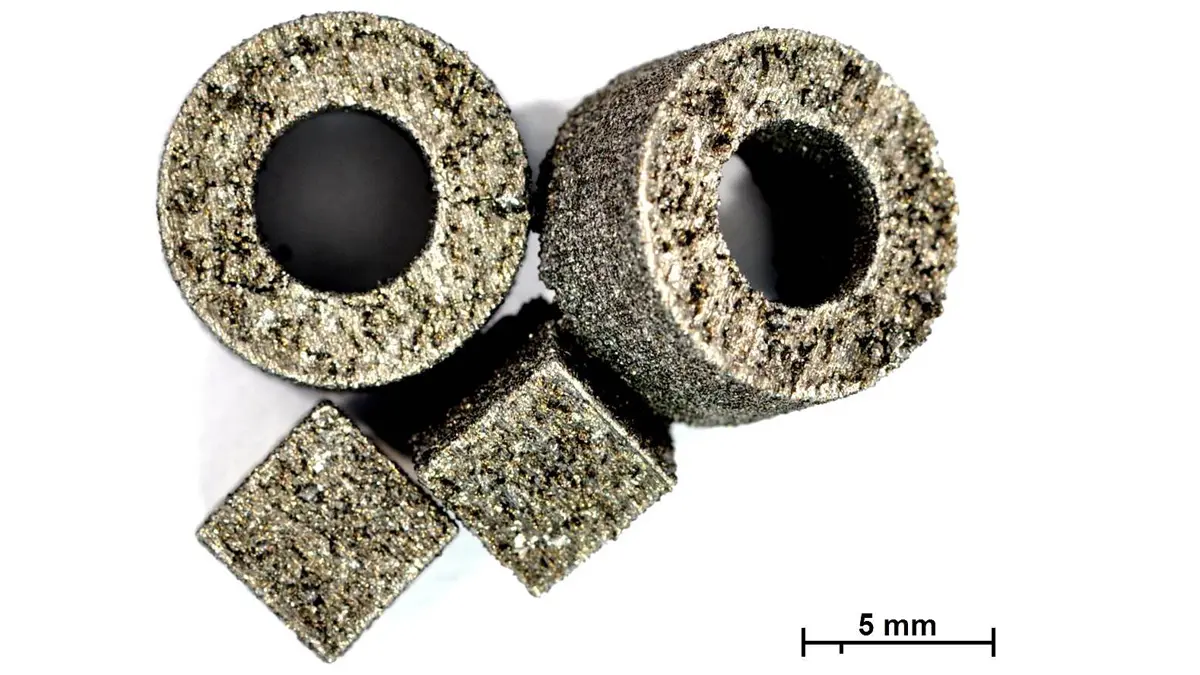
TU Graz and partners successfully 3D print super magnet using laser-based AM.

An additive manufacturing breakthrough coming out of TU Graz in Austria could make it easier to manufacture permanent magnets for small electronic components. A TU Graz team—working in collaboration with the University of Vienna, the Friedrich-Alexander Universität Erlangen-Nürnberg (FAU) and Joanneum Research—has successfully manufactured super magnets using a laser-based 3D printing process.

RelatedPosts

0603 Automotive Chip Varistors as TVS Diode Replacements, TDK Tech Note

Miniaturization of MLCCs and Electrolytics, KAVX Tech Chat

Exxelia Offers Custom Naval Transformers and Inductors

Permanent magnets are present in many electrical products—from electric motors and sensors, to wind turbines and magnetic switching systems. Despite their ubiquity, however, they present certain manufacturing challenges. That is, permanent magnets are typically produced using sintering or injection molding, which limits them in terms of size and geometry.

With electronics being increasingly miniaturized, there needs to be a way to produce super magnets in more complex geometries and at smaller scales. Additive manufacturing has thus presented an interesting avenue forward for the production of super magnets.

The Austria-based research team recently reported it had successfully 3D printed a super magnet structure, using a magnetic powder material and a laser-based AM process. The overall process has been refined to the point where the printed magnets display a high relative density with controllable microstructures.
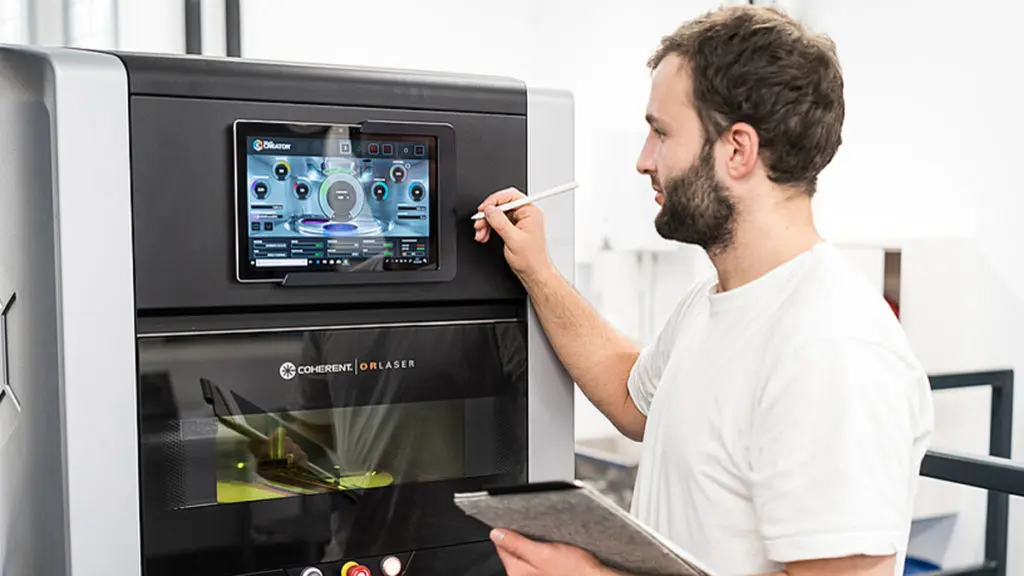
Siegfried Arneitz a PhD student at the Institute of Materials Science, Joining and Forming at TU Graz (Photo: TU Graz)

As Siegfried Arneitz and Mateusz Skalon, researchers at the Institute of Materials Science, Joining and Forming at TU Graz, explained: “The combination of both these features enables efficient material use because it means we can precisely tailor the magnetic properties according to the application.”

In the beginning, the researchers focused their efforts on 3D printing neodymium (NdFeB), a rare earth metal that is used in many strong permanent magnets, such as those used in computers, smartphones and more.

Now, team member Arneitz—a PhD student at TU Graz—is exploring the possibility of 3D printing other types of magnets, like iron and cobalt magnets (Fe-Co). Down the line, these magnets could present a more ecological alternative to NdFeB, which, as a rare earth metal, is resource intensive and challenging to recycle.

The researchers also point out that, in terms of performance, rare earth metals tend to lose their magnetic properties at high temperatures, while Fe-Co alloys can maintain their magnetism up to 400° Celsius.

“Theoretical calculations have shown that the magnetic properties of these materials can be improved by a factor of two or three,” Arneitz added. “Given the flexibility of shape that 3D printing offers, we’re confident we can get closer to this goal. We’re going to continue working on this topic in collaboration with various other institutes so we can develop alternative magnetic materials for areas in which neodymium magnets are not necessary.”

featured image source: TU Graz

Related

Source: Phys.org

Recent Posts

Exxelia Offers Custom Naval Transformers and Inductors

21.1.2026
7

Researchers Demonstrated 32nm Aluminum Vacuum Gap Capacitor

20.1.2026
18

Würth Elektronik Introduces Product Navigator for Passive Components

14.1.2026
71

Panasonic Passive Components for Reliable Robotic Arms

14.1.2026
81

DC/DC Push‑Pull Converter vs PSFB Design Guide

12.1.2026
88

How Metal Prices Are Driving Passive Component Price Hikes

8.1.2026
353

Modelithics COMPLETE Library v25.8 for Keysight ADS

7.1.2026
42

Taiyo Yuden Releases 165C Automotive Multilayer Metal Power Inductor in 1608 Size

7.1.2026
40

2025 Top Passive Components Blog Articles

5.1.2026
124

Upcoming Events

Jan 27
16:00 - 17:00 CET

Simplifying Vehicle Development with Automotive Ethernet and Zonal Smart Switch Technologies

Feb 24
16:00 - 17:00 CET

Designing Qi2 Wireless Power Systems: Practical Development and EMC Optimization

Mar 21
All day

PSMA Capacitor Workshop 2026

View Calendar

Popular Posts

  • Buck Converter Design and Calculation

    0 shares
    Share 0 Tweet 0
  • Boost Converter Design and Calculation

    0 shares
    Share 0 Tweet 0
  • LLC Resonant Converter Design and Calculation

    0 shares
    Share 0 Tweet 0
  • Flyback Converter Design and Calculation

    0 shares
    Share 0 Tweet 0
  • Ripple Current and its Effects on the Performance of Capacitors

    3 shares
    Share 3 Tweet 0
  • How Metal Prices Are Driving Passive Component Price Hikes

    0 shares
    Share 0 Tweet 0
  • MLCC and Ceramic Capacitors

    0 shares
    Share 0 Tweet 0
  • Dual Active Bridge (DAB) Topology

    0 shares
    Share 0 Tweet 0
  • What is a Dielectric Constant and DF of Plastic Materials?

    4 shares
    Share 4 Tweet 0
  • Degradation of Capacitors and its Failure Mechanisms

    0 shares
    Share 0 Tweet 0

Newsletter Subscription


Passive Components Blog

© EPCI - Leading Passive Components Educational and Information Site

  • Home
  • Privacy Policy
  • EPCI Membership & Advertisement
  • About

No Result
View All Result
  • Home
  • Knowledge Blog
  • PCNS

© EPCI - Leading Passive Components Educational and Information Site

This website uses cookies. By continuing to use this website you are giving consent to cookies being used. Visit our Privacy and Cookie Policy.
Go to mobile version