











Passive Components Blog
No Result
View All Result
  • Home
  • NewsFilter
    • All
    • Aerospace & Defence
    • Antenna
    • Applications
    • Automotive
    • Capacitors
    • Circuit Protection Devices
    • electro-mechanical news
    • Filters
    • Fuses
    • Inductors
    • Industrial
    • Integrated Passives
    • inter-connect news
    • Market & Supply Chain
    • Market Insights
    • Medical
    • Modelling and Simulation
    • New Materials & Supply
    • New Technologies
    • Non-linear Passives
    • Oscillators
    • Passive Sensors News
    • Resistors
    • RF & Microwave
    • Telecommunication
    • Weekly Digest

    DigiKey Launches “Engineering Unlocked” Video Series

    Equivalent Circuit Constants of Crystal Units Explained

    Vishay Releases Compact High‑Accuracy Hall Effect Linear Position Sensor

    Nanocrystalline Cores for Low‑Loss MHz Chip Inductors

    Exxelia Miniaturized 400 MHz Inverted‑F Antenna

    Würth Elektronik Unveils High-Current Automotive Power Inductor

    Transformer-Based Power-Line Harvester Magnetic Design

    Tantalum Capacitor Anode Manufacturing Quality Management

    Middle East Conflict: The Potential Impact to Passive Components

    Trending Tags

    • Ripple Current
    • RF
    • Leakage Current
    • Tantalum vs Ceramic
    • Snubber
    • Low ESR
    • Feedthrough
    • Derating
    • Dielectric Constant
    • New Products
    • Market Reports
  • VideoFilter
    • All
    • Antenna videos
    • Capacitor videos
    • Circuit Protection Video
    • Filter videos
    • Fuse videos
    • Inductor videos
    • Inter-Connect Video
    • Non-linear passives videos
    • Oscillator videos
    • Passive sensors videos
    • Resistor videos

    Transformer-Based Power-Line Harvester Magnetic Design

    Thermal Modeling of Magnetics

    Standard vs Planar LLC transformers Comparison for Battery Chargers

    How Modern Tools Model Magnetic Components for Power Electronics

    Advanced Loss Modeling for Planar Magnetics in the Frenetic Planar Tool

    2026 Power Magnetics Design Trends: Flyback, DAB and Planar

    Enabling Software‑Defined Vehicle Architectures: Automotive Ethernet and Zonal Smart Power

    Calculating Resistance Value of a Flyback RC Snubber 

    One‑Pulse Characterization of Nonlinear Power Inductors

    Trending Tags

    • Capacitors explained
    • Inductors explained
    • Resistors explained
    • Filters explained
    • Application Video Guidelines
    • EMC
    • New Products
    • Ripple Current
    • Simulation
    • Tantalum vs Ceramic
  • Knowledge Blog
  • DossiersNew
  • Suppliers
    • Who is Who
  • PCNS
    • PCNS 2025
    • PCNS 2023
    • PCNS 2021
    • PCNS 2019
    • PCNS 2017
  • Events
  • Home
  • NewsFilter
    • All
    • Aerospace & Defence
    • Antenna
    • Applications
    • Automotive
    • Capacitors
    • Circuit Protection Devices
    • electro-mechanical news
    • Filters
    • Fuses
    • Inductors
    • Industrial
    • Integrated Passives
    • inter-connect news
    • Market & Supply Chain
    • Market Insights
    • Medical
    • Modelling and Simulation
    • New Materials & Supply
    • New Technologies
    • Non-linear Passives
    • Oscillators
    • Passive Sensors News
    • Resistors
    • RF & Microwave
    • Telecommunication
    • Weekly Digest

    DigiKey Launches “Engineering Unlocked” Video Series

    Equivalent Circuit Constants of Crystal Units Explained

    Vishay Releases Compact High‑Accuracy Hall Effect Linear Position Sensor

    Nanocrystalline Cores for Low‑Loss MHz Chip Inductors

    Exxelia Miniaturized 400 MHz Inverted‑F Antenna

    Würth Elektronik Unveils High-Current Automotive Power Inductor

    Transformer-Based Power-Line Harvester Magnetic Design

    Tantalum Capacitor Anode Manufacturing Quality Management

    Middle East Conflict: The Potential Impact to Passive Components

    Trending Tags

    • Ripple Current
    • RF
    • Leakage Current
    • Tantalum vs Ceramic
    • Snubber
    • Low ESR
    • Feedthrough
    • Derating
    • Dielectric Constant
    • New Products
    • Market Reports
  • VideoFilter
    • All
    • Antenna videos
    • Capacitor videos
    • Circuit Protection Video
    • Filter videos
    • Fuse videos
    • Inductor videos
    • Inter-Connect Video
    • Non-linear passives videos
    • Oscillator videos
    • Passive sensors videos
    • Resistor videos

    Transformer-Based Power-Line Harvester Magnetic Design

    Thermal Modeling of Magnetics

    Standard vs Planar LLC transformers Comparison for Battery Chargers

    How Modern Tools Model Magnetic Components for Power Electronics

    Advanced Loss Modeling for Planar Magnetics in the Frenetic Planar Tool

    2026 Power Magnetics Design Trends: Flyback, DAB and Planar

    Enabling Software‑Defined Vehicle Architectures: Automotive Ethernet and Zonal Smart Power

    Calculating Resistance Value of a Flyback RC Snubber 

    One‑Pulse Characterization of Nonlinear Power Inductors

    Trending Tags

    • Capacitors explained
    • Inductors explained
    • Resistors explained
    • Filters explained
    • Application Video Guidelines
    • EMC
    • New Products
    • Ripple Current
    • Simulation
    • Tantalum vs Ceramic
  • Knowledge Blog
  • DossiersNew
  • Suppliers
    • Who is Who
  • PCNS
    • PCNS 2025
    • PCNS 2023
    • PCNS 2021
    • PCNS 2019
    • PCNS 2017
  • Events
No Result
View All Result
Passive Components Blog
No Result
View All Result

TAIYO YUDEN Releases 0.33mm Thin SMD Metal Power Inductor

7.1.2025
Reading Time: 3 mins read
A A

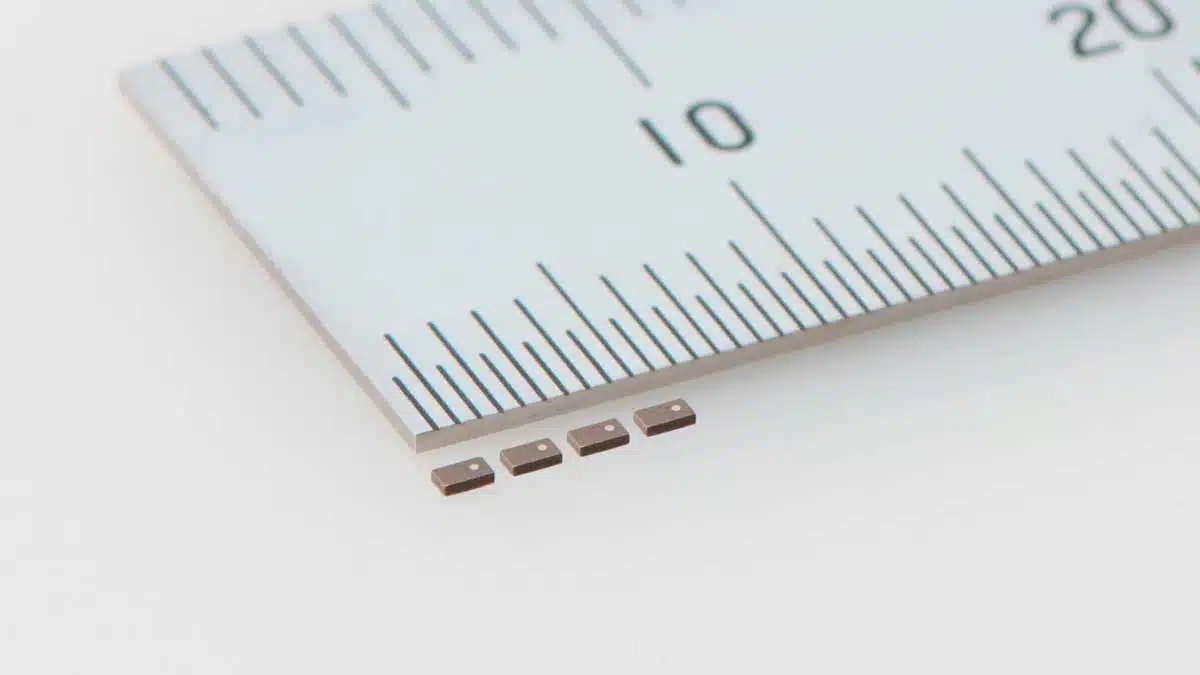
TAIYO YUDEN has begun mass production of a SMD metal power inductor MCOIL™ LSCN series of multilayer thin metal power inductors in dimensions 1.0 x 0.5 x 0.33 mm maximum height.

This power inductor is for use as choke coils in the power supply circuits of wearable devices, such as smartphones, AR/VR glasses, TWS devices, and smart watches. 

RelatedPosts

Conductive Polymer Capacitor Market and Design‑In Guide to 2035

Taiyo Yuden Releases 165C Automotive Multilayer Metal Power Inductor in 1608 Size

TAIYO YUDEN Extends Polymer Hybrid Aluminum Capacitors with Higher Ripple Current and Lower Profile

The “LSCND1005CCTR47MH” is 40% lower in height than our previous product, the “LSCNB1005EETR47MB” (1.0 x 0.5 x 0.55 mm), and realizes a metal power inductor as thin as 0.33 mm. This will contribute to the miniaturization and thickness reduction of cutting-edge electronic devices.

Mass production of this products began at our subsidiary, WAKAYAMA TAIYO YUDEN CO., LTD. (Inami-cho, Hidaka-gun, Wakayama Prefecture), in December 2024. Samples are available for 50 yen per unit.

Technology Background
As smartphones, AR/VR glasses, and wearable devices are equipped with higher-performance processors, more sensors, multiple cameras, and higher-capacity batteries for sophistication, electronic components used in them need to be smaller and thinner.

In particular, smartphones are requiring thinner electronic components, due to the trend towards foldable devices that combine large screens and smaller sizes, as well as the adoption of multi-layered circuit boards. On the other hand, wearable devices, such as AR/VR glasses, TWS devices, and smart watches, require smaller, lighter, and thinner components to achieve a thin profile and comfortable fit.

To address these needs, TAIYO YUDEN has been expanding its lineup in the MCOIL™ LSCN series of multilayer metal power inductors which use metallic magnetic core materials with high DC saturation characteristics, and provide superior characteristics for achieving miniaturization and thinness. With our latest upgrade, we have commercialized the “LSCND1005CCTR47MH,” which achieves a thickness of 0.33 mm for a metal power inductor by utilizing the strengths of our multilayer process technology.

In response to market needs, we will continue to expand and improve our product lineup with higher performance and reliability.

■ Application
For use as choke coils for power supply circuits in wearable devices such as smartphones, AR/VR glasses, TWS devices, and smart watches.

■ Characteristics

Part numberSize
(LxW)
[mm]
H
[mm]
max.
Nominal
inductance
[μH]
Inductance
tolerance
[%]
Rated current*3 [A] max.DC
resistance
[mΩ] max.
Saturation
current
Idc1*1
Temperature
rise current
Idc2*2
LSCND1005CCTR47MH1.0×0.50.330.47±20%1.40.8345
  • *1 The saturation current value (Idc1) is the DC current value having an inductance decrease down to 30%. (at 20℃)
  • *2 The temperature rise current value(Idc2) is the DC current value having temperature increase up to 40℃. (at 20℃)
  • *3 The rated current value is following either Idc1(max) or Idc2(max), which is the lower one.
Related

Source: TAIYO YUDEN

Recent Posts

Nanocrystalline Cores for Low‑Loss MHz Chip Inductors

25.3.2026
19

Exxelia Miniaturized 400 MHz Inverted‑F Antenna

24.3.2026
7

Würth Elektronik Unveils High-Current Automotive Power Inductor

24.3.2026
18

Transformer-Based Power-Line Harvester Magnetic Design

24.3.2026
10

Middle East Conflict: The Potential Impact to Passive Components

23.3.2026
98

LLC Transformer: Designing a 2 kW LLC Transformer with Integrated Resonant Inductor

26.3.2026
62

Inductor Technology Dossier

19.3.2026
49

Coilcraft Releases TLVR Inductors for High Density VRMs and PoL Converters

19.3.2026
47

Vishay Introduced Space-Grade SMT Common Mode Choke

19.3.2026
16

Upcoming Events

Apr 21
16:00 - 17:00 CEST

Heatsink Solutions: Thermal Management in electronic devices

May 5
16:00 - 17:00 CEST

Understanding and Selecting Capacitors – Fundamentals, Technologies and Latest Trends

May 19
16:00 - 17:00 CEST

Designing Qi2 Wireless Power Systems: Practical Development and EMC Optimization

View Calendar

Popular Posts

  • Buck Converter Design and Calculation

    0 shares
    Share 0 Tweet 0
  • Boost Converter Design and Calculation

    0 shares
    Share 0 Tweet 0
  • Flyback Converter Design and Calculation

    0 shares
    Share 0 Tweet 0
  • LLC Resonant Converter Design and Calculation

    0 shares
    Share 0 Tweet 0
  • Dual Active Bridge (DAB) Topology

    0 shares
    Share 0 Tweet 0
  • MLCC and Ceramic Capacitors

    0 shares
    Share 0 Tweet 0
  • Ripple Current and its Effects on the Performance of Capacitors

    3 shares
    Share 3 Tweet 0
  • MLCC Case Sizes Standards Explained

    0 shares
    Share 0 Tweet 0
  • What is a Dielectric Constant and DF of Plastic Materials?

    4 shares
    Share 4 Tweet 0
  • Capacitor Charging and Discharging

    0 shares
    Share 0 Tweet 0

Newsletter Subscription


Passive Components Blog

© EPCI - Leading Passive Components Educational and Information Site

  • Home
  • Privacy Policy
  • EPCI Membership & Advertisement
  • About

No Result
View All Result
  • Home
  • Knowledge Blog
  • PCNS

© EPCI - Leading Passive Components Educational and Information Site

This website uses cookies. By continuing to use this website you are giving consent to cookies being used. Visit our Privacy and Cookie Policy.
Go to mobile version