






Passive Components Blog
No Result
View All Result
  • Home
  • NewsFilter
    • All
    • Aerospace & Defence
    • Antenna
    • Applications
    • Automotive
    • Capacitors
    • Circuit Protection Devices
    • electro-mechanical news
    • Filters
    • Fuses
    • Inductors
    • Industrial
    • Integrated Passives
    • inter-connect news
    • Market & Supply Chain
    • Market Insights
    • Medical
    • Modelling and Simulation
    • New Materials & Supply
    • New Technologies
    • Non-linear Passives
    • Oscillators
    • Passive Sensors News
    • Resistors
    • RF & Microwave
    • Telecommunication
    • Weekly Digest

    How a Digital Structural Twin Can Predict Tantalum Capacitor Reliability

    SCHURTER Buys Biaodi to Boost High-Voltage Protection Portfolio

    Binder Hybrid Connector Simplifies One Cable Automation

    Tapped Inductor Buck Converter Fundamentals

    TAIYO YUDEN Releases Mini Metal Power Inductors

    Molecular Memristor Shows Record 145 kH Emergent Inductance

    Planar vs Conventional Transformer: When it Make Sense

    Researchers Propose Next‑Gen Compact Memory Using Ultra-thin Ferroelectric Capacitors

    Nichicon ADN Automotive Hybrid Aluminum Capacitors Now Available in EMEA

    Trending Tags

    • Ripple Current
    • RF
    • Leakage Current
    • Tantalum vs Ceramic
    • Snubber
    • Low ESR
    • Feedthrough
    • Derating
    • Dielectric Constant
    • New Products
    • Market Reports
  • VideoFilter
    • All
    • Antenna videos
    • Capacitor videos
    • Circuit Protection Video
    • Filter videos
    • Fuse videos
    • Inductor videos
    • Inter-Connect Video
    • Non-linear passives videos
    • Oscillator videos
    • Passive sensors videos
    • Resistor videos

    Tapped Inductor Buck Converter Fundamentals

    Planar vs Conventional Transformer: When it Make Sense

    Modeling Fringing Field Losses in Inductors & Transformers

    Why Power Inductors Use a Ferrite Core With an Air Gap

    Transformer-Based Power-Line Harvester Magnetic Design

    Thermal Modeling of Magnetics

    Standard vs Planar LLC transformers Comparison for Battery Chargers

    How Modern Tools Model Magnetic Components for Power Electronics

    Advanced Loss Modeling for Planar Magnetics in the Frenetic Planar Tool

    Trending Tags

    • Capacitors explained
    • Inductors explained
    • Resistors explained
    • Filters explained
    • Application Video Guidelines
    • EMC
    • New Products
    • Ripple Current
    • Simulation
    • Tantalum vs Ceramic
  • Knowledge Blog
  • DossiersNew
  • Suppliers
    • Who is Who
  • PCNS
    • PCNS 2025
    • PCNS 2023
    • PCNS 2021
    • PCNS 2019
    • PCNS 2017
  • Events
  • Home
  • NewsFilter
    • All
    • Aerospace & Defence
    • Antenna
    • Applications
    • Automotive
    • Capacitors
    • Circuit Protection Devices
    • electro-mechanical news
    • Filters
    • Fuses
    • Inductors
    • Industrial
    • Integrated Passives
    • inter-connect news
    • Market & Supply Chain
    • Market Insights
    • Medical
    • Modelling and Simulation
    • New Materials & Supply
    • New Technologies
    • Non-linear Passives
    • Oscillators
    • Passive Sensors News
    • Resistors
    • RF & Microwave
    • Telecommunication
    • Weekly Digest

    How a Digital Structural Twin Can Predict Tantalum Capacitor Reliability

    SCHURTER Buys Biaodi to Boost High-Voltage Protection Portfolio

    Binder Hybrid Connector Simplifies One Cable Automation

    Tapped Inductor Buck Converter Fundamentals

    TAIYO YUDEN Releases Mini Metal Power Inductors

    Molecular Memristor Shows Record 145 kH Emergent Inductance

    Planar vs Conventional Transformer: When it Make Sense

    Researchers Propose Next‑Gen Compact Memory Using Ultra-thin Ferroelectric Capacitors

    Nichicon ADN Automotive Hybrid Aluminum Capacitors Now Available in EMEA

    Trending Tags

    • Ripple Current
    • RF
    • Leakage Current
    • Tantalum vs Ceramic
    • Snubber
    • Low ESR
    • Feedthrough
    • Derating
    • Dielectric Constant
    • New Products
    • Market Reports
  • VideoFilter
    • All
    • Antenna videos
    • Capacitor videos
    • Circuit Protection Video
    • Filter videos
    • Fuse videos
    • Inductor videos
    • Inter-Connect Video
    • Non-linear passives videos
    • Oscillator videos
    • Passive sensors videos
    • Resistor videos

    Tapped Inductor Buck Converter Fundamentals

    Planar vs Conventional Transformer: When it Make Sense

    Modeling Fringing Field Losses in Inductors & Transformers

    Why Power Inductors Use a Ferrite Core With an Air Gap

    Transformer-Based Power-Line Harvester Magnetic Design

    Thermal Modeling of Magnetics

    Standard vs Planar LLC transformers Comparison for Battery Chargers

    How Modern Tools Model Magnetic Components for Power Electronics

    Advanced Loss Modeling for Planar Magnetics in the Frenetic Planar Tool

    Trending Tags

    • Capacitors explained
    • Inductors explained
    • Resistors explained
    • Filters explained
    • Application Video Guidelines
    • EMC
    • New Products
    • Ripple Current
    • Simulation
    • Tantalum vs Ceramic
  • Knowledge Blog
  • DossiersNew
  • Suppliers
    • Who is Who
  • PCNS
    • PCNS 2025
    • PCNS 2023
    • PCNS 2021
    • PCNS 2019
    • PCNS 2017
  • Events
No Result
View All Result
Passive Components Blog
No Result
View All Result

Thermal Conductivity Plastics Filled with Graphene Improve its Thermal Conductivity and Stability

4.8.2021
Reading Time: 4 mins read
A A

High thermal conductivity plastics show extraordinary talents in transformer inductors, electronic component heat dissipation, special cables, electronic packaging, thermal potting and other fields for their good processing performance, low price and excellent thermal conductivity. High thermal conductivity plastics with graphene as filler can meet the requirements of high density and high integration assembly development in thermal management and electronics industry.

Conventional thermal conductive plastics are mainly filled with high heat-conducting metal or inorganic filler particles to uniformly fill the polymer matrix materials. When the amount of filler reaches a certain level, the filler forms a chain-like and network-like morphology in the system, that is, a thermally conductive network chain. When the orientation direction of these heat conductive mesh chains is parallel to the heat flow direction, the thermal conductivity of the system is greatly improved.

RelatedPosts

How a Digital Structural Twin Can Predict Tantalum Capacitor Reliability

SCHURTER Buys Biaodi to Boost High-Voltage Protection Portfolio

Binder Hybrid Connector Simplifies One Cable Automation

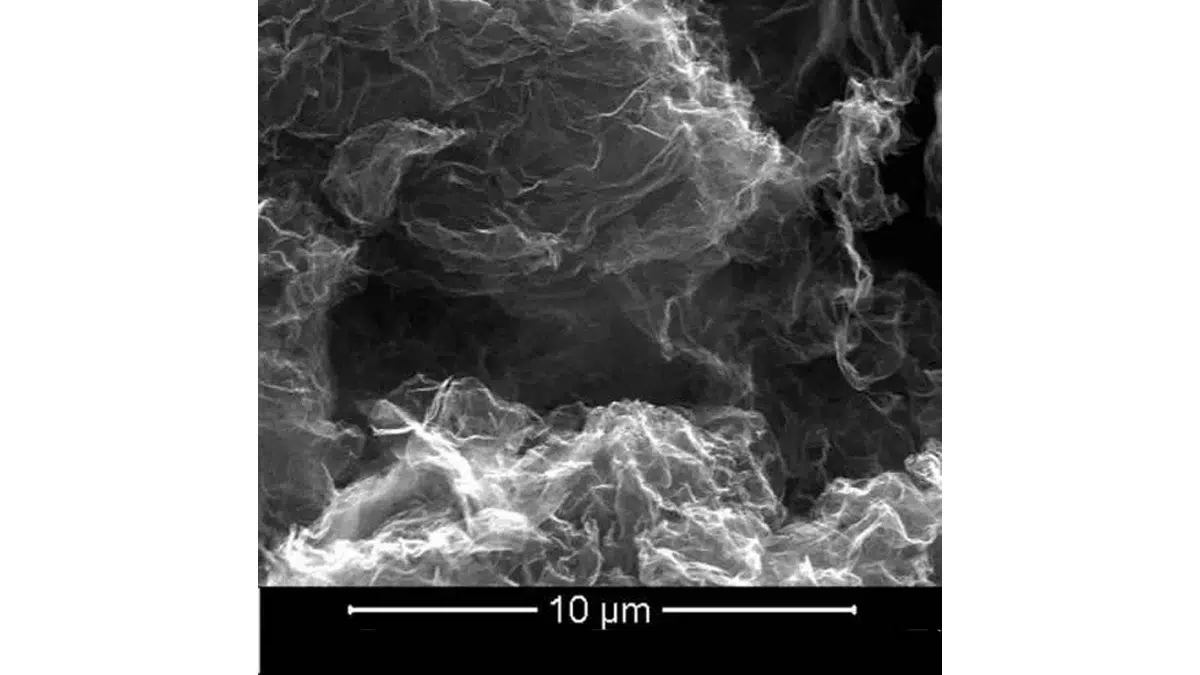
High thermal conductive plastics with carbon nanomaterial graphene as filler can meet the requirements of high density and high integration assembly development in thermal management and electronics industry. For example, the thermal conductivity of pure polyamide 6 (PA6) is 0.338 W / (m · K), when filled with 50% alumina, the thermal conductivity of the composite is 1.57 times that of pure PA6; when adding 25% the modified zinc oxide, the thermal conductivity of the composite is three times higher than that of pure PA6. When the 20% graphene nanosheet is added, the thermal conductivity of the composite reaches 4.11 W/(m•K), which is increased by over 15 times than pure PA6, which demonstrates the enormous potential of graphene in the field of thermal management.

1. Preparation and thermal conductivity of graphene/polymer composites

The thermal conductivity of graphene/polymer composites is inseparable from the processing conditions in the preparation process. Different preparation methods make a difference in the dispersion, interfacial action and spatial structure of the filler in the matrix, and these factors determine the stiffness, strength, toughness and ductility of the composite. As far as the current research is concerned, for graphene/polymer composites, the degree of dispersion of graphene and the degree of peeling of graphene sheets can be controlled by controlling shear, temperature and polar solvents.

2. The factors affecting of the performance of graphene filled high thermal conductivity plastics

2.1 Addition amount of Graphene

In the high thermal conductivity plastic filled with graphene, as the amount of graphene increases, thermal conductive network chain is gradually formed in the system, which greatly improves the thermal conductivity of the composite material.

By studying the thermal conductivity of epoxy resin (EP)-based graphene composites, it is found that the filling ratio of graphene (about 4 layers) can increase the thermal conductivity of EP by about 30 times to 6.44. W/(m•K), while traditional thermal conductive fillers require 70% (volume fraction) of the filler to achieve this effect.

2.2 Number of layers of Graphene

For multilayers graphene, the study on 1-10 layers of graphene found that when the number of graphene layers was increased from 2 to 4, the thermal conductivity decreased from 2 800 W/(m•K) to 1300 W/(m•K). It follows that the thermal conductivity of graphene tends to decrease with the increase of the number of layers.

This is because the multilayer graphene will agglomerate with time, which will cause the thermal conductivity to decrease. At the same time, the defects in the graphene and the disorder of the edge will reduce the thermal conductivity of the graphene.

2.3 Types of substrate

The main components of high thermal conductivity plastics include matrix materials and fillers. Graphene is the best choice for fillers because of its excellent thermal conductivity. Different matrix compositions affect thermal conductivity. Polyamide (PA) has good mechanical properties, heat resistance, wear resistance, low friction coefficient, certain flame retardancy, easy processing, suitable for filling modification, to improve its performance and expand the application field.

The study found that when the volume fraction of graphene is 5%, the thermal conductivity of the composite is 4 times higher than that of the ordinary polymer, and when the volume fraction of graphene is increased to 40%, the thermal conductivity of the composite is increased by 20 times.

2.4 Arrangement and distribution of graphene in matrix

It has been found that the directional vertical stacking of graphene can improve its thermal conductivity. In addition, the distribution of the filler in the matrix also affects the thermal conductivity of the composite. When the filler is uniformly dispersed in the matrix and forms a thermally conductive network chain, the thermal conductivity of the composite is significantly improved.

2.5 Interface resistance and interface coupling strength

In general, the interfacial compatibility between the inorganic filler particles and the organic resin matrix is ​​poor, and the filler particles are easily agglomerated in the matrix, making it difficult to form a uniform dispersion. In addition, the difference in surface tension between the inorganic filler particles and the matrix makes it difficult for the surface of the filler particles to be wetted by the resin matrix, resulting in voids at the interface between the two, thereby increasing the interfacial thermal resistance of the polymer composite.

3. Conclusion

High thermal conductivity plastics filled with graphene have high thermal conductivity and good thermal stability, and their development prospects are very broad. Besides the thermal conductivity, graphene has other excellent properties, such as high strength, high electrical and optical properties, and is widely used in mobile devices, aerospace, and new energy batteries.

Related

Source: Get News

Recent Posts

How a Digital Structural Twin Can Predict Tantalum Capacitor Reliability

14.5.2026
1

Tapped Inductor Buck Converter Fundamentals

13.5.2026
16

TAIYO YUDEN Releases Mini Metal Power Inductors

13.5.2026
13

Molecular Memristor Shows Record 145 kH Emergent Inductance

12.5.2026
17

Planar vs Conventional Transformer: When it Make Sense

11.5.2026
41

Researchers Propose Next‑Gen Compact Memory Using Ultra-thin Ferroelectric Capacitors

11.5.2026
29

Nichicon ADN Automotive Hybrid Aluminum Capacitors Now Available in EMEA

11.5.2026
24

Electrocaloric Multilayer Capacitors: Towards Quiet, Solid‑State Cooling Around Room Temperature

7.5.2026
187

High-Crystallinity Nanocrystalline Composites for MHz Chip Inductors

7.5.2026
64

Upcoming Events

May 19
16:00 - 17:00 CEST

Designing Qi2 Wireless Power Systems: Practical Development and EMC Optimization

Jun 2
16:00 - 17:00 CEST

Calculation, Simulation and Measurement of 800V EMC Filters

Jun 16
16:00 - 17:00 CEST

EMC with EMC – EMC‑compliant design with electromechanical connectors

View Calendar

Popular Posts

  • Buck Converter Design and Calculation

    0 shares
    Share 0 Tweet 0
  • Boost Converter Design and Calculation

    0 shares
    Share 0 Tweet 0
  • Flyback Converter Design and Calculation

    0 shares
    Share 0 Tweet 0
  • LLC Resonant Converter Design and Calculation

    0 shares
    Share 0 Tweet 0
  • MLCC and Ceramic Capacitors

    0 shares
    Share 0 Tweet 0
  • Dual Active Bridge (DAB) Topology

    0 shares
    Share 0 Tweet 0
  • Capacitor Charging and Discharging

    0 shares
    Share 0 Tweet 0
  • What Electronics Engineer Needs to Know About Passive Low Pass Filters

    0 shares
    Share 0 Tweet 0
  • Ripple Current and its Effects on the Performance of Capacitors

    3 shares
    Share 3 Tweet 0
  • MLCC Case Sizes Standards Explained

    0 shares
    Share 0 Tweet 0

Newsletter Subscription


Passive Components Blog

© EPCI - Leading Passive Components Educational and Information Site

  • Home
  • Privacy Policy
  • EPCI Membership & Advertisement
  • About

No Result
View All Result
  • Home
  • Knowledge Blog
  • PCNS

© EPCI - Leading Passive Components Educational and Information Site

This website uses cookies. By continuing to use this website you are giving consent to cookies being used. Visit our Privacy and Cookie Policy.
Go to mobile version