




Passive Components Blog
No Result
View All Result
  • Home
  • NewsFilter
    • All
    • Aerospace & Defence
    • Antenna
    • Applications
    • Automotive
    • Capacitors
    • Circuit Protection Devices
    • electro-mechanical news
    • Filters
    • Fuses
    • Inductors
    • Industrial
    • Integrated Passives
    • inter-connect news
    • Market & Supply Chain
    • Market Insights
    • Medical
    • Modelling and Simulation
    • New Materials & Supply
    • New Technologies
    • Non-linear Passives
    • Oscillators
    • Passive Sensors News
    • Resistors
    • RF & Microwave
    • Telecommunication
    • Weekly Digest

    Binder Extends NCC Circular Connectors for Harsh Environments

    Standard vs Planar LLC transformers Comparison for Battery Chargers

    Würth Elektronik and Grinn Launch Edge AI Cooperation

    Bourns Expanded Semi-Shielded Low Profile Automotive Power Inductor

    Peak Nano to Develop Fusion Grade High Energy Film Capacitors

    Murata New Vibration Sensor Targets High‑Frequency Predictive Maintenance

    Kyocera Releases 30fs Jitter Differential Clock Oscillator

    Panasonic Expands Automotive PP Film Capacitors Voltage Range

    Panasonic Extends Automotive Power Inductor Line

    Trending Tags

    • Ripple Current
    • RF
    • Leakage Current
    • Tantalum vs Ceramic
    • Snubber
    • Low ESR
    • Feedthrough
    • Derating
    • Dielectric Constant
    • New Products
    • Market Reports
  • VideoFilter
    • All
    • Antenna videos
    • Capacitor videos
    • Circuit Protection Video
    • Filter videos
    • Fuse videos
    • Inductor videos
    • Inter-Connect Video
    • Non-linear passives videos
    • Oscillator videos
    • Passive sensors videos
    • Resistor videos

    Standard vs Planar LLC transformers Comparison for Battery Chargers

    How Modern Tools Model Magnetic Components for Power Electronics

    Advanced Loss Modeling for Planar Magnetics in the Frenetic Planar Tool

    2026 Power Magnetics Design Trends: Flyback, DAB and Planar

    Enabling Software‑Defined Vehicle Architectures: Automotive Ethernet and Zonal Smart Power

    Calculating Resistance Value of a Flyback RC Snubber 

    One‑Pulse Characterization of Nonlinear Power Inductors

    Thermistor Linearization Challenges

    Coaxial Connectors and How to Connect with PCB

    Trending Tags

    • Capacitors explained
    • Inductors explained
    • Resistors explained
    • Filters explained
    • Application Video Guidelines
    • EMC
    • New Products
    • Ripple Current
    • Simulation
    • Tantalum vs Ceramic
  • Knowledge Blog
  • DossiersNew
  • Suppliers
    • Who is Who
  • PCNS
    • PCNS 2025
    • PCNS 2023
    • PCNS 2021
    • PCNS 2019
    • PCNS 2017
  • Events
  • Home
  • NewsFilter
    • All
    • Aerospace & Defence
    • Antenna
    • Applications
    • Automotive
    • Capacitors
    • Circuit Protection Devices
    • electro-mechanical news
    • Filters
    • Fuses
    • Inductors
    • Industrial
    • Integrated Passives
    • inter-connect news
    • Market & Supply Chain
    • Market Insights
    • Medical
    • Modelling and Simulation
    • New Materials & Supply
    • New Technologies
    • Non-linear Passives
    • Oscillators
    • Passive Sensors News
    • Resistors
    • RF & Microwave
    • Telecommunication
    • Weekly Digest

    Binder Extends NCC Circular Connectors for Harsh Environments

    Standard vs Planar LLC transformers Comparison for Battery Chargers

    Würth Elektronik and Grinn Launch Edge AI Cooperation

    Bourns Expanded Semi-Shielded Low Profile Automotive Power Inductor

    Peak Nano to Develop Fusion Grade High Energy Film Capacitors

    Murata New Vibration Sensor Targets High‑Frequency Predictive Maintenance

    Kyocera Releases 30fs Jitter Differential Clock Oscillator

    Panasonic Expands Automotive PP Film Capacitors Voltage Range

    Panasonic Extends Automotive Power Inductor Line

    Trending Tags

    • Ripple Current
    • RF
    • Leakage Current
    • Tantalum vs Ceramic
    • Snubber
    • Low ESR
    • Feedthrough
    • Derating
    • Dielectric Constant
    • New Products
    • Market Reports
  • VideoFilter
    • All
    • Antenna videos
    • Capacitor videos
    • Circuit Protection Video
    • Filter videos
    • Fuse videos
    • Inductor videos
    • Inter-Connect Video
    • Non-linear passives videos
    • Oscillator videos
    • Passive sensors videos
    • Resistor videos

    Standard vs Planar LLC transformers Comparison for Battery Chargers

    How Modern Tools Model Magnetic Components for Power Electronics

    Advanced Loss Modeling for Planar Magnetics in the Frenetic Planar Tool

    2026 Power Magnetics Design Trends: Flyback, DAB and Planar

    Enabling Software‑Defined Vehicle Architectures: Automotive Ethernet and Zonal Smart Power

    Calculating Resistance Value of a Flyback RC Snubber 

    One‑Pulse Characterization of Nonlinear Power Inductors

    Thermistor Linearization Challenges

    Coaxial Connectors and How to Connect with PCB

    Trending Tags

    • Capacitors explained
    • Inductors explained
    • Resistors explained
    • Filters explained
    • Application Video Guidelines
    • EMC
    • New Products
    • Ripple Current
    • Simulation
    • Tantalum vs Ceramic
  • Knowledge Blog
  • DossiersNew
  • Suppliers
    • Who is Who
  • PCNS
    • PCNS 2025
    • PCNS 2023
    • PCNS 2021
    • PCNS 2019
    • PCNS 2017
  • Events
No Result
View All Result
Passive Components Blog
No Result
View All Result

AVX Releases 150°C High-Temperature, Automotive-Grade Polymer Chip Capacitors

20.9.2021
Reading Time: 2 mins read
A A

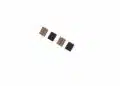
Rated for operating temperatures up to 150°C at category voltage, the new TCO Series capacitors meet AEC-Q200 requirements, exhibit low DCL and a benign failure mode, and are ideal for use in low- and medium-power automotive, industrial, and telecommunications applications.

AVX Corporation, a leading manufacturer and supplier of advanced electronic components and interconnect, sensor, control, and antenna solutions, released the new TCO Series high-temperature, automotive-grade polymer chip capacitors, which are rated for operating temperatures up to 150°C at category voltage and meet AEC-Q200 Stress Test Qualification for Passive Components requirements, which ensure stable performance at 85°C, 85% relative humidity, and rated voltage for up to 1,000 hours. Based on AVX’s field-proven TCQ Series automotive polymer capacitors, the new TCO Series chip capacitors are manufactured in an IATF-16949-certified facility and feature robust J-lead constructions comprised of tantalum anodes, tantalum pentoxide (Ta2O5) dielectrics, and conductive polymer electrodes that exhibit a benign failure mode under recommended use conditions. The series also exhibits low DCL (0.1CV) and basic reliability of 1% per 1,000 hours at 85°C and rated voltage with 0.1Ω/V series impedance and 60% confidence, and is ideally suited for use in high-temperature, low- and medium-power automotive, industrial, and telecommunications applications.

RelatedPosts

Kyocera Releases 30fs Jitter Differential Clock Oscillator

KYOCERA AVX Extends Ultra‑Broadband RF Capacitor Series

Kyocera Offers Small SAW Filters for IoT RF Modules

TCO Series capacitors are currently available as D-case (EIA Metric 7343-31) components rated MSL 3 per J-STD-020 and for 10µF ±20% tolerance, 50VDC at 105°C, a maximum of 50µA DCL, 150mΩ maximum ESR at 100kHz, and operating temperatures extending from -55°C to +150°C, but several other codes are actively in development. They are also RoHS compliant, lead-free compatible, and capable of withstanding three reflow cycles at 260°C. Ideal applications for the series include automotive cabin control, infotainment, and comfort systems; body electronics that manage safety, power management, and diagnostic systems; and aftermarket electronics such as dash cams, radar detectors, navigation systems, subwoofers, amplifiers, and headrest monitors; as well as DC/DC converters and coupling/decoupling circuits in industrial and telecommunications equipment.

“The new TCO Series high-temperature, automotive-grade polymer chip capacitors are based on our TCQ Series automotive polymer capacitors, which now have more than five years of field-proven success,” said Allen Mayar, AVX Electrolytic Capacitors global product manager. “Both polymer capacitor series satisfy the stringent AEC-Q200 requirements for automotive use thanks to superior material selections, design decisions, and manufacturing processes, and the new TCO Series offers the additional benefit of 150°C operation at category voltage.”

TCO Series capacitors are shipped on seven- or 13-inch pure tin reels for automated assembly and lead-time for the series is currently 20 weeks.


Related

Source: AVX

Recent Posts

Binder Extends NCC Circular Connectors for Harsh Environments

13.3.2026
1

Standard vs Planar LLC transformers Comparison for Battery Chargers

13.3.2026
7

Würth Elektronik and Grinn Launch Edge AI Cooperation

13.3.2026
4

Bourns Expanded Semi-Shielded Low Profile Automotive Power Inductor

12.3.2026
10

Peak Nano to Develop Fusion Grade High Energy Film Capacitors

11.3.2026
24

Murata New Vibration Sensor Targets High‑Frequency Predictive Maintenance

10.3.2026
18

Kyocera Releases 30fs Jitter Differential Clock Oscillator

10.3.2026
12

Panasonic Expands Automotive PP Film Capacitors Voltage Range

9.3.2026
22

Panasonic Extends Automotive Power Inductor Line

9.3.2026
27

Upcoming Events

Mar 19
13:00 - 14:00 CDT

Smart Consideration of Inductor Thermal Performance

Mar 21
All day

PSMA Capacitor Workshop 2026

Apr 21
16:00 - 17:00 CEST

Heatsink Solutions: Thermal Management in electronic devices

View Calendar

Popular Posts

  • Buck Converter Design and Calculation

    0 shares
    Share 0 Tweet 0
  • Boost Converter Design and Calculation

    0 shares
    Share 0 Tweet 0
  • Flyback Converter Design and Calculation

    0 shares
    Share 0 Tweet 0
  • LLC Resonant Converter Design and Calculation

    0 shares
    Share 0 Tweet 0
  • MLCC Manufacturers Consider Price Increase as AI Demand Outpaces Supply

    0 shares
    Share 0 Tweet 0
  • Dual Active Bridge (DAB) Topology

    0 shares
    Share 0 Tweet 0
  • Ripple Current and its Effects on the Performance of Capacitors

    3 shares
    Share 3 Tweet 0
  • MLCC and Ceramic Capacitors

    0 shares
    Share 0 Tweet 0
  • MLCC Case Sizes Standards Explained

    0 shares
    Share 0 Tweet 0
  • 3-Phase EMI Filter Design, Simulation, Calculation and Test

    0 shares
    Share 0 Tweet 0

Newsletter Subscription


Passive Components Blog

© EPCI - Leading Passive Components Educational and Information Site

  • Home
  • Privacy Policy
  • EPCI Membership & Advertisement
  • About

No Result
View All Result
  • Home
  • Knowledge Blog
  • PCNS

© EPCI - Leading Passive Components Educational and Information Site

This website uses cookies. By continuing to use this website you are giving consent to cookies being used. Visit our Privacy and Cookie Policy.
Go to mobile version