















Passive Components Blog
No Result
View All Result
  • Home
  • NewsFilter
    • All
    • Aerospace & Defence
    • Antenna
    • Applications
    • Automotive
    • Capacitors
    • Circuit Protection Devices
    • electro-mechanical news
    • Filters
    • Fuses
    • Inductors
    • Industrial
    • Integrated Passives
    • inter-connect news
    • Market & Supply Chain
    • Market Insights
    • Medical
    • Modelling and Simulation
    • New Materials & Supply
    • New Technologies
    • Non-linear Passives
    • Oscillators
    • Passive Sensors News
    • Resistors
    • RF & Microwave
    • Telecommunication
    • Weekly Digest

    Exxelia Releases Updated Microwave Materials and Frequency Tuning Catalogues

    Coilcraft Unveils Molded Power Inductors for High‑Current VRMs

    Murata Automotive MLCCs Push Capacitance Limits for ADAS and Power Lines

    TDK Releases Ultra‑small EMI Noise Suppression Filters

    Littelfuse Presents Ultra-Miniature Half-Pitch SMT DIP Switches

    SCHURTER Releases Compact SMT DIP Switches

    TDK and Nippon Chemical Launch Joint Venture for MLCC Materials

    Wk 14 Electronics Supply Chain Digest

    Bourns Releases Compact High Current Shielded Power Inductors

    Trending Tags

    • Ripple Current
    • RF
    • Leakage Current
    • Tantalum vs Ceramic
    • Snubber
    • Low ESR
    • Feedthrough
    • Derating
    • Dielectric Constant
    • New Products
    • Market Reports
  • VideoFilter
    • All
    • Antenna videos
    • Capacitor videos
    • Circuit Protection Video
    • Filter videos
    • Fuse videos
    • Inductor videos
    • Inter-Connect Video
    • Non-linear passives videos
    • Oscillator videos
    • Passive sensors videos
    • Resistor videos

    Transformer-Based Power-Line Harvester Magnetic Design

    Thermal Modeling of Magnetics

    Standard vs Planar LLC transformers Comparison for Battery Chargers

    How Modern Tools Model Magnetic Components for Power Electronics

    Advanced Loss Modeling for Planar Magnetics in the Frenetic Planar Tool

    2026 Power Magnetics Design Trends: Flyback, DAB and Planar

    Enabling Software‑Defined Vehicle Architectures: Automotive Ethernet and Zonal Smart Power

    Calculating Resistance Value of a Flyback RC Snubber 

    One‑Pulse Characterization of Nonlinear Power Inductors

    Trending Tags

    • Capacitors explained
    • Inductors explained
    • Resistors explained
    • Filters explained
    • Application Video Guidelines
    • EMC
    • New Products
    • Ripple Current
    • Simulation
    • Tantalum vs Ceramic
  • Knowledge Blog
  • DossiersNew
  • Suppliers
    • Who is Who
  • PCNS
    • PCNS 2025
    • PCNS 2023
    • PCNS 2021
    • PCNS 2019
    • PCNS 2017
  • Events
  • Home
  • NewsFilter
    • All
    • Aerospace & Defence
    • Antenna
    • Applications
    • Automotive
    • Capacitors
    • Circuit Protection Devices
    • electro-mechanical news
    • Filters
    • Fuses
    • Inductors
    • Industrial
    • Integrated Passives
    • inter-connect news
    • Market & Supply Chain
    • Market Insights
    • Medical
    • Modelling and Simulation
    • New Materials & Supply
    • New Technologies
    • Non-linear Passives
    • Oscillators
    • Passive Sensors News
    • Resistors
    • RF & Microwave
    • Telecommunication
    • Weekly Digest

    Exxelia Releases Updated Microwave Materials and Frequency Tuning Catalogues

    Coilcraft Unveils Molded Power Inductors for High‑Current VRMs

    Murata Automotive MLCCs Push Capacitance Limits for ADAS and Power Lines

    TDK Releases Ultra‑small EMI Noise Suppression Filters

    Littelfuse Presents Ultra-Miniature Half-Pitch SMT DIP Switches

    SCHURTER Releases Compact SMT DIP Switches

    TDK and Nippon Chemical Launch Joint Venture for MLCC Materials

    Wk 14 Electronics Supply Chain Digest

    Bourns Releases Compact High Current Shielded Power Inductors

    Trending Tags

    • Ripple Current
    • RF
    • Leakage Current
    • Tantalum vs Ceramic
    • Snubber
    • Low ESR
    • Feedthrough
    • Derating
    • Dielectric Constant
    • New Products
    • Market Reports
  • VideoFilter
    • All
    • Antenna videos
    • Capacitor videos
    • Circuit Protection Video
    • Filter videos
    • Fuse videos
    • Inductor videos
    • Inter-Connect Video
    • Non-linear passives videos
    • Oscillator videos
    • Passive sensors videos
    • Resistor videos

    Transformer-Based Power-Line Harvester Magnetic Design

    Thermal Modeling of Magnetics

    Standard vs Planar LLC transformers Comparison for Battery Chargers

    How Modern Tools Model Magnetic Components for Power Electronics

    Advanced Loss Modeling for Planar Magnetics in the Frenetic Planar Tool

    2026 Power Magnetics Design Trends: Flyback, DAB and Planar

    Enabling Software‑Defined Vehicle Architectures: Automotive Ethernet and Zonal Smart Power

    Calculating Resistance Value of a Flyback RC Snubber 

    One‑Pulse Characterization of Nonlinear Power Inductors

    Trending Tags

    • Capacitors explained
    • Inductors explained
    • Resistors explained
    • Filters explained
    • Application Video Guidelines
    • EMC
    • New Products
    • Ripple Current
    • Simulation
    • Tantalum vs Ceramic
  • Knowledge Blog
  • DossiersNew
  • Suppliers
    • Who is Who
  • PCNS
    • PCNS 2025
    • PCNS 2023
    • PCNS 2021
    • PCNS 2019
    • PCNS 2017
  • Events
No Result
View All Result
Passive Components Blog
No Result
View All Result

Bourns Expands its Modular Contacts for Power-Dense Systems

19.3.2026
Reading Time: 6 mins read
A A

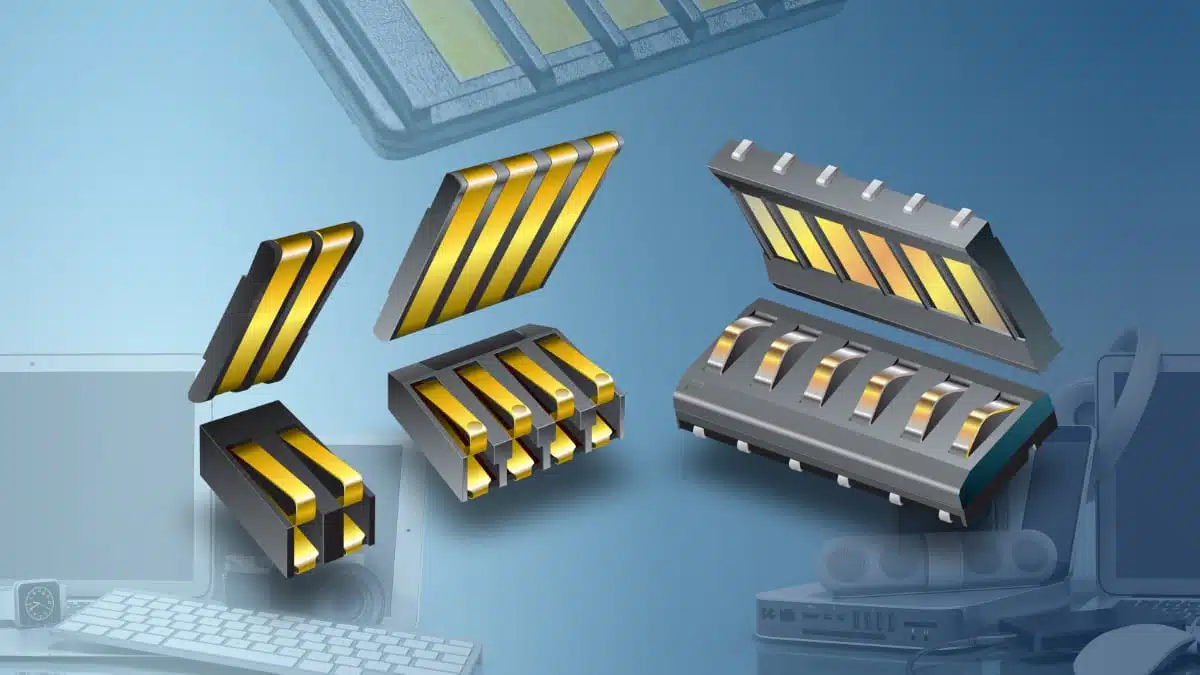
Bourns has expanded its modular contacts portfolio with new five, six and eight amp versions addressing higher power delivery requirements in compact systems.

The new parts target designers who need scalable, board-level power interconnects for charging, energy transfer and multiple subsystems while maintaining reliability over many mating cycles.

RelatedPosts

Bourns Releases Compact High Current Shielded Power Inductors

Bourns Expanded Semi-Shielded Low Profile Automotive Power Inductor

Bourns Extends PPTC Resettable High‑Power, High‑Voltage Protection Fuses

Key features and benefits

The new Bourns modular contacts are offered as models 75ABF, 75ABM, 76AAF, 76AAM, 78ADF and 78ADM. They are designed as stackable, board-mounted contacts that can be combined to meet different current and subsystem needs according to the manufacturer datasheets.

Key characteristics include:

  • Rated for 5 A, 6 A and 8 A per contact, depending on series, to support higher power delivery in compact interconnect points
  • Mechanical design tested for 50,000-cycle operation, supporting long service life in systems with frequent plugging and unplugging
  • Stackable side-by-side arrangement, allowing designers to build multi-contact, modular power interfaces and to scale current capability by adding parallel paths where appropriate
  • Power-dense form factor that can help reduce connector area on the PCB while maintaining current handling and thermal performance according to the manufacturer
  • RoHS-compliant construction and halogen-free status under Bourns’ internal halogen-free criteria, supporting environmental and regulatory requirements

For many applications, the combination of higher current rating and high mating-cycle capability makes these contacts suitable where classic board-to-board or wired connectors might be oversized or less flexible from a layout perspective.

Typical applications

Bourns positions these modular contacts for demanding power-related tasks where efficient energy transfer over short distances on or near the PCB is important.

Typical use cases include:

  • Battery charging interfaces inside equipment, where higher current capability allows faster charging with controlled temperature rise
  • Local power distribution between boards or modules, for example from a main power board to functional daughtercards in industrial or communications systems
  • Parallel loads and multiple subsystems, where individual contacts can feed separate modules while sharing a common mechanical structure
  • Short-distance power links where minimizing voltage drop and resistive losses is critical for system efficiency
  • Modular platforms that may require field upgrades or reconfiguration, benefitting from high mating-cycle capability

In many of these scenarios, the ability to stack contacts side-by-side enables designers to tailor the number of power channels and current capability without redesigning the basic contact footprint.

Technical highlights

While exact mechanical dimensions, plating systems and detailed electrical characteristics are defined in the individual datasheets for each series, several technical aspects are relevant for design-in:

  • Current ratings: Nominal 5 A, 6 A and 8 A per contact type, specified under defined test conditions in the respective datasheets
  • Contact life: Tested to 50,000 mating cycles, which is significantly higher than many standard board connectors and supports frequent connect/disconnect scenarios
  • Power density: Geometry optimized for high current in a compact contact, reducing the connector footprint for a given power budget
  • Compliance: RoHS-compliant, and classified as halogen free under Bourns’ internal definition (limits on Br and Cl content and total halogens)
  • Product families:
    • 75ABF and 75ABM modular contacts
    • 76AAF and 76AAM modular contacts
    • 78ADF and 78ADM modular contacts

For precise design calculations such as temperature rise, contact resistance and derating versus ambient temperature, engineers should refer to the manufacturer datasheets for each series and current rating.

Design-in notes for engineers

When designing these modular contacts into power-dense systems, engineers should consider:

  • Current and thermal margins: Select the appropriate 5 A, 6 A or 8 A contact type and apply suitable derating based on ambient temperature, airflow and copper area on the PCB, using curves and limits from the manufacturer datasheets.
  • Stacking and layout: Since contacts can be stacked side-by-side, layout planning should allow sufficient spacing for creepage/clearance and for any expected voltage difference between adjacent contacts.
  • Mechanical life: The 50,000-cycle test capability makes these parts attractive for connectors that will be frequently mated, but mechanical guidance, keying and strain relief for attached cables or modules should still be part of the overall design.
  • Voltage drop and efficiency: For high-current paths over short distances, contact resistance and conductor cross-section are important to minimize voltage drop; designers should use the specified contact resistance and evaluate P=I2⋅RP = I^{2} \cdot RP=I2⋅R losses as part of worst-case analysis.
  • System modularity: The modular contact concept fits well in systems that may later require additional power channels or subsystem expansions; leaving reserved PCB positions for additional contacts can simplify future upgrades.

From a purchasing perspective, grouping on a single platform (75, 76 and 78 families) can simplify sourcing and allow alignment of contact style across multiple projects, while still offering different current ratings and configurations for individual designs.

Source

This article is based on information provided in the official Bourns press release announcing the expansion of its modular contacts portfolio, complemented by general engineering context for power interconnect design.

References

  1. Bourns press release – Bourns Expands Industry-Leading Modular Contacts Portfolio with Five, Six and Eight Amp Products
  2. Bourns modular contacts product family page
  3. Bourns 75ABF datasheet
  4. Bourns 75ABM datasheet
  5. Bourns 76AAF datasheet
  6. Bourns 76AAM datasheet
  7. Bourns 78ADF datasheet
  8. Bourns 78ADM datasheet

Related

Recent Posts

Coilcraft Unveils Molded Power Inductors for High‑Current VRMs

8.4.2026
6

Littelfuse Presents Ultra-Miniature Half-Pitch SMT DIP Switches

7.4.2026
5

SCHURTER Releases Compact SMT DIP Switches

7.4.2026
4

Bourns Releases Compact High Current Shielded Power Inductors

2.4.2026
22

Molex Completes Acquisition of Smiths Interconnect, Expanding Portfolio of High-Reliability Connectivity Solutions

1.4.2026
11

APEC 2026 Power Electronics Trends and Implications for Passive Components

1.4.2026
85

Hydra Enhances Film Capacitor Robustness by Novel Gel Filler

1.4.2026
27

Würth Elektronik Releases Heat Sinks for TO and IC packages

31.3.2026
25

Binder Introduces Triangular Moulding for M16 and M12 Cable Connectors

31.3.2026
4

Upcoming Events

Apr 21
16:00 - 17:00 CEST

Heatsink Solutions: Thermal Management in electronic devices

May 5
16:00 - 17:00 CEST

Understanding and Selecting Capacitors – Fundamentals, Technologies and Latest Trends

May 19
16:00 - 17:00 CEST

Designing Qi2 Wireless Power Systems: Practical Development and EMC Optimization

View Calendar

Popular Posts

  • Buck Converter Design and Calculation

    0 shares
    Share 0 Tweet 0
  • Boost Converter Design and Calculation

    0 shares
    Share 0 Tweet 0
  • Flyback Converter Design and Calculation

    0 shares
    Share 0 Tweet 0
  • LLC Resonant Converter Design and Calculation

    0 shares
    Share 0 Tweet 0
  • Dual Active Bridge (DAB) Topology

    0 shares
    Share 0 Tweet 0
  • MLCC and Ceramic Capacitors

    0 shares
    Share 0 Tweet 0
  • Capacitor Charging and Discharging

    0 shares
    Share 0 Tweet 0
  • Ripple Current and its Effects on the Performance of Capacitors

    3 shares
    Share 3 Tweet 0
  • Plastic Materials Dielectric Constant and DF

    4 shares
    Share 4 Tweet 0
  • MLCC Case Sizes Standards Explained

    0 shares
    Share 0 Tweet 0

Newsletter Subscription


Passive Components Blog

© EPCI - Leading Passive Components Educational and Information Site

  • Home
  • Privacy Policy
  • EPCI Membership & Advertisement
  • About

No Result
View All Result
  • Home
  • Knowledge Blog
  • PCNS

© EPCI - Leading Passive Components Educational and Information Site

This website uses cookies. By continuing to use this website you are giving consent to cookies being used. Visit our Privacy and Cookie Policy.
Go to mobile version