

- News
- All
- Aerospace & Defence
- Antenna
- Applications
- Automotive
- Capacitors
- Circuit Protection Devices
- electro-mechanical news
- Filters
- Fuses
- Inductors
- Industrial
- Integrated Passives
- inter-connect news
- Market & Supply Chain
- Market Insights
- Medical
- Modelling and Simulation
- New Materials & Supply
- New Technologies
- Non-linear Passives
- Optoelectronics and Isolation
- Oscillators
- Passive Sensors News
- Resistors
- RF & Microwave
- Telecommunication
- Weekly Digest



- News
- All
- Aerospace & Defence
- Antenna
- Applications
- Automotive
- Capacitors
- Circuit Protection Devices
- electro-mechanical news
- Filters
- Fuses
- Inductors
- Industrial
- Integrated Passives
- inter-connect news
- Market & Supply Chain
- Market Insights
- Medical
- Modelling and Simulation
- New Materials & Supply
- New Technologies
- Non-linear Passives
- Optoelectronics and Isolation
- Oscillators
- Passive Sensors News
- Resistors
- RF & Microwave
- Telecommunication
- Weekly Digest

Inductors e-Blog
Transformers: How Transformers and Solenoids Work
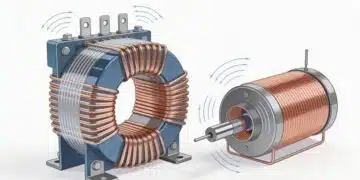
This article provides a practical introduction to how transformers and solenoids work, their key equations, parasitic effects, and typical applications...
Read moreDetailsResistors Pulse Load and Derating Design Guide
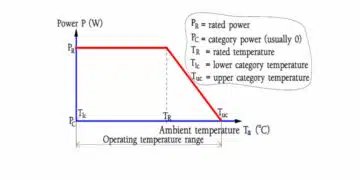
Resistors in power and signal circuits rarely see pure DC; they are often stressed by pulses, surges and elevated temperatures...
Read moreDetailsInductance, Impedance, Q Factor and DCR Losses
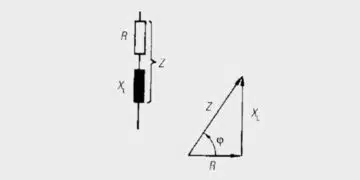
The article explains basic definition of inductance, impedance and inductive losses. Inductors are not just abstract L symbols in schematics but real...
Read moreDetailsDC-DC Converter Basic Characteristics and Formulas
This article elaborates on design and calculation of basic DC/DC power converters. The post is based on Würth Elektronik‘s “DC/DC Converter Handbook”...
Read moreDetailsCore Magnetic Materials, Permeability and Their Losses
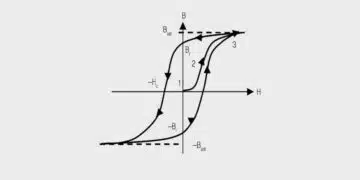
Magnetic-core selection determines the achievable inductance, saturation margin, power loss, thermal performance and EMI behaviour of inductors and transformers. A...
Read moreDetailsMagnetic Flux Density, Flux Linkage and Faraday–Lenz Law in Inductors
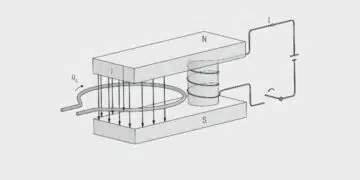
Magnetic flux density, magnetic flux and Faraday–Lenz law explain why a voltage appears across an inductor when its current changes....
Read moreDetailsMagnetic Fields in Inductors: Ampère’s Law, Flux Density, Saturation and Air Gaps

Inductors, transformers, ferrite beads and common-mode chokes all rely on the magnetic field produced by electric current. This knowledge article...
Read moreDetailsInductor and Transformer Symbols

This article provides an overview of common and less-common inductor and transformer symbols. The inductors, coils or chokes are electrical...
Read moreDetailsSwitching vs Linear Power Regulators

This article delves into a comprehensive comparison of linear and switching regulators, examining their advantages, limitations, and suitability for different...
Read moreDetailsInductor and Choke, What is it ?

This article explains basics of What is an Inductor? and What is a Choke? to understand the passive electronic component...
Read moreDetailsPopular Posts
-

Buck Converter Design and Calculation
-
Boost Converter Design and Calculation
-
LLC Resonant Converter Design and Calculation
-
Capacitor Charging and Discharging
-
Flyback Converter Design and Calculation
-
Audio Capacitors: Choosing Capacitors for Crossover Circuits
-
MLCC and Ceramic Capacitors
-
Thermistors Basics, NTC and PTC Thermistors
-
RF Connector Types: How To Choose the Right One
-
Passive Low Pass Filters: Fundamentals and EMI Design

© 2015–2026
All rights reserved