







Passive Components Blog
No Result
View All Result
  • Home
  • NewsFilter
    • All
    • Aerospace & Defence
    • Antenna
    • Applications
    • Automotive
    • Capacitors
    • Circuit Protection Devices
    • electro-mechanical news
    • Filters
    • Fuses
    • Inductors
    • Industrial
    • Integrated Passives
    • inter-connect news
    • Market & Supply Chain
    • Market Insights
    • Medical
    • Modelling and Simulation
    • New Materials & Supply
    • New Technologies
    • Non-linear Passives
    • Oscillators
    • Passive Sensors News
    • Resistors
    • RF & Microwave
    • Telecommunication
    • Weekly Digest

    Molecular Memristor Shows Record 145 kH Emergent Inductance

    Planar vs Conventional Transformer: When it Make Sense

    Researchers Propose Next‑Gen Compact Memory Using Ultra-thin Ferroelectric Capacitors

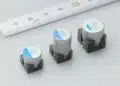
    Nichicon ADN Automotive Hybrid Aluminum Capacitors Now Available in EMEA

    Wk 19 Electronics Supply Chain Digest

    Electrocaloric Multilayer Capacitors: Towards Quiet, Solid‑State Cooling Around Room Temperature

    High-Crystallinity Nanocrystalline Composites for MHz Chip Inductors

    European Components Distribution Shows Strong Q1 2026 Growth Amid Geopolitical Uncertainty

    Stackpole Expanded its AlN Thick Film Chip Resistors

    Trending Tags

    • Ripple Current
    • RF
    • Leakage Current
    • Tantalum vs Ceramic
    • Snubber
    • Low ESR
    • Feedthrough
    • Derating
    • Dielectric Constant
    • New Products
    • Market Reports
  • VideoFilter
    • All
    • Antenna videos
    • Capacitor videos
    • Circuit Protection Video
    • Filter videos
    • Fuse videos
    • Inductor videos
    • Inter-Connect Video
    • Non-linear passives videos
    • Oscillator videos
    • Passive sensors videos
    • Resistor videos

    Planar vs Conventional Transformer: When it Make Sense

    Modeling Fringing Field Losses in Inductors & Transformers

    Why Power Inductors Use a Ferrite Core With an Air Gap

    Transformer-Based Power-Line Harvester Magnetic Design

    Thermal Modeling of Magnetics

    Standard vs Planar LLC transformers Comparison for Battery Chargers

    How Modern Tools Model Magnetic Components for Power Electronics

    Advanced Loss Modeling for Planar Magnetics in the Frenetic Planar Tool

    2026 Power Magnetics Design Trends: Flyback, DAB and Planar

    Trending Tags

    • Capacitors explained
    • Inductors explained
    • Resistors explained
    • Filters explained
    • Application Video Guidelines
    • EMC
    • New Products
    • Ripple Current
    • Simulation
    • Tantalum vs Ceramic
  • Knowledge Blog
  • DossiersNew
  • Suppliers
    • Who is Who
  • PCNS
    • PCNS 2025
    • PCNS 2023
    • PCNS 2021
    • PCNS 2019
    • PCNS 2017
  • Events
  • Home
  • NewsFilter
    • All
    • Aerospace & Defence
    • Antenna
    • Applications
    • Automotive
    • Capacitors
    • Circuit Protection Devices
    • electro-mechanical news
    • Filters
    • Fuses
    • Inductors
    • Industrial
    • Integrated Passives
    • inter-connect news
    • Market & Supply Chain
    • Market Insights
    • Medical
    • Modelling and Simulation
    • New Materials & Supply
    • New Technologies
    • Non-linear Passives
    • Oscillators
    • Passive Sensors News
    • Resistors
    • RF & Microwave
    • Telecommunication
    • Weekly Digest

    Molecular Memristor Shows Record 145 kH Emergent Inductance

    Planar vs Conventional Transformer: When it Make Sense

    Researchers Propose Next‑Gen Compact Memory Using Ultra-thin Ferroelectric Capacitors

    Nichicon ADN Automotive Hybrid Aluminum Capacitors Now Available in EMEA

    Wk 19 Electronics Supply Chain Digest

    Electrocaloric Multilayer Capacitors: Towards Quiet, Solid‑State Cooling Around Room Temperature

    High-Crystallinity Nanocrystalline Composites for MHz Chip Inductors

    European Components Distribution Shows Strong Q1 2026 Growth Amid Geopolitical Uncertainty

    Stackpole Expanded its AlN Thick Film Chip Resistors

    Trending Tags

    • Ripple Current
    • RF
    • Leakage Current
    • Tantalum vs Ceramic
    • Snubber
    • Low ESR
    • Feedthrough
    • Derating
    • Dielectric Constant
    • New Products
    • Market Reports
  • VideoFilter
    • All
    • Antenna videos
    • Capacitor videos
    • Circuit Protection Video
    • Filter videos
    • Fuse videos
    • Inductor videos
    • Inter-Connect Video
    • Non-linear passives videos
    • Oscillator videos
    • Passive sensors videos
    • Resistor videos

    Planar vs Conventional Transformer: When it Make Sense

    Modeling Fringing Field Losses in Inductors & Transformers

    Why Power Inductors Use a Ferrite Core With an Air Gap

    Transformer-Based Power-Line Harvester Magnetic Design

    Thermal Modeling of Magnetics

    Standard vs Planar LLC transformers Comparison for Battery Chargers

    How Modern Tools Model Magnetic Components for Power Electronics

    Advanced Loss Modeling for Planar Magnetics in the Frenetic Planar Tool

    2026 Power Magnetics Design Trends: Flyback, DAB and Planar

    Trending Tags

    • Capacitors explained
    • Inductors explained
    • Resistors explained
    • Filters explained
    • Application Video Guidelines
    • EMC
    • New Products
    • Ripple Current
    • Simulation
    • Tantalum vs Ceramic
  • Knowledge Blog
  • DossiersNew
  • Suppliers
    • Who is Who
  • PCNS
    • PCNS 2025
    • PCNS 2023
    • PCNS 2021
    • PCNS 2019
    • PCNS 2017
  • Events
No Result
View All Result
Passive Components Blog
No Result
View All Result

Nichicon ADN Automotive Hybrid Aluminum Capacitors Now Available in EMEA

11.5.2026
Reading Time: 6 mins read
A A

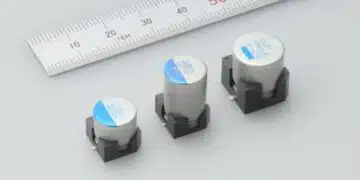
Nichicon has released its ADN‑suffix conductive polymer hybrid aluminum electrolytic capacitors into the EMEA distribution channel, targeting demanding automotive and industrial applications.

These Nichicon hybrids offer a combination of aluminum electrolytic capacitor energy storage with polymer‑enhanced low impedance and long life, making them attractive for engineers who need robust capacitors for harsh environments.

RelatedPosts

Conductive Polymer Capacitor Market and Design‑In Guide to 2035

NICHICON Releases 125C Long Life SMD Polymer Aluminum Capacitors

NICHICON Releases Long Life High Ripple Current Snap-In Aluminum Electrolytic Capacitors

Key features and benefits

  • Automotive‑rated ADN suffix for AEC‑focused designs
    ADN‑marked versions within Nichicon’s hybrid aluminum electrolytic portfolio are qualified for automotive use according to manufacturer documentation, simplifying selection for control units, power stages and other on‑board systems where automotive approvals are mandatory.
  • Hybrid aluminum electrolytic construction
    The devices combine a liquid electrolyte with a conductive polymer system, typically providing lower ESR, improved ripple current capability and better frequency response than conventional wet aluminum capacitors of similar size, while preserving familiar mounting and package styles.
  • Expanded series coverage
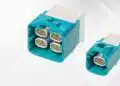
    The ADN designation spans multiple Nichicon hybrid series, including GYA, GYB, GYC, GYD, GYE, GYF, GYG, GXC and GWC, giving designers a wide range of case sizes, capacitance values and voltage ratings within a harmonized automotive‑ready family.
  • Designed for harsh operation
    ADN hybrids are intended for environments with elevated temperature, vibration and long service life expectations, such as under‑hood modules, power converters and industrial control equipment, where stable performance over many thousands of hours is critical.
  • Distribution access in EMEA
    Availability through authorized distribution partners in Europe, the Middle East and Africa allows purchasing teams to source ADN parts via standard channels, with stocking, logistics and sampling support aligned to regional needs.

Typical applications

Nichicon positions ADN‑suffix hybrid capacitors primarily for automotive electronics, but the same characteristics are valuable across several high‑reliability sectors.

  • Automotive control units and ECUs in engine bay or chassis environments where temperature cycling and vibration are severe.
  • DC‑DC converters, on‑board chargers, and 12 V to 48 V power nets in vehicles that require capacitors with lower ESR for ripple current and noise control.
  • Industrial equipment such as motor drives, programmable controllers and power supplies operating in elevated temperature ambient conditions.
  • White goods and home appliances that need long‑life capacitors for control boards and inverter stages, helping to support extended warranty expectations.
  • Computing and communication systems where compact, high‑reliability decoupling or bulk energy storage is required on boards with limited space.

Technical highlights

The press information focuses on the ADN suffix as an automotive qualification marker across several existing Nichicon hybrid aluminum electrolytic series. Detailed electrical and mechanical parameters remain series‑specific and are defined in the respective datasheets.

What the ADN suffix means in practice

For design engineers, the ADN suffix indicates that the selected GYx, GXx or GWx hybrid capacitor is intended and qualified for automotive‑class applications according to the manufacturer. In practice, this typically implies tighter process control, additional testing and documentation that support use in safety‑relevant or mission‑critical vehicle systems, when combined with the appropriate series choice and rating.

Because ADN is a suffix applied across multiple series rather than a single family on its own, engineers can select the base series that fits electrical and mechanical requirements, then choose the ADN variant to align with automotive qualification needs, rather than redesigning around a completely different capacitor type.

Availability and part numbers

Nichicon states that ADN‑suffix hybrid aluminum electrolytic capacitors are now available to customers in the EMEA region through authorized distribution partners. For engineers and purchasers, this means that:

  • ADN versions of GYA, GYB, GYC, GYD, GYE, GYF, GYG, GXC and GWC can be sourced via the existing Nichicon distribution network in Europe, the Middle East and Africa.
  • Sampling and volume purchasing can be coordinated through Nichicon (Austria) Corporation or local distributors listed in Nichicon’s sales and distributor directories.
  • Availability in Asia and North America is planned but will be announced separately; engineers working on global platforms should confirm regional logistics with Nichicon or their distributor.

Because ordering codes and detailed part numbering structures differ per series and rating, exact part numbers, voltage options and capacitance values should be taken directly from the official Nichicon product pages or datasheets for each ADN‑marked series.

Design‑in notes for engineers

  • Start from the application environment
    Determine the maximum ambient and hot‑spot temperatures, vibration levels and expected service life of the node where the capacitor will be placed, then select the ADN series and size whose endurance and temperature ratings, as specified in the datasheet, include adequate design margin.
  • Check ESR and ripple current per series
    Each GYx, GXx or GWx hybrid series offers different ESR and ripple current capabilities; use the manufacturer’s curves and maximum ratings to ensure that ripple power losses keep self‑heating within acceptable limits for the chosen mounting location.
  • Consider package and mounting constraints
    Board space, height and assembly flow may favor certain case sizes or terminal configurations within the ADN‑marked portfolio; verify footprint, clearance and any required keep‑out areas using Nichicon’s mechanical drawings or 3D models where available.
  • Align with automotive qualification strategy
    For automotive ECUs, align the ADN‑suffix choice with system‑level qualification, ensuring that the selected series supports the required temperature class and that validation testing reflects the worst‑case operating profile.
  • Coordinate with purchasing early
    Since ADN availability currently focuses on EMEA, coordinate with purchasing and logistics to confirm distributor stock, lead times and planned roll‑out to other regions when designing platforms intended for global manufacture.

Source

This article is based on information provided in a Nichicon press release announcing the availability of ADN‑suffix automotive‑rated hybrid aluminum electrolytic capacitors in EMEA, supplemented by related product information from the manufacturer’s website and documentation.

References

  1. Nichicon Automotive-Rated Hybrid Capacitors with “ADN” Suffix Now Available Through EMEA Distribution Channels
  2. Nichicon Europe product portal

Related

Recent Posts

Planar vs Conventional Transformer: When it Make Sense

11.5.2026
28

Researchers Propose Next‑Gen Compact Memory Using Ultra-thin Ferroelectric Capacitors

11.5.2026
22

Electrocaloric Multilayer Capacitors: Towards Quiet, Solid‑State Cooling Around Room Temperature

7.5.2026
180

Stackpole Expanded its AlN Thick Film Chip Resistors

6.5.2026
22

KYOCERA 10 µF 0201 MLCC Brings High‑Capacitance into Mobile Designs

6.5.2026
50

Würth Elektronik Introduces Compact Flat-wire SMT Power Inductors for Automotive

5.5.2026
48

KYOCERA AVX Extends MLV Varistors for 48V Automotive Protection

5.5.2026
23

Energy Localization in Tantalum Anode Formation: A Structural Perspective

4.5.2026
46

YAGEO Introduces C0G Flexible Termination Automotive MLCCs

30.4.2026
34

Upcoming Events

May 13
17:00 - 17:30 CEST

Winding Loss Modeling for Toroidal Magnetics – Including Gapped Cores

May 19
16:00 - 17:00 CEST

Designing Qi2 Wireless Power Systems: Practical Development and EMC Optimization

Jun 2
16:00 - 17:00 CEST

Calculation, Simulation and Measurement of 800V EMC Filters

View Calendar

Popular Posts

  • Buck Converter Design and Calculation

    0 shares
    Share 0 Tweet 0
  • Boost Converter Design and Calculation

    0 shares
    Share 0 Tweet 0
  • Flyback Converter Design and Calculation

    0 shares
    Share 0 Tweet 0
  • LLC Resonant Converter Design and Calculation

    0 shares
    Share 0 Tweet 0
  • MLCC and Ceramic Capacitors

    0 shares
    Share 0 Tweet 0
  • Dual Active Bridge (DAB) Topology

    0 shares
    Share 0 Tweet 0
  • Capacitor Charging and Discharging

    0 shares
    Share 0 Tweet 0
  • What Electronics Engineer Needs to Know About Passive Low Pass Filters

    0 shares
    Share 0 Tweet 0
  • Ripple Current and its Effects on the Performance of Capacitors

    3 shares
    Share 3 Tweet 0
  • MLCC Case Sizes Standards Explained

    0 shares
    Share 0 Tweet 0

Newsletter Subscription


Passive Components Blog

© EPCI - Leading Passive Components Educational and Information Site

  • Home
  • Privacy Policy
  • EPCI Membership & Advertisement
  • About

No Result
View All Result
  • Home
  • Knowledge Blog
  • PCNS

© EPCI - Leading Passive Components Educational and Information Site

This website uses cookies. By continuing to use this website you are giving consent to cookies being used. Visit our Privacy and Cookie Policy.
Go to mobile version