






Reliable PCB component layout starts with package-specific land patterns, controlled mechanical stress and an assembly process that suits the selected components.
This article explains lead preparation, SMD pad design, component spacing, cleaning, handling and board support for design, component and manufacturing engineers working with passive components in signal and power-electronic assemblies.
Key Takeaways
Component reliability depends on the interaction between the part, the PCB and the complete manufacturing process. The following principles apply from layout review through final mechanical assembly.
- Use the exact component manufacturer’s land pattern and processing limits. A generic pad-width percentage or fixed pad extension is not suitable for every chip size, termination or soldering method.
- Minimise PCB bending during placement, testing, depanelisation, connector insertion and screw tightening. Brittle ceramic components can develop cracks even when the electrical design is correct.
- Design cleaning access into the layout. Low stand-off, long narrow channels and multiple terminations can trap residues and restrict washing, rinsing and drying.
- Separate assembly spacing from electrical insulation requirements. Creepage, clearance, vent access, cooling and rework each impose different constraints.
- Qualify the installed assembly, not just the component. Confirm thermal performance, mechanical support, cleaning compatibility, ESD precautions and any moisture-sensitive handling requirements before production release.
Board Design and Component Pre-Assembly Preparation
Leaded components may require cutting and forming before mounting, but these operations must not transfer damaging loads into the body, seals or internal connections. Establish the forming method, hole pattern and mechanical support before releasing the PCB and assembly drawings.
Lead forming and expansion allowance
Where a component is connected between rigid soldering terminals, provide the lead compliance needed to accommodate assembly tolerances and differential thermal expansion. A small expansion bend, as illustrated in Figure 1, can prevent the terminals from pulling directly on the internal connections. Damage at these connections may produce intermittent, temperature-dependent open circuits that are difficult to diagnose.
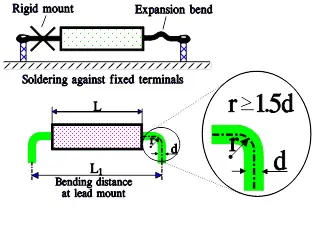
Do not bend a lead immediately against the component body. Support the lead during forming so that the tool load is not transmitted into a seal or internal termination. The manufacturer’s minimum straight length, bend radius and permitted forming method take precedence over a general layout rule.
For a conventional axial component on a modular hole grid, the original layout relationship can be written as Eq. (1). Here L is the component body length measured along its axis, d is the lead diameter, M is the selected hole-grid pitch, n is the smallest permitted positive integer satisfying the relationship, and L1 is the resulting hole-centre spacing. All lengths must use the same unit.
Eq. (1) is a legacy geometric starting point, not a component qualification requirement or a substitute for a specified bend radius. The original modular approach used a grid pitch of 2.5 mm or 2.54 mm. A half-grid or another spacing may be appropriate for a small body, provided the finished lead shape still meets the component’s forming requirements. Restricting n to odd values is a library convention rather than an electrical or reliability requirement.
Mechanical retention and lead cutting
Do not use component mass alone to decide whether additional retention is necessary. Consider body height, centre of gravity, lead stiffness, mounting orientation, vibration, shock and the strength of the finished attachment. Large capacitors and magnetics may need clamps, brackets or a qualified staking compound so that their solder joints do not carry the full mechanical load.
Any adhesive or staking material must be compatible with the component coating, PCB finish, temperature range and cleaning process. Its placement must not obstruct a pressure-relief device or prevent the movement required by a protective disconnector. Capacitor installation instructions can also impose requirements on the flexibility of connecting conductors. [2, 8]
Cutting leads with hand tools or automatic equipment can transmit a short mechanical impulse to the component. Use suitable, maintained tooling and a controlled support arrangement; do not assume that a particular cutter shape alone makes the operation harmless. For a mechanically sensitive construction, qualify the cutting and forming operation as part of the assembly process.
Power components and soldering heat
For leaded power components, assess both the operating temperature and the heat introduced during soldering. Leads provide a thermal path between the component and the solder joint, while body spacing affects cooling and the temperature of the surrounding board. Capacitors and magnetic components are not loss-free: capacitor ripple losses and magnetic-component losses can contribute to self-heating. [2]
Choose mounting height, cooling arrangements and operating derating from the component’s installation requirements. Do not improvise longer or thinner leads, change lead material, or rely on an assumed internal solder alloy as a general remedy. Instead, select a construction and soldering process that remain within the manufacturer’s time, temperature and mechanical limits.
Where thermal bonding or staking is proposed, verify the resulting temperature distribution and mechanical stress in the installed assembly. A material that improves one heat path may also constrain expansion or reduce access for cleaning and inspection.
Mounting Considerations for Single-Ended Components
Single-ended components concentrate their external connections at one end of the body. Excessive pushing, pulling or bending can therefore damage terminals, seals or internal elements rather than simply changing the external lead shape. [2]
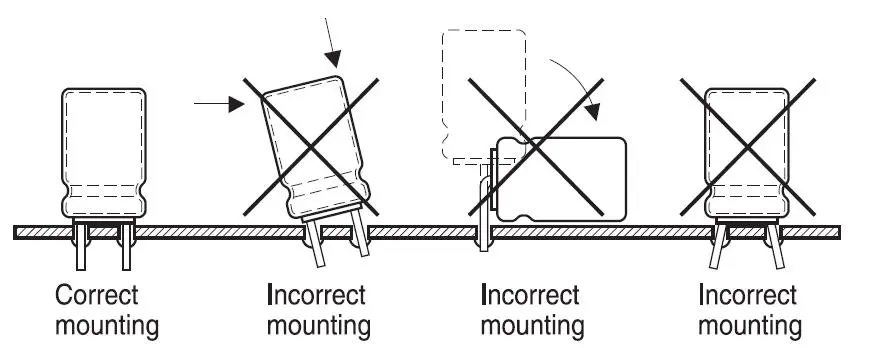
For aluminum electrolytic capacitors, mechanical damage may cause electrical deterioration, an open circuit or a short circuit. Figure 2 illustrates the mounting precautions associated with this construction.
- Match the finished PCB hole spacing to the specified lead spacing. Do not force the leads into an incompatible footprint.
- Do not move or straighten the body by loading its leads after soldering.
- Do not lift or carry a PCB by holding a soldered component.
- Observe polarity, permitted mounting position, body clearance and pressure-relief requirements.
- Provide separate retention where the installation requires it, without obstructing the vent or loading the terminals. [2]
SMD Components Pad Design & Layout
SMD land patterns must support solder-joint formation without introducing excessive solder volume, component movement or mechanical constraint. Use the recommended footprint for the exact package and soldering method, then qualify it with the selected PCB, stencil, paste and assembly process. [1]
Land patterns and solder volume
A single pad-width percentage, overlap or extension cannot cover the range from miniature chips to large power components. Check the termination dimensions and tolerances, pad separation, pad width, toe and heel geometry where applicable, solder-mask openings and stencil apertures. Confirm whether the part is approved for reflow, wave soldering or another process.
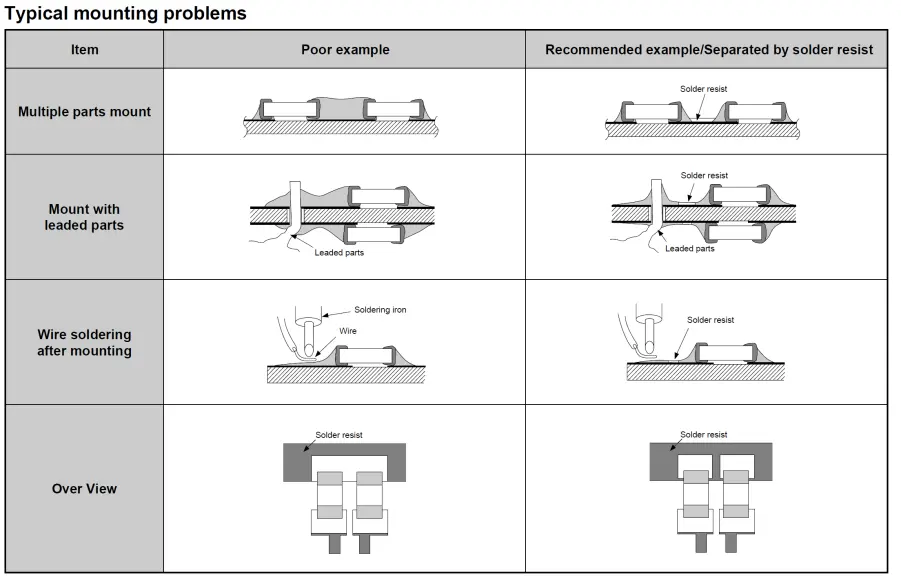
For MLCCs, excess solder can increase the mechanical constraint at the terminations and make the ceramic more susceptible to board-bending stress. Too little solder can reduce attachment strength. The objective is the manufacturer’s recommended joint geometry, not the largest possible fillet. Figure 3 retains the original examples of mounting problems and corrective layout concepts. [1]
Solder resist and alternative case sizes
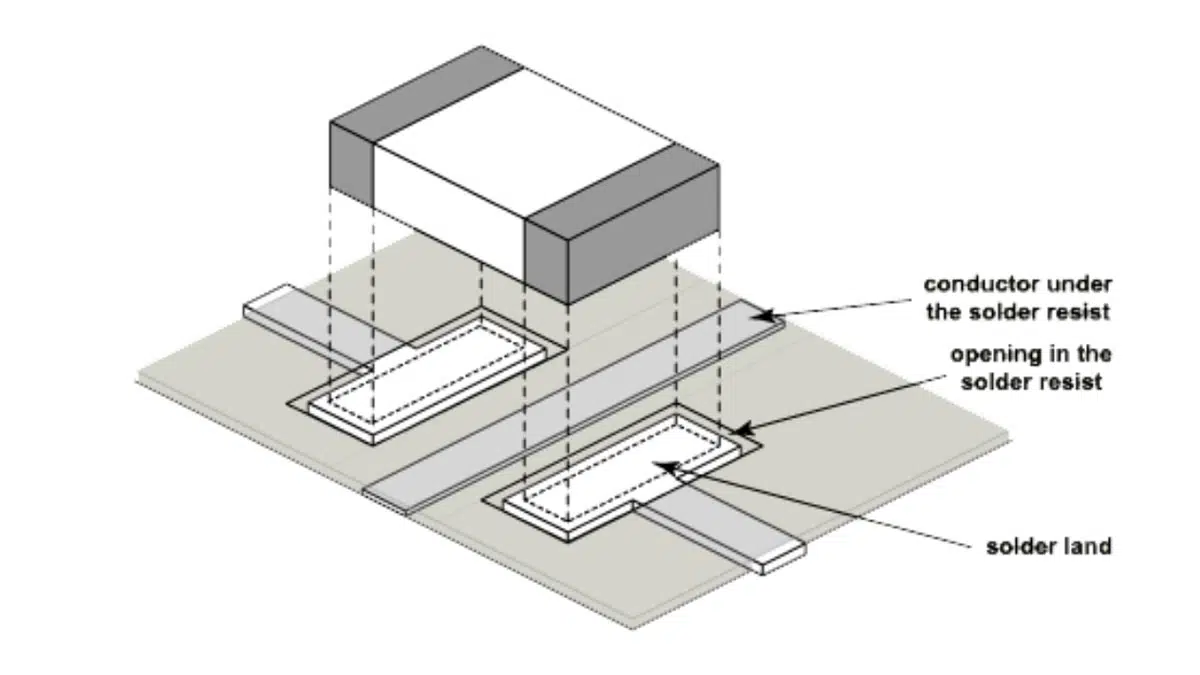
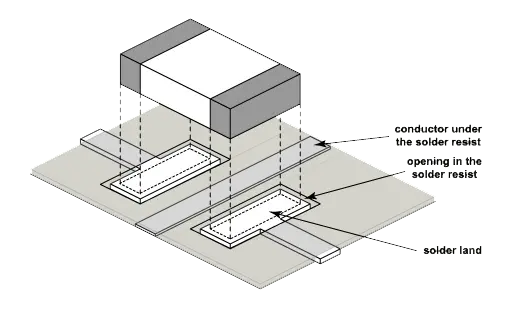
Solder resist, also called solder mask, controls which copper areas are exposed for soldering. Its opening size, registration tolerance and thickness must be compatible with the board fabricator’s process and the required solder joints. Mask encroachment onto a termination pad can compromise assembly; excessive mask thickness between pads can also affect component seating and cleaning access. Figure 4 illustrates the relationship between mask, copper and board surface. [3]
The original AVX example in Figures 5 and 6 illustrates a land-pattern concept intended to accommodate B- and C-case tantalum capacitors through the exposed solderable geometry. Treat this as a package-specific design concept, not a universal interchangeable footprint.
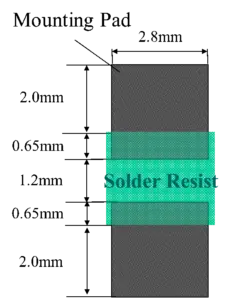
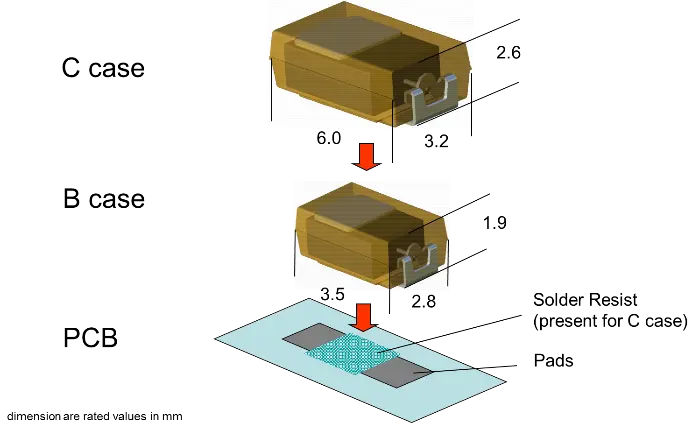
Before approving an alternative case size, compare electrical ratings, capacitance tolerance, ESR, ripple capability, surge restrictions, polarity marking, height, termination geometry and the resulting solder joints. Any potential purchasing benefit must be assessed alongside qualification effort and assembly yield. A solder-mask change alone does not establish electrical or mechanical equivalence.
Component geometry and board-bending stress
Leadless ceramic chips are directly coupled to PCB movement through their terminations and solder joints. Their position and orientation therefore matter during board bending, thermal cycling and assembly. Figure 7 illustrates the original orientation guidance; the actual stress direction must be assessed for the board and process in question. [1]
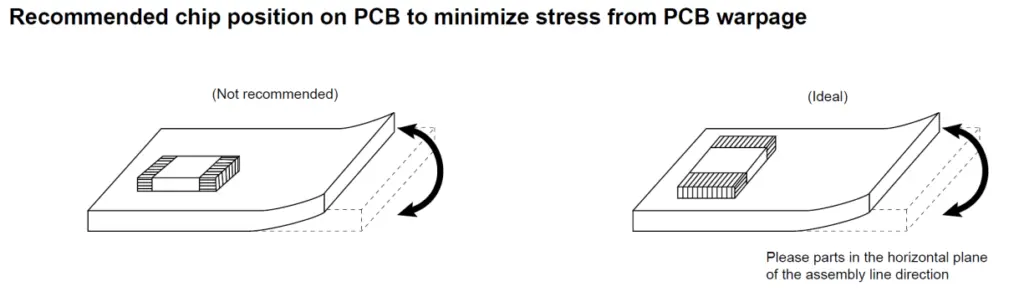
A shorter distance between opposing terminations can reduce the differential movement imposed over that distance, but package proportions do not guarantee improved mechanical strength, electrical performance and cooling simultaneously. Reverse-geometry devices place terminations on the longer sides of the body and can offer useful electrical or thermal characteristics; their mounting and cleaning requirements still need separate evaluation.
Where board flex is a significant risk, consider suitable stress-relieving termination constructions as part of component selection. Such constructions do not eliminate the need for correct land patterns, board support and process control.
Placement near board-separation lines
Depanelisation can impose bending and twisting loads on components close to a separation line. Keep mechanically sensitive chips away from high-strain locations where practical, consider their orientation and review the panel’s tabs, slots and separation method. Figure 8 preserves the original layout comparison.
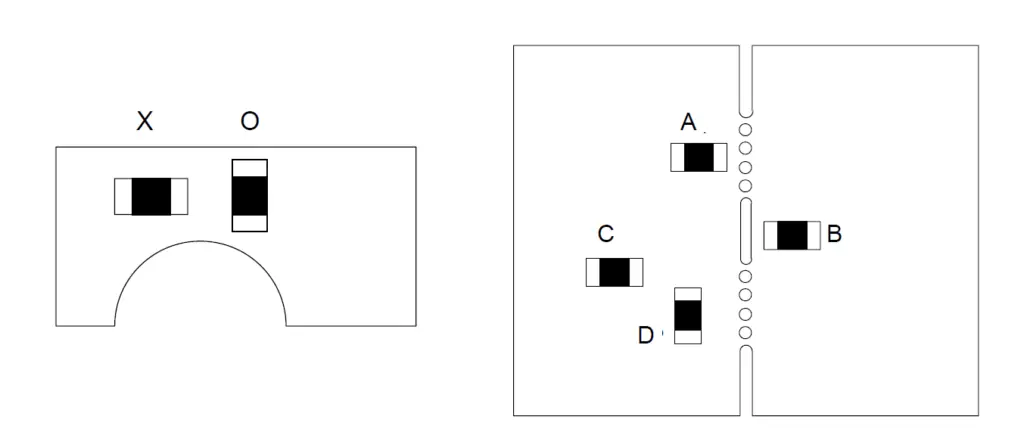
Do not apply a universal risk ranking to the lettered arrangements independently of the separation process. Murata’s mounting guidance specifically notes that an orientation advantage under hand-separation loading need not remain valid with a cutting disc, where the stress direction differs. A supported router-type separation process can reduce the bending associated with breaking a board by hand. [1]
Thermal paths and mechanical compliance
SMD solder joints and PCB copper can provide important heat-conduction paths. However, an SMD package is not automatically cooler than a leaded equivalent: temperature depends on internal losses, construction, copper distribution, airflow, enclosure conditions and neighbouring heat sources. For power and SMPS assemblies, verify the actual component and terminal temperatures under the intended load. [2]
Where thermal spreading is needed, coordinate the copper design with the required land pattern and soldering process rather than simply enlarging the solderable pads. For resistors, capacitors and magnetics, use the exact part’s derating information and reference conditions.
Not all SMD components have flexible leads. Leadless chips, compliant-termination parts and leaded surface-mount packages accommodate movement differently. Large or tall components may also require mechanical retention, but the retention method must not introduce excessive thermal-expansion stress or obstruct inspection, cleaning or a safety mechanism.
Component Spacing
Component spacing serves several purposes: soldering access, inspection, rework, cooling, mechanical clearance and electrical insulation. These requirements must be checked separately rather than reduced to one minimum gap.
For wave-soldered assemblies, component position and separation must allow solder access and avoid shadowing and bridging. Reflow does not remove the need for spacing: placement tolerances, solder-joint inspection, cleaning and rework still require access. Check component-body tolerances and overhangs as well as nominal pad-to-pad distances.
For mains-connected, high-voltage or safety-related power assemblies, determine electrical spacing from the applicable equipment standard and insulation-coordination requirements. Clearance concerns the path through air; creepage concerns the path along an insulating surface. Neither is established by a universal 0.5 mm component gap.
IEC 60664-1:2020 with Amendment 1:2025 provides an insulation-coordination framework for equipment within low-voltage supply systems. Its stated scope includes frequencies up to 30 kHz, so it must not be treated as an unrestricted spacing rule for every high-frequency SMPS waveform. Select the applicable equipment and insulation requirements for the actual operating conditions. [5]
Also consider electrically exposed component cases. A standard electrolytic-capacitor sleeve or housing coating must not be assumed to provide functional insulation throughout service life. Additional insulation measures may be required where a capacitor contacts another component, a clamp, an enclosure or conductors beneath its body. [2]
Pad Layout Considerations for Proper PCB Cleaning
Cleaning access is a layout parameter, not merely a final manufacturing operation. Where residues must be removed, the assembly must permit the cleaning chemistry, rinse and drying process to reach the relevant surfaces, including those beneath components. Restricted gaps and difficult package geometries require particular attention. [4]
Residues, leakage and conductive growth
Residues beneath a component can be difficult to inspect and remove. In combination with moisture, electrical bias and susceptible materials, contamination can contribute to leakage and electrochemical migration. Figures 9 and 10 retain the original examples of under-component residue and conductive growth.


The required cleanliness and validation approach depend on the application. High-impedance signal circuits can be sensitive to small leakage paths, while power and high-voltage assemblies must also address insulation performance and the consequences of conductive contamination. Harsh-environment and mission-critical equipment require a cleaning or no-clean process qualified for the relevant service conditions.
- A “no-clean” paste designation does not, by itself, establish suitability for every board, environment or subsequent coating process.
- Low stand-off and narrow gaps restrict access beneath components.
- Long channels can be more difficult to wash, rinse and dry than open, short flow paths.
- Component orientation, nearby obstacles and the arrangement of terminations can determine whether the process reaches a trapped residue.
- Validate the assembled board and selected process; visual cleanliness of accessible surfaces does not demonstrate cleanliness beneath every component. [4]
Figure 11 illustrates the original examples of layouts that make cleaning more difficult. Review these restrictions while the footprint and component arrangement can still be changed.

Reverse-geometry and multi-terminal components
Reverse-geometry and multi-terminal components can solve electrical or thermal problems while introducing a different manufacturing constraint. Their terminations may divide the available under-body space into narrow or obstructed channels. Review the actual package geometry rather than assuming that a small body is easy to clean. [4]
Figure 12 shows the original reverse-geometry resistor example. A long, restricted channel beneath the body can limit cleaning-fluid exchange even when the exposed board surface is accessible.

Figure 13 shows a three-terminal MLCC example. Multiple terminations can interrupt flow beneath the component, so cleaning access must be checked alongside the intended noise-suppression function.
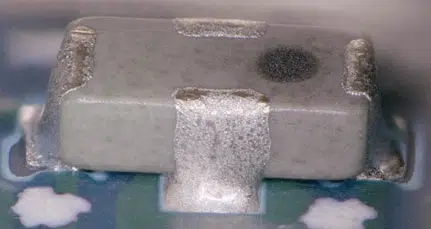
Figure 14 retains the automotive inverter example of a bleeder-resistor network. Dense resistor arrangements can support compact assembly, but the cleaning process must still reach the relevant gaps and remove or safely accommodate residues under the intended electrical and environmental conditions.

For further design guidance, consult the PBT Works cleaning-layout resource in Reference [4]. Cleaning chemistry and equipment settings must also remain compatible with the component. In particular, excessive ultrasonic excitation can cause board resonance, cracked ceramic chips or damaged solder joints; qualify the process before production. [1]
Component Handling
Handling controls must protect against contamination, mechanical damage, electrostatic stress and stored electrical energy. Apply the controls required by the exact component and assembly rather than assuming that all passive components have the same sensitivity.
Contamination and mechanical damage
Handle exposed, non-hermetic components with suitable tools and clean procedures. Avoid contaminating terminations with perspiration, skin oils or process residues. Use appropriately sized tweezers or vacuum tools without squeezing a brittle body or damaging its coating.
For bulk and automated handling, minimise abrasion, impact and uncontrolled movement. Tape-and-reel packaging provides controlled presentation to placement equipment, but feeder setup and component pickup still require verification. Do not return dropped ceramic chips to production stock without an approved disposition: mechanical damage may not be externally visible. [1]
Multi-lead components and coplanarity
Maintain the specified terminal coplanarity of multi-lead components, including surface-mount film capacitors and passive arrays. A termination that does not seat correctly can produce an inadequate joint even when the remaining terminations appear acceptable. Avoid unapproved lead reshaping during cleaning, placement or rework.
For leaded parts, support the body during handling rather than pulling on the terminals. Check that the package is stable during placement and that the board support arrangement does not load adjacent components.
Stored charge and power-capacitor installation
Capacitors may remain charged after the supply is disconnected, including when an installed discharge device has failed. Before handling an energy-storage or power-capacitor assembly, isolate its sources, follow the equipment’s approved discharge procedure and verify the terminal voltage with suitable equipment. Do not use an uncontrolled direct short as the initial discharge method. [8]
Where the manufacturer requires a shorting or grounding connection after discharge, apply it as part of the specified safe-work procedure. Do not use a single voltage threshold to decide whether a capacitor is harmless: the equipment, accessible conductors and stored energy must all be considered.
For impregnated and other large power capacitors, follow the exact construction’s mounting-position instructions. A universal terminals-up rule is not appropriate. The position of the pressure-relief device, electrolyte or impregnant system, and protective disconnector can determine which orientations are permitted. [2, 8]
In capacitor banks, provide the required cooling space and avoid mechanically constraining a vent or disconnector. Size cables, busbars and terminal connections for the specified current and permissible temperature rise. Use flexible connections where the installation instructions require movement, and observe the specified terminal and mounting torque. [2, 8]
Electrostatic discharge precautions
Some passive components are ESD-sensitive. Thin-film resistors are a relevant example: manufacturer datasheets can explicitly require precautions for electrostatic-sensitive devices. Use the sensitivity information for the selected series rather than inferring immunity from the word “passive”. [6]
For identified ESD-sensitive parts, use the approved ESD-controlled workstation, packaging, tools and personnel-grounding procedure. Gloves or finger cots used for cleanliness do not replace an ESD-control system. Personnel-grounding arrangements must also be compatible with the electrical safety requirements of the work being performed.
Large capacitance alone does not justify omitting all handling precautions. Check the component’s permitted transient stress and the requirements of the complete assembly, including any ESD-sensitive semiconductors already mounted on the board.
Moisture-sensitive handling and floor life
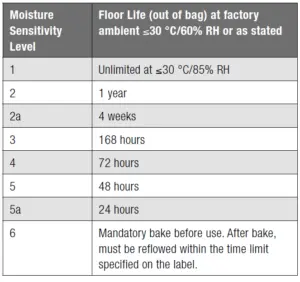
For components assigned a moisture sensitivity level, follow the manufacturer’s packaging label and the applicable IPC/JEDEC J-STD-033 handling process. Revision D addresses handling, packing, shipping and use of moisture-, reflow- and process-sensitive devices. Moisture absorption followed by soldering heat can damage a susceptible package. [7]
Figures 15 and 16 retain the original humidity-indicator and caution-label examples. These illustrations accompany the article’s historical revision-C material; the applicable production instructions and package label govern current handling.
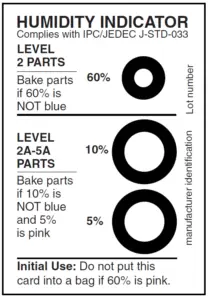
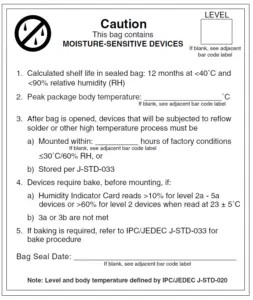
Track exposure after opening the moisture-barrier bag and process the parts within their permitted floor life. When exposure limits are exceeded, use the approved recovery procedure for the component and packaging materials. Do not apply a generic baking schedule to every passive component.
Pick & Place
Placement and subsequent assembly operations can bend a PCB even when they do not directly touch a sensitive chip. Control nozzle travel, contact load and board support so that the process does not transfer excessive stress into mounted components. [1]
Placement force and board support
Large or thin boards can deflect under a placement nozzle. Set the machine for the actual component height and board surface, maintain the nozzle mechanism, and use an approved support arrangement beneath the board. Figure 18 illustrates the use of support pins to limit deflection.
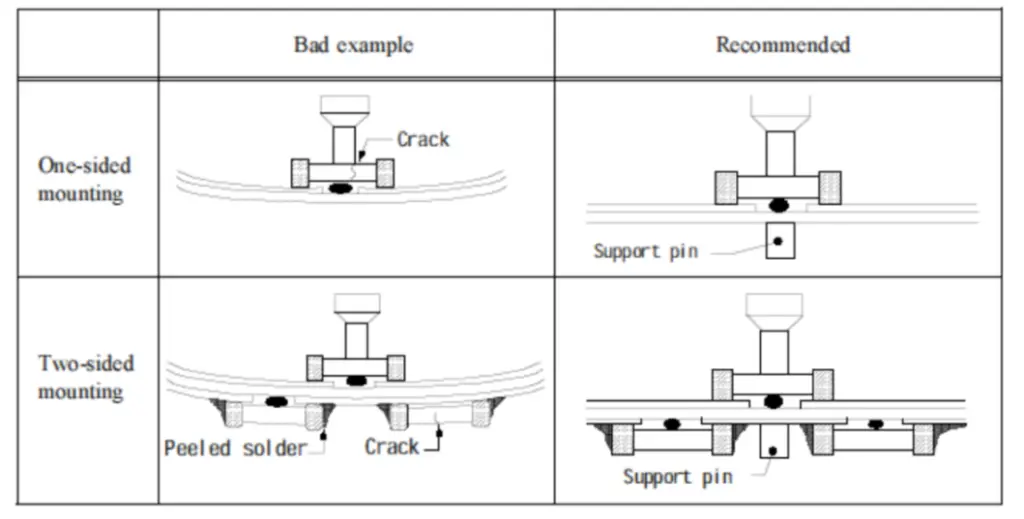
Placement speed alone is not the acceptance criterion. Check the combination of contact force, nozzle overtravel, support location, component geometry and equipment condition. Dirt or wear in the pickup mechanism can introduce abnormal forces even when the programmed placement coordinates are correct. [1]
Electrical test and probe loading
Electrical test probes can impose concentrated loads that bend the PCB and damage ceramic chips or solder joints. Place support near the applied probe load where practical, while keeping supports clear of components and other vulnerable features. Figure 19 illustrates the original test-loading example. [1]
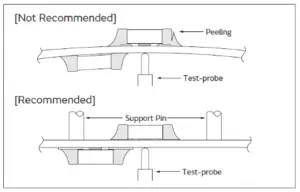
Confirm the fixture and support-pin positions before testing, and avoid an impact when the probe contacts the board. A fixture must support the assembly without forcing a warped board flat or applying load directly to an underside component.
Placement of nearby and opposite-side components
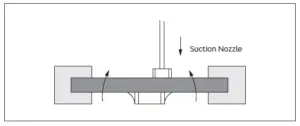
Placing another component nearby, or on the opposite side, can bend the board beneath an already mounted MLCC. If the nozzle’s lowest position is set too low, the placement operation can impose deflection stress on bottom-side components. Establish the nozzle reference against the correctly supported board and periodically check the setting. [1]
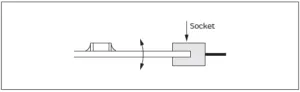
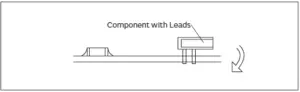
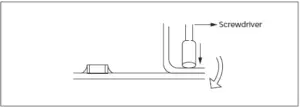
Figures 20–23 preserve the four illustrations associated with the original nearby-component placement discussion.
Insertion of leaded components and connectors
Inserting a transformer, connector or another large leaded component can bend the board and damage components already fitted. Use hole dimensions compatible with the lead tolerances and required solder joint, rather than forcing a tight insertion. Any proposed hole enlargement must remain consistent with the PCB and soldering requirements. [1]
Support the PCB with a dedicated fixture or suitable pins before insertion. Check support height and condition during production so that the support arrangement does not itself distort the board. Apply the same principle when inserting or removing sockets and connectors: react the mating force locally instead of allowing the PCB to flex.
Screw tightening and final mechanical assembly
Fastening a PCB to a chassis or shield can introduce bending if the supports are not coplanar, the board is already warped or the screws are overtightened. Use the specified tightening torque and a controlled assembly sequence. Keep sensitive ceramic components away from mechanically stressed fixing locations where practical. [1]
Do not force a reflow-warped board flat with its mounting screws. Review the board, supports and enclosure as one mechanical system, including any loads introduced by cables, heatsinks and connectors.
PCB Component Layout: Design and Selection Checklist
A production-ready layout review must connect component selection with the assembly process and service environment. Record the evidence for each check so that substitutions and later process changes can be assessed against the same requirements.
- Application and qualification: identify whether the assembly is a low-voltage signal board, power or SMPS board, automotive module or safety-related product. Confirm that the selected component is approved for the intended application; a generic family description is not sufficient. [1]
- Electrical ratings: compare nominal value, tolerance, operating voltage, current, pulse stress, losses and relevant temperature dependence. Check the parameters that apply to the actual circuit function rather than nominal value alone.
- Package and footprint: check the exact manufacturer drawing, body and termination tolerances, polarity, land pattern, solder-mask definition, stencil design and approved soldering method. [1, 3]
- Thermal performance: verify derating and installed temperature with the intended copper, airflow, enclosure and neighbouring heat sources. Check capacitor ripple-current conditions and terminal connections where relevant. [2]
- Mechanical integrity: review lead forming, body retention, placement loads, test fixtures, depanelisation, connector forces and screw tightening. For high-risk assemblies, include board-strain assessment in process qualification.
- Cleaning and coating: confirm access beneath components, material compatibility, rinsing and drying. Validate any no-clean approach or subsequent coating process for the application. [3, 4]
- Handling and storage: document ESD precautions, packaging, storage limits, solderability checks and any assigned moisture-sensitive floor life. [1, 6, 7]
- Safety: determine the applicable insulation requirements, preserve vent and disconnector access, and document safe discharge and verification for stored-energy circuits. [2, 5, 8]
- Catalogue versus custom parts: prefer a documented catalogue construction when it meets the requirements. For custom magnetics, capacitors or lead forms, agree the mechanical drawing, termination arrangement, processing limits, qualification plan and change-control responsibilities before release.
- Substitution control: qualify an alternative manufacturer, case size or termination construction against the installed assembly. Matching capacitance, resistance or inductance does not establish footprint, thermal, cleaning or mechanical equivalence.
Conclusion
Reliable passive-component assembly requires more than correct electrical values. Lead preparation, pad geometry, component orientation, cooling, cleaning access and board support all influence whether a component survives manufacturing and remains reliable in service.
Use the exact component’s drawings and processing limits, separate assembly clearances from electrical insulation requirements, and qualify the complete manufacturing sequence. Preventing board flex and trapped contamination during design is more effective than attempting to correct their consequences after assembly.
FAQ
These questions address common layout and assembly decisions for passive components. The exact component specification and the applicable equipment requirements remain the basis for production approval.
Start with the recommended land pattern for the exact component and approved soldering method. Check termination tolerances, pad separation, solder-mask openings and stencil apertures with the assembler. Do not apply one fixed overlap or pad-width percentage to every package. Qualify the resulting solder joints on the intended PCB rather than assuming that a larger fillet is better.
MLCCs can crack when PCB bending transfers stress through their solder joints into the ceramic body. Relevant operations include placement, electrical testing, depanelisation, connector insertion and screw tightening. Excess solder can increase mechanical constraint. Reduce the risk with suitable positioning, controlled solder volume, maintained placement equipment and support close to the applied assembly or test load.
No-clean describes a process material, not automatic approval for every finished assembly. The decision depends on the residues, electrical conditions, environment and any subsequent coating process. Low stand-off components and restricted channels can make residue removal difficult. Qualify either the cleaning process or the decision to leave residues in place for the intended application.
There is no universal component gap that satisfies assembly, cooling, rework and electrical safety requirements. Determine each requirement separately. Mains-connected and high-voltage circuits require the applicable creepage, clearance and insulation assessment. Also check exposed cases, component tolerances, pressure-relief access and cleaning paths. A convenient assembly gap must not be treated as a safety-insulation rule.
Not without checking the parameters relevant to the installed assembly. Compare electrical ratings, losses, temperature behaviour, package tolerances, termination construction, soldering limits and qualification. A different case size or manufacturer can also change mechanical stress and cleaning access. Approve the alternative against the circuit and manufacturing process, rather than nominal capacitance, resistance or inductance alone.
How to Review Passive-Component Layout Before Production
Use this review before releasing a new board or approving a component substitution. Complete the checks jointly with the component, PCB and assembly requirements available.
Review the component, footprint, spacing, cleaning access and mechanical assembly process before production release.
- Confirm the component and application
Identify the exact part number, intended circuit function and service environment. Check that the electrical ratings and application qualification match the design.
- Review the footprint and assembly process
Compare the manufacturer drawing with the PCB footprint. Check lead or termination tolerances, polarity, solder-mask openings, stencil design and permitted soldering conditions.
- Check spacing and cleaning access
Review assembly clearances, electrical insulation, cooling, vent access and rework space separately. Identify restricted gaps and confirm that the cleaning or no-clean process is suitable.
- Control mechanical loads
Review placement, electrical testing, depanelisation, lead insertion, connector mating and screw tightening. Define board support and component retention so that these operations do not impose excessive bending.
- Validate and document the assembly
Confirm installed temperatures, solder joints, cleaning performance and handling controls on representative assemblies. Record the approved parts, process limits and substitution requirements before production release.
Further Reading
These background articles explain the component technologies and selection parameters that underpin the mounting and handling decisions discussed here.
- MLCC and Ceramic Capacitors — construction, dielectric behaviour and termination options relevant to ceramic-component selection.
- Film and Foil Organic Dielectric Capacitors — construction and application differences relevant to package choice and processing.
- Resistor Types, Ratings, Applications and Selection — electrical, thermal, pulse and voltage checks for resistor selection.
- Capacitor Fundamentals — capacitor technologies, charge storage and principal circuit functions.
References
The following sources support the component-processing, cleaning and safety guidance. Product-specific limits apply only to the parts and conditions identified in their respective documents.
- Murata Manufacturing, GRM188R60J226ME15 Reference Sheet: Chip Multilayer Ceramic Capacitors, Murata Manufacturing, 2025. Mounting, solder quantity, cleaning, testing, depanelisation and mechanical assembly precautions.
- TDK Electronics, Aluminum Electrolytic Capacitors: General Technical Information, TDK Electronics, 2026. Thermal behaviour, insulation, mounting and installation guidance.
- Epec Engineered Technologies, Solder Mask Design Basics, Epec Engineered Technologies, undated. Mask geometry, registration, process compatibility and layout considerations.
- PBT Works, Design PCBA for Cleaning, PBT Works, undated. Under-component gaps and package configurations that complicate cleaning.
- International Electrotechnical Commission, IEC 60664-1:2020+AMD1:2025: Insulation Coordination for Equipment within Low-Voltage Supply Systems — Part 1: Principles, Requirements and Tests, IEC, 2025. Consolidated edition; scope and insulation-coordination framework.
- Vishay Dale Thin Film, PLT: Precision Low TCR Thin Film Resistor, Surface Mount Chip, Vishay Intertechnology, 2026. Example of a passive-component datasheet requiring electrostatic-sensitive-device handling precautions.
- IPC and JEDEC, IPC/JEDEC J-STD-033D: Handling, Packing, Shipping and Use of Moisture, Reflow, and Process Sensitive Devices, IPC/JEDEC, 2018. Moisture-sensitive-device handling framework.
- EPCOS/TDK Electronics, PhaseCap Compact Capacitors: B25673A9252A000, Cautions and Warnings, EPCOS, 2012, with subsequent withdrawal notice. Historical installation and discharge precautions for power-factor-correction capacitors; not a current product-selection recommendation.