












Passive Components Blog
No Result
View All Result
  • Home
  • NewsFilter
    • All
    • Aerospace & Defence
    • Antenna
    • Applications
    • Automotive
    • Capacitors
    • Circuit Protection Devices
    • electro-mechanical news
    • Filters
    • Fuses
    • Inductors
    • Industrial
    • Integrated Passives
    • inter-connect news
    • Market & Supply Chain
    • Market Insights
    • Medical
    • Modelling and Simulation
    • New Materials & Supply
    • New Technologies
    • Non-linear Passives
    • Oscillators
    • Passive Sensors News
    • Resistors
    • RF & Microwave
    • Telecommunication
    • Weekly Digest

    Rubycon PMLCAP DC‑Link Film Capacitors in Mass Production

    Bourns SSD‑1000A AEC‑Q Digital Current Sensors

    YAGEO High‑Capacitance X7R Automotive MLCC Extensions

    How Metal Prices Are Driving Passive Component Price Hikes

    Modelithics COMPLETE Library v25.8 for Keysight ADS

    Taiyo Yuden Releases 165C Automotive Multilayer Metal Power Inductor in 1608 Size

    Energy-Controlled Structural Evolution of Amorphous Ta₂O₅ in Tantalum Anodes

    Jianghai Vibration‑Resistant Aluminum Capacitors Guidelines for Industrial Electronics

    2025 Top Passive Components Blog Articles

    Trending Tags

    • Ripple Current
    • RF
    • Leakage Current
    • Tantalum vs Ceramic
    • Snubber
    • Low ESR
    • Feedthrough
    • Derating
    • Dielectric Constant
    • New Products
    • Market Reports
  • VideoFilter
    • All
    • Antenna videos
    • Capacitor videos
    • Circuit Protection Video
    • Filter videos
    • Fuse videos
    • Inductor videos
    • Inter-Connect Video
    • Non-linear passives videos
    • Oscillator videos
    • Passive sensors videos
    • Resistor videos

    One‑Pulse Characterization of Nonlinear Power Inductors

    Thermistor Linearization Challenges

    Coaxial Connectors and How to Connect with PCB

    PCB Manufacturing, Test Methods, Quality and Reliability

    Transformer Behavior – Current Transfer and Hidden Feedback

    Choosing the Right Capacitor: The Importance of Accurate Measurements

    RF Inductors: Selection and Design Challenges for High-Frequency Circuits

    Transformer Safety IEC 61558 Standard

    3-Phase EMI Filter Design, Simulation, Calculation and Test

    Trending Tags

    • Capacitors explained
    • Inductors explained
    • Resistors explained
    • Filters explained
    • Application Video Guidelines
    • EMC
    • New Products
    • Ripple Current
    • Simulation
    • Tantalum vs Ceramic
  • Knowledge Blog
  • Suppliers
    • Who is Who
  • PCNS
    • PCNS 2025
    • PCNS 2023
    • PCNS 2021
    • PCNS 2019
    • PCNS 2017
  • Events
  • Home
  • NewsFilter
    • All
    • Aerospace & Defence
    • Antenna
    • Applications
    • Automotive
    • Capacitors
    • Circuit Protection Devices
    • electro-mechanical news
    • Filters
    • Fuses
    • Inductors
    • Industrial
    • Integrated Passives
    • inter-connect news
    • Market & Supply Chain
    • Market Insights
    • Medical
    • Modelling and Simulation
    • New Materials & Supply
    • New Technologies
    • Non-linear Passives
    • Oscillators
    • Passive Sensors News
    • Resistors
    • RF & Microwave
    • Telecommunication
    • Weekly Digest

    Rubycon PMLCAP DC‑Link Film Capacitors in Mass Production

    Bourns SSD‑1000A AEC‑Q Digital Current Sensors

    YAGEO High‑Capacitance X7R Automotive MLCC Extensions

    How Metal Prices Are Driving Passive Component Price Hikes

    Modelithics COMPLETE Library v25.8 for Keysight ADS

    Taiyo Yuden Releases 165C Automotive Multilayer Metal Power Inductor in 1608 Size

    Energy-Controlled Structural Evolution of Amorphous Ta₂O₅ in Tantalum Anodes

    Jianghai Vibration‑Resistant Aluminum Capacitors Guidelines for Industrial Electronics

    2025 Top Passive Components Blog Articles

    Trending Tags

    • Ripple Current
    • RF
    • Leakage Current
    • Tantalum vs Ceramic
    • Snubber
    • Low ESR
    • Feedthrough
    • Derating
    • Dielectric Constant
    • New Products
    • Market Reports
  • VideoFilter
    • All
    • Antenna videos
    • Capacitor videos
    • Circuit Protection Video
    • Filter videos
    • Fuse videos
    • Inductor videos
    • Inter-Connect Video
    • Non-linear passives videos
    • Oscillator videos
    • Passive sensors videos
    • Resistor videos

    One‑Pulse Characterization of Nonlinear Power Inductors

    Thermistor Linearization Challenges

    Coaxial Connectors and How to Connect with PCB

    PCB Manufacturing, Test Methods, Quality and Reliability

    Transformer Behavior – Current Transfer and Hidden Feedback

    Choosing the Right Capacitor: The Importance of Accurate Measurements

    RF Inductors: Selection and Design Challenges for High-Frequency Circuits

    Transformer Safety IEC 61558 Standard

    3-Phase EMI Filter Design, Simulation, Calculation and Test

    Trending Tags

    • Capacitors explained
    • Inductors explained
    • Resistors explained
    • Filters explained
    • Application Video Guidelines
    • EMC
    • New Products
    • Ripple Current
    • Simulation
    • Tantalum vs Ceramic
  • Knowledge Blog
  • Suppliers
    • Who is Who
  • PCNS
    • PCNS 2025
    • PCNS 2023
    • PCNS 2021
    • PCNS 2019
    • PCNS 2017
  • Events
No Result
View All Result
Passive Components Blog
No Result
View All Result

Smiths Interconnect Expands Cable Harness Production Capacity

2.4.2025
Reading Time: 3 mins read
A A

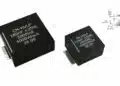
Smiths Interconnect announces the expansion of its cable harness production capacity at its facility in Tunisia.

This strategic move is aimed at meeting the growing demand for high-quality cable harness solutions across various industries and strengthening Smiths Interconnect’s product offering with an investment for growth in support of all EMEA production sites. 

RelatedPosts

Smiths Interconnect Extends Space-Qualified, High-Reliability Fixed Chip Attenuators 

RF mmWave Resistive and Wilkinson Power Dividers for Space Applications

A cable harness is an assembly of electrical cables or wires which are bound together to transmit signals or electrical power. They are crucial connectivity systems integral to a wide range of products in sectors including aerospace, defence, and automotive, and construction machinery. The ultra high-performance electronic products designed by Smiths Interconnect are purpose built for use in harsh environments where connectivity is required on a continued and consistent basis with high performance.

The expansion of Smiths Interconnect’s capabilities includes the addition of state-of-the-art manufacturing equipment and the implementation of advanced production processes. This enables customers to improve their value chain by reducing the number of suppliers required to provide connectors and cable assembly; with a one-stop-shop to deliver connectors with cable harnessed to it. This reduces lead times and supports sustainability through less movement of goods and packaging.

Mark Kelleher, Connectors BU Director at Smiths Interconnect, said: “The expansion of our cable harness capacity allows Smiths Interconnect to become a one-stop-shop for our customers, reducing their supply chain, simplifying their processes and lowering costs. By improving our cable harness and assembly capability we offer complete connectivity solutions of tested cabled connectors eliminating a double procurement process.”

The full manufacturing process includes:

  • Cutting and Stripping: We use automated cutting machines to ensure each wire is cut to the precise length required by the specification. Advanced stripping tools are employed to remove the insulation from the wire ends, ensuring high-quality connections in subsequent stages.
  • Crimping: Our crimping process creates solid mechanical connections between wires and contact terminations. We use both semi-automatic and manual crimping machines to ensure high precision and quality in every crimp.
  • Soldering: We perform both automatic and manual soldering to ensure strong, conductive joints, adhering strictly to IPC standards. Each solder joint undergoes a visual inspection to detect any potential defects.
  • Overmoulding: To protect the integrity of our cable harnesses, we offer overmoulding, which involves encapsulating the wires, terminations, and connectors with a durable material. This provides additional protection against moisture, abrasion, and environmental conditions.
  • Ink Printing for Marking: After production, each cable, wire, or connector is clearly marked for easy identification, traceability, and compliance with customer specifications.
  • Quality Testing and Inspection: Our cable harnesses undergo rigorous testing and inspection at multiple stages, including electrical continuity and pull-out tests, as well as visual, mechanical, and measurement inspections.

We have specialized personnel certified according to IPC A-620 for cable assembly and IPC J-STD-001 for soldering procedures. The addition of the cable assembly department at our Tunisian site enables Smiths Interconnect to specialize in manufacturing and testing cabling for signal, data transmission, hybrid, armoured and power, as well as coaxial, twinax, triax, and quadrax, Mil-Spec and D-sub connectors for aerospace, defence, transportation, and industrial applications.

From small to large volume capacities, we offer complete interconnect assemblies that leverage our high-reliability connectors with qualified cable solutions. This increased capacity enables us to better serve our global customer base and support their evolving needs by providing qualified cables and connectors in a unique, integrated solution.

Related

Source: Smith Interconnect

Recent Posts

How Metal Prices Are Driving Passive Component Price Hikes

8.1.2026
109

2025 Top Passive Components Blog Articles

5.1.2026
79

Exxelia Releases Custom Smart Integrated Magnetics for Space Applications

5.1.2026
37

Coaxial Connectors and How to Connect with PCB

17.12.2025
103

PCB Manufacturing, Test Methods, Quality and Reliability

17.12.2025
72

Littelfuse Completes Acquisition of Basler Electric

12.12.2025
37

Molex Introduces Modular Wire-to-Wire Automotive Connectors

11.12.2025
15

YAGEO Achieved a Record Revenue in November on Strong AI Demand

10.12.2025
74

Murata Releases World’s First Inner Cavity-Structure Ultra-Low-Loss LCP Flexible Substrate

10.12.2025
82

Upcoming Events

Jan 27
16:00 - 17:00 CET

Simplifying Vehicle Development with Automotive Ethernet and Zonal Smart Switch Technologies

Feb 24
16:00 - 17:00 CET

Designing Qi2 Wireless Power Systems: Practical Development and EMC Optimization

View Calendar

Popular Posts

  • Buck Converter Design and Calculation

    0 shares
    Share 0 Tweet 0
  • Boost Converter Design and Calculation

    0 shares
    Share 0 Tweet 0
  • LLC Resonant Converter Design and Calculation

    0 shares
    Share 0 Tweet 0
  • Flyback Converter Design and Calculation

    0 shares
    Share 0 Tweet 0
  • Ripple Current and its Effects on the Performance of Capacitors

    3 shares
    Share 3 Tweet 0
  • What Electronics Engineer Needs to Know About Passive Low Pass Filters

    0 shares
    Share 0 Tweet 0
  • MLCC and Ceramic Capacitors

    0 shares
    Share 0 Tweet 0
  • Dual Active Bridge (DAB) Topology

    0 shares
    Share 0 Tweet 0
  • SEPIC Converter Design and Calculation

    0 shares
    Share 0 Tweet 0
  • What is a Dielectric Constant and DF of Plastic Materials?

    4 shares
    Share 4 Tweet 0

Newsletter Subscription


Passive Components Blog

© EPCI - Leading Passive Components Educational and Information Site

  • Home
  • Privacy Policy
  • EPCI Membership & Advertisement
  • About

No Result
View All Result
  • Home
  • Knowledge Blog
  • PCNS

© EPCI - Leading Passive Components Educational and Information Site

This website uses cookies. By continuing to use this website you are giving consent to cookies being used. Visit our Privacy and Cookie Policy.
Go to mobile version