


Passive Components Blog
No Result
View All Result
  • Home
  • NewsFilter
    • All
    • Aerospace & Defence
    • Antenna
    • Applications
    • Automotive
    • Capacitors
    • Circuit Protection Devices
    • electro-mechanical news
    • Filters
    • Fuses
    • Inductors
    • Industrial
    • Integrated Passives
    • inter-connect news
    • Market & Supply Chain
    • Market Insights
    • Medical
    • Modelling and Simulation
    • New Materials & Supply
    • New Technologies
    • Non-linear Passives
    • Oscillators
    • Passive Sensors News
    • Resistors
    • RF & Microwave
    • Telecommunication
    • Weekly Digest

    Molecular Memristor Shows Record 145 kH Emergent Inductance

    Planar vs Conventional Transformer: When it Make Sense

    Researchers Propose Next‑Gen Compact Memory Using Ultra-thin Ferroelectric Capacitors

    Nichicon ADN Automotive Hybrid Aluminum Capacitors Now Available in EMEA

    Wk 19 Electronics Supply Chain Digest

    Electrocaloric Multilayer Capacitors: Towards Quiet, Solid‑State Cooling Around Room Temperature

    High-Crystallinity Nanocrystalline Composites for MHz Chip Inductors

    European Components Distribution Shows Strong Q1 2026 Growth Amid Geopolitical Uncertainty

    Stackpole Expanded its AlN Thick Film Chip Resistors

    Trending Tags

    • Ripple Current
    • RF
    • Leakage Current
    • Tantalum vs Ceramic
    • Snubber
    • Low ESR
    • Feedthrough
    • Derating
    • Dielectric Constant
    • New Products
    • Market Reports
  • VideoFilter
    • All
    • Antenna videos
    • Capacitor videos
    • Circuit Protection Video
    • Filter videos
    • Fuse videos
    • Inductor videos
    • Inter-Connect Video
    • Non-linear passives videos
    • Oscillator videos
    • Passive sensors videos
    • Resistor videos

    Planar vs Conventional Transformer: When it Make Sense

    Modeling Fringing Field Losses in Inductors & Transformers

    Why Power Inductors Use a Ferrite Core With an Air Gap

    Transformer-Based Power-Line Harvester Magnetic Design

    Thermal Modeling of Magnetics

    Standard vs Planar LLC transformers Comparison for Battery Chargers

    How Modern Tools Model Magnetic Components for Power Electronics

    Advanced Loss Modeling for Planar Magnetics in the Frenetic Planar Tool

    2026 Power Magnetics Design Trends: Flyback, DAB and Planar

    Trending Tags

    • Capacitors explained
    • Inductors explained
    • Resistors explained
    • Filters explained
    • Application Video Guidelines
    • EMC
    • New Products
    • Ripple Current
    • Simulation
    • Tantalum vs Ceramic
  • Knowledge Blog
  • DossiersNew
  • Suppliers
    • Who is Who
  • PCNS
    • PCNS 2025
    • PCNS 2023
    • PCNS 2021
    • PCNS 2019
    • PCNS 2017
  • Events
  • Home
  • NewsFilter
    • All
    • Aerospace & Defence
    • Antenna
    • Applications
    • Automotive
    • Capacitors
    • Circuit Protection Devices
    • electro-mechanical news
    • Filters
    • Fuses
    • Inductors
    • Industrial
    • Integrated Passives
    • inter-connect news
    • Market & Supply Chain
    • Market Insights
    • Medical
    • Modelling and Simulation
    • New Materials & Supply
    • New Technologies
    • Non-linear Passives
    • Oscillators
    • Passive Sensors News
    • Resistors
    • RF & Microwave
    • Telecommunication
    • Weekly Digest

    Molecular Memristor Shows Record 145 kH Emergent Inductance

    Planar vs Conventional Transformer: When it Make Sense

    Researchers Propose Next‑Gen Compact Memory Using Ultra-thin Ferroelectric Capacitors

    Nichicon ADN Automotive Hybrid Aluminum Capacitors Now Available in EMEA

    Wk 19 Electronics Supply Chain Digest

    Electrocaloric Multilayer Capacitors: Towards Quiet, Solid‑State Cooling Around Room Temperature

    High-Crystallinity Nanocrystalline Composites for MHz Chip Inductors

    European Components Distribution Shows Strong Q1 2026 Growth Amid Geopolitical Uncertainty

    Stackpole Expanded its AlN Thick Film Chip Resistors

    Trending Tags

    • Ripple Current
    • RF
    • Leakage Current
    • Tantalum vs Ceramic
    • Snubber
    • Low ESR
    • Feedthrough
    • Derating
    • Dielectric Constant
    • New Products
    • Market Reports
  • VideoFilter
    • All
    • Antenna videos
    • Capacitor videos
    • Circuit Protection Video
    • Filter videos
    • Fuse videos
    • Inductor videos
    • Inter-Connect Video
    • Non-linear passives videos
    • Oscillator videos
    • Passive sensors videos
    • Resistor videos

    Planar vs Conventional Transformer: When it Make Sense

    Modeling Fringing Field Losses in Inductors & Transformers

    Why Power Inductors Use a Ferrite Core With an Air Gap

    Transformer-Based Power-Line Harvester Magnetic Design

    Thermal Modeling of Magnetics

    Standard vs Planar LLC transformers Comparison for Battery Chargers

    How Modern Tools Model Magnetic Components for Power Electronics

    Advanced Loss Modeling for Planar Magnetics in the Frenetic Planar Tool

    2026 Power Magnetics Design Trends: Flyback, DAB and Planar

    Trending Tags

    • Capacitors explained
    • Inductors explained
    • Resistors explained
    • Filters explained
    • Application Video Guidelines
    • EMC
    • New Products
    • Ripple Current
    • Simulation
    • Tantalum vs Ceramic
  • Knowledge Blog
  • DossiersNew
  • Suppliers
    • Who is Who
  • PCNS
    • PCNS 2025
    • PCNS 2023
    • PCNS 2021
    • PCNS 2019
    • PCNS 2017
  • Events
No Result
View All Result
Passive Components Blog
No Result
View All Result

TDK Extends Automotive Varistors with LIN and CAN Models

20.2.2024
Reading Time: 4 mins read
A A

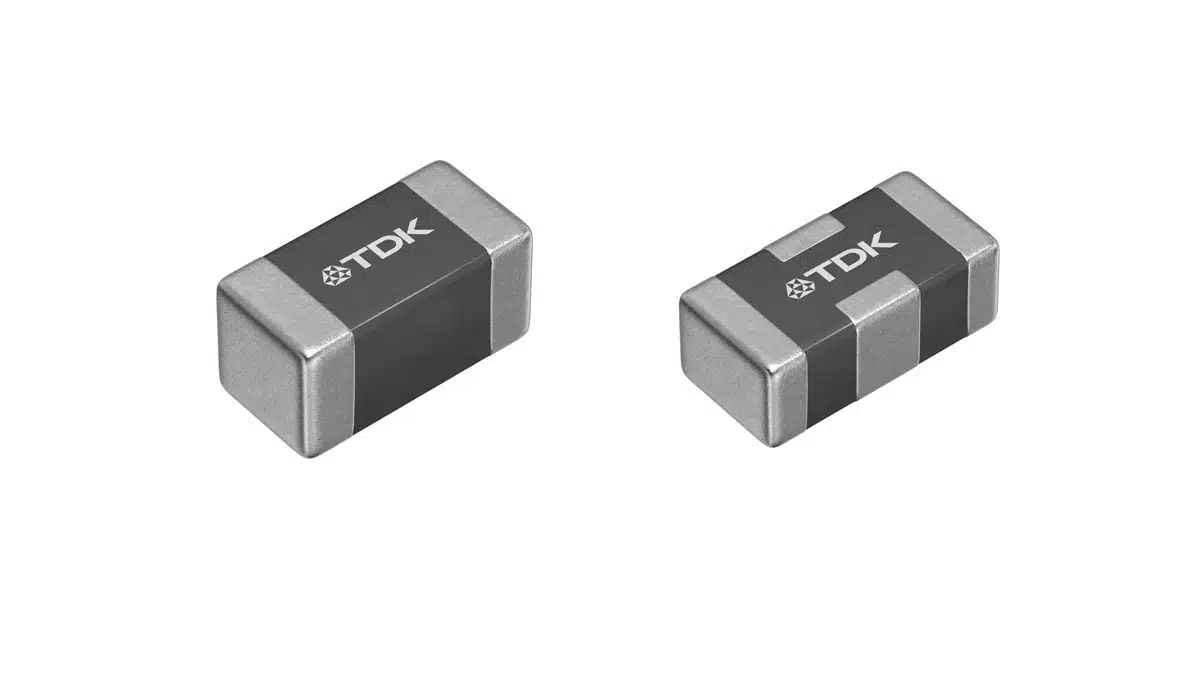
TDK Corporation has announced the addition of two new varistors to its AVRH series for automotive applications.

Both are characterized by the high electrostatic discharge (ESD) withstanding voltage demanded to ensure the safe operation of safety-critical automotive functions that comprise advanced driver assistance systems (ADAS).

RelatedPosts

TDK Introduces High‑Voltage Common‑Mode Chokes for Compact 1250 V DC Converters

TDK Releases Ultra‑small EMI Noise Suppression Filters

TDK and Nippon Chemical Launch Joint Venture for MLCC Materials

Both of the two new varistors in TDK’s AVRH series are compliant with the AEC-Q200 automotive standard and fulfill 25 kV voltage resistance requirement under IEC 61000-4-2 standard in the electrostatic discharge test.

They operate within the temperature range of -55 °C to +150 °C. They not only meet anti-ESD requirements, they also have minimal footprints, useful as automotive OEMs attempt to miniaturize.
Mass production of both the AVRH10C220YT201MA8 and the AVRH16A2C270KT200NA8 is scheduled to begin in March 2024.

The percentage of electronics in the total BOM (bill of materials) of automobiles is increasing as automotive OEMs add and refine ADAS features such as lane departure warning, collision avoidance, and adaptive cruise control. That is true of electric vehicles (EVs), hybrids, and traditional gas-fueled vehicles alike. Auto manufacturers are also working on autonomous driving, which requires the inclusion of even more sophisticated electronics. The electronic control units (ECUs) that manage all of these new electronic subsystems are particularly susceptible to damage from ESD. The problem is that even the briefest interruptions in safety-critical ADAS and autonomous driving functions are intolerable, and the potential for the problem only increases as more electronics are added to each vehicle.

Varistors are fundamental circuit elements for handling severe voltage irregularities. In automotive applications, they protect delicate ECUs, and are instrumental in conforming to automotive safety standards such as AEC-Q200 and IEC 61000-4-2.

The AVRH10C220YT201MA8 is designed to support electronics on a LIN bus. It has a maximum continuous voltage of 16 V and a capacitance of 200 pF. The 1005 size (1.0 mm (L) x 0.5 mm (W) x 0.5 mm (H)) is 75% smaller than the existing model. The smaller size allows customer devices to be smaller therefore reducing the consumption of materials. This product also uses TDK’s proprietary coating technology to enhance durability. Small as it is, it achieves the high reliability needed to meet the automotive quality standard.

AVRH16A2C270KT200NA8 is designed to support electronics on a CAN bus. It has a 2-in-1 array structure, in which the functions of two varistors are integrated into a single element. Another characteristic is that TDK’s proprietary design technology minimizes the capacitance difference between the channels. It is designed at the 1608 size (1.6 mm (L) x 0.8 mm (W) x 0.6 mm (H)).

Moving forward, TDK will continue providing customers with flexible support for designing their diversified automotive equipment by expanding the product lineup through further downsizing, increased operating voltage and expansion of capacitance range, etc.

Glossary

  • IEC 61000-4-2: An electrostatic discharge immunity standard formulated by the International Electrotechnical Commission (IEC)
  • CAN: Controller Area Network, one of the communication protocols for automotive LANs.
  • LIN: Local Interconnect Network, referring to a communication standard with the goal of reducing the cost of automotive networks
  • ADAS: Advanced driver-assistance systems
  • ECU: Electronic control unit
  • ESD: Electrostatic discharge

Features

AVRH Series

  • ESD resistance of 25kV
  • Expansion of operating areas as it supports temperatures up to 150 °C
  • AEC-Q200 compliant

AVRH10C220YT201MA8

  • Space saving by small footprint
  • An environmental design that reduces the consumption of materials

AVRH16A2C270KT200NA8

  • A 2-in-1 array structure in which a single chip can function as two varistors
  • A specification is that the capacitance difference between channels is minimized (to less than 1.0 pF)

Applications

  • AVRH10C220YT201MA8: Automotive LIN systems
  • AVRH16A2C270KT200NA8: Automotive CAN and CAN-FD systems
Related

Source: TDK

Recent Posts

Molecular Memristor Shows Record 145 kH Emergent Inductance

12.5.2026
6

Nichicon ADN Automotive Hybrid Aluminum Capacitors Now Available in EMEA

11.5.2026
21

Stackpole Expanded its AlN Thick Film Chip Resistors

6.5.2026
22

Würth Elektronik Introduces Compact Flat-wire SMT Power Inductors for Automotive

5.5.2026
48

KYOCERA AVX Extends MLV Varistors for 48V Automotive Protection

5.5.2026
23

YAGEO Introduces C0G Flexible Termination Automotive MLCCs

30.4.2026
34

Murata Introduces Crystal and NTC Set for Automotive UWB Timing

30.4.2026
31

Modelithics Releases COMPLETE v26.1 for Keysight ADS

23.4.2026
23

April 2026 Interconnect, Passives and Electromechanical Components Market Insights

22.4.2026
139

Upcoming Events

May 13
17:00 - 17:30 CEST

Winding Loss Modeling for Toroidal Magnetics – Including Gapped Cores

May 19
16:00 - 17:00 CEST

Designing Qi2 Wireless Power Systems: Practical Development and EMC Optimization

Jun 2
16:00 - 17:00 CEST

Calculation, Simulation and Measurement of 800V EMC Filters

View Calendar

Popular Posts

  • Buck Converter Design and Calculation

    0 shares
    Share 0 Tweet 0
  • Boost Converter Design and Calculation

    0 shares
    Share 0 Tweet 0
  • Flyback Converter Design and Calculation

    0 shares
    Share 0 Tweet 0
  • LLC Resonant Converter Design and Calculation

    0 shares
    Share 0 Tweet 0
  • MLCC and Ceramic Capacitors

    0 shares
    Share 0 Tweet 0
  • Dual Active Bridge (DAB) Topology

    0 shares
    Share 0 Tweet 0
  • Capacitor Charging and Discharging

    0 shares
    Share 0 Tweet 0
  • What Electronics Engineer Needs to Know About Passive Low Pass Filters

    0 shares
    Share 0 Tweet 0
  • Ripple Current and its Effects on the Performance of Capacitors

    3 shares
    Share 3 Tweet 0
  • MLCC Case Sizes Standards Explained

    0 shares
    Share 0 Tweet 0

Newsletter Subscription


Passive Components Blog

© EPCI - Leading Passive Components Educational and Information Site

  • Home
  • Privacy Policy
  • EPCI Membership & Advertisement
  • About

No Result
View All Result
  • Home
  • Knowledge Blog
  • PCNS

© EPCI - Leading Passive Components Educational and Information Site

This website uses cookies. By continuing to use this website you are giving consent to cookies being used. Visit our Privacy and Cookie Policy.
Go to mobile version