







Passive Components Blog
No Result
View All Result
  • Home
  • NewsFilter
    • All
    • Aerospace & Defence
    • Antenna
    • Applications
    • Automotive
    • Capacitors
    • Circuit Protection Devices
    • electro-mechanical news
    • Filters
    • Fuses
    • Inductors
    • Industrial
    • Integrated Passives
    • inter-connect news
    • Market & Supply Chain
    • Market Insights
    • Medical
    • Modelling and Simulation
    • New Materials & Supply
    • New Technologies
    • Non-linear Passives
    • Oscillators
    • Passive Sensors News
    • Resistors
    • RF & Microwave
    • Telecommunication
    • Weekly Digest

    Power Converter Dossier: Passive Components Design and Selection Guide 2026

    Evans Group Unifies Four High-Rel Capacitor Leaders

    Skeleton Releases Graphene‑Based UPS for AI Data Centers

    Designing 800 V DC EMC Filters: Calculation, Simulation and Measurement

    TDK Releases DC-link Film Capacitors with Ultra-low Inductance for SiC Power Converters

    Murata Introduces World First 2.2uF 100V Soft‑Term MLCC in 0805 Size for Automotive

    Murata and Xona Partner on LEO Satellite Navigation for Industrial Applications

    Bourns Offers Custom Magnetics for 3‑Phase Flying Capacitor Inverters

    YAGEO Releases Cost Efficient Pt‑RTD Sensors with Ni wires

    Trending Tags

    • Ripple Current
    • RF
    • Leakage Current
    • Tantalum vs Ceramic
    • Snubber
    • Low ESR
    • Feedthrough
    • Derating
    • Dielectric Constant
    • New Products
    • Market Reports
  • VideoFilter
    • All
    • Antenna videos
    • Capacitor videos
    • Circuit Protection Video
    • Filter videos
    • Fuse videos
    • Inductor videos
    • Inter-Connect Video
    • Non-linear passives videos
    • Oscillator videos
    • Passive sensors videos
    • Resistor videos

    Designing 800 V DC EMC Filters: Calculation, Simulation and Measurement

    Current Sense Transformer Datasheet and Design‑in Guide

    Designing a USB Type‑C Flyback Planar Transformer with Frenetic’s Planar Tool

    Magnetics Design in High‑Frequency GaN Converters

    Qi2 Wireless Charging: Inductors, Capacitors and EMC Filters

    Two‑capacitor paradox explained for engineers

    Capacitances of Nonlinear MLCCs: What Datasheets Don’t Tell You

    Tapped Inductor Buck Converter Fundamentals

    Planar vs Conventional Transformer: When it Make Sense

    Trending Tags

    • Capacitors explained
    • Inductors explained
    • Resistors explained
    • Filters explained
    • Application Video Guidelines
    • EMC
    • New Products
    • Ripple Current
    • Simulation
    • Tantalum vs Ceramic
  • Knowledge Blog
  • DossiersNew
  • Suppliers
    • Who is Who
  • PCNS
    • PCNS 2025
    • PCNS 2023
    • PCNS 2021
    • PCNS 2019
    • PCNS 2017
  • Events
  • Home
  • NewsFilter
    • All
    • Aerospace & Defence
    • Antenna
    • Applications
    • Automotive
    • Capacitors
    • Circuit Protection Devices
    • electro-mechanical news
    • Filters
    • Fuses
    • Inductors
    • Industrial
    • Integrated Passives
    • inter-connect news
    • Market & Supply Chain
    • Market Insights
    • Medical
    • Modelling and Simulation
    • New Materials & Supply
    • New Technologies
    • Non-linear Passives
    • Oscillators
    • Passive Sensors News
    • Resistors
    • RF & Microwave
    • Telecommunication
    • Weekly Digest

    Power Converter Dossier: Passive Components Design and Selection Guide 2026

    Evans Group Unifies Four High-Rel Capacitor Leaders

    Skeleton Releases Graphene‑Based UPS for AI Data Centers

    Designing 800 V DC EMC Filters: Calculation, Simulation and Measurement

    TDK Releases DC-link Film Capacitors with Ultra-low Inductance for SiC Power Converters

    Murata Introduces World First 2.2uF 100V Soft‑Term MLCC in 0805 Size for Automotive

    Murata and Xona Partner on LEO Satellite Navigation for Industrial Applications

    Bourns Offers Custom Magnetics for 3‑Phase Flying Capacitor Inverters

    YAGEO Releases Cost Efficient Pt‑RTD Sensors with Ni wires

    Trending Tags

    • Ripple Current
    • RF
    • Leakage Current
    • Tantalum vs Ceramic
    • Snubber
    • Low ESR
    • Feedthrough
    • Derating
    • Dielectric Constant
    • New Products
    • Market Reports
  • VideoFilter
    • All
    • Antenna videos
    • Capacitor videos
    • Circuit Protection Video
    • Filter videos
    • Fuse videos
    • Inductor videos
    • Inter-Connect Video
    • Non-linear passives videos
    • Oscillator videos
    • Passive sensors videos
    • Resistor videos

    Designing 800 V DC EMC Filters: Calculation, Simulation and Measurement

    Current Sense Transformer Datasheet and Design‑in Guide

    Designing a USB Type‑C Flyback Planar Transformer with Frenetic’s Planar Tool

    Magnetics Design in High‑Frequency GaN Converters

    Qi2 Wireless Charging: Inductors, Capacitors and EMC Filters

    Two‑capacitor paradox explained for engineers

    Capacitances of Nonlinear MLCCs: What Datasheets Don’t Tell You

    Tapped Inductor Buck Converter Fundamentals

    Planar vs Conventional Transformer: When it Make Sense

    Trending Tags

    • Capacitors explained
    • Inductors explained
    • Resistors explained
    • Filters explained
    • Application Video Guidelines
    • EMC
    • New Products
    • Ripple Current
    • Simulation
    • Tantalum vs Ceramic
  • Knowledge Blog
  • DossiersNew
  • Suppliers
    • Who is Who
  • PCNS
    • PCNS 2025
    • PCNS 2023
    • PCNS 2021
    • PCNS 2019
    • PCNS 2017
  • Events
No Result
View All Result
Passive Components Blog
No Result
View All Result

TDK tech article Solutions to silencing of DC-DC converters by measures against acoustic noise in power inductors

1.12.2017
Reading Time: 2 mins read
A A

source: TDK technical article

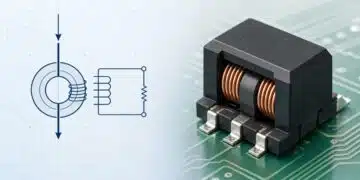
Products such as laptop and tablet PCs, smartphones, television sets, and automotive electronic devices sometimes make high-pitched sounds when they are running. This is a phenomenon known as “acoustic noise” and is sometimes caused by passive components including capacitors and inductors. The mechanics in acoustic noise are different between capacitors and inductors, but acoustic noise in inductors is particularly complex as it involves a mix of factors. This article introduces some causes of and effective measures against acoustic noise in power inductors, which are main components in power circuits of devices such as DC-DC converters.

RelatedPosts

Power Converter Dossier: Passive Components Design and Selection Guide 2026

Evans Group Unifies Four High-Rel Capacitor Leaders

Skeleton Releases Graphene‑Based UPS for AI Data Centers

Causes of acoustic noise in power inductors
Factors such as intermittent operations, frequency variable modes, and load changes generate vibrations of audible frequencies
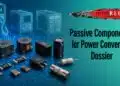
Sound waves are elastic waves that pass through air and a human hears the frequency domain of about 20 to 20 kHz. The main bodies of power inductors of DC-DC converters vibrate when alternating currents and pulse waves of frequencies in the audible range flow, and this results in acoustic noise which is sometimes called “coil whine” (Figure 1).

Figure 1: The mechanics of the acoustic noise in power inductors

Figure 1: The mechanics of the acoustic noise in power inductors

Power inductors of DC-DC converters are one of the causes of sounds and noises along with the increasing performance of electronic devices. DC-DC converters attain stable direct currents of fixed voltages by creating pulsed currents from ON/OFF statuses with switching elements and controlling the lengths (pulse widths) of the ON times. This is known as “PWM (pulse width modulation)” and is widely used as the mainstream method for DC-DC converters.

However, the switching frequencies of DC-DC converters are high ranging from several 100 kHz to several MHz, and the vibrations of these frequencies cannot be heard as sounds and noises exceed the human audible range. This leaves the question of why power inductors of DC-DC converters generate acoustic noises.

Vibrations that occur in the main bodies of power inductors generate acoustic noise through currents of frequencies in the audible range flowing in. Below are causes of the vibrations and the causes of amplified sounds and noises.

Causes of vibrations

  1. Magnetostriction (magnetic strain) of the magnetic core
  2. Attraction due to magnetization of the magnetic core
  3. Vibrations in the winding due to leakage flux

Causes of amplified sounds and noises

  1. Contact with other components
  2. Effects on surrounding magnetic bodies due to leakage flux
  3. Matching with natural vibration frequencies of entire sets including substrates


Continue to read the full TDK article HERE
Related

Recent Posts

Power Converter Dossier: Passive Components Design and Selection Guide 2026

5.6.2026
15

Evans Group Unifies Four High-Rel Capacitor Leaders

5.6.2026
12

Skeleton Releases Graphene‑Based UPS for AI Data Centers

5.6.2026
14

TDK Releases DC-link Film Capacitors with Ultra-low Inductance for SiC Power Converters

4.6.2026
35

Murata Introduces World First 2.2uF 100V Soft‑Term MLCC in 0805 Size for Automotive

4.6.2026
22

Bourns Offers Custom Magnetics for 3‑Phase Flying Capacitor Inverters

3.6.2026
26

YAGEO Releases Cost Efficient Pt‑RTD Sensors with Ni wires

3.6.2026
17

Stackpole Introduces 1400A Busbar Shunt Resistors

2.6.2026
23

Tecate Unveils High‑temp 105C Supercapacitors for Harsh‑Environment Designs

2.6.2026
20

Upcoming Events

Jun 16
16:00 - 17:00 CEST

EMC with EMC – EMC‑compliant design with electromechanical connectors

View Calendar

Popular Posts

  • Buck Converter Design and Calculation

    0 shares
    Share 0 Tweet 0
  • Boost Converter Design and Calculation

    0 shares
    Share 0 Tweet 0
  • MLCC and Ceramic Capacitors

    0 shares
    Share 0 Tweet 0
  • Flyback Converter Design and Calculation

    0 shares
    Share 0 Tweet 0
  • LLC Resonant Converter Design and Calculation

    0 shares
    Share 0 Tweet 0
  • What Electronics Engineer Needs to Know About Passive Low Pass Filters

    0 shares
    Share 0 Tweet 0
  • Dual Active Bridge (DAB) Topology

    0 shares
    Share 0 Tweet 0
  • SEPIC Converter Design and Calculation

    0 shares
    Share 0 Tweet 0
  • Capacitor Charging and Discharging

    0 shares
    Share 0 Tweet 0
  • Earthing Systems and IEC Classification Explained

    0 shares
    Share 0 Tweet 0

Newsletter Subscription


Passive Components Blog

© EPCI - Leading Passive Components Educational and Information Site

  • Home
  • Privacy Policy
  • EPCI Membership & Advertisement
  • About

No Result
View All Result
  • Home
  • Knowledge Blog
  • Dossiers
  • PCNS

© EPCI - Leading Passive Components Educational and Information Site

This website uses cookies. By continuing to use this website you are giving consent to cookies being used. Visit our Privacy and Cookie Policy.
Go to mobile version