




Samsung Electro-Mechanics’ multilayer ceramic capacitor business is expected to become a substantially larger contributor to company revenue as AI server and data-center demand shifts the market toward higher-value components.
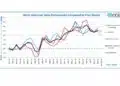
Market reporting cited by TrendForce projects MLCC revenue of KRW 6.516 trillion in 2026 and KRW 8.241 trillion in 2027, up from KRW 4.715 trillion in 2025.
AI infrastructure drives higher-value mix
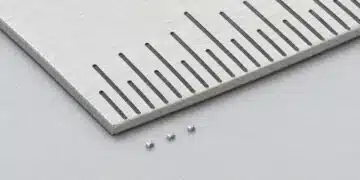
The projected growth reflects demand for high-capacitance, miniaturized and high-temperature-capable multilayer ceramic capacitors (MLCCs) used around processors, accelerators, memory and voltage-regulator power rails. These components provide local decoupling, transient-current support and high-frequency noise suppression in increasingly power-dense computing platforms.
Samsung Electro-Mechanics is targeting this demand with MLCCs designed for AI servers, where compact footprints, stable capacitance under bias and temperature, and low impedance are essential. The company’s higher-end X6S product mix is particularly relevant to dense server designs that require substantial capacitance close to GPU, CPU and accelerator loads.
Supply agreements support 2027 outlook
During 2026, Samsung Electro-Mechanics disclosed three MLCC supply agreements with a combined value of KRW 1.8213 trillion. The reported contracts include KRW 454 billion announced in June, KRW 295.1 billion in July and a KRW 1.0722 trillion agreement announced in September, with deliveries scheduled to start in 2027.
The largest announced agreement concerns MLCCs for AI-server applications. It reinforces the strategic importance of high-performance MLCC capacity as AI infrastructure continues to increase component content per server and per rack.
Pricing signals tight high-end capacity
TrendForce reported that Samsung Electro-Mechanics’ MLCC average selling price rose 13.9 percent year over year in the first half of 2026, while component-business utilization reached 91 percent. The figures indicate that demand is supporting both high factory loading and a richer product mix.
For the fourth quarter of 2026, the company is reported to be raising prices for certain OEM and ODM customers. Consumer-grade X5R MLCCs may increase by approximately 25 to 30 percent, while high-end X6S MLCCs for AI-server applications may rise by around 10 to 20 percent.
This pricing approach may also serve as a capacity-allocation mechanism: lower-margin demand can be limited while production is directed toward AI, data-center and other high-value applications. For system designers, the development highlights the importance of qualified second sources, early allocation discussions and design choices that avoid unnecessary dependence on a single case size or dielectric class.
Murata EOL action may reshape sourcing
Murata has reportedly issued end-of-life notices affecting selected specifications across nine MLCC series, including products used in general-purpose, automotive and RF applications. The reported portfolio adjustment is associated with a move away from larger, lower-capacitance and lower-margin MLCCs toward miniaturized, higher-capacitance products.
Although MLCC product rationalization is a normal industry practice, the breadth of this action could create new qualification and replacement activity among equipment makers. Manufacturers using affected parts should verify last-time-buy dates, assess form-fit-function alternatives, and review electrical behavior rather than relying solely on nominal capacitance and voltage ratings.
Important replacement checks include DC-bias behavior, temperature characteristic, ESR and ESL, mechanical robustness, termination construction, reliability qualification and availability across the expected product lifetime. The impact may be especially significant where larger case sizes or specific automotive and RF characteristics are difficult to substitute directly.
Implications for component buyers
The combined developments point to a more segmented MLCC market. Commodity and high-volume consumer grades may remain subject to different supply-demand conditions than high-capacitance products qualified for AI servers, automotive electronics and advanced networking hardware.
For procurement and design teams, practical actions include:
- Identify all MLCCs exposed to supplier EOL notices or constrained case-size and dielectric combinations.
- Qualify alternatives before last-time-buy windows close, including electrical testing at actual DC bias, temperature and frequency conditions.
- Review MLCC case-size standards when considering replacements, since physical compatibility does not guarantee equivalent electrical or reliability performance.
- Prioritize long-term supply agreements and lifecycle visibility for AI-server, automotive and high-reliability designs.
- Coordinate purchasing and engineering decisions early, particularly for high-capacitance X5R and X6S components used near high-current processor and accelerator rails.
Further reading
- MLCCs in the Age of AI: Q2 2026 Market Tightness
- Samsung Three Pillars MLCC Strategy for AI Hardware Topology
- Samsung Wins KRW 1.072T AI Server MLCC Contract
- Samsung Offers Industry High Capacitance MLCCs for AI Servers
Source
This article is based on a TrendForce market-news report, which cites reporting from Popcorn News and Commercial Times regarding Samsung Electro-Mechanics’ MLCC outlook, supply agreements, pricing and Murata portfolio actions.