


Fusion development creates a new capacitor opportunity. This article based on a MarketEYE analysis by Dennis M. Zogbi, published by TTI, examining the emerging role of pulse-grade film capacitors, polypropylene dielectric materials and capacitor banks in fusion-energy systems.
Fusion energy is transitioning from a long-term science programme into a capital-intensive engineering race, creating a potential new demand centre for high-voltage and high-energy pulsed-power capacitors. The opportunity is particularly relevant to polypropylene film capacitors, capacitor banks, pulse-forming networks and associated dielectric materials used to accumulate energy and release it in extremely short, controlled bursts.
While commercial fusion electricity remains unproven, fusion developers are building and testing increasingly large systems based on magnetic confinement, inertial confinement, laser-driven fusion and Z-pinch concepts. Across these architectures, capacitor banks are fundamental enabling hardware rather than supporting components.
Capacitor banks enable fusion pulses
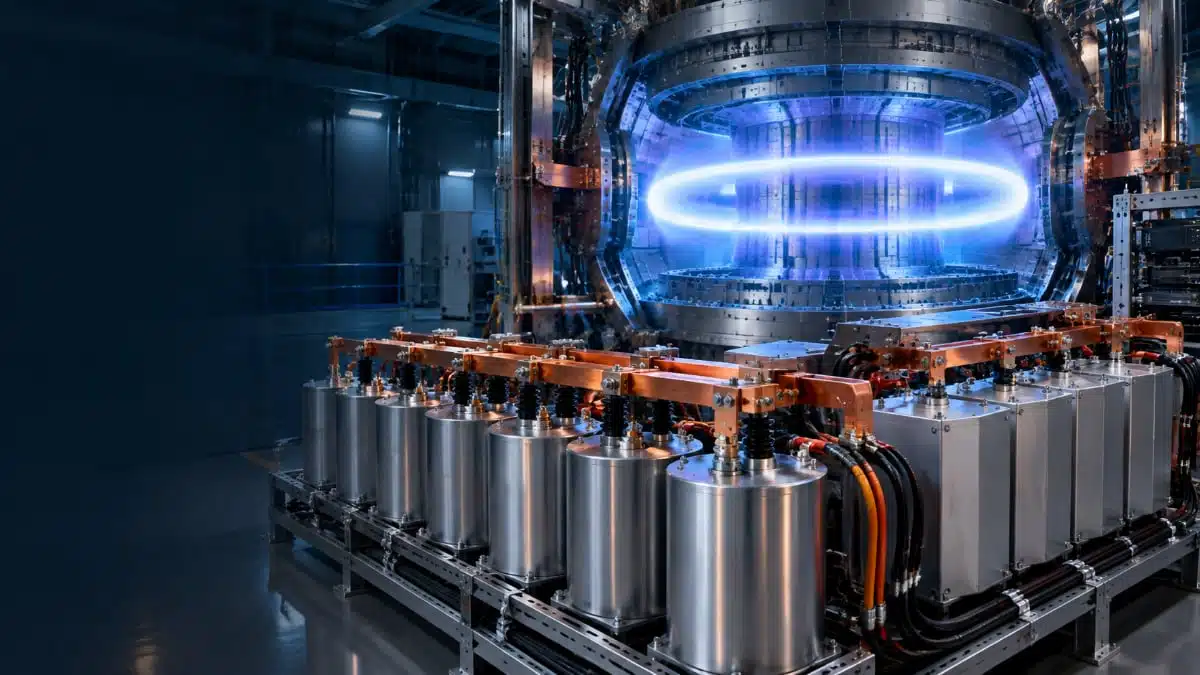
A fusion event requires a very large quantity of energy to be concentrated into a small volume over nanoseconds or microseconds. Grid-connected supplies and batteries cannot normally provide this instantaneous power directly, so systems charge capacitor banks over a relatively long period and discharge them rapidly into magnets, pulsed-power drivers, lasers or plasma-generation circuits.
High-energy pulsed-power capacitors are therefore used to support plasma formation, compression, heating and confinement. In practical systems, capacitors can be connected in large parallel and series arrangements to meet voltage, stored-energy, current and pulse-shape requirements.
Polypropylene film remains central
Metallized and extended-foil polypropylene film capacitors remain the established technology for many high-energy pulsed-power applications. Their combination of low dielectric loss, high insulation resistance, high breakdown strength and useful self-healing behaviour makes them well suited to repetitive high-voltage discharge duty.
These strengths explain why polypropylene film capacitors are widely considered the core dielectric technology for fusion capacitor banks, magnetic-coil energisation circuits, snubbers and pulse-discharge modules. However, conventional biaxially oriented polypropylene film also faces energy-density, heating and lifetime limitations as repetition rate and operating stress increase.
That limitation is creating a parallel opportunity for suppliers of advanced dielectric films, improved metallisation systems, thermal-management solutions and lower-inductance capacitor constructions.
Capacitor roles by technology
Pulse-grade film capacitors
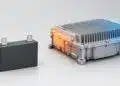
Pulse-grade film capacitors are the primary energy-storage devices in high-energy fusion drivers. They can be charged over milliseconds or seconds, then discharged within microseconds while handling very high peak currents.
Such capacitors are relevant to inertial-confinement and pulsed-power fusion facilities, including Marx-generator banks, inductive voltage adders and laser-driver power supplies. Their design priorities include stored energy, peak-current capability, low ESR, low ESL, voltage endurance, thermal stability and lifetime under repetitive discharge.
Polypropylene capacitors for magnets
Tokamaks and other magnetic-confinement systems require high-energy electrical pulses for plasma breakdown and for energising magnetic coils. Polypropylene capacitors can support these functions through pulsed coil-driving banks as well as transient-protection and snubber circuits.
The key engineering issue is not simply capacitance. Designers must also control parasitic inductance, current sharing, insulation coordination, thermal rise and voltage reversal during the discharge event.
Precision ceramic capacitors
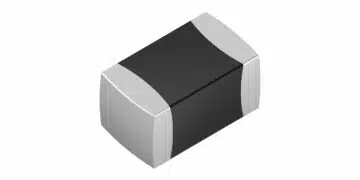
C0G/NP0 multilayer ceramic capacitors are not the main energy-storage element in a fusion driver, but they have an important role in precision trigger, timing, diagnostic and RF circuits. Their capacitance stability over temperature and applied voltage supports accurate synchronisation of multistage pulse systems.
Other MLCC technologies, aluminum electrolytic capacitors and tantalum capacitors are also used throughout control electronics, auxiliary power supplies, DC/DC converters and monitoring hardware.
Mica and RF capacitors
Mica capacitors and vacuum variable capacitors are suitable for specialised RF matching and tuning networks used in plasma-heating systems. These applications require high Q, stable RF performance and robust voltage handling.
For example, plasma-heating antennas must maintain effective impedance matching as plasma conditions vary from shot to shot. RF capacitor selection therefore requires close attention to loss, current handling, voltage withstand and frequency-dependent behaviour.
Supercapacitors for support power
Electric double-layer supercapacitors may become increasingly relevant for shot-to-shot buffering, ride-through power and critical safety-system support. Their fast recharge capability and long cycle life can complement conventional capacitor banks, especially in repetitive-pulse systems.
This is an emerging rather than established fusion-capacitor application. Supercapacitors are unlikely to replace high-voltage pulse film capacitors in the main discharge bank, but they can support auxiliary power architectures where high cycle life and rapid energy replenishment are important.
Pulsed-power architectures
Marx generators and pulse networks
Marx generators charge multiple capacitor stages in parallel and discharge them in series to produce high-voltage pulses. They are used in pulsed-power research, laser drivers and plasma systems where very high voltage must be generated from lower-voltage charging supplies.
A Marx generator capacitor design must balance voltage margin, capacitance, pulse width, rise time and insulation requirements. Equal voltage sharing and reliable triggering across many stages are particularly important in large fusion systems.
Pulse-forming networks provide another essential function by converting stored capacitor energy into a controlled output waveform. Instead of allowing a simple decaying discharge, these networks use capacitors and inductors to shape a repeatable high-voltage pulse with a defined duration and flatter waveform.
Inductive voltage adders
Inductive voltage adders are emerging as an alternative pulsed-power architecture for fusion drivers. Their objective is to reduce pulse-compression stages and potentially lower total component count compared with conventional Marx-generator systems.
For capacitor suppliers, this does not remove the market requirement. Instead, it can shift demand toward tightly matched, high-reliability capacitor modules designed for demanding repetitive operation, fast switching and precise system-level timing.
Supply chain implications
Demand could scale rapidly
A single fusion pulsed-power installation may use thousands or tens of thousands of individual capacitors. Demand is not limited to the primary pulse bank: capacitors are required throughout charging systems, magnet supplies, laser modules, RF equipment, diagnostics, protection circuits and low-voltage control electronics.
Fusion developers and component suppliers are already pursuing specialised capacitor manufacturing and advanced-dielectric development. This includes activity from established pulse-capacitor suppliers as well as new partnerships focused on fusion-grade film technologies and million-shot operational targets.
Qualification will matter
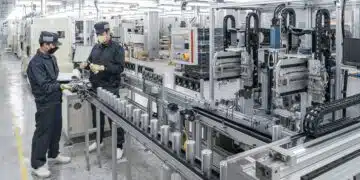
The key commercial constraint may be qualified manufacturing capacity rather than basic capacitor availability. Fusion applications require specialised parts with documented pulse performance, lifetime data, low-inductance interconnections, high-voltage insulation and tightly controlled production consistency.
Suppliers seeking to address this segment should be prepared to support:
- High-voltage and high-peak-current qualification
- Repetitive pulse-life testing under realistic waveforms
- ESR, ESL and current-sharing characterisation
- Thermal modelling and cooling integration
- Partial-discharge and insulation-coordination verification
- Custom mechanical packaging, busbar design and modular assembly
- Traceability, process control and long-term supply commitments
Materials innovation
Beyond conventional BOPP
Conventional BOPP remains a strong baseline material for pulsed-power capacitors, but its operational limits can become more restrictive as systems move toward higher pulse repetition rates and longer lifetime targets. Self-heating, electrical-field stress, energy density and thermal derating are central constraints.
New high-energy-density dielectric films aim to increase usable field strength while reducing loss and extending pulse-life capability. The resulting competition will likely focus on whether emerging materials can deliver meaningful system-level advantages without compromising manufacturability, reliability, cost or supply-chain resilience.
A realistic market outlook
Fusion should still be treated as an emerging and technically uncertain capacitor market. Public project schedules have repeatedly changed, and large-scale grid-connected fusion generation has not yet been demonstrated.
Nevertheless, the nearer-term opportunity for passive-component suppliers is real: research machines, pilot facilities, laser platforms and repetitive pulsed-power systems require substantial capacitor content well before commercial fusion plants reach utility scale. Capacitor manufacturers with proven film-dielectric, high-voltage, pulse-discharge and custom-bank capabilities are positioned to benefit as programmes advance.
Further reading
- Capacitors in Fusion Energy Experiments
- High-Energy Capacitor Banks for Plasma Research
- Capacitors in Pulse Forming Network
- Peak Nano to Develop Fusion Grade High Energy Film Capacitors
Source
This article is based on a MarketEYE analysis by Dennis M. Zogbi, published by TTI, examining the emerging role of pulse-grade film capacitors, polypropylene dielectric materials and capacitor banks in fusion-energy systems.