














Passive Components Blog
No Result
View All Result
  • Home
  • NewsFilter
    • All
    • Aerospace & Defence
    • Antenna
    • Applications
    • Automotive
    • Capacitors
    • Circuit Protection Devices
    • electro-mechanical news
    • Filters
    • Fuses
    • Inductors
    • Industrial
    • Integrated Passives
    • inter-connect news
    • Market & Supply Chain
    • Market Insights
    • Medical
    • Modelling and Simulation
    • New Materials & Supply
    • New Technologies
    • Non-linear Passives
    • Oscillators
    • Passive Sensors News
    • Resistors
    • RF & Microwave
    • Telecommunication
    • Weekly Digest

    AI Servers Demand is Driving Tantalum Capacitor Price Hikes

    DMASS Reports Europe Components Up 9.8% in Q4 2025

    Bourns Extends PPTC Resettable High‑Power, High‑Voltage Protection Fuses

    Mastering Galvanic Isolation in Power Electronics: Methods, Standards, and Implementation

    Bourns Releases Compact Automotive Isolation Power Transformer

    Wk 9 Electronics Supply Chain Digest

    VINATech Targets AI Data Center Supercapacitor Boom

    Littelfuse NANO2 415 SMD Fuse Wins 2025 Product of the Year

    TDK Introduces 350V Safety Film Capacitors for Compact EMI Suppression

    Trending Tags

    • Ripple Current
    • RF
    • Leakage Current
    • Tantalum vs Ceramic
    • Snubber
    • Low ESR
    • Feedthrough
    • Derating
    • Dielectric Constant
    • New Products
    • Market Reports
  • VideoFilter
    • All
    • Antenna videos
    • Capacitor videos
    • Circuit Protection Video
    • Filter videos
    • Fuse videos
    • Inductor videos
    • Inter-Connect Video
    • Non-linear passives videos
    • Oscillator videos
    • Passive sensors videos
    • Resistor videos

    2026 Power Magnetics Design Trends: Flyback, DAB and Planar

    Enabling Software‑Defined Vehicle Architectures: Automotive Ethernet and Zonal Smart Power

    Calculating Resistance Value of a Flyback RC Snubber 

    One‑Pulse Characterization of Nonlinear Power Inductors

    Thermistor Linearization Challenges

    Coaxial Connectors and How to Connect with PCB

    PCB Manufacturing, Test Methods, Quality and Reliability

    Transformer Behavior – Current Transfer and Hidden Feedback

    Choosing the Right Capacitor: The Importance of Accurate Measurements

    Trending Tags

    • Capacitors explained
    • Inductors explained
    • Resistors explained
    • Filters explained
    • Application Video Guidelines
    • EMC
    • New Products
    • Ripple Current
    • Simulation
    • Tantalum vs Ceramic
  • Knowledge Blog
  • DossiersNew
  • Suppliers
    • Who is Who
  • PCNS
    • PCNS 2025
    • PCNS 2023
    • PCNS 2021
    • PCNS 2019
    • PCNS 2017
  • Events
  • Home
  • NewsFilter
    • All
    • Aerospace & Defence
    • Antenna
    • Applications
    • Automotive
    • Capacitors
    • Circuit Protection Devices
    • electro-mechanical news
    • Filters
    • Fuses
    • Inductors
    • Industrial
    • Integrated Passives
    • inter-connect news
    • Market & Supply Chain
    • Market Insights
    • Medical
    • Modelling and Simulation
    • New Materials & Supply
    • New Technologies
    • Non-linear Passives
    • Oscillators
    • Passive Sensors News
    • Resistors
    • RF & Microwave
    • Telecommunication
    • Weekly Digest

    AI Servers Demand is Driving Tantalum Capacitor Price Hikes

    DMASS Reports Europe Components Up 9.8% in Q4 2025

    Bourns Extends PPTC Resettable High‑Power, High‑Voltage Protection Fuses

    Mastering Galvanic Isolation in Power Electronics: Methods, Standards, and Implementation

    Bourns Releases Compact Automotive Isolation Power Transformer

    Wk 9 Electronics Supply Chain Digest

    VINATech Targets AI Data Center Supercapacitor Boom

    Littelfuse NANO2 415 SMD Fuse Wins 2025 Product of the Year

    TDK Introduces 350V Safety Film Capacitors for Compact EMI Suppression

    Trending Tags

    • Ripple Current
    • RF
    • Leakage Current
    • Tantalum vs Ceramic
    • Snubber
    • Low ESR
    • Feedthrough
    • Derating
    • Dielectric Constant
    • New Products
    • Market Reports
  • VideoFilter
    • All
    • Antenna videos
    • Capacitor videos
    • Circuit Protection Video
    • Filter videos
    • Fuse videos
    • Inductor videos
    • Inter-Connect Video
    • Non-linear passives videos
    • Oscillator videos
    • Passive sensors videos
    • Resistor videos

    2026 Power Magnetics Design Trends: Flyback, DAB and Planar

    Enabling Software‑Defined Vehicle Architectures: Automotive Ethernet and Zonal Smart Power

    Calculating Resistance Value of a Flyback RC Snubber 

    One‑Pulse Characterization of Nonlinear Power Inductors

    Thermistor Linearization Challenges

    Coaxial Connectors and How to Connect with PCB

    PCB Manufacturing, Test Methods, Quality and Reliability

    Transformer Behavior – Current Transfer and Hidden Feedback

    Choosing the Right Capacitor: The Importance of Accurate Measurements

    Trending Tags

    • Capacitors explained
    • Inductors explained
    • Resistors explained
    • Filters explained
    • Application Video Guidelines
    • EMC
    • New Products
    • Ripple Current
    • Simulation
    • Tantalum vs Ceramic
  • Knowledge Blog
  • DossiersNew
  • Suppliers
    • Who is Who
  • PCNS
    • PCNS 2025
    • PCNS 2023
    • PCNS 2021
    • PCNS 2019
    • PCNS 2017
  • Events
No Result
View All Result
Passive Components Blog
No Result
View All Result

7 electronic design problems that boost medical device costs

19.10.2018
Reading Time: 3 mins read
A A
Medical equipment in oncology department at hospital

Medical equipment in oncology department at hospital

Source: Medical Design and Sourcing news

by Mike Labbe, Valtronic. When developing electronic devices, design for manufacturing (DFM) often takes a back seat without regard for the long-term consequences. Even if the manufacturing cost is within the target, companies should consider and address the device’s manufacturability. 
Products that are challenging to build typically result in longer lead times, lower margins, and possibly lower quality compared with products that are designed with manufacturing in mind. Common electronic design issues to consider include:

RelatedPosts

AI Servers Demand is Driving Tantalum Capacitor Price Hikes

DMASS Reports Europe Components Up 9.8% in Q4 2025

Bourns Extends PPTC Resettable High‑Power, High‑Voltage Protection Fuses

Over-tolerance/over-dimensioning
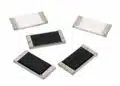
Tight component tolerances may be necessary, but the cost to make the product is directly correlated. If your design margin can tolerate 5% or 10% resistors, do not specify 1%. Similarly, mechanical tolerances should be only as tight as needed to ensure functionality. A contract manufacturer will build according to its customer’s requirements to meet the tolerances of the finished product. To reduce cost and avoid additional delays, only add tighter requirements as necessary.

Mixed technology
Different technologies on a printed circuit board assembly (PCBA), such as surface-mount technology (SMT) and through-hole components, can increase cost and manufacturing time. Minimizing mixed technologies and designing for as much automated assembly and SMT placement as possible reduces manufacturing complexity and cost, while improving quality. Always minimize hand component placement and other manual secondary operations.

Electrical testing
All devices should be electrically tested at the factory to ensure that only quality product ships and to provide near real-time feedback on performance or quality issues. This saves time and cost by allowing correction or rework of a failing product before shipping. Plan for functional testing at the factory as early as possible in the design cycle.

Electronic component placement
Most of a contract manufacturer’s automated equipment relies on conveyors and fixtures to transport products through the process. Components placed close to the edge of the board (unless critical to design parameters), at odd angles, or placed without regard for good practices for design layout and spacing may require additional paneling/tooling to facilitate fixturing and increase manufacturing cost.

Component sourcing
Many devices require tight control over approved component vendors or have only single sources. Components should be chosen with multiple alternatives and included in the approved bill of material. This can save cost by allowing for competitive sourcing and eliminate minimum-buy quantities. Allowing for substitution of available components without requiring significant additional testing or approvals can also dramatically improve lead times.

Component sensitivity
For many applications, moisture- and temperature-sensitive components cannot be avoided. When designing electronics and selecting components, consider factors that will affect manufacturing process flow such as components that cannot withstand SMT reflow profiles or be exposed to a water-wash process. These components require hand placement, resulting in significantly more labor and higher assembly cost than an identical functional part that can tolerate these environments. Some common examples include:

LEDs, switches and connectors, which have a variety of heat tolerances. When used on a Restriction of Hazardous Substances (RoHS) PCBA, ensure they are compatible with reflow temperatures for RoHS processes. Many variable resistors, capacitors, switches and connectors cannot be washed or conformal-coated. If you intend to use a water wash or flux, specify components that are compatible with the process.

For projects that require conformal coating, room-temperature vulcanization or underfill, work with your contract manufacturer during design to determine optimal processes and materials. Specifying a unique material or unconventional process will require additional development and may increase product cost significantly.

PC board design
Conduct a DFM review on the PCB design before transferring to production. This should include careful review and optimization of several factors, such as layer count, component density, panelization design, fiducial markers and required assembly tooling. The PCB is often most expensive and longest-lead component on a bill of materials, so clear communication with your board house or contract manufacturer during design and prototyping will prove invaluable to achieving the highest-quality and lowest-cost PCB design.

Mike Labbe is director of R&D for Valtronic and has more than 25 years of experience managing full life-cycle development and commercialization of complex medical devices and technologies. 

Related

Recent Posts

AI Servers Demand is Driving Tantalum Capacitor Price Hikes

3.3.2026
10

DMASS Reports Europe Components Up 9.8% in Q4 2025

3.3.2026
7

Mastering Galvanic Isolation in Power Electronics: Methods, Standards, and Implementation

2.3.2026
9

VINATech Targets AI Data Center Supercapacitor Boom

26.2.2026
34

TDK Introduces 350V Safety Film Capacitors for Compact EMI Suppression

26.2.2026
34

Samsung Launches Worlds First Automotive 47uF 4V MLCC in 0805 Size

24.2.2026
31

Würth Elektronik Present in IEEE APEC

24.2.2026
19

Samsung Three Pillars MLCC Strategy for AI Hardware Topology

24.2.2026
81

KYOCERA AVX Extends Ultra‑Broadband RF Capacitor Series

24.2.2026
33

Upcoming Events

Mar 21
All day

PSMA Capacitor Workshop 2026

Apr 21
16:00 - 17:00 CEST

Heatsink Solutions: Thermal Management in electronic devices

May 19
16:00 - 17:00 CEST

Designing Qi2 Wireless Power Systems: Practical Development and EMC Optimization

View Calendar

Popular Posts

  • Buck Converter Design and Calculation

    0 shares
    Share 0 Tweet 0
  • Boost Converter Design and Calculation

    0 shares
    Share 0 Tweet 0
  • Flyback Converter Design and Calculation

    0 shares
    Share 0 Tweet 0
  • LLC Resonant Converter Design and Calculation

    0 shares
    Share 0 Tweet 0
  • MLCC Manufacturers Consider Price Increase as AI Demand Outpaces Supply

    0 shares
    Share 0 Tweet 0
  • Ripple Current and its Effects on the Performance of Capacitors

    3 shares
    Share 3 Tweet 0
  • Dual Active Bridge (DAB) Topology

    0 shares
    Share 0 Tweet 0
  • MLCC and Ceramic Capacitors

    0 shares
    Share 0 Tweet 0
  • What is a Dielectric Constant and DF of Plastic Materials?

    4 shares
    Share 4 Tweet 0
  • MLCC Case Sizes Standards Explained

    0 shares
    Share 0 Tweet 0

Newsletter Subscription


Passive Components Blog

© EPCI - Leading Passive Components Educational and Information Site

  • Home
  • Privacy Policy
  • EPCI Membership & Advertisement
  • About

No Result
View All Result
  • Home
  • Knowledge Blog
  • PCNS

© EPCI - Leading Passive Components Educational and Information Site

This website uses cookies. By continuing to use this website you are giving consent to cookies being used. Visit our Privacy and Cookie Policy.
Go to mobile version