







Passive Components Blog
No Result
View All Result
  • Home
  • NewsFilter
    • All
    • Aerospace & Defence
    • Antenna
    • Applications
    • Automotive
    • Capacitors
    • Circuit Protection Devices
    • electro-mechanical news
    • Filters
    • Fuses
    • Inductors
    • Industrial
    • Integrated Passives
    • inter-connect news
    • Market & Supply Chain
    • Market Insights
    • Medical
    • Modelling and Simulation
    • New Materials & Supply
    • New Technologies
    • Non-linear Passives
    • Oscillators
    • Passive Sensors News
    • Resistors
    • RF & Microwave
    • Telecommunication
    • Weekly Digest

    Capacitances of Nonlinear MLCCs: What Datasheets Don’t Tell You

    Stackpole Releases Automotive Wide‑Termination Resistors

    How a Digital Structural Twin Can Predict Tantalum Capacitor Reliability

    SCHURTER Buys Biaodi to Boost High-Voltage Protection Portfolio

    Binder Hybrid Connector Simplifies One Cable Automation

    Tapped Inductor Buck Converter Fundamentals

    TAIYO YUDEN Releases Mini Metal Power Inductors

    Molecular Memristor Shows Record 145 kH Emergent Inductance

    Planar vs Conventional Transformer: When it Make Sense

    Trending Tags

    • Ripple Current
    • RF
    • Leakage Current
    • Tantalum vs Ceramic
    • Snubber
    • Low ESR
    • Feedthrough
    • Derating
    • Dielectric Constant
    • New Products
    • Market Reports
  • VideoFilter
    • All
    • Antenna videos
    • Capacitor videos
    • Circuit Protection Video
    • Filter videos
    • Fuse videos
    • Inductor videos
    • Inter-Connect Video
    • Non-linear passives videos
    • Oscillator videos
    • Passive sensors videos
    • Resistor videos

    Capacitances of Nonlinear MLCCs: What Datasheets Don’t Tell You

    Tapped Inductor Buck Converter Fundamentals

    Planar vs Conventional Transformer: When it Make Sense

    Modeling Fringing Field Losses in Inductors & Transformers

    Why Power Inductors Use a Ferrite Core With an Air Gap

    Transformer-Based Power-Line Harvester Magnetic Design

    Thermal Modeling of Magnetics

    Standard vs Planar LLC transformers Comparison for Battery Chargers

    How Modern Tools Model Magnetic Components for Power Electronics

    Trending Tags

    • Capacitors explained
    • Inductors explained
    • Resistors explained
    • Filters explained
    • Application Video Guidelines
    • EMC
    • New Products
    • Ripple Current
    • Simulation
    • Tantalum vs Ceramic
  • Knowledge Blog
  • DossiersNew
  • Suppliers
    • Who is Who
  • PCNS
    • PCNS 2025
    • PCNS 2023
    • PCNS 2021
    • PCNS 2019
    • PCNS 2017
  • Events
  • Home
  • NewsFilter
    • All
    • Aerospace & Defence
    • Antenna
    • Applications
    • Automotive
    • Capacitors
    • Circuit Protection Devices
    • electro-mechanical news
    • Filters
    • Fuses
    • Inductors
    • Industrial
    • Integrated Passives
    • inter-connect news
    • Market & Supply Chain
    • Market Insights
    • Medical
    • Modelling and Simulation
    • New Materials & Supply
    • New Technologies
    • Non-linear Passives
    • Oscillators
    • Passive Sensors News
    • Resistors
    • RF & Microwave
    • Telecommunication
    • Weekly Digest

    Capacitances of Nonlinear MLCCs: What Datasheets Don’t Tell You

    Stackpole Releases Automotive Wide‑Termination Resistors

    How a Digital Structural Twin Can Predict Tantalum Capacitor Reliability

    SCHURTER Buys Biaodi to Boost High-Voltage Protection Portfolio

    Binder Hybrid Connector Simplifies One Cable Automation

    Tapped Inductor Buck Converter Fundamentals

    TAIYO YUDEN Releases Mini Metal Power Inductors

    Molecular Memristor Shows Record 145 kH Emergent Inductance

    Planar vs Conventional Transformer: When it Make Sense

    Trending Tags

    • Ripple Current
    • RF
    • Leakage Current
    • Tantalum vs Ceramic
    • Snubber
    • Low ESR
    • Feedthrough
    • Derating
    • Dielectric Constant
    • New Products
    • Market Reports
  • VideoFilter
    • All
    • Antenna videos
    • Capacitor videos
    • Circuit Protection Video
    • Filter videos
    • Fuse videos
    • Inductor videos
    • Inter-Connect Video
    • Non-linear passives videos
    • Oscillator videos
    • Passive sensors videos
    • Resistor videos

    Capacitances of Nonlinear MLCCs: What Datasheets Don’t Tell You

    Tapped Inductor Buck Converter Fundamentals

    Planar vs Conventional Transformer: When it Make Sense

    Modeling Fringing Field Losses in Inductors & Transformers

    Why Power Inductors Use a Ferrite Core With an Air Gap

    Transformer-Based Power-Line Harvester Magnetic Design

    Thermal Modeling of Magnetics

    Standard vs Planar LLC transformers Comparison for Battery Chargers

    How Modern Tools Model Magnetic Components for Power Electronics

    Trending Tags

    • Capacitors explained
    • Inductors explained
    • Resistors explained
    • Filters explained
    • Application Video Guidelines
    • EMC
    • New Products
    • Ripple Current
    • Simulation
    • Tantalum vs Ceramic
  • Knowledge Blog
  • DossiersNew
  • Suppliers
    • Who is Who
  • PCNS
    • PCNS 2025
    • PCNS 2023
    • PCNS 2021
    • PCNS 2019
    • PCNS 2017
  • Events
No Result
View All Result
Passive Components Blog
No Result
View All Result

Stackpole Releases Automotive Wide‑Termination Resistors

14.5.2026
Reading Time: 7 mins read
A A

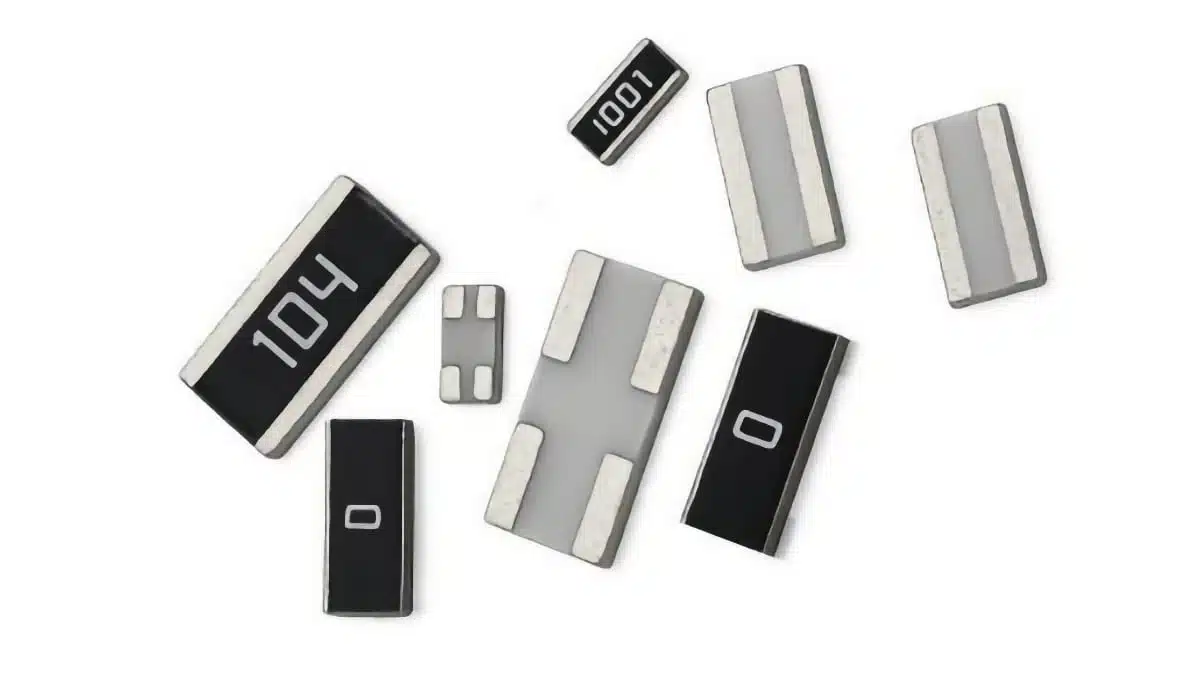
Stackpole Electronics has introduced the RMWA series of automotive‑grade wide termination thick film chip resistors designed for high power density and long‑term reliability in harsh environments.

The wide terminal thick film chip resistor series targets applications where thermal management, pulse handling and mechanical robustness are critical, such as automotive electronics, industrial controls and high‑reliability power supplies.

RelatedPosts

Stackpole Expanded its AlN Thick Film Chip Resistors

Stackpole Releases AlN High‑Power Thick Film Chip Resistors

Stackpole Expands Anti-Corrosive Anti-Sulfur Thin Film Chip Resistors

Key features and benefits

  • Wide terminal design for better heat spreading
    The long‑side terminations increase the effective contact area to the PCB, improving thermal conduction into the copper and reducing local hot spots on both the resistor and the board.
  • High power ratings up to 3 W in compact footprint
    Selected high‑power versions like RMWA1225‑HP are rated up to 3 W, allowing designers to consolidate parallel resistors or downsize case formats while maintaining the same dissipation capability according to the manufacturer datasheet.
  • Automotive‑grade construction and AEC‑Q200 qualification
    The series is qualified to AEC‑Q200 with verified stability under load life, temperature cycling, biased humidity and short‑time overload testing, supporting use in safety‑relevant and mission‑critical ECUs.
  • Improved thermal performance and extended system life
    Better heat removal directly translates into lower operating temperatures, which typically extends resistor and PCB lifetime and helps maintain calibration and drift budgets over the product life.
  • Antisulfur materials for polluted environments
    Antisulfur construction mitigates resistance drift or open‑circuit failures caused by sulfur‑rich atmospheres, which is important for under‑hood automotive, industrial and field‑installed equipment.
  • Defined pulse voltage and pulse power behavior
    The RMWA family provides specified pulse characteristics, giving circuit designers clear design limits for transient and surge events rather than relying on generic derating assumptions.
  • Broad application reach across segments
    The same platform serves automotive, industrial, power conversion and high‑reliability consumer electronics, simplifying qualification and vendor consolidation for multi‑market platforms.

Typical applications

The RMWA wide‑termination resistors are intended for circuits where a combination of power dissipation, pulse loading and environmental robustness is required.

  • Automotive ECUs and modules
    Suitable for power and signal conditioning stages in engine control, transmission, body electronics, ADAS and electrification systems where AEC‑Q200, thermal cycling and vibration robustness are mandatory.
  • High‑power gate drivers and switching stages
    Gate resistors, snubbers or damping networks in IGBT, SiC and GaN driver circuits benefit from the defined pulse capability and the ability to handle repetitive switching surges.
  • Industrial controls and automation
    PLCs, motor drives, inverters and power supplies operating in harsh or polluted industrial atmospheres can leverage the antisulfur design and wide thermal margins.
  • Power supplies and DC/DC converters
    Bleeder, preload, inrush‑limiting, sharing and damping resistors in AC‑DC and DC‑DC power supplies gain from the higher power density to keep layouts compact.
  • High‑reliability consumer and prosumer equipment
    Designs like high‑end appliances, tools and networking gear that require long operating life without field failures can use the automotive‑grade screening as an additional robustness margin.

Technical highlights

While individual ratings depend on size and value selection, the RMWA platform shares several common characteristics according to manufacturer documentation.

Construction and reliability

  • Thick film chip resistor technology with wide, long‑side terminations.
  • Automotive‑grade design with AEC‑Q200 qualification.
  • Antisulfur construction for operation in corrosive or polluted atmospheres.
  • Verified performance under:
    • Load life testing.
    • Temperature cycling.
    • Biased humidity.
    • Short‑time overload.

These tests simulate real‑world stress combinations such as power cycling, environmental humidity and transient over‑stress, which often drive long‑term drift and latent failures in conventional resistors.

Power and pulse capability

  • Power ratings ranging from approximately 0.75 W up to 3 W depending on case size and high‑power options such as RMWA1225‑HP according to the manufacturer datasheet.
  • Wide‑termination geometry that reduces PCB temperature rise for a given dissipation level.
  • Defined pulse voltage and pulse power profiles to support design against transient and surge conditions.

Clearly specified pulse performance helps engineers size components for events like load dumps, inrush currents, short pulses in gate drivers or protective crowbar actions, instead of over‑dimensioning purely based on continuous power.

Example: wide‑termination vs. standard chip

The table below illustrates the design intent of wide‑termination thick film resistors like RMWA compared to conventional same‑size chips in typical use. Specific numeric values are indicative and actual ratings must be taken from the manufacturer datasheet.

AspectConventional chip (same size)Wide‑termination RMWA‑type device
PCB contact areaShort‑side terminations, smaller copper interfaceLong‑side terminations, larger copper interface
Thermal path into PCBMore localized heat flow, higher hot spot temperatureImproved heat spreading, lower local temperature
Achievable continuous powerLimited by local board heatingHigher possible power rating at same footprint
Mechanical robustnessMore sensitive to board bending and flexImproved solder joint robustness over wide edge
Pulse/surge definitionOften only generic overload guidanceDedicated pulse voltage and pulse power curves

Design‑in notes for engineers

When selecting and placing wide‑termination thick film resistors like the RMWA series, several practical points can help extract the full benefit of the technology.

  • Use the PCB as a heat spreader
    Maximize copper area connected to the wide terminations and, where possible, connect them to internal copper planes through vias to gain additional thermal mass and reduce temperature rise.
  • Respect derating curves and ambient conditions
    Review the power derating versus temperature in the datasheet and ensure worst‑case ambient, self‑heating and enclosure conditions keep the resistor within safe limits.
  • Align pulse specification with real transients
    Map system events such as load dump, inrush, repetitive gate pulses or clamping actions onto the defined pulse voltage and pulse power curves, including duration and duty cycle, to verify adequate margin.
  • Consider board flex and mechanical stress
    Even with wide terminations, locate high‑power resistors away from areas with significant board flex, mounting holes or connectors to minimize mechanical strain on solder joints.
  • Account for antisulfur protection in environment choice
    In applications prone to sulfur exposure (rubber, certain industrial processes, polluted air), antisulfur RMWA variants can significantly improve long‑term stability and reduce field failure risk.
  • Check AEC‑Q200 for automotive platforms
    For automotive ECUs, verify that the chosen RMWA variant is listed as AEC‑Q200 compliant for the intended case size, resistance value and tolerance, and document this in the component approval file.

Layout and placement considerations

A few layout guidelines can further optimize performance:

  • Place wide‑termination resistors so that their long edges align with the main heat‑spreading copper regions on the PCB.
  • Avoid narrow thermal neck‑downs directly at the terminations; use gradual copper transitions to keep current and heat distribution uniform.
  • In multi‑resistor networks handling significant power, distribute RMWA devices to avoid creating local hot clusters that can raise overall board temperature.

Source

This article is based on information from a Stackpole Electronics manufacturer press release and associated product documentation for the RMWA automotive‑grade wide termination thick film chip resistor series.
References

  1. Stackpole Electronics RMWA press release PDF
  2. Stackpole Electronics official website

Related

Recent Posts

SCHURTER Buys Biaodi to Boost High-Voltage Protection Portfolio

14.5.2026
13

Binder Hybrid Connector Simplifies One Cable Automation

13.5.2026
7

Molecular Memristor Shows Record 145 kH Emergent Inductance

12.5.2026
17

Planar vs Conventional Transformer: When it Make Sense

11.5.2026
45

Nichicon ADN Automotive Hybrid Aluminum Capacitors Now Available in EMEA

11.5.2026
25

Stackpole Expanded its AlN Thick Film Chip Resistors

6.5.2026
23

Würth Elektronik Introduces Compact Flat-wire SMT Power Inductors for Automotive

5.5.2026
52

KYOCERA AVX Extends MLV Varistors for 48V Automotive Protection

5.5.2026
28

YAGEO Introduces C0G Flexible Termination Automotive MLCCs

30.4.2026
44

Upcoming Events

May 19
16:00 - 17:00 CEST

Designing Qi2 Wireless Power Systems: Practical Development and EMC Optimization

Jun 2
16:00 - 17:00 CEST

Calculation, Simulation and Measurement of 800V EMC Filters

Jun 16
16:00 - 17:00 CEST

EMC with EMC – EMC‑compliant design with electromechanical connectors

View Calendar

Popular Posts

  • Buck Converter Design and Calculation

    0 shares
    Share 0 Tweet 0
  • Boost Converter Design and Calculation

    0 shares
    Share 0 Tweet 0
  • Flyback Converter Design and Calculation

    0 shares
    Share 0 Tweet 0
  • LLC Resonant Converter Design and Calculation

    0 shares
    Share 0 Tweet 0
  • MLCC and Ceramic Capacitors

    0 shares
    Share 0 Tweet 0
  • Dual Active Bridge (DAB) Topology

    0 shares
    Share 0 Tweet 0
  • Capacitor Charging and Discharging

    0 shares
    Share 0 Tweet 0
  • What Electronics Engineer Needs to Know About Passive Low Pass Filters

    0 shares
    Share 0 Tweet 0
  • Ripple Current and its Effects on the Performance of Capacitors

    3 shares
    Share 3 Tweet 0
  • MLCC Case Sizes Standards Explained

    0 shares
    Share 0 Tweet 0

Newsletter Subscription


Passive Components Blog

© EPCI - Leading Passive Components Educational and Information Site

  • Home
  • Privacy Policy
  • EPCI Membership & Advertisement
  • About

No Result
View All Result
  • Home
  • Knowledge Blog
  • PCNS

© EPCI - Leading Passive Components Educational and Information Site

This website uses cookies. By continuing to use this website you are giving consent to cookies being used. Visit our Privacy and Cookie Policy.
Go to mobile version