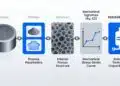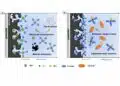
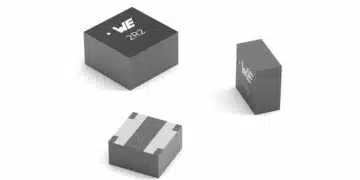



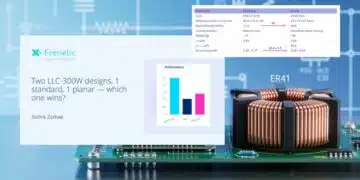


This presentation from Würth Elektronik by Jon Izkue provides guidelines How capacitor measurements help you to select the correct capacitor technology.
Introduction
Selecting the right capacitor for electronic applications is critical, yet nuanced, due to varying measurement conditions, data sheet specifics, and simulation models.
While capacitance is the initial go-to parameter, real-world performance depends on understanding ripple current limitations, voltage derating, ESR, and the effects of aging and operating conditions. This white paper synthesizes advanced content from an expert webinar to guide engineers on optimizing capacitor choices.
Key Takeaways
- Selecting the correct capacitor technology is critical due to varying conditions and specifications; capacitance alone does not determine performance.
- Measurement conditions impact results; capacitance can drop significantly under DC bias and varies based on signal and temperature.
- Understanding ripple limitations and using simulation models allows for better capacitor selection in real-world scenarios.
- Mitigate aging effects by using manufacturer bias curves; derating MLCC Class 2 capacitors by 50% is inadequate.
- Advanced capacitor selection involves understanding measurement conditions, temperature effects, and using tools for worst-case design.
Measurement Essentials for Capacitor Selection
Capacitance as listed in data sheets is typically measured at specific reference conditions: 1V AC, 1kHz frequency, 0V DC bias, and 25°C ambient temperature. These conditions ensure repeatability but do not reflect real circuit scenarios. For example, MLCC class 2 capacitors can lose 30–90% of their rated capacitance when operated at their maximum DC voltage, especially in smaller package sizes like 0805 compared to larger 1812 sizes.
Preconditioning and Memory Effects
Ceramic capacitors, especially MLCC class 2 types, require thermal preconditioning (e.g. heating to 150°C for 1 hour, then cooling for a day) to reset the dielectric material before measurement. Failing to precondition results in permanent polarization effects, causing non-reproducible capacitance readings due to a memory effect in the ceramic domains.
Impact of AC and DC Test Signals
Manufacturers use LCR meters with specific AC excitation (often 1V) to test capacitance. Real-world signals can be lower—meaning less measured capacitance—or higher, but may exceed practical device limits. DC bias dramatically reduces capacitance, more so than AC level. When DC bias approaches 50% or more of rated voltage, remaining capacitance may drop below one third of nominal value. Temperature can cause further divergence, but under high DC bias, the effect converges — temperature “saturates” rather than adds losses.
| Parameter | Test Condition | Remark |
|---|---|---|
| Capacitance | 1V/1kHz at 25°C | Preconditioning resets material, prevents memory effect |
| AC Level | 1V excitation | Lower signals can show lower capacitance |
| Ripple current limit | Rated temp/freq | Higher value possible at lower temp or higher freq (see multipliers below) |
Temperature increases ripple current capability (due to increased permissible self-heating), but shortens operating life. Ripple current multipliers increase with switching frequency (e.g., from 900mA RMS up to nearly 2A RMS at higher frequency/low temp), but this must be balanced against thermal endurance—exceeding rated endurance causes rapid aging or outright failure.
| Parameter | Test Condition | Typical Value | Importance |
|---|---|---|---|
| Capacitance | 1V/1kHz at 25°C | 10 µF (MLCC) | Reference only; expect major losses in real use |
| Ripple Current | max temp/frequency | 900 mA RMS (Electrolytic) | Limit for safe continuous operation |
| Multipliers | Frequency, Temp | up to 2x ripple (higher freq/lower temp) | Boost permissible ripple with operation tweaks |
| AC Level | 1V excitation | — | Lower signals can show lower capacitance |
| Endurance | max stress | 2,000 hours | Benchmark for max rated conditions |
| Useful Life | relaxed limits | 5,000 hours | Statistical failure probability & extended use |
Time-dependent Aging Effects
Capacitance can decrease further with time under bias in MLCC class 2 capacitors. After 10 seconds, losses may reach 50%; after an hour, extra 15% loss, and after 24 hours, total losses may exceed 70%. After about 100 hours, losses tend to saturate. Applications with continuous power-on cycles experience ongoing degradation, emphasizing need for worst-case design consideration.
Manufacturers measure capacitance at reference conditions (1V, 1kHz, 0V bias, 25°C). Real-world operation often shifts these values. Especially in MLCC class 2 capacitors, capacitance can drop by 30–90% under rated DC voltage, with more loss in smaller package sizes. These critical curves are not always published in datasheets.
Aging effects (DC bias/time) are not captured in most simulation models; designers of mission critical applications shall empirically measure circuit capacitance over extended periods (days).
Capacitor Technologies Core Performance Dependencies
- DC Bias Curve: Capacitance drops with applied DC voltage, especially in MLCC Class 2. The effect depends heavily on size and material profile. Simulation platforms provide real bias curves for correct selection.
- Temperature Impact: Elevated temperature shifts capacitance and increases permissible ripple, but decreases lifetime. Electrolytic capacitors rated for higher temperature offer extended operational life even at moderate temperatures.
- Voltage Impact: For supercapacitors, higher voltage at higher temperatures drastically shortens life due to oxide/electrolyte breakdown. Lower voltage improves longevity.
- Electrolytic (and hybrid polymer) capacitors actually benefit from continuous DC voltage, which reforms the oxide layer, reduces leakage, and extends life—provided rated conditions are observed. A small voltage derating (e.g., use 300V part at 250V) gives modest life extension (~125%).
- Ripple & Lifetime Calculators: Modern tools allow sorting and selection based on not just rated specs but adjusted values under real-world use—frequency, voltage, and temperature.
| Capacitor Type | DC Bias Impact | Temperature Impact | Ripple Current Multiplier |
|---|---|---|---|
| MLCC Class 2 | Up to 90% drop at rated voltage | Loss converges at high bias | N/A |
| Aluminum Electrolytic | Minimal, positive for lifetime | Strong influence (lifetime halves every 10°C rise) | 2x at lower temp, higher freq |
| Supercapacitors | Decreases lifetime at higher voltage | High temp + voltage accelerates aging | N/A |
| Film Capacitors | Permissible voltage derates with temp | Lifetime and voltage interdependent | N/A |
Simulation Models & RedExpert Platform
Simulation models (LTSpice, PSI, etc.) from advanced suppliers include DC bias effects but commonly reflect bias curves at short time intervals (~10 seconds loading); aging effects over longer time frames are typically not modeled. Designers should build in extra safety margins in simulations, especially for critical or high-voltage MLCC circuits.
Platforms like RedExpert let users input real application conditions: voltage, ripple, temperature, expected switching frequency. Results are displayed in sortable tables, showing true operating lifetime for selected part numbers. For example, a capacitor rated for 105°C offers a multiyear lifespan at 70°C, but operating at maximum voltage, ripple and temp can drop this to under two years.
Simulation tools such as RedExpert goes beyond standard datasheets, offering:
- Bias-dependent capacitance curves
- Lifetime calculators factoring voltage, frequency, and temperature
- Downloadable simulation models (LTSpice, PSI), but DC bias aging is not modeled; only initial bias curves are included
Access: Model libraries downloadable from manufacturer homepage, GitHub, or within RedExpert. Always verify inclusion of DC bias curves.
Practical Selection & Worst-Case Design
- For MLCC Class 2, derating by 50% is grossly inadequate: losses up to 90% are documented. Always use manufacturer bias curves and worst-case estimation based on both bias and temperature.
- Couple all effects—bias, temperature, aging—in calculation for robust design. Instability, noise, and power delivery issues otherwise result.
- Plan for uncertainty: Each measurement is affected by operational history, memory effect, temperature, and bias.
- Use platform tools for worst-case estimation and confirm with in-circuit measurement if possible.
Conclusion
Advanced capacitor selection is more than picking a rated value from a datasheet. It requires understanding real measurement conditions, temperature and bias effects, and leveraging tools that incorporate these variables for safe and reliable electronic design. Always read the complete data sheet, utilize specialized selection platforms, and design to handle worst-case scenarios for mission-critical applications.
Capacitor measurements such as capacitance, Equivalent Series Resistance (ESR), and ripple current are measured under specific conditions. Real-world application can cause significant differences, especially for MLCC class 2 capacitors due to DC bias and temperature effects. Always consult manufacturer bias curves or selection tools for accurate component choice.
DC bias refers to the DC voltage applied to the capacitor. For MLCC class 2, applying a DC voltage can cause up to 90% loss of capacitance at rated voltage, particularly in smaller packages. This effect is not detailed in standard datasheets – use vendor simulation platforms for accurate predictions.
Preconditioning resets the dielectric domains to ensure reproducible measurements. Failing to do so leads to permanent polarization and unpredictable capacitance changes. Preconditioning generally involves heating the capacitor to 150°C for 1 hour, then cooling for a day before measurement.
Higher temperature increases permissible ripple but reduces lifespan. Lifetime calculators (e.g. RedExpert) can estimate actual operating life by combining voltage, ripple, and temperature inputs.
Advanced models are provided in manufacturer LTSpice libraries, GitHub repositories, or selection platforms (RedExpert). Ensure the chosen model includes DC bias curves, as most standard simulation models do not.
How to Select the Correct Capacitor for Your Application
- Define Application Requirements
Determine capacitance value, voltage rating, expected ripple current, and operating temperature based on your circuit’s needs.
- Review Manufacturer Datasheet
Check test conditions for all parameters. Pay special attention to notes regarding measurement frequency, AC excitation, preconditioning, and derating tables.
- Account for DC Bias and Temperature Effects
Consult manufacturer bias curves or use an online selection platform to see how capacitance and ESR change in your expected operating conditions.
- Calculate True Ripple and Lifetime
Use lifetime calculators to input your operating frequency, voltage, and temperature. Adjust ripple currents using datasheet-provided multipliers.
- Select or Simulate the Component
Sort available parts by application-specific conditions (highest ripple, longest lifetime, minimal capacitance loss) using simulation platforms. Download simulation models with DC bias and run application-specific checks.
- Validate Worst-case Scenario
Measure your circuit in real conditions for extended periods and adjust design if significant aging or loss is observed, especially for critical MLCC circuits.