













Passive Components Blog
No Result
View All Result
  • Home
  • NewsFilter
    • All
    • Aerospace & Defence
    • Antenna
    • Applications
    • Automotive
    • Capacitors
    • Circuit Protection Devices
    • electro-mechanical news
    • Filters
    • Fuses
    • Inductors
    • Industrial
    • Integrated Passives
    • inter-connect news
    • Market & Supply Chain
    • Market Insights
    • Medical
    • Modelling and Simulation
    • New Materials & Supply
    • New Technologies
    • Non-linear Passives
    • Oscillators
    • Passive Sensors News
    • Resistors
    • RF & Microwave
    • Telecommunication
    • Weekly Digest

    YAGEO Introduces High Rel MLCCs Beyond MIL-Spec Limits

    Würth Elektronik Expanded Capacity for Validation and Services in Asia

    Samsung Introduces Ultra-High-Voltage 1500 V MLCCs for xEV Powertrains

    YAGEO Q1 2026 Results: AI Servers and Pricing Power Behind a Moderate Q2 Outlook

    TDK Introduces High‑Voltage Common‑Mode Chokes for Compact 1250 V DC Converters

    Vishay Extends Power Inductors for DC/DC with 1212 Compact Case

    Modeling Planar Magnetics Temperature: Practical Guidelines for Power Electronics Engineers

    YAGEO Releases Ferrite Shielded Power Inductors for High‑Density Designs

    Samsung Presents MLCC Selection Guide for Humanoids and Robotic Applications

    Trending Tags

    • Ripple Current
    • RF
    • Leakage Current
    • Tantalum vs Ceramic
    • Snubber
    • Low ESR
    • Feedthrough
    • Derating
    • Dielectric Constant
    • New Products
    • Market Reports
  • VideoFilter
    • All
    • Antenna videos
    • Capacitor videos
    • Circuit Protection Video
    • Filter videos
    • Fuse videos
    • Inductor videos
    • Inter-Connect Video
    • Non-linear passives videos
    • Oscillator videos
    • Passive sensors videos
    • Resistor videos

    Transformer-Based Power-Line Harvester Magnetic Design

    Thermal Modeling of Magnetics

    Standard vs Planar LLC transformers Comparison for Battery Chargers

    How Modern Tools Model Magnetic Components for Power Electronics

    Advanced Loss Modeling for Planar Magnetics in the Frenetic Planar Tool

    2026 Power Magnetics Design Trends: Flyback, DAB and Planar

    Enabling Software‑Defined Vehicle Architectures: Automotive Ethernet and Zonal Smart Power

    Calculating Resistance Value of a Flyback RC Snubber 

    One‑Pulse Characterization of Nonlinear Power Inductors

    Trending Tags

    • Capacitors explained
    • Inductors explained
    • Resistors explained
    • Filters explained
    • Application Video Guidelines
    • EMC
    • New Products
    • Ripple Current
    • Simulation
    • Tantalum vs Ceramic
  • Knowledge Blog
  • DossiersNew
  • Suppliers
    • Who is Who
  • PCNS
    • PCNS 2025
    • PCNS 2023
    • PCNS 2021
    • PCNS 2019
    • PCNS 2017
  • Events
  • Home
  • NewsFilter
    • All
    • Aerospace & Defence
    • Antenna
    • Applications
    • Automotive
    • Capacitors
    • Circuit Protection Devices
    • electro-mechanical news
    • Filters
    • Fuses
    • Inductors
    • Industrial
    • Integrated Passives
    • inter-connect news
    • Market & Supply Chain
    • Market Insights
    • Medical
    • Modelling and Simulation
    • New Materials & Supply
    • New Technologies
    • Non-linear Passives
    • Oscillators
    • Passive Sensors News
    • Resistors
    • RF & Microwave
    • Telecommunication
    • Weekly Digest

    YAGEO Introduces High Rel MLCCs Beyond MIL-Spec Limits

    Würth Elektronik Expanded Capacity for Validation and Services in Asia

    Samsung Introduces Ultra-High-Voltage 1500 V MLCCs for xEV Powertrains

    YAGEO Q1 2026 Results: AI Servers and Pricing Power Behind a Moderate Q2 Outlook

    TDK Introduces High‑Voltage Common‑Mode Chokes for Compact 1250 V DC Converters

    Vishay Extends Power Inductors for DC/DC with 1212 Compact Case

    Modeling Planar Magnetics Temperature: Practical Guidelines for Power Electronics Engineers

    YAGEO Releases Ferrite Shielded Power Inductors for High‑Density Designs

    Samsung Presents MLCC Selection Guide for Humanoids and Robotic Applications

    Trending Tags

    • Ripple Current
    • RF
    • Leakage Current
    • Tantalum vs Ceramic
    • Snubber
    • Low ESR
    • Feedthrough
    • Derating
    • Dielectric Constant
    • New Products
    • Market Reports
  • VideoFilter
    • All
    • Antenna videos
    • Capacitor videos
    • Circuit Protection Video
    • Filter videos
    • Fuse videos
    • Inductor videos
    • Inter-Connect Video
    • Non-linear passives videos
    • Oscillator videos
    • Passive sensors videos
    • Resistor videos

    Transformer-Based Power-Line Harvester Magnetic Design

    Thermal Modeling of Magnetics

    Standard vs Planar LLC transformers Comparison for Battery Chargers

    How Modern Tools Model Magnetic Components for Power Electronics

    Advanced Loss Modeling for Planar Magnetics in the Frenetic Planar Tool

    2026 Power Magnetics Design Trends: Flyback, DAB and Planar

    Enabling Software‑Defined Vehicle Architectures: Automotive Ethernet and Zonal Smart Power

    Calculating Resistance Value of a Flyback RC Snubber 

    One‑Pulse Characterization of Nonlinear Power Inductors

    Trending Tags

    • Capacitors explained
    • Inductors explained
    • Resistors explained
    • Filters explained
    • Application Video Guidelines
    • EMC
    • New Products
    • Ripple Current
    • Simulation
    • Tantalum vs Ceramic
  • Knowledge Blog
  • DossiersNew
  • Suppliers
    • Who is Who
  • PCNS
    • PCNS 2025
    • PCNS 2023
    • PCNS 2021
    • PCNS 2019
    • PCNS 2017
  • Events
No Result
View All Result
Passive Components Blog
No Result
View All Result

Does NiPdAu Terminations Need Degolding Prior Sn/Pb Soldering ?

10.1.2020
Reading Time: 3 mins read
A A

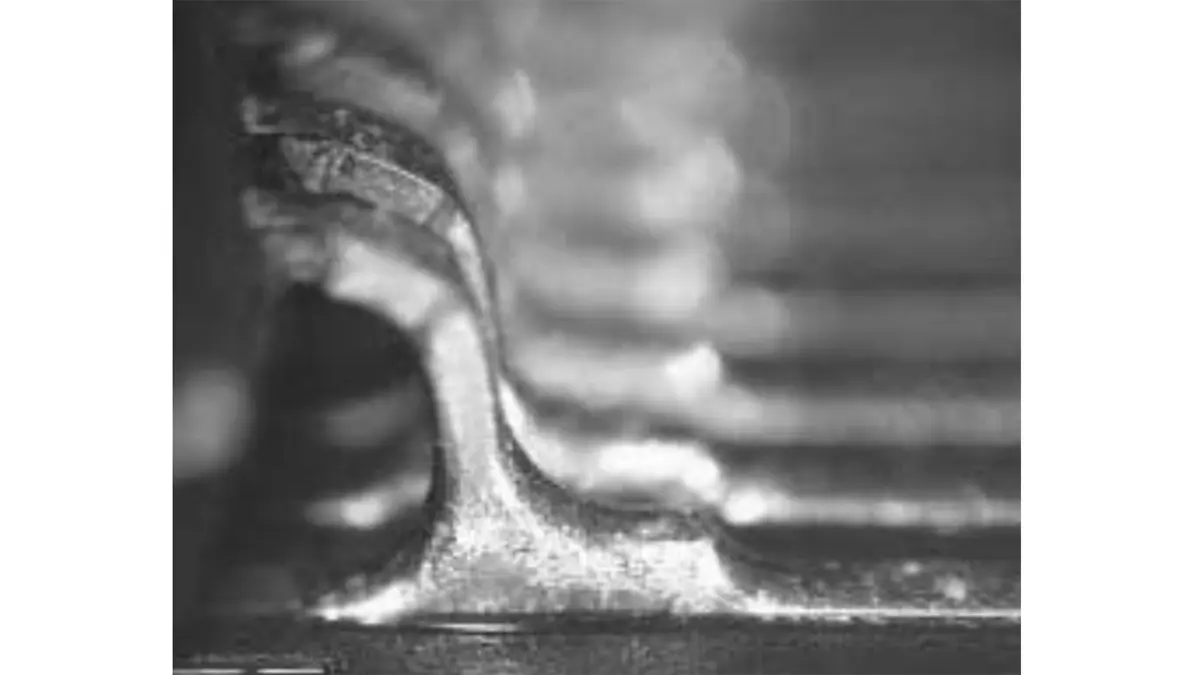
The use of gold (Au) finish on military and space qualified parts provides useful protection to the base material of leads during storage of the parts. The use of a gold layer over the barrier metal on the lead avoids the appearance of corrosion. On the other hand, as gold is not essentially soluble in Sn nor Pb, embrittlement on the lead can be produced when soldering using SnPb solder.

If the gold layer does not completely dissolve into the solder, then slow intermetallic reactions can proceed in the solid state. The gold reacts with the soldering, forming brittle intermetallics and preferential cleavage planes.

RelatedPosts

YAGEO Introduces High Rel MLCCs Beyond MIL-Spec Limits

Würth Elektronik Expanded Capacity for Validation and Services in Asia

Samsung Introduces Ultra-High-Voltage 1500 V MLCCs for xEV Powertrains

For this reason, Military/Aerospace and some levels of industrial standards specify the removal of gold plating from components before they are soldered to the PCB to try and inhibit the formation of this gold inter-metallic and the higher percentage risk of fractures forming in the solder joint during end use, especially where the PCB’s are destined for harsh environments. To eliminate the risk, the safest option is to remove the gold before assembly, this process is called “degolding” and it is addressed by the standard J-STD-001 “Requirements for Soldered Electrical and Electronic Assemblies” in the paragraph “Gold removal”

During year 2001, all the NiPd finished packages from manufacturer Texas Instruments were substituted by NiPdAu finished ones (both known as Pre-Plated finishes, PPF, in which the solderable finish is applied at the leadframe maker, not in a post mold finishing operation, PMF), which would provide a barrier to degradation of the finish. This finish consists on three layers over the copper base metal: a first one of Nickel (0.5 µm min), a second one of Palladium (0.02 µm min) and a last one of Gold (30 Å to 150 Å).

As per the bibliography available, recommended Au content on the joint should be less than 3% weight. Taking into account the very low width of the Au layer on the finish of the lead, Texas Instruments Application Report SZZA031 “A Nickel-Palladium-Gold Integrated Circuit Lead Finish and Its Potential for Solder-Joint Embrittlement” (December 2001) demonstrates, based on theory and experimentation, that main contribution of Au to the solder joint comes from the Printed Wiring Board (PWB) finish. On this testing, different thickness NiAu finish are considered for the PWB. Some more details about the evaluation of NiPdAu terminations are available in Texas Instrument evaluation paper (July 2001) here.

After metallographic analysis of the joint, it was shown that:

  • As the gold from the component lead is minimum, it is dissolved on the solder.
  • While the Sn melts during reflow, the sacrificial Au/Pd layer of the Surface is dissolved. The solder joint is made to the Ni surface of the component lead.
  • There is no Cu migration through the Ni barrier layer of the lead.
  • In a system with no Au on the PWB and with a standard Au thickness on the lead, there is not Au detectable in the bulk of the solder joint.
  • The Au from the PWB can migrate across the solder joint and appear at the lead/solder interface in the case of the NiPd-finished lead (no gold, previous finish used by Texas Instruments).
  • At very high Au thicknesses on PWB and leads but give Au concentrations of less than 3 weight %, acicular SnAu intermetallics do form. These do not appear to be enough toaffect pull strength.
  • The risk of Au embrittlement caused by NiPdAu component lead finish is essentially negligible.
  • 3% weight Au on the solder is only achieved for artificially high thickness on Au layer on the PWB.
  • Good solderability with SnPb and Pb free solders.

In conclusion, as NiPdAu finish does not pose risk of embrittlement, there is no need of performing degolding on parts using this finish.

featured image source: Texas Instrument

Related

Source: DoEEEt Blog

Recent Posts

YAGEO Introduces High Rel MLCCs Beyond MIL-Spec Limits

16.4.2026
4

AI-Assisted Structural Diagnostics and Physics-Based Reliability Interpretation of Tantalum Capacitor Anodes

14.4.2026
16

KYOCERA AVX MIL-PRF-32535 BME NP0 MLCCs Approved to the DLA QPD

16.4.2026
20

ECIA March 2026 Industry Pulse Points to Best Sales Climate in Five Years

13.4.2026
29

Exxelia Releases Updated Microwave Materials and Frequency Tuning Catalogues

8.4.2026
18

Molex Completes Acquisition of Smiths Interconnect, Expanding Portfolio of High-Reliability Connectivity Solutions

1.4.2026
13

New J‑STD‑075B Standard Elevates Process Sensitivity Classification for Passive and Solid-State Components

27.3.2026
64

Equivalent Circuit Constants of Crystal Units Explained

26.3.2026
49

Nanocrystalline Cores for Low‑Loss MHz Chip Inductors

25.3.2026
58

Upcoming Events

Apr 21
16:00 - 17:00 CEST

Heatsink Solutions: Thermal Management in electronic devices

Apr 22
17:00 - 17:30 CEST

Magnetics in a high frequency GaN era

Apr 22
17:00 - 18:00 CEST

Derating Tantalum, Film, and Ceramic Capacitors

View Calendar

Popular Posts

  • Buck Converter Design and Calculation

    0 shares
    Share 0 Tweet 0
  • Boost Converter Design and Calculation

    0 shares
    Share 0 Tweet 0
  • Flyback Converter Design and Calculation

    0 shares
    Share 0 Tweet 0
  • LLC Resonant Converter Design and Calculation

    0 shares
    Share 0 Tweet 0
  • MLCC and Ceramic Capacitors

    0 shares
    Share 0 Tweet 0
  • Dual Active Bridge (DAB) Topology

    0 shares
    Share 0 Tweet 0
  • Capacitor Charging and Discharging

    0 shares
    Share 0 Tweet 0
  • Plastic Materials Dielectric Constant and DF

    4 shares
    Share 4 Tweet 0
  • MLCC Case Sizes Standards Explained

    0 shares
    Share 0 Tweet 0
  • Ripple Current and its Effects on the Performance of Capacitors

    3 shares
    Share 3 Tweet 0

Newsletter Subscription


Passive Components Blog

© EPCI - Leading Passive Components Educational and Information Site

  • Home
  • Privacy Policy
  • EPCI Membership & Advertisement
  • About

No Result
View All Result
  • Home
  • Knowledge Blog
  • PCNS

© EPCI - Leading Passive Components Educational and Information Site

This website uses cookies. By continuing to use this website you are giving consent to cookies being used. Visit our Privacy and Cookie Policy.
Go to mobile version