


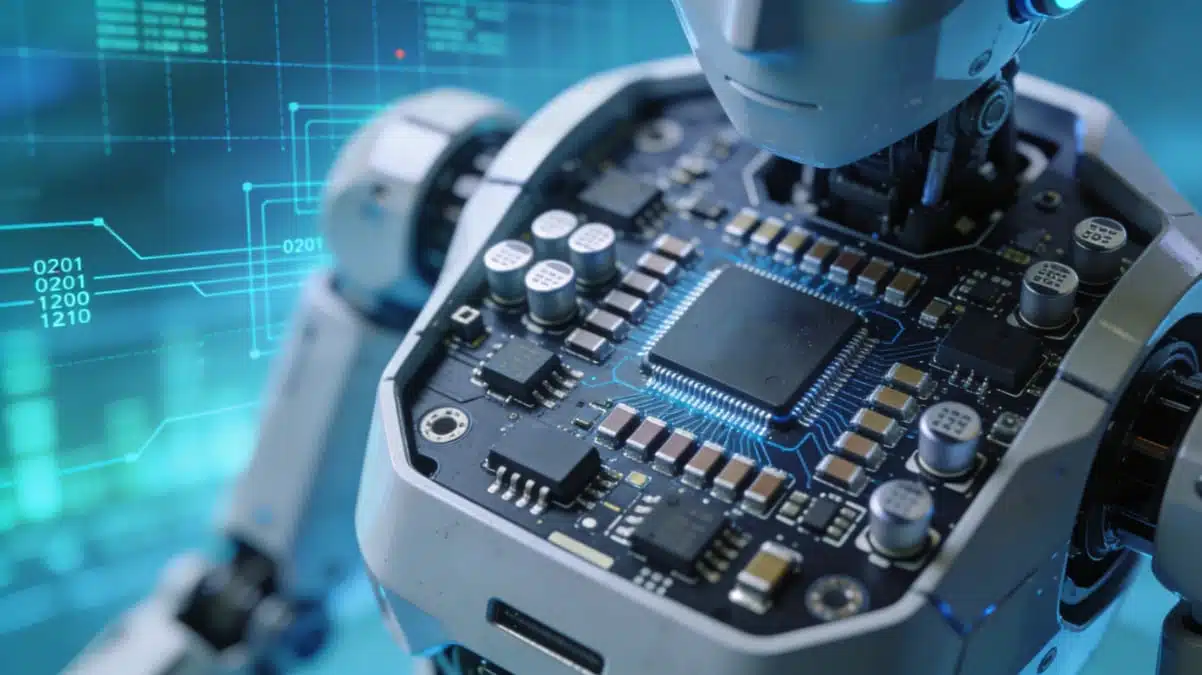
Robots and humanoid robotic systems are rapidly transforming into sophisticated electromechanical systems. These systems often integrate high-performance AI computing, powerful multi-axis drives, and dense sensor arrays within a limited mechanical space. This combination places significant demands on the passive components in their power distribution network.
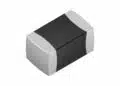
Samsung Electro‑Mechanics has introduced its latest MLCC offering, suitable for humanoid robots and other robotic platforms. This article provides an overview of the new product and offers practical guidance for design engineers and purchasing teams involved in the development of next-generation robotics platforms.
Key features and benefits
Samsung Electro‑Mechanics positions MLCCs as a core enabler for the three main subsystems of robotic systems and humanoid robots: computing modules, motor control / actuator drives, and sensors.
The below guidelines are focused on MLCCs in humanoid robots as an example of the most demanding platform nevertheless they are applicable also in other type of industrial robots, collaborative robots, AGVs/AMRs and autonomous systems with similar constraints on size, power density and reliability.
Computing modules (SoC, GPU/NPU, PMIC)
The computing section in a humanoid robot resembles a compact AI server: high current transients, high rail counts and dense layouts around APs, GPUs and NPUs. The typical applications include:
- Core and I/O decoupling for AI SoCs, GPUs, NPUs in humanoid control units.
- Bulk capacitance at PMIC outputs for 0.6–1.2 V core rails and 1.8–5 V auxiliary rails (exact voltages as per system design and manufacturer datasheets).
- High‑density embedded controller boards performing motion planning, perception and safety logic.
In this environment, ultra‑compact, ultra‑high‑capacitance MLCCs are used to:
- Minimize voltage droop under fast load steps on core rails (decoupling and bulk capacitance near SoC / GPU).
- Reduce ESL/ESR by placing small case sizes directly under the package to handle high‑frequency components of the current transient.
- Save board space by replacing multiple conventional MLCCs or wet capacitors with single high‑capacitance types, simplifying layout and BoM.
Motor control and actuator drives (ECU domain)
Humanoid joints are driven by multiple actuators that see vibration, back‑EMF and elevated temperatures, especially in 48 V drive architectures. Typical applications include:
- 48 V drive systems for robotic joints and actuators (DC bus filtering, snubber networks, auxiliary supplies) according to manufacturer datasheets.
- Gate driver supply decoupling in BLDC / PMSM inverter stages.
- Back‑EMF suppression and damping around motor phases, in combination with other protection components.
Samsung Electro‑Mechanics addresses this with high‑voltage, high‑reliability MLCCs (up to 100–125 V class) that can:
- Replace or complement aluminum electrolytic capacitors in compact motor control PCBs.
- Provide stable capacitance at high temperature and under mechanical stress thanks to improved bending strength technology.
- Support 48 V drive and DC bus filtering in industrial and automotive‑grade environments.
The lineup includes 1206 and 1210 case sizes with tailored bending strength options (general, soft‑term) for industrial and automotive applications.
Sensor power and signal integrity
Humanoid robots rely on dense arrays of vision, balance and tactile sensors that operate from low‑voltage rails and are highly sensitive to noise. Typical applications include:
- Local supply decoupling in CMOS image sensors / camera modules used for robot vision.
- Power filtering for IMUs, gyroscopes and accelerometers forming the balance sensor package.
- EMI/RFI suppression in tactile sensor arrays distributed over hands, feet and skin panels.
The MLCCs in this section are optimized to:
- Maintain supply stability in miniature camera modules and other ultra‑compact sensor packages.
- Support balance sensors by minimizing capacitance variation over voltage and vibration, stabilizing the reference used for attitude control.
- Act as noise filters in tactile sensor chains, blocking switching and motor noise from contaminating delicate analog front‑ends.
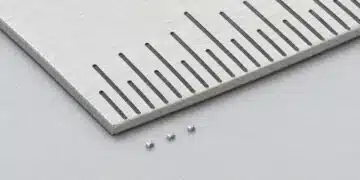
Samsung Electro‑Mechanics focuses here on 0201 MLCCs with capacitances up to 10 µF in low voltage ratings suitable for sensor rails.
Technical highlights
Ultra‑compact MLCCs for computing modules
The table below summarizes the “all‑in‑one” MLCCs aimed at SoC‑centric computing modules.
| Part number | Size (inch/metric) | Capacitance | Rated voltage | TCC | Typical location |
|---|---|---|---|---|---|
| CL03W106MS5C6W# | 0201 / 0603 | 10 µF | 2.5 Vdc | X6T | Directly beneath AI chipsets / sensors |
| CL05X476MS6N9W# | 0402 / 1005 | 47 µF | 2.5 Vdc | X6S | GPU / NPU power rail decoupling |
| CL10X107MS8NZW# | 0603 / 1608 | 100 µF | 2.5 Vdc | X6S | PMIC output and main power sections |
Placing 0201 MLCCs directly under the package minimizes inductance, which is crucial for limiting high‑frequency voltage ripple. Larger case sizes like 0603 provide high bulk capacitance, enabling replacement of parallel capacitor banks and freeing PCB area.
Dielectric and temperature characteristics
- X6S/X6T: Designed to operate up to mid‑range high temperatures (for example up to around 105–125 °C according to manufacturer datasheets), while keeping capacitance change within specified limits.
- These classes are suitable for tightly packed computing boards where ambient and self‑heating can be substantial; refer to the official datasheets for exact temperature and capacitance variation curves.
Ultra‑high‑capacitance MLCCs for fast transient performance
For applications where multiple joints move simultaneously and strict motion timing is required, Samsung Electro‑Mechanics highlights MLCCs with extremely high capacitance in 0805–1210 packages:
| Part number | Size (inch/metric) | Capacitance | Rated voltage | TCC |
|---|---|---|---|---|
| CL21X107MSYN3W# | 0805 / 2012 | 100 µF | 2.5 Vdc | X6S |
| CL31X227MSKNNW# | 1206 / 3216 | 220 µF | 2.5 Vdc | X6S |
| CL32X337MSVN4S# | 1210 / 3225 | 330 µF | 2.5 Vdc | X6S |
| CL32Z227MSVN4S# | 1210 / 3225 | 220 µF | 2.5 Vdc | X7T |
In practice, these values allow the designer to:
- Place low‑ESR bulk capacitance close to motor controllers and local DC/DC converters feeding high‑dynamic loads.
- Improve 1 ms‑class transient response, reducing torque ripple and timing errors in coordinated motion.
- Replace or downsize traditional electrolytics in some locations, with the benefit of better mechanical robustness and lower ESR (subject to system‑level validation).
X7T devices provide tighter capacitance stability over temperature, which is useful in environments with wider ambient variation; see the corresponding datasheets for detailed temperature characteristics.
High‑voltage, high‑reliability MLCCs for 48 V actuators
For motor control and actuator ECUs in harsh environments, Samsung Electro‑Mechanics offers 1206 and 1210 MLCCs rated up to 100–125 Vdc with enhanced bending strength.
1206 lineup (100 Vdc, 4.7 µF)
| Part number | Application | Feature | Bending strength (typ.) | Size (inch/metric) | Capacitance | Rated voltage | TCC |
|---|---|---|---|---|---|---|---|
| CL31Y475KCK6NW# | Industrial | General | 1 mm | 1206 / 3216 | 4.7 µF | 100 Vdc | X7S |
| CL31Y475KCK64N# | Industrial | Soft‑term | 3 mm | 1206 / 3216 | 4.7 µF | 100 Vdc | X7S |
| CL31Y475KCK6PN# | Automotive | General | 3 mm | 1206 / 3216 | 4.7 µF | 100 Vdc | X7S |
The soft‑term variants use terminations designed to enhance board‑level bending strength, helpful in assemblies where the PCB experiences flexing and vibration, such as joint‑integrated drive electronics.
1210 lineup (100–125 Vdc, 4.7–10 µF)
| Part number | Size (inch) | Capacitance | Rated voltage | TCC | Application | Soft‑term | Bending strength |
|---|---|---|---|---|---|---|---|
| CL32Z475KUJ6NW# | 1210 | 4.7 µF | 125 Vdc | X7T | Industrial | No | – |
| CL32Y106KCV6NW# | 1210 | 10 µF | 100 Vdc | X7S | Industrial | No | – |
| CL32Y106KCV64N# | 1210 | 10 µF | 100 Vdc | X7S | Industrial | Yes | 3 mm |
| CL32Y106KCV6PN# | 1210 | 10 µF | 100 Vdc | X7S | Automotive | No | 3 mm |
| CL32Y106KCJ6PJ# | 1210 | 10 µF | 100 Vdc | X7S | Automotive | Yes | 5 mm |
These parts are intended for 48 V bus filtering, DC link stabilization and snubber / clamp functions in motor drives and actuators according to manufacturer datasheets. The higher bending strength options (up to 5 mm) are particularly relevant in automotive‑grade humanoid platforms and mobile robots.
Sensor MLCCs for compact, noise‑sensitive circuits
For sensors, Samsung Electro‑Mechanics focuses on ultra‑small 0201 MLCCs:
| Part number | Size (inch/metric) | Capacitance | Rated voltage | TCC | Typical application |
|---|---|---|---|---|---|
| CL03X225MQ5N6W# | 0201 / 0603 | 2.2 µF | 6.3 Vdc | X6S | Sensor / logic decoupling |
| CL03X475MS3CNW# | 0201 / 0603 | 4.7 µF | 2.5 Vdc | X6S | Sensor / logic decoupling |
| CL03W106MS5C6W# | 0201 / 0603 | 10 µF | 2.5 Vdc | X6T | High‑density sensor rails |
These are suitable for:
- Bypass and decoupling in sensor SoCs and ASICs with limited pad and PCB area.
- Local RC filtering and anti‑aliasing networks in tactile and force sensors, where minimizing series inductance is important.
- Supply noise suppression in high‑resolution ADC front‑ends.
Source
This article is based on a Samsung Electro‑Mechanics product news release describing MLCC optimization for humanoid robot computing, motor control and sensor modules, complemented with independent editorial context for design engineers and buyers.