



Passive Components Blog
No Result
View All Result
  • Home
  • NewsFilter
    • All
    • Aerospace & Defence
    • Antenna
    • Applications
    • Automotive
    • Capacitors
    • Circuit Protection Devices
    • electro-mechanical news
    • Filters
    • Fuses
    • Inductors
    • Industrial
    • Integrated Passives
    • inter-connect news
    • Market & Supply Chain
    • Market Insights
    • Medical
    • Modelling and Simulation
    • New Materials & Supply
    • New Technologies
    • Non-linear Passives
    • Oscillators
    • Passive Sensors News
    • Resistors
    • RF & Microwave
    • Telecommunication
    • Weekly Digest

    YAGEO Introduces C0G Flexible Termination Automotive MLCCs

    SCHURTER Releases SMT Micro Switch for Compact HMIs

    binder Releases Tool‑Tightenable M12 Connectors for Improved Reliability

    Vishay Introduced Thin Film Submount Platform for Optical and RF Modules

    Murata Introduces Crystal and NTC Set for Automotive UWB Timing

    Kyocera Developed Multilayer Ceramic Core Substrate for AI Packages

    Modeling Fringing Field Losses in Inductors & Transformers

    YMIN Introduces Polymer Tantalum Capacitors for AI Server SSDs

    Littelfuse Expands High-Voltage TVS Diodes

    Trending Tags

    • Ripple Current
    • RF
    • Leakage Current
    • Tantalum vs Ceramic
    • Snubber
    • Low ESR
    • Feedthrough
    • Derating
    • Dielectric Constant
    • New Products
    • Market Reports
  • VideoFilter
    • All
    • Antenna videos
    • Capacitor videos
    • Circuit Protection Video
    • Filter videos
    • Fuse videos
    • Inductor videos
    • Inter-Connect Video
    • Non-linear passives videos
    • Oscillator videos
    • Passive sensors videos
    • Resistor videos

    Modeling Fringing Field Losses in Inductors & Transformers

    Why Power Inductors Use a Ferrite Core With an Air Gap

    Transformer-Based Power-Line Harvester Magnetic Design

    Thermal Modeling of Magnetics

    Standard vs Planar LLC transformers Comparison for Battery Chargers

    How Modern Tools Model Magnetic Components for Power Electronics

    Advanced Loss Modeling for Planar Magnetics in the Frenetic Planar Tool

    2026 Power Magnetics Design Trends: Flyback, DAB and Planar

    Enabling Software‑Defined Vehicle Architectures: Automotive Ethernet and Zonal Smart Power

    Trending Tags

    • Capacitors explained
    • Inductors explained
    • Resistors explained
    • Filters explained
    • Application Video Guidelines
    • EMC
    • New Products
    • Ripple Current
    • Simulation
    • Tantalum vs Ceramic
  • Knowledge Blog
  • DossiersNew
  • Suppliers
    • Who is Who
  • PCNS
    • PCNS 2025
    • PCNS 2023
    • PCNS 2021
    • PCNS 2019
    • PCNS 2017
  • Events
  • Home
  • NewsFilter
    • All
    • Aerospace & Defence
    • Antenna
    • Applications
    • Automotive
    • Capacitors
    • Circuit Protection Devices
    • electro-mechanical news
    • Filters
    • Fuses
    • Inductors
    • Industrial
    • Integrated Passives
    • inter-connect news
    • Market & Supply Chain
    • Market Insights
    • Medical
    • Modelling and Simulation
    • New Materials & Supply
    • New Technologies
    • Non-linear Passives
    • Oscillators
    • Passive Sensors News
    • Resistors
    • RF & Microwave
    • Telecommunication
    • Weekly Digest

    YAGEO Introduces C0G Flexible Termination Automotive MLCCs

    SCHURTER Releases SMT Micro Switch for Compact HMIs

    binder Releases Tool‑Tightenable M12 Connectors for Improved Reliability

    Vishay Introduced Thin Film Submount Platform for Optical and RF Modules

    Murata Introduces Crystal and NTC Set for Automotive UWB Timing

    Kyocera Developed Multilayer Ceramic Core Substrate for AI Packages

    Modeling Fringing Field Losses in Inductors & Transformers

    YMIN Introduces Polymer Tantalum Capacitors for AI Server SSDs

    Littelfuse Expands High-Voltage TVS Diodes

    Trending Tags

    • Ripple Current
    • RF
    • Leakage Current
    • Tantalum vs Ceramic
    • Snubber
    • Low ESR
    • Feedthrough
    • Derating
    • Dielectric Constant
    • New Products
    • Market Reports
  • VideoFilter
    • All
    • Antenna videos
    • Capacitor videos
    • Circuit Protection Video
    • Filter videos
    • Fuse videos
    • Inductor videos
    • Inter-Connect Video
    • Non-linear passives videos
    • Oscillator videos
    • Passive sensors videos
    • Resistor videos

    Modeling Fringing Field Losses in Inductors & Transformers

    Why Power Inductors Use a Ferrite Core With an Air Gap

    Transformer-Based Power-Line Harvester Magnetic Design

    Thermal Modeling of Magnetics

    Standard vs Planar LLC transformers Comparison for Battery Chargers

    How Modern Tools Model Magnetic Components for Power Electronics

    Advanced Loss Modeling for Planar Magnetics in the Frenetic Planar Tool

    2026 Power Magnetics Design Trends: Flyback, DAB and Planar

    Enabling Software‑Defined Vehicle Architectures: Automotive Ethernet and Zonal Smart Power

    Trending Tags

    • Capacitors explained
    • Inductors explained
    • Resistors explained
    • Filters explained
    • Application Video Guidelines
    • EMC
    • New Products
    • Ripple Current
    • Simulation
    • Tantalum vs Ceramic
  • Knowledge Blog
  • DossiersNew
  • Suppliers
    • Who is Who
  • PCNS
    • PCNS 2025
    • PCNS 2023
    • PCNS 2021
    • PCNS 2019
    • PCNS 2017
  • Events
No Result
View All Result
Passive Components Blog
No Result
View All Result

IQD Würth Elektronik Extends Temperature Range of Crystals

4.5.2023
Reading Time: 2 mins read
A A

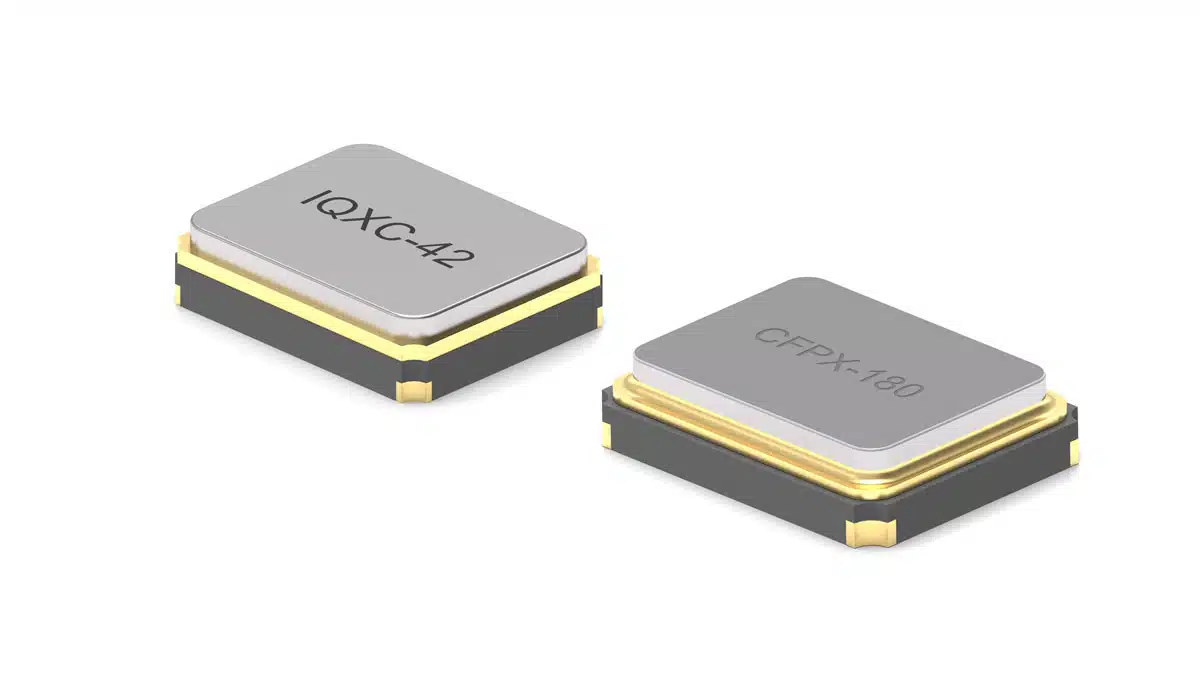
IQD, part of Würth Elektronik group extends temperature range of crystals to -40 to 125 °C.

Components capable of withstanding high operating temperatures are increasingly in demand, and it is not just by engineers working on the traditional high temperature or extreme applications, for example downhole.

RelatedPosts

Heatsink Design and Thermal Interface Materials for Reliable Electronics

Würth Elektronik Expanded Capacity for Validation and Services in Asia

Würth Elektronik Releases Heat Sinks for TO and IC packages

This trend is partly driven by IC manufacturers, who often design one chipset suitable for both industrial and automotive applications, and by the increased use of electronic devices in more extreme environments.

Additionally, the internal self-heating of electronic components close to the crystal on the board can be a motivation to select a crystal that is guaranteed to operate within the specification up to 125 °C.

Customers who are using the same frequencies in multiple projects with different temperature requirements, may also benefit from selecting one extended temperature part that is designed to work within all these applications rather than having to source and stock multiple parts.

IQD is therefore introducing a range of crystals housed in the popular 4-pad SMD ceramic packages 3.2 x 2.5 mm (CFPX-180) and 2.0 x 1.6 mm (IQXC-42) with the extended operating temperature range of -40 to 125 °C. The CFPX-180 is available in a range of frequencies from 12.0 MHz and the IQXC-42 from 16.0 MHz, with various load capacitances. The parts are offered with frequency stabilities down to +-30ppm over -40 to 125 °C and the ESR values are specified slightly lower than for the existing range of crystals in order to meet the demands of new microcontrollers, which often require lower ESR, for example for IoT applications.

For engineers requiring AEC-Q200 qualification, IQD also has a range of automotive qualified crystals. For a full list of the available frequencies and specifications please visit our website www.iqdfrequencyproducts.com.

These parts are recommended for multiple applications, including Internet of Things (IoT and IIoT), e.g.:

  • Ethernet
  • Green and smart energy applications (Solar inverters)
  • Industrial Control Systems
  • RFID
  • Test and Measurement Systems
  • Telemetry systems
  • Transportation systems
  • WiFi modules

Related

Source: Würth Elektronik

Recent Posts

YAGEO Introduces C0G Flexible Termination Automotive MLCCs

30.4.2026
11

SCHURTER Releases SMT Micro Switch for Compact HMIs

30.4.2026
4

binder Releases Tool‑Tightenable M12 Connectors for Improved Reliability

30.4.2026
4

Vishay Introduced Thin Film Submount Platform for Optical and RF Modules

30.4.2026
9

Murata Introduces Crystal and NTC Set for Automotive UWB Timing

30.4.2026
8

Murata New MLCC Bulk Case Packaging Cuts Packaging Material by 99%

27.4.2026
49

Exxelia Introduces SMD High‑Voltage Mica Capacitors

28.4.2026
23

April 2026 Interconnect, Passives and Electromechanical Components Market Insights

22.4.2026
85

KYOCERA AVX Introduces Traction‑Grade DC Link Film Capacitors

21.4.2026
48

Upcoming Events

May 5
16:00 - 17:00 CEST

Understanding and Selecting Capacitors – Fundamentals, Technologies and Latest Trends

May 7
17:00 - 18:00 CEST

From Grid to Motion: How Industrial Electrification is Redefining Power System Design

May 12
8:00 - 15:00 CEST

ESCC Space Splice connectors

View Calendar

Popular Posts

  • Buck Converter Design and Calculation

    0 shares
    Share 0 Tweet 0
  • Boost Converter Design and Calculation

    0 shares
    Share 0 Tweet 0
  • Flyback Converter Design and Calculation

    0 shares
    Share 0 Tweet 0
  • LLC Resonant Converter Design and Calculation

    0 shares
    Share 0 Tweet 0
  • MLCC and Ceramic Capacitors

    0 shares
    Share 0 Tweet 0
  • Dual Active Bridge (DAB) Topology

    0 shares
    Share 0 Tweet 0
  • What Electronics Engineer Needs to Know About Passive Low Pass Filters

    0 shares
    Share 0 Tweet 0
  • Capacitor Charging and Discharging

    0 shares
    Share 0 Tweet 0
  • MLCC Case Sizes Standards Explained

    0 shares
    Share 0 Tweet 0
  • Ripple Current and its Effects on the Performance of Capacitors

    3 shares
    Share 3 Tweet 0

Newsletter Subscription


Passive Components Blog

© EPCI - Leading Passive Components Educational and Information Site

  • Home
  • Privacy Policy
  • EPCI Membership & Advertisement
  • About

No Result
View All Result
  • Home
  • Knowledge Blog
  • PCNS

© EPCI - Leading Passive Components Educational and Information Site

This website uses cookies. By continuing to use this website you are giving consent to cookies being used. Visit our Privacy and Cookie Policy.
Go to mobile version