










Passive Components Blog
No Result
View All Result
  • Home
  • NewsFilter
    • All
    • Aerospace & Defence
    • Antenna
    • Applications
    • Automotive
    • Capacitors
    • Circuit Protection Devices
    • electro-mechanical news
    • Filters
    • Fuses
    • Inductors
    • Industrial
    • Integrated Passives
    • inter-connect news
    • Market & Supply Chain
    • Market Insights
    • Medical
    • Modelling and Simulation
    • New Materials & Supply
    • New Technologies
    • Non-linear Passives
    • Oscillators
    • Passive Sensors News
    • Resistors
    • RF & Microwave
    • Telecommunication
    • Weekly Digest

    Murata New Vibration Sensor Targets High‑Frequency Predictive Maintenance

    Kyocera Releases 30fs Jitter Differential Clock Oscillator

    Panasonic Expands Automotive PP Film Capacitors Voltage Range

    Panasonic Extends Automotive Power Inductor Line

    February 2026 Interconnect, Passives and Electromechanical Components Market Insights

    Wk 10 Electronics Supply Chain Digest

    YAGEO Presents 3.6 kW LLC Transformer Platform

    Empower Extends Embedded Silicon Capacitors for AI

    ECIA February 2026 Industry Pulse Signals Strong Component Growth

    Trending Tags

    • Ripple Current
    • RF
    • Leakage Current
    • Tantalum vs Ceramic
    • Snubber
    • Low ESR
    • Feedthrough
    • Derating
    • Dielectric Constant
    • New Products
    • Market Reports
  • VideoFilter
    • All
    • Antenna videos
    • Capacitor videos
    • Circuit Protection Video
    • Filter videos
    • Fuse videos
    • Inductor videos
    • Inter-Connect Video
    • Non-linear passives videos
    • Oscillator videos
    • Passive sensors videos
    • Resistor videos

    How Modern Tools Model Magnetic Components for Power Electronics

    Advanced Loss Modeling for Planar Magnetics in the Frenetic Planar Tool

    2026 Power Magnetics Design Trends: Flyback, DAB and Planar

    Enabling Software‑Defined Vehicle Architectures: Automotive Ethernet and Zonal Smart Power

    Calculating Resistance Value of a Flyback RC Snubber 

    One‑Pulse Characterization of Nonlinear Power Inductors

    Thermistor Linearization Challenges

    Coaxial Connectors and How to Connect with PCB

    PCB Manufacturing, Test Methods, Quality and Reliability

    Trending Tags

    • Capacitors explained
    • Inductors explained
    • Resistors explained
    • Filters explained
    • Application Video Guidelines
    • EMC
    • New Products
    • Ripple Current
    • Simulation
    • Tantalum vs Ceramic
  • Knowledge Blog
  • DossiersNew
  • Suppliers
    • Who is Who
  • PCNS
    • PCNS 2025
    • PCNS 2023
    • PCNS 2021
    • PCNS 2019
    • PCNS 2017
  • Events
  • Home
  • NewsFilter
    • All
    • Aerospace & Defence
    • Antenna
    • Applications
    • Automotive
    • Capacitors
    • Circuit Protection Devices
    • electro-mechanical news
    • Filters
    • Fuses
    • Inductors
    • Industrial
    • Integrated Passives
    • inter-connect news
    • Market & Supply Chain
    • Market Insights
    • Medical
    • Modelling and Simulation
    • New Materials & Supply
    • New Technologies
    • Non-linear Passives
    • Oscillators
    • Passive Sensors News
    • Resistors
    • RF & Microwave
    • Telecommunication
    • Weekly Digest

    Murata New Vibration Sensor Targets High‑Frequency Predictive Maintenance

    Kyocera Releases 30fs Jitter Differential Clock Oscillator

    Panasonic Expands Automotive PP Film Capacitors Voltage Range

    Panasonic Extends Automotive Power Inductor Line

    February 2026 Interconnect, Passives and Electromechanical Components Market Insights

    Wk 10 Electronics Supply Chain Digest

    YAGEO Presents 3.6 kW LLC Transformer Platform

    Empower Extends Embedded Silicon Capacitors for AI

    ECIA February 2026 Industry Pulse Signals Strong Component Growth

    Trending Tags

    • Ripple Current
    • RF
    • Leakage Current
    • Tantalum vs Ceramic
    • Snubber
    • Low ESR
    • Feedthrough
    • Derating
    • Dielectric Constant
    • New Products
    • Market Reports
  • VideoFilter
    • All
    • Antenna videos
    • Capacitor videos
    • Circuit Protection Video
    • Filter videos
    • Fuse videos
    • Inductor videos
    • Inter-Connect Video
    • Non-linear passives videos
    • Oscillator videos
    • Passive sensors videos
    • Resistor videos

    How Modern Tools Model Magnetic Components for Power Electronics

    Advanced Loss Modeling for Planar Magnetics in the Frenetic Planar Tool

    2026 Power Magnetics Design Trends: Flyback, DAB and Planar

    Enabling Software‑Defined Vehicle Architectures: Automotive Ethernet and Zonal Smart Power

    Calculating Resistance Value of a Flyback RC Snubber 

    One‑Pulse Characterization of Nonlinear Power Inductors

    Thermistor Linearization Challenges

    Coaxial Connectors and How to Connect with PCB

    PCB Manufacturing, Test Methods, Quality and Reliability

    Trending Tags

    • Capacitors explained
    • Inductors explained
    • Resistors explained
    • Filters explained
    • Application Video Guidelines
    • EMC
    • New Products
    • Ripple Current
    • Simulation
    • Tantalum vs Ceramic
  • Knowledge Blog
  • DossiersNew
  • Suppliers
    • Who is Who
  • PCNS
    • PCNS 2025
    • PCNS 2023
    • PCNS 2021
    • PCNS 2019
    • PCNS 2017
  • Events
No Result
View All Result
Passive Components Blog
No Result
View All Result

Murata New Vibration Sensor Targets High‑Frequency Predictive Maintenance

10.3.2026
Reading Time: 7 mins read
A A

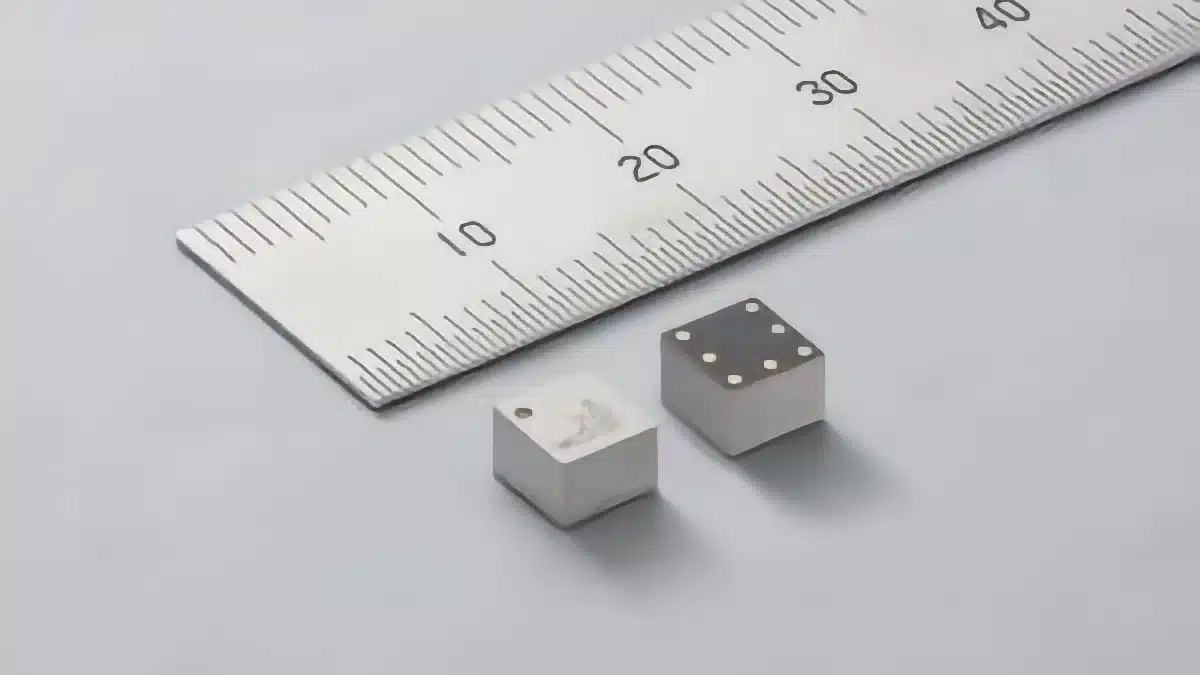
Murata has introduced the PKGM-210D-R, an SMD vibration sensor device optimized for predictive maintenance and condition monitoring in industrial equipment.

The device can detect high-frequency vibration components up to 20 kHz, enabling earlier detection of bearing, motor and mechanical issues that are often missed by conventional low-frequency sensors. Its compact footprint and integrated signal conditioning are designed to simplify design-in and retrofit on existing machinery.

RelatedPosts

MLCC Manufacturers Consider Price Increase as AI Demand Outpaces Supply

Murata Opens New Ceramic Capacitor Manufacturing and R&D Center in Japan

Murata Publishes Power Delivery Guide for AI Servers

Key features and benefits

The Murata PKGM-210D-R is a single-axis piezoelectric ceramic vibration sensor with integrated analog signal conditioning and temperature sensing. It is intended as a robust, board-mountable building block for condition-based monitoring systems in factory automation and related fields.

Key features:

  • Z-axis vibration detection with a frequency bandwidth from 5 kHz to 20 kHz
  • Compact SMD package of 0.20 × 0.20 × 0.14 inches (5.0 × 5.0 × 3.5 mm) for PCB mounting
  • Built-in driver and filter circuits, reducing external analog front-end complexity
  • Single-ended analog output, simplifying connection to ADCs or monitoring ICs
  • Integrated temperature sensor for additional diagnostic and compensation functions
  • Supply voltage range of 3.0 V to 5.2 V, supporting common industrial and embedded power rails
  • Typical G sensitivity of 44 mV/G, with a minimum detection range of ±10.2 G and a typical range of ±50 G
  • Operating temperature range from −20∘C-20^\circ\text{C} to 85∘C85^\circ\text{C}, suitable for many industrial environments

From a system perspective, the integrated filter and driver stages can reduce BOM count, PCB area and analog design effort compared with raw piezo elements or sensors requiring external charge amplifiers.

Typical applications

Murata positions the PKGM-210D-R primarily for predictive maintenance and condition-based monitoring in factory automation. The high-frequency bandwidth allows the device to capture early-stage fault signatures that often reside above the range used for simple vibration level monitoring.

Typical application areas include:

  • Bearings and rotating machinery health monitoring in motors, pumps, compressors and gearboxes
  • Detection of abnormal vibration patterns from insufficient lubrication, misalignment or early mechanical wear
  • Integration into smart motors, actuators or mechatronic modules for built-in condition monitoring
  • Retrofit sensor nodes on existing production equipment where compact SMD devices can be added to local control boards or small sensor PCBs
  • Industrial IoT (IIoT) vibration monitoring nodes feeding data to gateways or cloud-based analytics platforms

Because the sensor focuses on the Z-axis and the 5 kHz to 20 kHz band, it complements lower-frequency accelerometers often used for overall vibration trend monitoring, allowing multi-band analysis in more advanced monitoring architectures.

Technical highlights

The PKGM-210D-R combines Murata’s piezoelectric ceramic vibration detection technology with an integrated analog interface in a small SMD package.

Key technical data (according to manufacturer specifications):

  • Product name: PKGM-210D-R
  • Package size: 5.0 mm (L) × 5.0 mm (W) × 3.5 mm (T)
  • Detection axis: 1 axis (Z direction)
  • Frequency bandwidth: 5 kHz to 20 kHz
  • Detection G range (minimum): ±10.2 G, typical ±50 G
  • G sensitivity (typical): 44 mV/G
  • Supply voltage: 3.0 V to 5.2 V
  • Current consumption: 3.0 mA
  • Output type: single analog output
  • Operating temperature range: −20∘C-20^\circ\text{C} to 85∘C85^\circ\text{C}

In practice, a sensitivity of 44 mV/G means that a vibration of 10 G will produce an output swing of approximately 0.44 V0.44\ \text{V}, which is directly usable by most microcontroller or data-acquisition ADC inputs when combined with appropriate offset and scaling. Engineers should refer to the manufacturer datasheet for detailed transfer characteristics, recommended output loading and calibration information.

The integrated temperature sensor adds another diagnostic dimension: it can support temperature-based derating strategies, correlation of vibration signatures with thermal conditions, or compensation for temperature drift of the vibration measurement chain.

Design‑in notes for engineers

When designing in the PKGM-210D-R, several practical aspects are worth considering:

  • Mechanical placement and orientation: The device senses vibration along the Z-axis, so PCB placement, board mounting and mechanical coupling to the monitored structure are critical for capturing relevant vibration signatures. Placing the sensor close to the mechanical component of interest and ensuring a rigid mechanical path typically improves signal fidelity.
  • Frequency focus: With a 5 kHz to 20 kHz bandwidth, the sensor targets higher-frequency vibration components that often precede major failures. This makes it suitable for early fault detection algorithms but less suited as a general-purpose low-frequency accelerometer. Combining it with a broadband accelerometer can give a more complete picture of machinery health.
  • Signal chain and ADC interface: Thanks to the built-in driver and filter circuits, the analog output can usually be routed directly to a microcontroller or data-acquisition ADC, subject to the recommended load and input impedance given in the datasheet. Engineers should verify required anti-aliasing, offset and scaling in the context of their sampling rate and ADC input range.
  • Power budget and supply: The typical current consumption of 3.0 mA is modest for continuously powered industrial nodes but may be notable in battery-powered wireless sensors. Power-cycling or duty-cycling strategies, where compatible with the monitoring requirements, can help manage energy usage.
  • Temperature considerations: The operating range of −20∘C-20^\circ\text{C} to 85∘C85^\circ\text{C} covers many industrial indoor and enclosure-based applications. For harsher environments or outdoor installations, system-level thermal management and environmental protection must be considered, and the temperature sensor output can be used for additional monitoring or compensation.
  • Noise and cabling: In PCB-level integration, the single-ended analog output can be sufficient, especially when traces are short and routed carefully with proper grounding. For longer runs or noisy environments, Murata’s differential output variant PKGM-200D-R may be a better fit, as differential signaling improves immunity to common-mode noise.

From a purchasing and lifecycle perspective, having both a single-ended and a differential version in the same product family can simplify platform design, allowing reuse of mechanical and digital processing while tailoring the analog interface to each use case according to the manufacturer datasheet.

Source

This article is based on information provided in the official Murata Manufacturing Co., Ltd. press release and related product pages, complemented with general engineering interpretation for vibration-based predictive maintenance applications.


References

  1. Murata press release – Murata launches vibration sensor device for predictive maintenance capable of detecting high-frequency range up to 20 kHz
  2. Murata PKGM-210D-R product page
  3. Murata PKGM-200D-R product page – differential output vibration sensor

Related

Recent Posts

Kyocera Releases 30fs Jitter Differential Clock Oscillator

10.3.2026
1

Panasonic Expands Automotive PP Film Capacitors Voltage Range

9.3.2026
7

Panasonic Extends Automotive Power Inductor Line

9.3.2026
11

YAGEO Presents 3.6 kW LLC Transformer Platform

6.3.2026
28

ECIA February 2026 Industry Pulse Signals Strong Component Growth

6.3.2026
17

Inductors and Ferrite Beads Price Hikes 

5.3.2026
58

TDK Extends Compact ThermoFuse Varistors up to 50 kA

5.3.2026
14

Samtec ANSI/VITA 90 Connectors: Rugged Small Form Factor Standard

5.3.2026
5

Resistor Technology Dossier

4.3.2026
38

Upcoming Events

Mar 19
13:00 - 14:00 CDT

Smart Consideration of Inductor Thermal Performance

Mar 21
All day

PSMA Capacitor Workshop 2026

Apr 21
16:00 - 17:00 CEST

Heatsink Solutions: Thermal Management in electronic devices

View Calendar

Popular Posts

  • Buck Converter Design and Calculation

    0 shares
    Share 0 Tweet 0
  • Boost Converter Design and Calculation

    0 shares
    Share 0 Tweet 0
  • Flyback Converter Design and Calculation

    0 shares
    Share 0 Tweet 0
  • LLC Resonant Converter Design and Calculation

    0 shares
    Share 0 Tweet 0
  • MLCC Manufacturers Consider Price Increase as AI Demand Outpaces Supply

    0 shares
    Share 0 Tweet 0
  • Dual Active Bridge (DAB) Topology

    0 shares
    Share 0 Tweet 0
  • Ripple Current and its Effects on the Performance of Capacitors

    3 shares
    Share 3 Tweet 0
  • MLCC and Ceramic Capacitors

    0 shares
    Share 0 Tweet 0
  • What is a Dielectric Constant and DF of Plastic Materials?

    4 shares
    Share 4 Tweet 0
  • MLCC Case Sizes Standards Explained

    0 shares
    Share 0 Tweet 0

Newsletter Subscription


Passive Components Blog

© EPCI - Leading Passive Components Educational and Information Site

  • Home
  • Privacy Policy
  • EPCI Membership & Advertisement
  • About

No Result
View All Result
  • Home
  • Knowledge Blog
  • PCNS

© EPCI - Leading Passive Components Educational and Information Site

This website uses cookies. By continuing to use this website you are giving consent to cookies being used. Visit our Privacy and Cookie Policy.
Go to mobile version