









Passive Components Blog
No Result
View All Result
  • Home
  • NewsFilter
    • All
    • Aerospace & Defence
    • Antenna
    • Applications
    • Automotive
    • Capacitors
    • Circuit Protection Devices
    • electro-mechanical news
    • Filters
    • Fuses
    • Inductors
    • Industrial
    • Integrated Passives
    • inter-connect news
    • Market & Supply Chain
    • Market Insights
    • Medical
    • Modelling and Simulation
    • New Materials & Supply
    • New Technologies
    • Non-linear Passives
    • Oscillators
    • Passive Sensors News
    • Resistors
    • RF & Microwave
    • Telecommunication
    • Weekly Digest

    Top 10 Connector Vendors by Product Type

    Bourns Releases High‑Q Air Coil Inductors for RF Aplications

    CMSE 2026 Announces Call for Presentations on High-Reliability Military and Space Electronics

    ESA Call for Papers 6th Space Passive Component Days – SPCD 2026

    Würth Elektronik Offers Halogen‑Free EMC Gaskets for Displays and Housings

    Component Distribution Supply Chain January 2026

    Binder Unveils M8 Flange Solder Connectors for Flexible Cabling

    Power Electronics Tools for Passives and Magnetic Designs

    Modelithics Releases Component Model Library for SIMULIA CST Studio Suite

    Trending Tags

    • Ripple Current
    • RF
    • Leakage Current
    • Tantalum vs Ceramic
    • Snubber
    • Low ESR
    • Feedthrough
    • Derating
    • Dielectric Constant
    • New Products
    • Market Reports
  • VideoFilter
    • All
    • Antenna videos
    • Capacitor videos
    • Circuit Protection Video
    • Filter videos
    • Fuse videos
    • Inductor videos
    • Inter-Connect Video
    • Non-linear passives videos
    • Oscillator videos
    • Passive sensors videos
    • Resistor videos

    One‑Pulse Characterization of Nonlinear Power Inductors

    Thermistor Linearization Challenges

    Coaxial Connectors and How to Connect with PCB

    PCB Manufacturing, Test Methods, Quality and Reliability

    Transformer Behavior – Current Transfer and Hidden Feedback

    Choosing the Right Capacitor: The Importance of Accurate Measurements

    RF Inductors: Selection and Design Challenges for High-Frequency Circuits

    Transformer Safety IEC 61558 Standard

    3-Phase EMI Filter Design, Simulation, Calculation and Test

    Trending Tags

    • Capacitors explained
    • Inductors explained
    • Resistors explained
    • Filters explained
    • Application Video Guidelines
    • EMC
    • New Products
    • Ripple Current
    • Simulation
    • Tantalum vs Ceramic
  • Knowledge Blog
  • DossiersNew
  • Suppliers
    • Who is Who
  • PCNS
    • PCNS 2025
    • PCNS 2023
    • PCNS 2021
    • PCNS 2019
    • PCNS 2017
  • Events
  • Home
  • NewsFilter
    • All
    • Aerospace & Defence
    • Antenna
    • Applications
    • Automotive
    • Capacitors
    • Circuit Protection Devices
    • electro-mechanical news
    • Filters
    • Fuses
    • Inductors
    • Industrial
    • Integrated Passives
    • inter-connect news
    • Market & Supply Chain
    • Market Insights
    • Medical
    • Modelling and Simulation
    • New Materials & Supply
    • New Technologies
    • Non-linear Passives
    • Oscillators
    • Passive Sensors News
    • Resistors
    • RF & Microwave
    • Telecommunication
    • Weekly Digest

    Top 10 Connector Vendors by Product Type

    Bourns Releases High‑Q Air Coil Inductors for RF Aplications

    CMSE 2026 Announces Call for Presentations on High-Reliability Military and Space Electronics

    ESA Call for Papers 6th Space Passive Component Days – SPCD 2026

    Würth Elektronik Offers Halogen‑Free EMC Gaskets for Displays and Housings

    Component Distribution Supply Chain January 2026

    Binder Unveils M8 Flange Solder Connectors for Flexible Cabling

    Power Electronics Tools for Passives and Magnetic Designs

    Modelithics Releases Component Model Library for SIMULIA CST Studio Suite

    Trending Tags

    • Ripple Current
    • RF
    • Leakage Current
    • Tantalum vs Ceramic
    • Snubber
    • Low ESR
    • Feedthrough
    • Derating
    • Dielectric Constant
    • New Products
    • Market Reports
  • VideoFilter
    • All
    • Antenna videos
    • Capacitor videos
    • Circuit Protection Video
    • Filter videos
    • Fuse videos
    • Inductor videos
    • Inter-Connect Video
    • Non-linear passives videos
    • Oscillator videos
    • Passive sensors videos
    • Resistor videos

    One‑Pulse Characterization of Nonlinear Power Inductors

    Thermistor Linearization Challenges

    Coaxial Connectors and How to Connect with PCB

    PCB Manufacturing, Test Methods, Quality and Reliability

    Transformer Behavior – Current Transfer and Hidden Feedback

    Choosing the Right Capacitor: The Importance of Accurate Measurements

    RF Inductors: Selection and Design Challenges for High-Frequency Circuits

    Transformer Safety IEC 61558 Standard

    3-Phase EMI Filter Design, Simulation, Calculation and Test

    Trending Tags

    • Capacitors explained
    • Inductors explained
    • Resistors explained
    • Filters explained
    • Application Video Guidelines
    • EMC
    • New Products
    • Ripple Current
    • Simulation
    • Tantalum vs Ceramic
  • Knowledge Blog
  • DossiersNew
  • Suppliers
    • Who is Who
  • PCNS
    • PCNS 2025
    • PCNS 2023
    • PCNS 2021
    • PCNS 2019
    • PCNS 2017
  • Events
No Result
View All Result
Passive Components Blog
No Result
View All Result

Samsung Unveils World First CLLC Resonant 1kV 33nF C0G MLCC in 1210 Size

19.12.2025
Reading Time: 3 mins read
A A

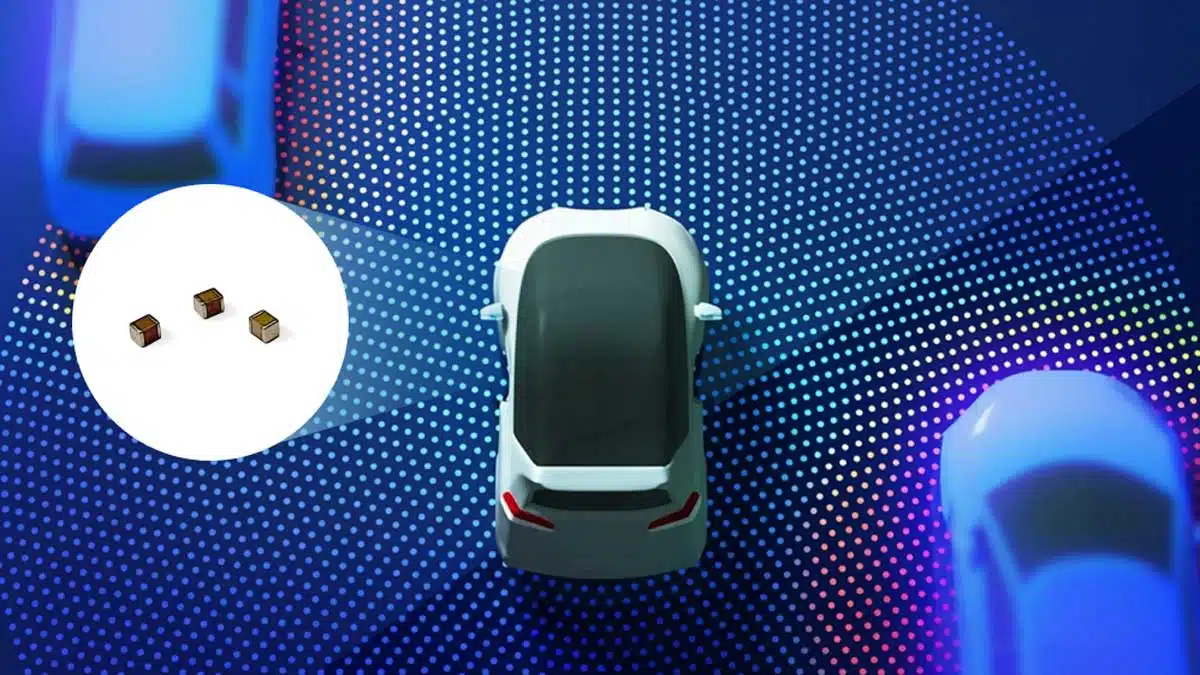
Samsung Electro-Mechanics has introduced the world’s first CLLC resonant multilayer ceramic capacitor (MLCC) in a compact 1210 (3.2 × 2.5 mm) package, offering 33 nF at 1000 V with a C0G dielectric tailored for xEV CLLC resonant converters.

This MLCC CL32C333JIV1PN#  targets on-board charger and high-voltage charging architectures in BEV and PHEV platforms where high stability, low loss, and miniaturization are critical.

RelatedPosts

Samsung Q4 2025 Results: MLCC focus for AI, Server and Automotive

Samsung MLCC Replacing Aluminum Polymer Capacitors in AI Systems

Samsungs Low ESL MLCCs to Power Next-Generation ADAS SoCs

Product overview

The new part, CL32C333JIV1PN, is a temperature-compensating high-voltage MLCC designed for xEV applications such as battery electric vehicles (BEV) and plug-in hybrid electric vehicles (PHEV). It combines a 33 nF capacitance with a 1000 V rated voltage in a standard 1210 case size using a C0G dielectric with a temperature range of −55 °C to 125 °C.

Mass production of this MLCC has already started, enabling automotive customers to immediately integrate it into next-generation resonant converter designs. The C0G characteristic ensures an ultra-stable capacitance change of 0 ± 30 ppm/°C across the specified temperature range, which is essential for predictable resonant behavior.

Role in CLLC resonant converters

Electrification of vehicles and increased functional integration are driving a sharp rise in the number of MLCCs per vehicle, especially in high-voltage power stages such as CLLC resonant circuits used in onboard chargers. In these resonant stages, capacitors must provide precise and stable capacitance under high voltage and temperature to maintain the designed resonant frequency and efficiency.

The CL32C333JIV1PN targets exactly these requirements by combining high voltage capability with low capacitance drift and low dielectric losses, supporting high power density designs without sacrificing EMI performance or reliability. Its compact 1210 footprint helps reduce PCB area versus traditional film or larger ceramic solutions at similar voltage ratings.

Key technologies and performance

Samsung Electro-Mechanics achieves the 33 nF, 1000 V performance in 1210 size by applying proprietary fine-particle ceramic and electrode materials, together with ultra-precision stacking processes. These process innovations enable higher layer counts and thinner dielectric layers while maintaining the robustness required for automotive environments.

The use of a C0G dielectric guarantees near-zero capacitance variation over temperature and very low voltage dependence, which minimizes frequency drift in resonant tanks and supports tight control margins in digital power stages. This stability simplifies design margins and can reduce the need for overdesign in surrounding magnetics and control algorithms.

Expanded high-voltage C0G lineup

Alongside the 33 nF / 1000 V flagship, Samsung Electro-Mechanics offers additional 1210 C0G high-voltage MLCC variants to cover a broader design space. These include a 10 nF device rated at 1250 V (CL32C103JXV3PN) and a 22 nF device rated at 1000 V (CL32C223JIV3PN), both in the same 3.2 × 2.5 mm package.

This lineup allows designers to optimize resonant capacitors for different power levels and bus voltages while keeping footprint and dielectric characteristics consistent across the platform. For all three parts, detailed datasheets and technical support are available, including sample services for evaluation and design-in.

Typical applications

  • xEV onboard chargers and high-voltage DC/DC converters using CLLC or similar resonant topologies that demand stable, high-voltage MLCCs.
  • High-frequency, high-efficiency power stages where minimizing losses and temperature-induced parameter shifts is critical for overall system performance.

Samsung Electro-Mechanics supports automotive customers with professional technical assistance and sample provisioning through regional contacts in the USA, Europe, and Southeast Asia, helping accelerate design cycles and qualification efforts.

Related

Source: Samsung Electro-Mechanics

Recent Posts

CMSE 2026 Announces Call for Presentations on High-Reliability Military and Space Electronics

28.1.2026
21

ESA Call for Papers 6th Space Passive Component Days – SPCD 2026

28.1.2026
21

Samsung Q4 2025 Results: MLCC focus for AI, Server and Automotive

26.1.2026
61

Capacitor Technology Dossier

26.1.2026
77

ROHM Extends 2012 Shunt Resistors Power Rating up to 1.25 W

23.1.2026
23

Passive Components in Quantum Computing

22.1.2026
125

0603 Automotive Chip Varistors as TVS Diode Replacements, TDK Tech Note

21.1.2026
29

Miniaturization of MLCCs and Electrolytics, KAVX Tech Chat

21.1.2026
69

Researchers Demonstrated 32nm Aluminum Vacuum Gap Capacitor

20.1.2026
41

Upcoming Events

Feb 24
16:00 - 17:00 CET

Designing Qi2 Wireless Power Systems: Practical Development and EMC Optimization

Mar 3
16:00 - 17:00 CET

Cybersecurity at the Eleventh Hour – from RED to CRA – Information and Discussion

Mar 21
All day

PSMA Capacitor Workshop 2026

View Calendar

Popular Posts

  • Buck Converter Design and Calculation

    0 shares
    Share 0 Tweet 0
  • Boost Converter Design and Calculation

    0 shares
    Share 0 Tweet 0
  • LLC Resonant Converter Design and Calculation

    0 shares
    Share 0 Tweet 0
  • Flyback Converter Design and Calculation

    0 shares
    Share 0 Tweet 0
  • Ripple Current and its Effects on the Performance of Capacitors

    3 shares
    Share 3 Tweet 0
  • How Metal Prices Are Driving Passive Component Price Hikes

    0 shares
    Share 0 Tweet 0
  • MLCC and Ceramic Capacitors

    0 shares
    Share 0 Tweet 0
  • Dual Active Bridge (DAB) Topology

    0 shares
    Share 0 Tweet 0
  • Degradation of Capacitors and its Failure Mechanisms

    0 shares
    Share 0 Tweet 0
  • What is a Dielectric Constant and DF of Plastic Materials?

    4 shares
    Share 4 Tweet 0

Newsletter Subscription


Passive Components Blog

© EPCI - Leading Passive Components Educational and Information Site

  • Home
  • Privacy Policy
  • EPCI Membership & Advertisement
  • About

No Result
View All Result
  • Home
  • Knowledge Blog
  • PCNS

© EPCI - Leading Passive Components Educational and Information Site

This website uses cookies. By continuing to use this website you are giving consent to cookies being used. Visit our Privacy and Cookie Policy.
Go to mobile version