





Passive Components Blog
No Result
View All Result
  • Home
  • NewsFilter
    • All
    • Aerospace & Defence
    • Antenna
    • Applications
    • Automotive
    • Capacitors
    • Circuit Protection Devices
    • electro-mechanical news
    • Filters
    • Fuses
    • Inductors
    • Industrial
    • Integrated Passives
    • inter-connect news
    • Market & Supply Chain
    • Market Insights
    • Medical
    • Modelling and Simulation
    • New Materials & Supply
    • New Technologies
    • Non-linear Passives
    • Oscillators
    • Passive Sensors News
    • Resistors
    • RF & Microwave
    • Telecommunication
    • Weekly Digest

    Molecular Memristor Shows Record 145 kH Emergent Inductance

    Planar vs Conventional Transformer: When it Make Sense

    Researchers Propose Next‑Gen Compact Memory Using Ultra-thin Ferroelectric Capacitors

    Nichicon ADN Automotive Hybrid Aluminum Capacitors Now Available in EMEA

    Wk 19 Electronics Supply Chain Digest

    Electrocaloric Multilayer Capacitors: Towards Quiet, Solid‑State Cooling Around Room Temperature

    High-Crystallinity Nanocrystalline Composites for MHz Chip Inductors

    European Components Distribution Shows Strong Q1 2026 Growth Amid Geopolitical Uncertainty

    Stackpole Expanded its AlN Thick Film Chip Resistors

    Trending Tags

    • Ripple Current
    • RF
    • Leakage Current
    • Tantalum vs Ceramic
    • Snubber
    • Low ESR
    • Feedthrough
    • Derating
    • Dielectric Constant
    • New Products
    • Market Reports
  • VideoFilter
    • All
    • Antenna videos
    • Capacitor videos
    • Circuit Protection Video
    • Filter videos
    • Fuse videos
    • Inductor videos
    • Inter-Connect Video
    • Non-linear passives videos
    • Oscillator videos
    • Passive sensors videos
    • Resistor videos

    Planar vs Conventional Transformer: When it Make Sense

    Modeling Fringing Field Losses in Inductors & Transformers

    Why Power Inductors Use a Ferrite Core With an Air Gap

    Transformer-Based Power-Line Harvester Magnetic Design

    Thermal Modeling of Magnetics

    Standard vs Planar LLC transformers Comparison for Battery Chargers

    How Modern Tools Model Magnetic Components for Power Electronics

    Advanced Loss Modeling for Planar Magnetics in the Frenetic Planar Tool

    2026 Power Magnetics Design Trends: Flyback, DAB and Planar

    Trending Tags

    • Capacitors explained
    • Inductors explained
    • Resistors explained
    • Filters explained
    • Application Video Guidelines
    • EMC
    • New Products
    • Ripple Current
    • Simulation
    • Tantalum vs Ceramic
  • Knowledge Blog
  • DossiersNew
  • Suppliers
    • Who is Who
  • PCNS
    • PCNS 2025
    • PCNS 2023
    • PCNS 2021
    • PCNS 2019
    • PCNS 2017
  • Events
  • Home
  • NewsFilter
    • All
    • Aerospace & Defence
    • Antenna
    • Applications
    • Automotive
    • Capacitors
    • Circuit Protection Devices
    • electro-mechanical news
    • Filters
    • Fuses
    • Inductors
    • Industrial
    • Integrated Passives
    • inter-connect news
    • Market & Supply Chain
    • Market Insights
    • Medical
    • Modelling and Simulation
    • New Materials & Supply
    • New Technologies
    • Non-linear Passives
    • Oscillators
    • Passive Sensors News
    • Resistors
    • RF & Microwave
    • Telecommunication
    • Weekly Digest

    Molecular Memristor Shows Record 145 kH Emergent Inductance

    Planar vs Conventional Transformer: When it Make Sense

    Researchers Propose Next‑Gen Compact Memory Using Ultra-thin Ferroelectric Capacitors

    Nichicon ADN Automotive Hybrid Aluminum Capacitors Now Available in EMEA

    Wk 19 Electronics Supply Chain Digest

    Electrocaloric Multilayer Capacitors: Towards Quiet, Solid‑State Cooling Around Room Temperature

    High-Crystallinity Nanocrystalline Composites for MHz Chip Inductors

    European Components Distribution Shows Strong Q1 2026 Growth Amid Geopolitical Uncertainty

    Stackpole Expanded its AlN Thick Film Chip Resistors

    Trending Tags

    • Ripple Current
    • RF
    • Leakage Current
    • Tantalum vs Ceramic
    • Snubber
    • Low ESR
    • Feedthrough
    • Derating
    • Dielectric Constant
    • New Products
    • Market Reports
  • VideoFilter
    • All
    • Antenna videos
    • Capacitor videos
    • Circuit Protection Video
    • Filter videos
    • Fuse videos
    • Inductor videos
    • Inter-Connect Video
    • Non-linear passives videos
    • Oscillator videos
    • Passive sensors videos
    • Resistor videos

    Planar vs Conventional Transformer: When it Make Sense

    Modeling Fringing Field Losses in Inductors & Transformers

    Why Power Inductors Use a Ferrite Core With an Air Gap

    Transformer-Based Power-Line Harvester Magnetic Design

    Thermal Modeling of Magnetics

    Standard vs Planar LLC transformers Comparison for Battery Chargers

    How Modern Tools Model Magnetic Components for Power Electronics

    Advanced Loss Modeling for Planar Magnetics in the Frenetic Planar Tool

    2026 Power Magnetics Design Trends: Flyback, DAB and Planar

    Trending Tags

    • Capacitors explained
    • Inductors explained
    • Resistors explained
    • Filters explained
    • Application Video Guidelines
    • EMC
    • New Products
    • Ripple Current
    • Simulation
    • Tantalum vs Ceramic
  • Knowledge Blog
  • DossiersNew
  • Suppliers
    • Who is Who
  • PCNS
    • PCNS 2025
    • PCNS 2023
    • PCNS 2021
    • PCNS 2019
    • PCNS 2017
  • Events
No Result
View All Result
Passive Components Blog
No Result
View All Result

Vishay Releases Sulfur‑Resistant Chip Resistors

12.2.2026
Reading Time: 6 mins read
A A

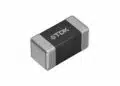
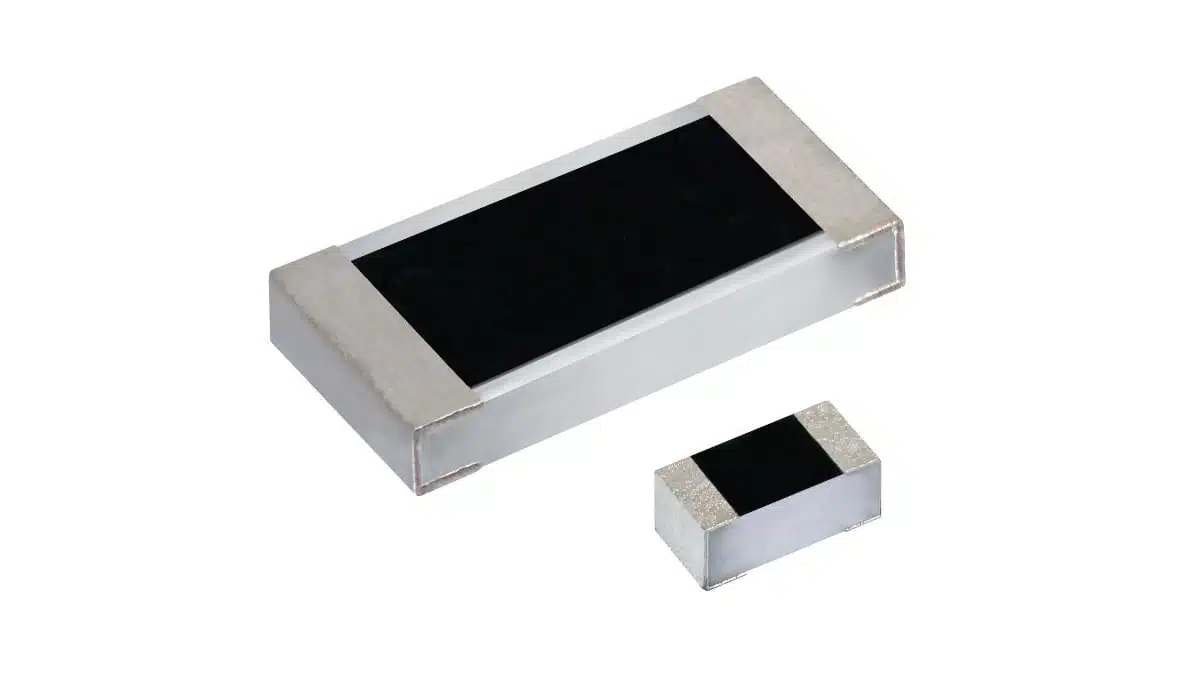
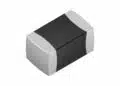
Vishay’s new RCA‑SR e3 series are AEC‑Q200 qualified thick film chip resistors designed for sulfur‑rich and thermally demanding environments in automotive, industrial, and telecom electronics.

By combining proven sulfur resistance with tight long‑term stability, they target design engineers who struggle with latent field failures caused by sulfur contamination and drift in standard thick film parts.

RelatedPosts

SPICE Simulation of Non-Linear Resistors: Vishay’s Thermistor and PPTC Modelling Ecosystem

Vishay Extends Power Inductors for DC/DC with 1212 Compact Case

Vishay Releases 2-Way Wilkinson Divider / Combiner for 15–20 GHz RF Front Ends

Key features and benefits

The RCA‑SR e3 thick film chip resistors family is positioned as a standard thick film chip platform with enhanced sulfur resistant resistors for applications exposed to polluted air, rubber and fuel vapors, or industrial atmospheres. The series is qualified to AEC‑Q200, making it suitable for automotive control units and other high‑reliability electronics where component derating and long service life are critical.

Key characteristics include:

  • Sulfur withstand capability tested per ASTM B809‑25, maximum resistance drift of 1% after 1000 h at 60 °C, addressing failure modes in sulfur‑containing atmospheres where conventional silver‑based terminations can corrode and go open.
  • Long‑term stability with ΔR/R ≤ 1% after 1000 h at rated power at 70 °C, helping maintain calibration and accuracy over equipment lifetime.
  • Standard thick film construction with a protective coating for electrical, mechanical, and climatic protection, supporting robust performance under vibration, temperature cycling, and humidity.
  • RoHS‑compliant and halogen‑free design, simplifying environmental compliance for global platforms.
  • Pure matte tin terminations compatible with both lead‑free and legacy lead‑containing soldering processes, easing second‑source and redesign scenarios.

For purchasing teams, the fact that RCA‑SR e3 is framed as a standard thick film series with added sulfur robustness means it can be treated as a drop‑in improvement over conventional chips in many BOMs, rather than as a niche specialty resistor.

Typical applications

Sulfur‑resistant chip resistors are relevant wherever electronics operate near combustion, rubber, fuels, or industrial emissions. The RCA‑SR e3 series is positioned for automotive, industrial, and telecommunications equipment that must remain stable over long field lifetimes.

Typical use cases include:

  • Automotive ECUs and sensors mounted in the engine compartment or underbody, exposed to exhaust gases and road pollution.
  • Industrial control systems in refineries, chemical plants, or rubber processing lines where airborne sulfur compounds are present.
  • Telecommunications infrastructure installed near roads or industrial areas, where long‑term stability and low drift reduce maintenance visits.
  • General purpose signal conditioning, pull‑ups, voltage dividers, and bias networks where latent sulfur‑induced opens would be costly or difficult to diagnose.

In many of these applications, the main value of a sulfur‑resistant series is not a visible performance boost, but reduced field failures and fewer unplanned service events over the product lifetime.

Technical highlights

The RCA‑SR e3 family spans five popular chip sizes and covers a broad resistance range, making it easy to design in across different power and voltage levels.

Case sizes and ratings

  • Available case sizes: 0201, 0402, 0603, 0805, 1206.
  • Power ratings at 70 °C (P70):
    • RCA0201‑SR e3: 0.05 W.
    • RCA0402‑SR e3: 0.1 W.
    • RCA0603‑SR e3: 0.125 W.
    • RCA0805‑SR e3: 0.25 W.
    • RCA1206‑SR e3: 0.25 W.
  • Maximum operating voltage:
    • 0201: 30 V.
    • 0402 and 0603: 75 V.
    • 0805: 150 V.
    • 1206: 200 V.
  • Operating temperature range: -55 °C to +155 °C.

In practice, the combination of -55 °C to +155 °C and AEC‑Q200 qualification allows these parts to be used in automotive and industrial designs that face aggressive thermal cycling, provided standard derating guidelines from the manufacturer datasheet are observed.

Resistance range, tolerance, and TCR

  • Resistance range:
    • RCA0201‑SR e3: 10 Ω to 1 MΩ; jumper (0 Ω).
    • RCA0402‑SR e3, RCA0603‑SR e3, RCA0805‑SR e3, RCA1206‑SR e3: 10 Ω to 10 MΩ; jumper (0 Ω).
  • Resistance tolerances: ±1% and ±5%.
  • TCR options:
    • 0201: ±200 ppm/K.
    • 0402, 0603, 0805, 1206: ±100 ppm/K and ±200 ppm/K.

For many control and sensing circuits, ±100 ppm/K is sufficient to keep temperature‑induced error within a few tenths of a percent over a wide temperature swing, while ±200 ppm/K is adequate for less critical pull‑up and biasing roles. According to the manufacturer’s datasheet, designers should select the appropriate TCR and tolerance combination based on the total error budget of their analog or mixed‑signal chain.

Design‑in notes for engineers

When considering a switch from standard thick film chips to sulfur‑resistant devices like RCA‑SR e3, the main design‑in effort is usually at the footprint and derating level rather than circuit topology. Because the series uses mainstream case sizes and power ratings, many existing 0201–1206 pads can be reused if the designer confirms the land pattern against the manufacturer’s recommended footprint.

Practical design‑in recommendations:

  • Use sulfur‑resistant types in positions exposed to air exchange or external pollution, such as near connectors, vents, or on boards placed in engine compartments or industrial cabinets with air circulation.
  • Pay attention to the specified operating voltage and power rating; in high‑voltage dividers or line‑connected sensing, select 0805 or 1206 parts and follow the derating curves from the datasheet instead of operating at the absolute maximum values.
  • Where long‑term calibration is important (current shunts for low current ranges, precision dividers for ADC reference scaling), prefer the ±1% tolerance and ±100 ppm/K TCR options where available.
  • For jumpers (0 Ω), check the recommended current and power limits in the official documentation, as these are often constrained by track width and thermal behavior rather than the nominal “0 Ω” label.
  • In automotive designs targeting AEC‑Q200, document the alignment between the component’s qualification and the system‑level environmental test plan, especially for sulfur exposure and long‑term drift.

From a supply‑chain perspective, consolidating on a sulfur‑resistant series like RCA‑SR e3 can simplify global product platforms, since the same BOM can be used in both benign and sulfur‑rich markets without separate variants dedicated to harsh environments.

Source

This article is based on an official Vishay Intertechnology press release and associated product information for the RCA‑SR e3 sulfur‑resistant thick film chip resistor series, with additional commentary aimed at design and purchasing engineers.
References

  1. Vishay press release – Vishay Intertechnology Standard Thick Film Chip Resistors Combine Sulfur Resistance With Long Term Stability (RCA‑SR e3)
  2. Vishay RCA‑SR e3 product page

Related

Recent Posts

Molecular Memristor Shows Record 145 kH Emergent Inductance

12.5.2026
6

Planar vs Conventional Transformer: When it Make Sense

11.5.2026
26

Nichicon ADN Automotive Hybrid Aluminum Capacitors Now Available in EMEA

11.5.2026
20

Stackpole Expanded its AlN Thick Film Chip Resistors

6.5.2026
22

Würth Elektronik Introduces Compact Flat-wire SMT Power Inductors for Automotive

5.5.2026
48

KYOCERA AVX Extends MLV Varistors for 48V Automotive Protection

5.5.2026
23

YAGEO Introduces C0G Flexible Termination Automotive MLCCs

30.4.2026
34

SCHURTER Releases SMT Micro Switch for Compact HMIs

30.4.2026
12

binder Releases Tool‑Tightenable M12 Connectors for Improved Reliability

30.4.2026
11

Upcoming Events

May 13
17:00 - 17:30 CEST

Winding Loss Modeling for Toroidal Magnetics – Including Gapped Cores

May 19
16:00 - 17:00 CEST

Designing Qi2 Wireless Power Systems: Practical Development and EMC Optimization

Jun 2
16:00 - 17:00 CEST

Calculation, Simulation and Measurement of 800V EMC Filters

View Calendar

Popular Posts

  • Buck Converter Design and Calculation

    0 shares
    Share 0 Tweet 0
  • Boost Converter Design and Calculation

    0 shares
    Share 0 Tweet 0
  • Flyback Converter Design and Calculation

    0 shares
    Share 0 Tweet 0
  • LLC Resonant Converter Design and Calculation

    0 shares
    Share 0 Tweet 0
  • MLCC and Ceramic Capacitors

    0 shares
    Share 0 Tweet 0
  • Dual Active Bridge (DAB) Topology

    0 shares
    Share 0 Tweet 0
  • What Electronics Engineer Needs to Know About Passive Low Pass Filters

    0 shares
    Share 0 Tweet 0
  • Capacitor Charging and Discharging

    0 shares
    Share 0 Tweet 0
  • MLCC Case Sizes Standards Explained

    0 shares
    Share 0 Tweet 0
  • Ripple Current and its Effects on the Performance of Capacitors

    3 shares
    Share 3 Tweet 0

Newsletter Subscription


Passive Components Blog

© EPCI - Leading Passive Components Educational and Information Site

  • Home
  • Privacy Policy
  • EPCI Membership & Advertisement
  • About

No Result
View All Result
  • Home
  • Knowledge Blog
  • PCNS

© EPCI - Leading Passive Components Educational and Information Site

This website uses cookies. By continuing to use this website you are giving consent to cookies being used. Visit our Privacy and Cookie Policy.
Go to mobile version